Sea Bass Lure Fishing: Best Tides, Marks & Lures
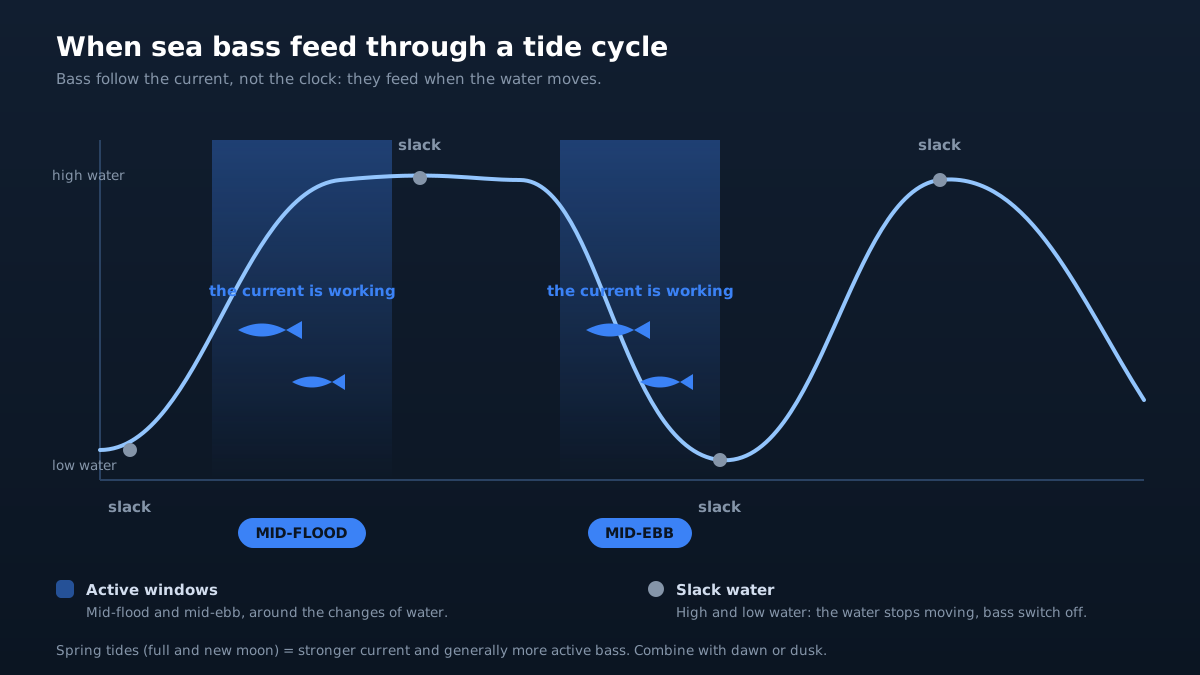
Sea bass are the most sought-after saltwater predator on lures. Hard-fighting, wary and sensitive to conditions, they reward anglers who understand one factor that freshwater fishing ignores: the tide. Here are the essentials to get started.
The tide: factor number one
At sea, the right lie at the wrong stage of tide gives nothing. Bass move and hunt with the current, which stirs up food and triggers activity.
- Active phases: often the flood and the ebb, when the current is working. Slack water (high and low tide) is generally calmer.
- Coefficients: near the new and full moon, these are spring tides (big range, strong currents, bass often active); around the quarters, neap tides (small range, finer fishing).
- The moon drives all of this: it governs the amplitude of the tides.
Golden rule: plan your session around the tide, not just your schedule. Two hours around a change of water are often worth more than a whole day at the wrong time.
That's exactly what CarnaFish, the AI fishing app, handles: on a sea spot, the AI factors in the tide, the moon phase and marine weather to tell you when and how to insist. Handy when you're starting out and don't yet know your marks.
Reading a shore spot
As in freshwater, it all starts with reading the spot. At sea, look for:
- Beaches: bass patrol along the bars and gullies, especially on the flood.
- Rocks and rockfills: ambush lies around drop-offs, holes and white water.
- Estuaries and river mouths: the current concentrates food there — often excellent on the ebb.
- Harbours and jetties: structure, shade and current, perfect at dusk.
Sea bass lures
1. Soft plastics (shads) on a jig head
The versatile foundation. They fish the whole water column and cast far. Match the head weight to the current and depth.
2. Jerkbaits and crankbaits
To imitate a roaming baitfish. Deadly on hunting fish and sight fishing, especially in clear water.
3. Topwater lures (stickbaits, poppers)
When bass hunt on the surface (often early, late, or on late-summer hunts), nothing is more effective or more spectacular.
4. Deep-diving lures
To reach bass glued to the bottom or in strong current.
5. Casting jigs
Compact and very dense, they cast extremely far — useful when bass are hunting out of range, or when a headwind stops you presenting a light lure. They sink fast and let you fish strong current without drifting.
Gear for shore bass fishing
Sea bass fishing brings two constraints freshwater ignores: casting distance and corrosion.
- Rod: 2.40 to 3.00 m, rated 10-40 g. The length serves both to cast far and to lift the line clear of waves and rocks.
- Reel: size 3000 to 4000, corrosion-treated without exception.
- Braid: 12 to 16/100, for distance and sensitivity.
- Leader: 30 to 40/100 fluorocarbon, 1 to 1.5 m. It absorbs abrasion on rock and barnacles, which is the number one cause of break-offs.
- After every session: rinse everything in fresh water, reel included. Salt destroys tackle faster than use does.
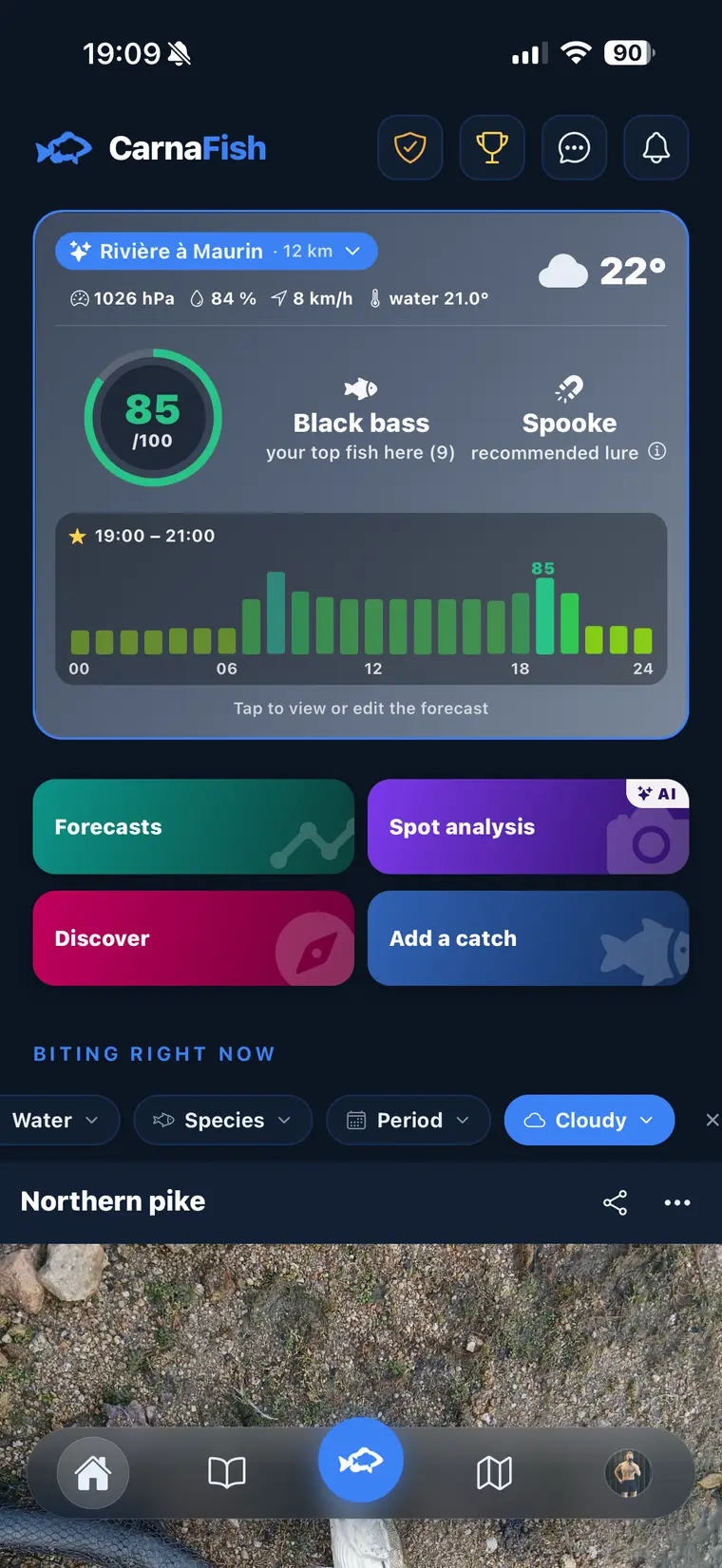
Not sure what to tie on?
Photograph your spot: CarnaFish reads the scene, cross-checks the conditions and gives you the zone, the lure and the retrieve. Free on iOS and Android.
Safety comes before everything else
This is what genuinely separates the sea from freshwater, and it isn't negotiable.
- Check the tide times before you leave, not once you're there. A flooding tide can cut off your retreat from a rock platform or a gully in minutes.
- Never fish rocks alone, and always tell someone your mark and your expected time back.
- Non-slip boots and an inflatable lifejacket as soon as you're on wet rock or a breakwater.
- Call it off in a big swell. One wave in thirty is far bigger than the rest, and that's the one that takes anglers.
When to go out
- Best windows: dawn and dusk, combined with an active tide phase. Night fishing can be excellent on some marks.
- Conditions: a slightly choppy sea and stirred-up water often put bass at ease. A flat, calm sea in bright sun is harder.
Also fish freshwater? The lures and the way you read a lie overlap a lot: see our guides to perch lure fishing and zander lure fishing for beginners.
Key takeaways
- Tide first: fish the flood and the ebb, around the changes of water.
- Spring tides (full/new moon) = strong current and often active bass.
- Beaches, rocks, estuaries, jetties: the classic shore lies.
- Versatile shad, topwater at the right hours, deep diver for the bottom.
FAQ
What tide is best for sea bass lure fishing?
Bass hunt mostly when the current is working, i.e. during the flood and the ebb, around the changes of water. High and low slack are often calmer. Spring-tide coefficients (near the full and new moon) usually make bass more active.
What lure should I use to start sea bass fishing?
A soft plastic (shad) on a jig head: versatile, it casts far and fishes the whole water column. Add a jerkbait for hunting fish and a topwater lure for the morning and evening windows.
Where can I fish for sea bass from shore?
Along beaches (bars and gullies), around rocks and rockfills, in estuaries and river mouths where the current concentrates food, and on jetties and harbours at dusk. Match the lie to the tide of the moment.
Do sea bass bite at night?
Yes, night fishing is often excellent on some marks, particularly around harbours, jetties and estuaries. Wary by day, bass move closer to shore and hunt more freely once the light fades.
What rod for shore sea bass fishing?
A 2.40 to 3.00 m rod rated 10-40 g, with a corrosion-treated 3000-4000 reel and 12-16/100 braid. The length serves as much to cast far as to lift the line clear of waves and rocks. Add a 30-40/100 fluorocarbon leader, 1 to 1.5 m long: abrasion on rock and barnacles is the leading cause of break-offs.
Should I rinse my tackle after fishing in the sea?
Yes, every time, in fresh water and including the reel. Salt attacks bearings, guides and hooks far faster than use itself. A two-minute rinse after each session easily doubles the life of an outfit.
What is the best tide for sea bass?
The phases where the current is working: the flood and the ebb, around the changes of water. High and low slack are usually the quietest moments. Spring-tide coefficients, near the full and new moon, generally make bass noticeably more active.
What safety precautions should I take fishing for bass from the shore?
Check the tide times before you leave, never once you're there: a flooding tide can cut off your retreat from a rock platform or a gully in minutes. Don't fish rocks alone, tell someone your mark and your expected time back, and wear non-slip boots and an inflatable lifejacket on wet rock or a breakwater. In a big swell, call it off.
Go from theory to fish
CarnaFish reads your spot from a photo and gives you the game plan: zone, lure, retrieve. Free on iOS and Android.