Bass lure fishing for beginners: the guide to triggering
Bass are probably the most fun predator to catch on lures: hard-fighting, curious, capable of blowing up on the surface or slurping a worm in slow motion. They're also a great fish to learn modern rigs on. Here's how to start without spreading yourself thin.
Understanding bass
Bass are fish of structure and cover. They love to hide: lily pads, sunken wood, weed beds, pontoons, cluttered edges. They ambush their prey and are highly territorial. Two reflexes to adopt:
- Get to the cover. Bass are rarely far from a shelter.
- Provoke them. A bass strike is often a reaction of aggression, not just hunger.
The rigs to know for beginners
1. The Texas rig
THE anti-snag rig par excellence. A soft plastic (craw, worm, creature) on a Texas hook goes through weed and wood without snagging. Essential to fish where bass really hide.
2. The wacky rig
A simple soft stickworm hooked in the middle, sinking with both ends wiggling. Deceptively easy and terribly effective on wary or inactive fish.
3. Topwater lures
Poppers, stickbaits, frogs: nothing beats a bass strike on the surface. Best early morning, evening, and over weed beds with a weedless frog.
4. Cranks and spinnerbaits
To cover water fast, find active fish and work the edges. A steady retrieve, keeping contact with the structure.
5. The ned rig and drop shot
The finesse rigs, for when nothing else works. A small lure presented slowly near the bottom often unlocks a hard day, especially in clear water, on pressured fish or right after a cold snap.
Gear to start with
No need to accumulate: one versatile outfit covers the Texas rig, the wacky and cranks.
- Rod: 1.95 to 2.15 m, rated 7-21 g, medium-fast action. The most forgiving compromise.
- Reel: 2500 spinning. Baitcasting is more accurate in cover but takes practice — start on spinning.
- Main line: 12-16/100 braid, to feel bites and pull a fish out of the cover.
- Leader: 24-30/100 fluorocarbon. It needs to be tough: you'll be fishing in branches and weed.
The retrieve that changes everything: the bite on the fall
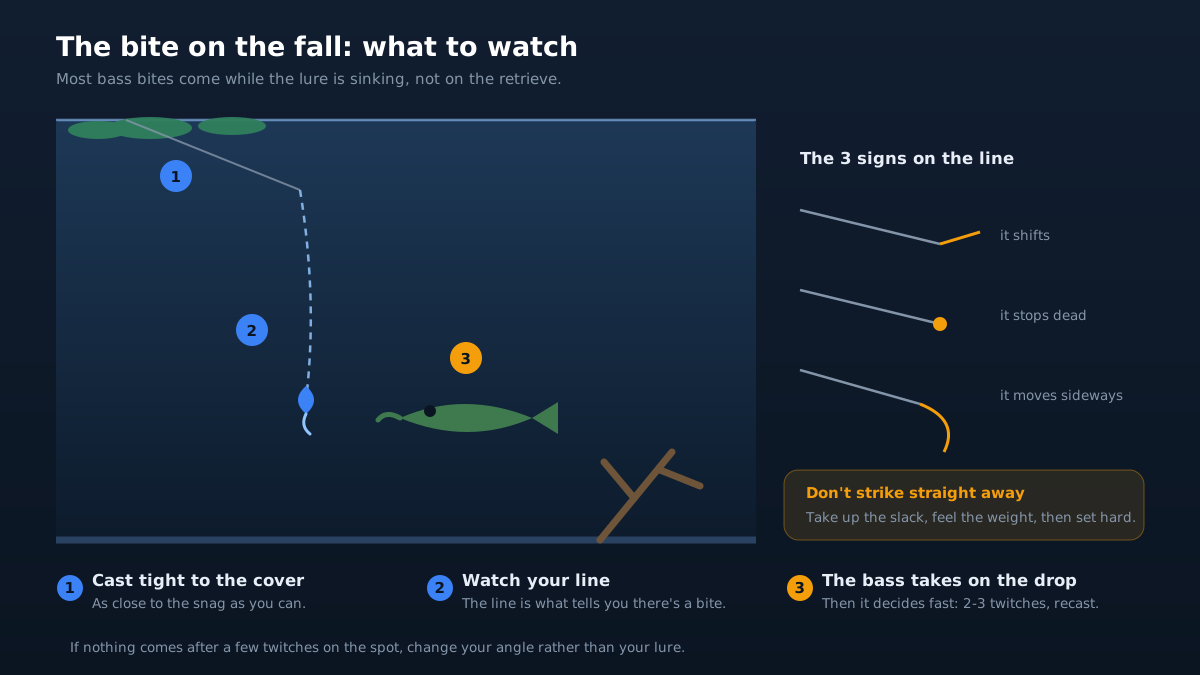
The vast majority of bass bites come while the lure is sinking, not while you're retrieving. This is the single most important reflex to build.
- Cast tight to the cover, as close to the obstacle as you can.
- Watch your line as the lure drops. A line that shifts, stops dead or moves sideways is a bite.
- Don't strike immediately. Take up the slack, feel the weight, then set the hook hard.
- If nothing comes, two or three animations on the spot, then cast elsewhere: bass make up their minds fast.
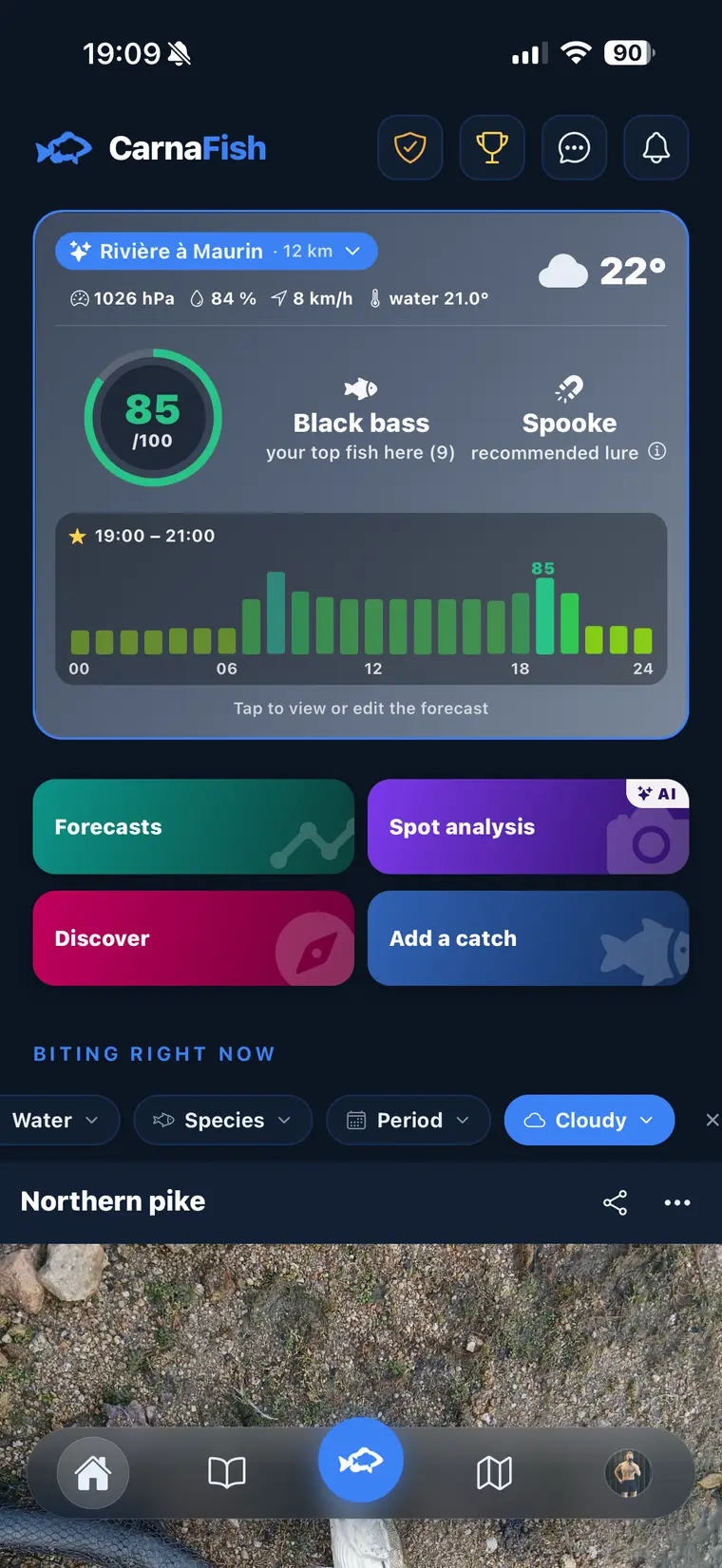
Not sure what to tie on?
Photograph your spot: CarnaFish reads the scene, cross-checks the conditions and gives you the zone, the lure and the retrieve. Free on iOS and Android.
Where and when to fish for bass
Bass are fished at the cover: lily-pad edges, fallen trees, pontoons, weed beds, rockfills. Before casting, take the time to read your fishing spot to spot the shelters and feeding zones.
- Best times: early morning and evening, especially in summer for topwater. On overcast days, they hunt more widely.
- Peak season: from late spring to autumn, when the water is warm. Bass become very slow in cold water.
In summer, a frog cast onto a mat of lily pads at first light is one of the finest thrills in lure fishing.
Beginner mistakes
- Fishing too far from cover: bass are glued to shelters, not in the middle of the lake.
- Retrieving the wacky too fast: let the lure work and sink, the bite often comes on the fall.
- Ignoring topwater at the right hours: you miss the most spectacular strikes.
- Neglecting the conditions: light, temperature and cover dictate everything. That's where CarnaFish, the AI fishing app, helps: photograph your spot and the AI cross-checks the scene and conditions to suggest a zone, a lure and a retrieve.
Bass share a lot with other predators: if you also fish rivers or lakes, the same logic applies to perch lure fishing — same small soft plastics, same edges — and to zander lure fishing for beginners on the deeper lies.
Key takeaways
- Texas for cover, wacky for finesse, topwater for fun and efficiency.
- Bass are glued to shelters: get to the contact.
- Warm water = active bass; cold water = slow everything down.
- Best windows: dawn and dusk.
FAQ
What lure should I use to start bass fishing?
A soft plastic on a Texas or wacky rig. The Texas goes anywhere in cover without snagging; the wacky is deceptively simple on wary fish. Add a topwater lure (popper or frog) for the morning and evening activity windows.
Where do bass hide?
In cover: lily pads, sunken wood, weed beds, pontoons, cluttered edges, rockfills. It's an ambush fish rarely far from a shelter. Fish tight to these structures rather than in open water.
When should I fish for bass?
From late spring to autumn, in warm water. The best hours are early morning and evening, especially for topwater fishing. In cold water, bass become very slow and difficult.
Do bass strike on topwater?
Yes, and it's one of the most spectacular kinds of fishing. Poppers, stickbaits and weedless frogs trigger explosive strikes, especially at dawn and dusk, over weed beds and lily pads.
What rod should a beginner use for bass?
A 1.95 to 2.15 m rod rated 7-21 g, medium-fast action, on a 2500 spinning reel. That outfit handles the Texas rig, the wacky and cranks without you needing to swap. Baitcasting is more accurate in cover, but save it for later: it takes real practice.
How do I detect a bass bite?
Most bites come while the lure is sinking, not on the retrieve. Watch your line after the cast: if it shifts, stops dead or moves sideways, that's a bite. Take up the slack, feel the weight of the fish, then set the hook hard — striking at thin air on a hunch costs more fish than anything else.
Do I need a wire leader for bass?
No: bass don't have cutting teeth, so 24 to 30/100 fluorocarbon is plenty. It does need to be tough, though, because you'll be fishing tight to branches, weed and pontoons — it's abrasion that breaks you off, not the fish.
What should I do when bass won't bite?
Go finesse before you change venue: a ned rig or drop shot with a small lure worked slowly near the bottom often unlocks a hard day, especially in clear water, on pressured fish or after a cold snap. Slow your search rhythm down too — in cold water, bass stop chasing anything.
Go from theory to fish
CarnaFish reads your spot from a photo and gives you the game plan: zone, lure, retrieve. Free on iOS and Android.