Perch lure fishing: the guide to catching them all year
Perch are the ideal predator to progress with: found almost everywhere, active for much of the year and often in schools, they let you rack up bites and test your rigs. But moving from tiny perch to a big stripe takes method. Here's how to go about it.
Understanding perch
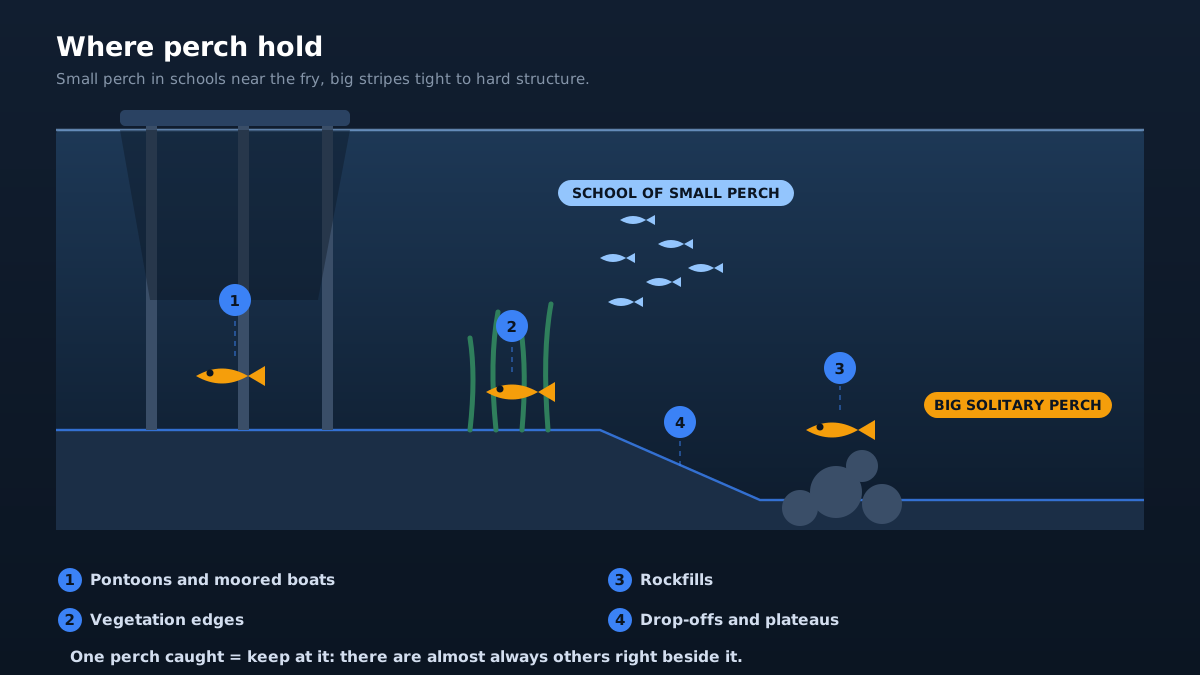
Perch are gregarious, opportunistic hunters. Small ones live in tight schools and chase fry on sight; big ones, more solitary, hold near structure and ambush their prey. Two practical consequences:
- When you catch a perch, keep at it: there are often more right next to it.
- Big specimens hold on marked structure (drop-offs, sunken wood, rocks), not in open water.
Gear: light, but not flimsy
Perch fishing is fine fishing. Too powerful an outfit stops you casting lures of a few grams and stops you feeling bites, which are often no more than a tick.
- Rod: 1.80 to 2.20 m, rated 2-10 g or 5-15 g depending on your lures. A sensitive tip action is essential.
- Reel: size 1000 to 2500, light enough not to unbalance the outfit.
- Braid: 8 to 12/100. Braid doesn't stretch: it's what lets you feel the bite and set the hook at distance.
- Leader: 16 to 22/100 fluorocarbon, 50 cm to 1 m. Only add fine wire if pike are genuinely present — it costs you bites from wary perch.
The best perch lures
1. Small soft plastics
The foundation. A shad or finesse of 5 to 8 cm on a light jig head (3 to 10 g) catches perch everywhere. Downsize to finesse rigs (drop shot, ned rig) when the fish are fussy.
2. The drop shot
Deadly on wary or holding perch. The lure stays suspended above the bottom, at eye level with the fish: perfect for working a precise lie without burning it out.
3. Cranks and small crankbaits
To cover water fast and find the active schools. A steady retrieve triggers hunting perch.
4. Bladed lures (spinners, perch-sized chatterbaits)
Flash and vibration excel in stained water and on aggressive fish. A classic for covering ground.
Where to find perch
This is what makes the difference. Before choosing your lure, learn to read your fishing spot: perch love vegetation edges, pontoons, rockfills, drop-offs and anything that concentrates fry. In winter, they gather on the deep zones.
Find the prey and you'll find the perch. Schools of baitfish on your sounder or fry scattering at the surface are golden clues.
Adapting to the season
Spring. Active perch on the warming edges. Soft plastics and cranks on a straight retrieve.
Summer. Frequent hunts early and late; reactive lures, and small vertical presentations over the schools during the day.
Autumn. The season of big stripes stocking up. Size your lures up a little (7-10 cm) and target the deep structure.
Winter. Perch grouped up and inactive: drop shot and finesse vertically, slow animation near the bottom.
Not sure what to tie on?
Photograph your spot: CarnaFish reads the scene, cross-checks the conditions and gives you the zone, the lure and the retrieve. Free on iOS and Android.
Finding and staying on a school of perch
A single perch is an accident; a school is a session. The whole game is locating the group, then keeping it active for as long as possible.
- Cover water fast first. Crank or spinner on a straight retrieve to find that first bite. Until you get one, you're searching — not yet fishing.
- Mark the exact spot. From the first perch, line up a marker on the bank. Schools hold on very small areas.
- Slow down and go finesse. Once you've found them, switch to a light soft plastic or drop shot to keep catching without spooking them.
- Change your angle before you leave. A school that stops responding head-on will often respond to a presentation coming from somewhere else.
Perch move with the fry: a school can vanish in ten minutes and be back on the same lie an hour later. Never write off a productive spot after one attempt.
Perch in canals, harbours and urban water
This is the most accessible perch fishing there is, and the most underrated. Urban water ticks every box: concrete structure, cast shade, concentrated fry and often stained water.
- Pontoons and moored boats: the shade under a hull is a permanent ambush point.
- Ladders, rings and pilings: every vertical edge holds perch.
- Locks and canal junctions: the churn concentrates prey.
- Bank rockfills: work parallel to the bank, not out towards open water.
In town, fish light and stay discreet: the water is often shallow and the fish see a lot of people.
Targeting big perch specifically
Big stripes aren't caught like small ones. Three adjustments change everything:
- Size up your lure. An 8 to 12 cm soft plastic naturally filters out the small fish. Fewer bites, but a far better average.
- Fish deeper. Big perch hold lower and tighter to hard structure than the schools of small ones.
- Slow right down. A big perch is an ambusher: it rarely takes a lure that's racing past. Long pauses trigger more than speed does.
Autumn and early winter remain the best windows: the bigger fish feed up before the cold water and group on identifiable lies.
The mistake to avoid
Many anglers leave a lie too soon. Perch work in phases: a school can stay inactive then switch on all at once. Insist on marked lies, vary the retrieve before changing lures. That's exactly where a tool like CarnaFish, the AI fishing app, saves time: you photograph your spot, the AI reads the scene and conditions and suggests a zone, a lure type and a retrieve. If you're starting out, also take a look at our guide to choosing a pike lure — the reasoning is the same.
Key takeaways
- A small 5-8 cm soft plastic on a light jig head = the safe bet.
- One bite = keep at it, perch live in schools.
- Big stripes hold on marked structure.
- Find the fry, you'll find the perch.
FAQ
What is the best lure for perch?
A small soft plastic (shad or finesse of 5 to 8 cm) on a light 3-10 g jig head. It's the most versatile rig, catching perch all year. For finesse, the drop shot and ned rig are deadly on wary fish.
How do I find perch in a body of water?
Look for structure and prey: vegetation edges, pontoons, rockfills, drop-offs, sunken wood. Perch follow schools of fry. When you catch one, keep fishing the same spot: they live in schools.
What lure size for big perch?
To target big stripes, size up to lures of 7 to 10 cm and fish the deep structure, especially in autumn when perch are stocking up. Small lures mostly catch small perch.
Can you catch perch on lures in winter?
Yes, but they are grouped up and inactive. Favour the drop shot and finesse rigs vertically, with a slow animation near the bottom, over the deep zones where the schools concentrate.
What rod for perch lure fishing?
A 1.80 to 2.20 m rod rated 2-10 g or 5-15 g depending on the lures you cast, with a sensitive tip action. Pair it with a 1000-2500 reel and 8 to 12/100 braid: it's the braid that lets you feel bites, which are often no more than a tick.
Do I need a wire leader for perch?
Not in most cases: 16 to 22/100 fluorocarbon is enough and far more discreet. Only add fine wire if pike are genuinely present on the lie — it costs you bites from wary perch, especially in clear water.
Where can I fish for perch without a boat?
Canals, harbours and urban water are the most accessible and most productive bank venues: pontoons, moored boats, pilings, locks and rockfills concentrate shade, structure and fry all at once. Work parallel to the bank rather than casting out into open water.
How long should I keep fishing a perch spot?
Longer than you think. A school can sit inactive then switch on all at once, and it can also leave a lie for ten minutes before coming back. Vary your retrieve and your angle of presentation before changing lure, and never write off a productive spot after a single blank attempt.
Go from theory to fish
CarnaFish reads your spot from a photo and gives you the game plan: zone, lure, retrieve. Free on iOS and Android.