Which lure for pike? The complete guide, season by season
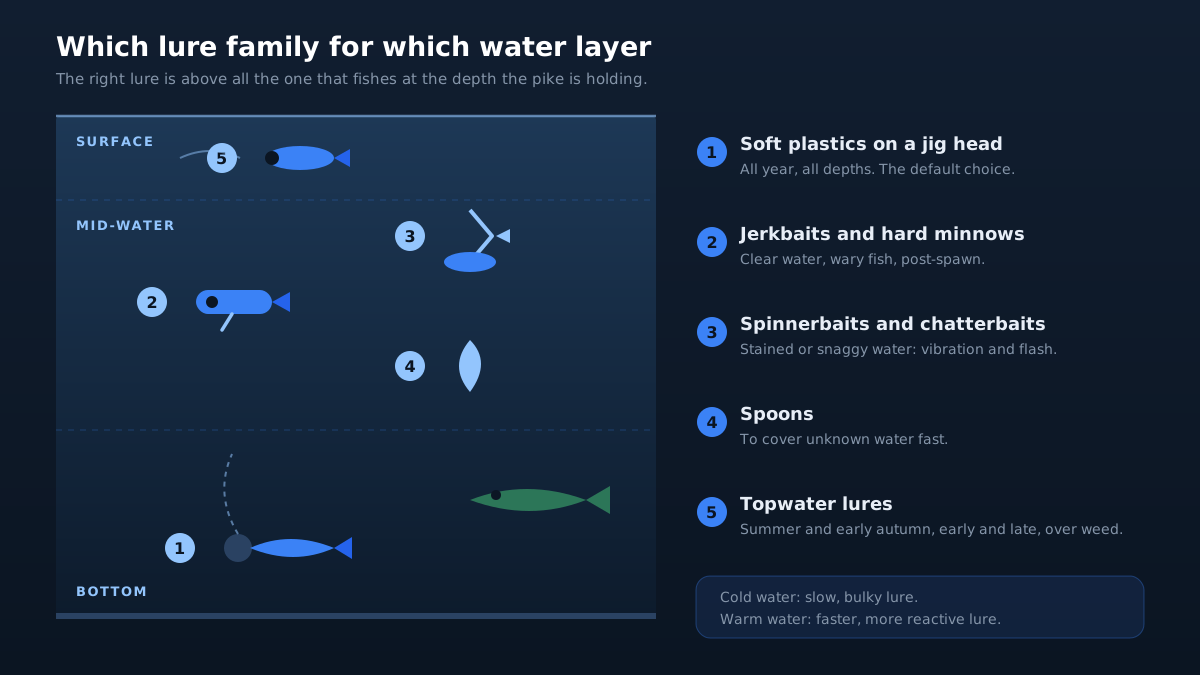
Choosing a pike lure isn't about picking "the best" one from a catalogue: it's about matching the size, the action and the depth to the conditions of the day. Here's how to reason instead of switching lures at random.
The 4 lure families to know
1. Soft plastics (shads & finesse)
The pike angler's Swiss army knife. Rigged on a jig head, they sink to the depth you want and lend themselves to countless retrieves. A shad of 10 to 15 cm on a 10–20 g head covers the vast majority of situations in rivers as well as lakes.
- When? All year round, and especially when the fish are inactive.
- How? A slow straight retrieve, or lifts followed by pauses (pike often strike on the drop).
2. Jerkbaits and crankbaits
Hard lures that imitate an injured fish. The jerkbait is worked with short flicks of the rod tip (the famous twitch) that trigger reflex strikes.
- When? Clear water, wary pike, post-spawn.
- How? Alternate rod-tip flicks and pauses. The bite often comes on the stop.
3. Spinnerbaits and chatterbaits
A spinning blade, vibration, flash: they excel in stained water or cluttered spots (weed beds, branches) because pike detect them from far away, even in low visibility.
- When? Murky water, spring, cluttered zones.
- How? A steady retrieve, keeping contact with the vibration.
4. Spoons
The great classic, deadly and versatile. A cast-and-retrieve spoon remains a safe bet to cover a spot quickly.
5. Topwater lures
Poppers, stickbaits and frogs: the most spectacular family. Pike attack vertically, often in a wall of spray.
- When? Summer and early autumn, early morning and evening, over shallow water and weed beds.
- How? An irregular retrieve with marked pauses. A frog goes where no other lure can — straight over lily pads and dense vegetation.
- Worth knowing: don't strike at the noise. Wait until you feel the weight of the fish, or you'll pull the lure out of its mouth.
Gear for pike
Pike demand solid tackle, less for the fight than for casting heavy lures all day and setting a hook in a bony mouth.
- Rod: 2.10 to 2.40 m, rated 10-40 g for all-round use, 30-80 g if you're throwing big swimbaits.
- Reel: size 3000 to 4000, loaded with 20 to 30/100 braid.
- Leader: wire or titanium, non-negotiable. Pike teeth cut through fluorocarbon, even in heavy diameters. Allow 40 to 50 cm.
- Unhooking kit: long pliers, wire cutters and an unhooking mat. That's not comfort, it's what lets you release the fish in good shape.
Choosing by season
Simple rule: cold water = slow, bulky lure; warm water = faster, more reactive lure.
Spring (post-spawn). Pike are recovering. Favour slow, easy-to-grab lures: shads on a slow straight retrieve, jerkbaits with long pauses.
Summer. Active fish, but often holding in the shade or deep during the hot hours. Attack early morning and evening with reactive lures (spinnerbait, fast jerk), and look for cooler water during the day.
Autumn. The best season. Pike are stocking up: this is the time for big volumes (15–20 cm shads, large swimbaits). Don't be afraid of size.
Winter. Metabolism in slow motion. Very slow soft plastics, near the bottom, with long pauses. Patience pays.
Choosing by water colour
- Clear water: natural shades (roach, perch, white/silver).
- Stained water: bright or fluo colours (chartreuse, orange, white) and above all vibration.
- Low light: dark silhouettes (black, purple) that stand out better against the sky.
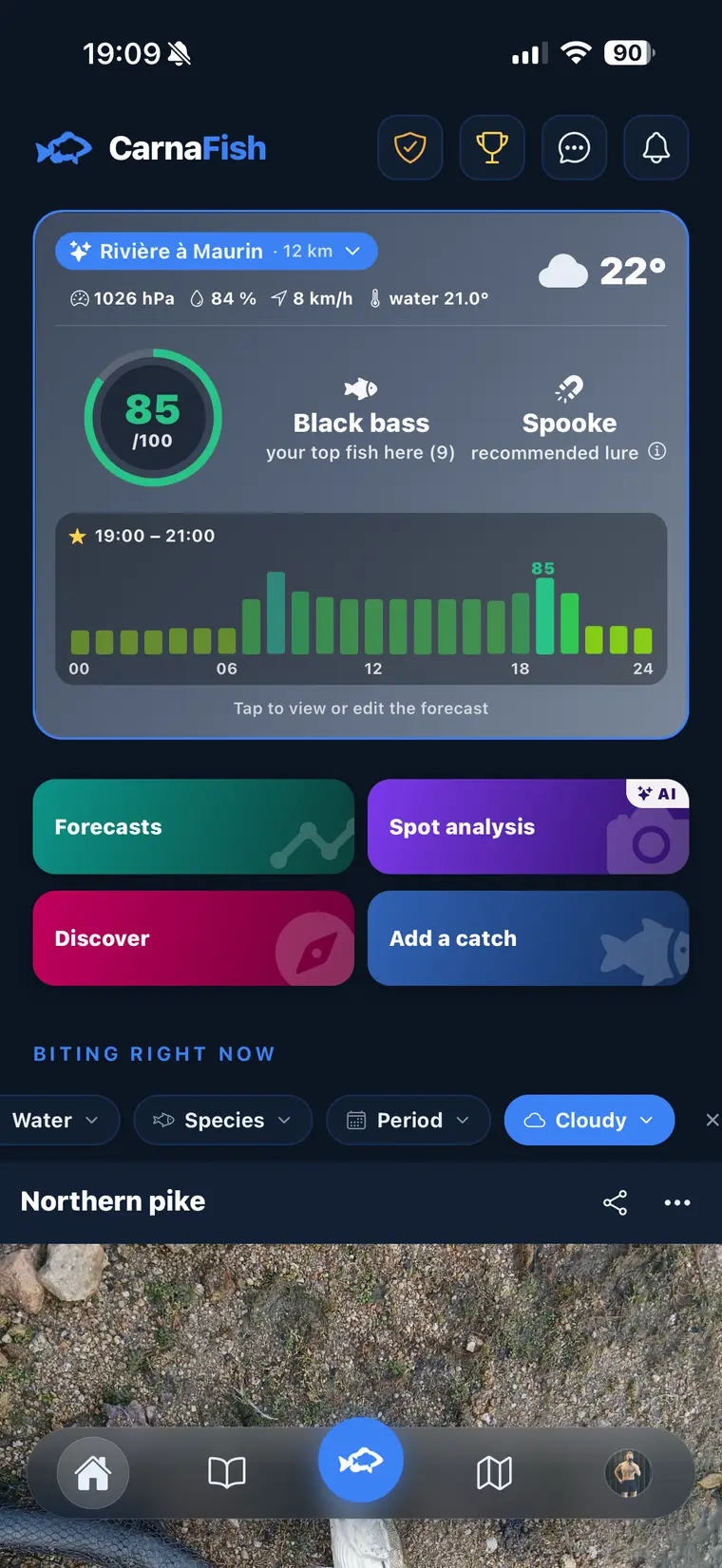
Not sure what to tie on?
Photograph your spot: CarnaFish reads the scene, cross-checks the conditions and gives you the zone, the lure and the retrieve. Free on iOS and Android.
Where to look for pike
Pike are ambush hunters: they don't patrol, they wait. So look for cover with food within immediate reach.
- Vegetation edges: weed beds, lily pads, reed lines. The number one lie, especially in spring and summer.
- Sunken trees and branches: an isolated snag in open water often holds a fish, and it's almost always a good one.
- Drop-offs: the transition between a plateau and a hole is a permanent hunting corridor.
- Current seams in rivers: pike sit in the slack water right beside the flow and dart out at whatever passes.
- Bay mouths and narrows: any pinch point baitfish are forced to swim through.
A pike never stays far from its lie for long. If you take a fish from a spot, another will move into the vacancy within days.
Do you really need to fish big?
"Big lure, big fish" is true but incomplete. Lure size selects fish more than it attracts them:
- A 10-12 cm shad catches every pike, small ones included, and remains the best choice to start with or on water you don't know.
- A 15-20 cm lure clearly reduces the number of bites but raises the average. That's the autumn choice, and the choice for water you know holds fish.
- Moving to very large swimbaits only makes sense on venues with a reputation for big fish, and demands tackle to match.
In cold water the logic partly inverts: a big volume worked very slowly still beats a small lure worked fast.
The classic mistake: switching lures too fast
Many anglers cycle through lures when the real problem is the spot or the retrieve. Before switching, ask yourself three questions: am I fishing at the right depth? does my retrieve match the fish's activity? am I insisting enough on the productive zones (edges, drop-offs, weed beds)? That's the whole point of reading a fishing spot before you even pick a lure.
This is exactly where CarnaFish, the AI fishing app, comes in: you photograph your spot, the app analyses the scene and the conditions, and suggests a zone, a lure type and a retrieve suited to the moment. Enough to stop guessing and fish more precisely. The same logic applies to other predators — see also our guide to zander lure fishing for beginners.
Key takeaways
- A 10–15 cm shad covers 80% of situations.
- Cold water → slow and big; warm water → fast and reactive.
- Murky water → vibration and bright colours.
- Before switching lures, first check your spot and your retrieve.
FAQ
What is the best lure to start pike fishing?
A soft plastic such as a 10–15 cm shad on a 10–20 g jig head. It's the most versatile rig: it fishes all year, at any depth, and forgives retrieve mistakes. Start with a slow straight retrieve before exploring lift-and-drop animations.
What lure colour should I choose for pike?
In clear water, natural shades (roach, perch, silver). In stained or murky water, bright or fluo colours (chartreuse, orange, white) and above all a lure that vibrates. In low light, dark silhouettes that stand out against the sky.
What size of lure for pike?
From 10 to 15 cm covers most situations. In autumn, when pike are stocking up for winter, don't hesitate to go up to 15–20 cm or more: big fish look for big prey.
How do I know which lure to use for my spot?
The choice depends on depth, water colour, vegetation and the day's activity. Instead of guessing, you can photograph your spot with CarnaFish: the AI analyses the scene and recommends a zone, a lure type and a retrieve suited to the conditions.
Do I need a wire leader for pike?
Yes, without exception. Pike teeth cut through fluorocarbon even in heavy diameters, and a fish that swims off with a lure in its mouth has little chance of surviving. A 40 to 50 cm wire or titanium leader is the minimum, including when you're targeting another species on pike water.
What rod for pike lure fishing?
A 2.10 to 2.40 m rod rated 10-40 g covers most situations, with a 3000-4000 reel and 20-30/100 braid. Only move up to 30-80 g if you regularly cast big swimbaits, which quickly wear out an outfit that's too light.
Where do pike hold in a lake?
They're ambush hunters: they take a lie and wait. Look for vegetation edges, sunken trees, drop-offs between plateau and hole, current seams in rivers, and narrows that baitfish are forced to pass through. An isolated snag in open water almost always holds a fish, often a good one.
What lure for pike on the surface?
Poppers, stickbaits and frogs, from summer into early autumn, early morning and evening over shallow water and weed beds. Work them on an irregular retrieve with marked pauses, and above all don't strike at the noise: wait until you feel the weight of the fish, or you'll pull the lure straight out of its mouth.
Go from theory to fish
CarnaFish reads your spot from a photo and gives you the game plan: zone, lure, retrieve. Free on iOS and Android.