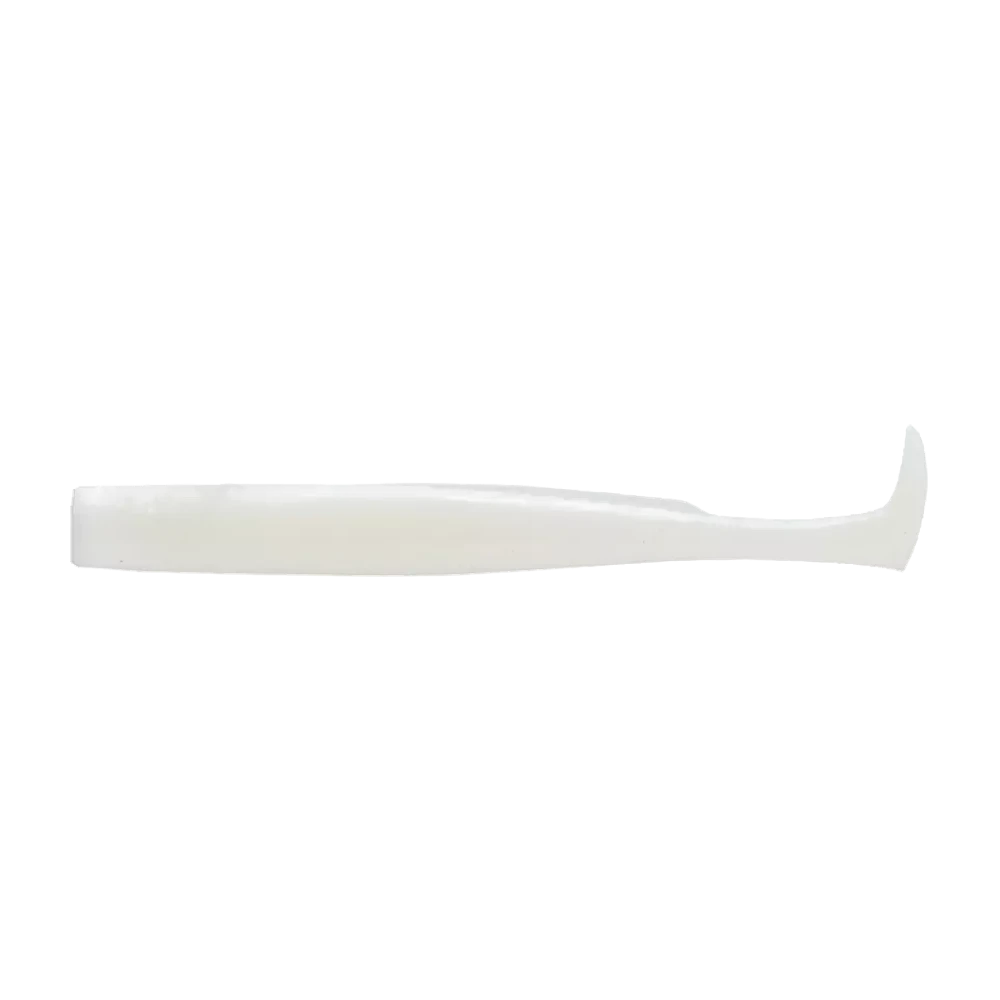
Fiiish Crazy Paddle-Tail: cover a bass beach without overthinking it
Rather not fish it blind? Photograph your spot — CarnaFish cross-checks the conditions and points you the right way.
Seen from above, a bass beach is just one long straight line broken by two or three surf gutters. The problem is never a lack of fish — it's how long it takes to find the one active gutter out of the five lining the spot. The Crazy Paddle-Tail was built exactly for that: a lure you cast far and fast, in a fan pattern, to cover ground before settling on what's actually producing.
Fan casting, before the lure itself
Before getting into the lure, it's worth covering the method, because it explains everything else. Fan casting means casting in a fan pattern from one fixed spot: one cast parallel to the beach, another at 45°, a third straight out, then move a few metres down and repeat. The goal isn't to fish one cast perfectly — it's to cover as much ground as possible in as little time as possible to find where the fish are actually feeding.
The Crazy Paddle-Tail is built for exactly this: it casts far, swims fast without breaking down, and its wake is easy to spot at distance — a real advantage when you're scanning for a swirl or a chasing bass's back.
What HSV action actually does for you
HSV, or High Swimming Vibration, means an oversized paddle tail relative to the body, pushing far more water than a standard shad of the same size. On the water, that gives two real advantages:
- You feel the lure working even in rough surf, which keeps you in touch with it and lets you detect a subtle bite through the chop.
- Bass find it from further away, including in stained water or a bit of swell — vibration travels further than sight in those conditions.
The flip side: the Crazy Paddle-Tail hates a slow retrieve. Below a certain speed the tail stops kicking properly and the lure loses its whole point. This is a lure to crank confidently, not crawl.
Matching head weight to wind and current
The body itself weighs almost nothing — it's the Crazy Sand Eel head, sold separately, that sets total weight and running depth.
- 15-20 g: calm sea, wind at your back, upper-column fishing. Ideal for a fast fan-cast in small surf.
- 25-35 g: the most versatile setup for a typical beach with some wind or drift current.
- 40-45 g: headwind or strong gutter current on the ebb, when you need an accurate cast and a stable swim despite the elements.
Field rule: if the lure pops back to the surface before the retrieve is done even at normal speed, the head's too light for the day's conditions — don't slow down, size up instead.
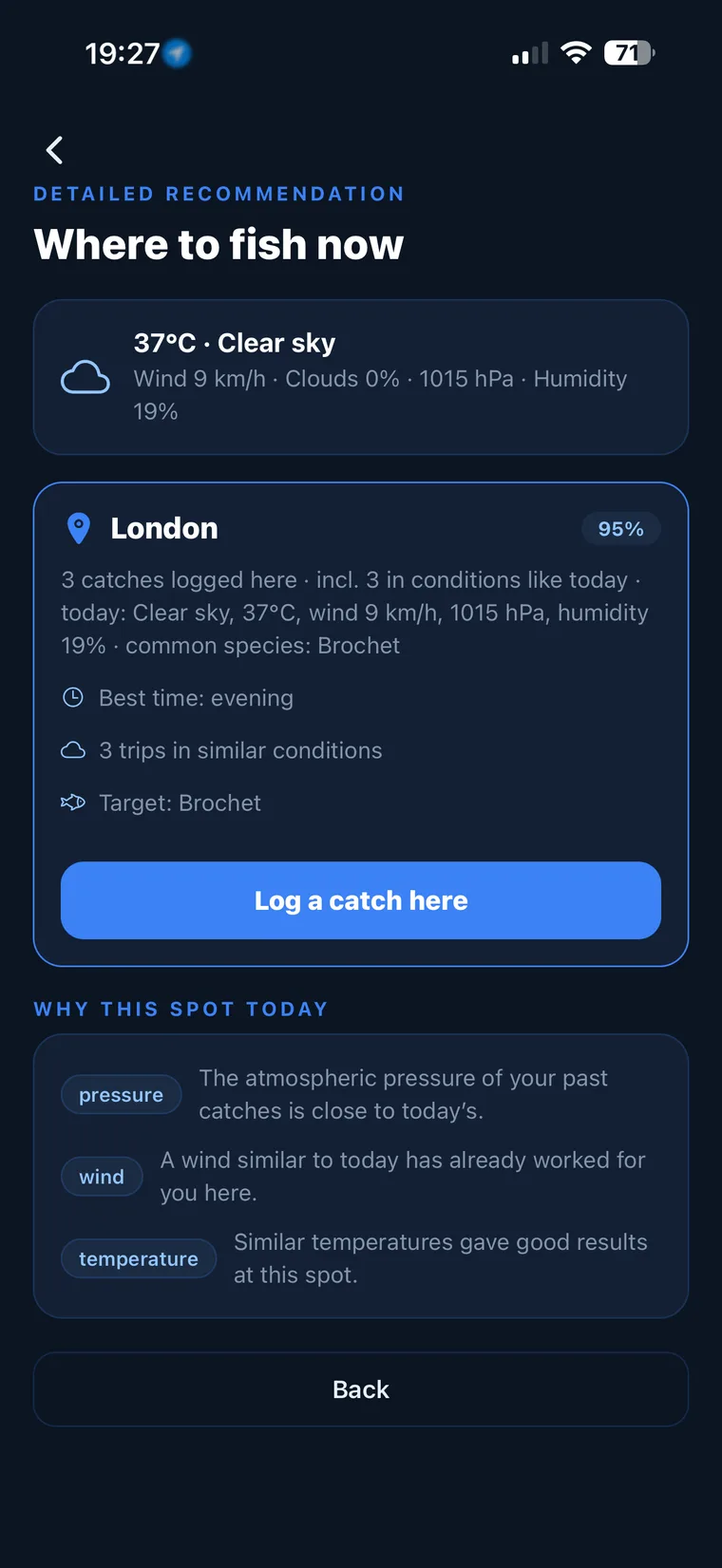
Not sure what to tie on?
Photograph your spot: CarnaFish reads the scene, cross-checks the conditions and gives you the zone, the lure and the retrieve. Free on iOS and Android.
Reading a beach before you cast
Fan casting gets a lot more efficient once you know where to concentrate your casts. Look for:
- Surf gutters, the dips between two sandbanks where water drains back out to sea — bass sit there to intercept whatever the outflow carries.
- Submerged sandbars, visible at low tide, that become ambush points once covered on the flood.
- Foam and turbidity lines, where bass hunt confidently because they're harder to spot themselves.
Picking the right lure never replaces reading the tide: on a beach, bass feed almost exclusively on the flood and the ebb, when the current is actually moving. Our full guide to fishing sea bass on lures breaks down which tide windows to prioritise. And to avoid wasting an hour guessing which gutter is live today, CarnaFish reads a photo of the spot against the tide and the day's marine conditions and tells you where to concentrate your casts.
Colour by sea state
- Rough surf, stirred-up water: Pearl White, a pale tone that keeps a strong silhouette even in foam.
- Clear water, flat sea: Ayu, more subtle and natural.
- Murky water, sand suspended by wind: Chartreuse Fluo, for maximum contrast when visibility drops.
Key takeaways
- Fan casting: cover as much ground as fast as possible before committing to one active zone.
- Powerful HSV action that hates a slow retrieve — crank it with confidence.
- 15-45 g head weight depending on wind and current — don't hesitate to size up.
- Spot surf gutters, submerged sandbars and foam lines before you start casting.
FAQ
Does the Crazy Paddle-Tail work on a slow retrieve?
No, that's its main limitation: below a certain speed the paddle tail stops kicking properly and the swim goes flat. Retrieve at medium to fast speed to get the full benefit of the lure.
Which head should I use fishing a gutter into a headwind?
A 40-45 g head from the Crazy Sand Eel range keeps an accurate casting trajectory and a stable swim despite the wind, where a lighter head will get knocked off line.
How do I spot an active gutter when I first arrive on a beach?
Look for a dip between two sandbanks where the water seems to be draining back out to sea, often marked by darker water or a different chop pattern than the rest of the beach. That's where the current concentrates food.
Does the Crazy Paddle-Tail cast as far as a hardbait?
Yes, that's one of its strong points: the streamlined body and dedicated jighead give it casting distance comparable to a sinking minnow — a real advantage for fan-casting a big beach.
What colour should I use in very murky water after a blow?
Chartreuse Fluo or any high-contrast tone: in stained water, vibration and visual contrast trigger the strike far more than colour realism does.
Should I switch lures if fan casting isn't producing after several casts?
Not right away — change retrieve speed and head weight first before switching lures. The Crazy Paddle-Tail already covers a wide range of presentations just by adjusting those two variables.
The full sea bass lure guideSeason-by-season strategy: which family of lure, when, and why.Go from theory to fish
CarnaFish reads your spot from a photo and gives you the game plan: zone, lure, retrieve. Free on iOS and Android.