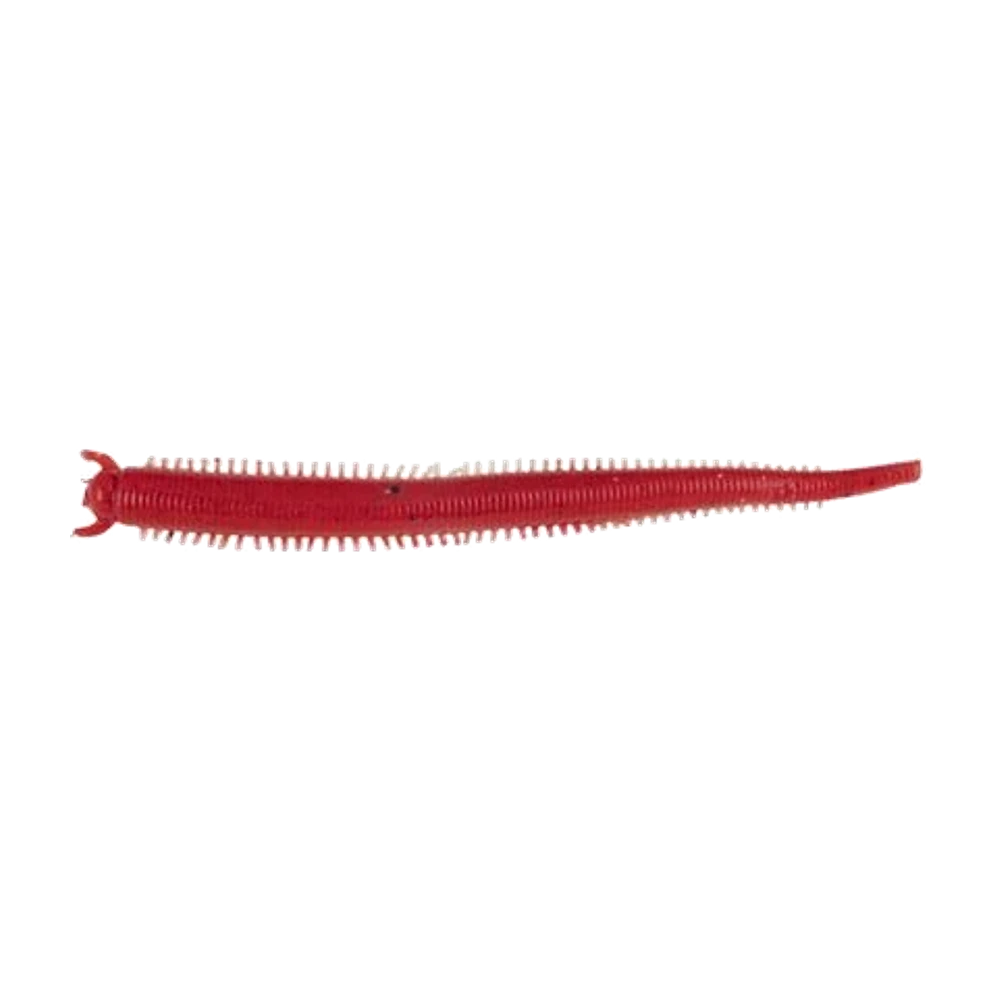
Berkley Gulp! Sandworm: the artificial worm you fish almost motionless
Before tying this one on, it helps to know if the spot actually calls for it. CarnaFish reads the scene from a photo.
Some days the bass are there but will not chase anything. Clear water, not a breath of wind, small tides, fish pinned to the bottom on a tongue of sand or between two patches of kelp. You run your minnows, your shads, your stickbaits past them: nothing moves. The fish are not absent, they are simply rooting through the sand rather than hunting in open water.
There is no good retrieve for that behaviour. There is a good menu. A bass that is rooting is looking for worms, shrimp, small crustaceans — slow or motionless prey it detects right on the bottom, more often by smell than by sight.
That is the slot the Gulp! Sandworm fills. It is an artificial worm soaked in a water-based attractant, fished with almost no animation at all, and closer to a bait than to a lure.
A material that is not classic soft plastic
The principle of scent diffusion and its effect on how long a fish holds the lure is covered on our Berkley PowerBait MaxScent The General page — no need to repeat it here. What is worth spelling out is how the Gulp formula differs from an ordinary scented soft plastic, because it changes how you handle it.
A classic soft plastic is plastisol: an oily, stable material into which a scent is blended and migrates slowly. Gulp is built on a water base. In practice:
- Diffusion is much faster and much wider. The plume forms within the first seconds in the water, which is exactly what you want on a static presentation.
- The lure dries out. Out of its juice it shrinks, hardens and becomes unusable within a few hours. That is the main constraint.
- The material is more fragile. A decent bass often tears the body apart. Budget one lure per serious fish, sometimes more.
- It does not mix with other soft plastics. Stored against plastisol it damages it and is damaged in turn. It lives in its own pot, separately.
Those four points explain why it is not a do-everything lure. It is a cartridge you load when active fishing produces nothing.
The three rigs, and when to pick which
The choice is made on the nature of the bottom, not on depth.
| Bottom | Rig | Why |
|---|---|---|
| Clean sand, even plateau | 3 to 8 g round jig head | Direct contact, short draws, the worm sweeps the sand |
| Cluttered bottom, rock, kelp | Drop shot, 10 to 20 g weight | The worm stays off the bottom, only the weight snags |
| Current, long range | Carolina-style sliding rig, 15 to 30 g | The weight holds, the worm drifts freely over 50 cm to 1 m |
Two rigging details make the difference. Thread the worm on dead straight: a twisted worm spins on itself in the slightest current and looks utterly artificial. And do not bury the hook too far — leave at least two thirds of the body hanging free, because that is the part that undulates.
On line, stay thin: 0.10 to 0.14 mm braid with a metre of 0.22 to 0.28 mm fluorocarbon leader. You are fishing slowly, at low tension, and you have to pick up bites that amount to weight settling on the line.
The retrieve: count, do not wind
This is the part that throws anglers used to active lures, because there is almost nothing to do.
- Cast and let it drop on a controlled line until you feel firm bottom contact.
- Touch nothing for ten to twenty seconds. The scent diffuses, the worm undulates in the current. That is a fishing phase in its own right, not dead time.
- A very slow draw, rod from 9 to 10 o'clock, over thirty to fifty centimetres only. The worm slides across the sand lifting a thread of particles.
- Lower the rod and give line back, then take up the slack.
- Another ten to twenty second pause.
- Repeat all the way in, counting seconds rather than handle turns.
A full retrieve takes three to five minutes instead of thirty seconds. That is normal; it is the entry price.
On the water: in this style of fishing the bite is not felt, it is seen. Watch your line rather than your rod tip — a bass sucking up a worm off the sand does not pull, it moves off sideways and your line drifts twenty or thirty centimetres to one side. When it moves, give a little line, count two seconds, then tighten progressively without a sharp strike.
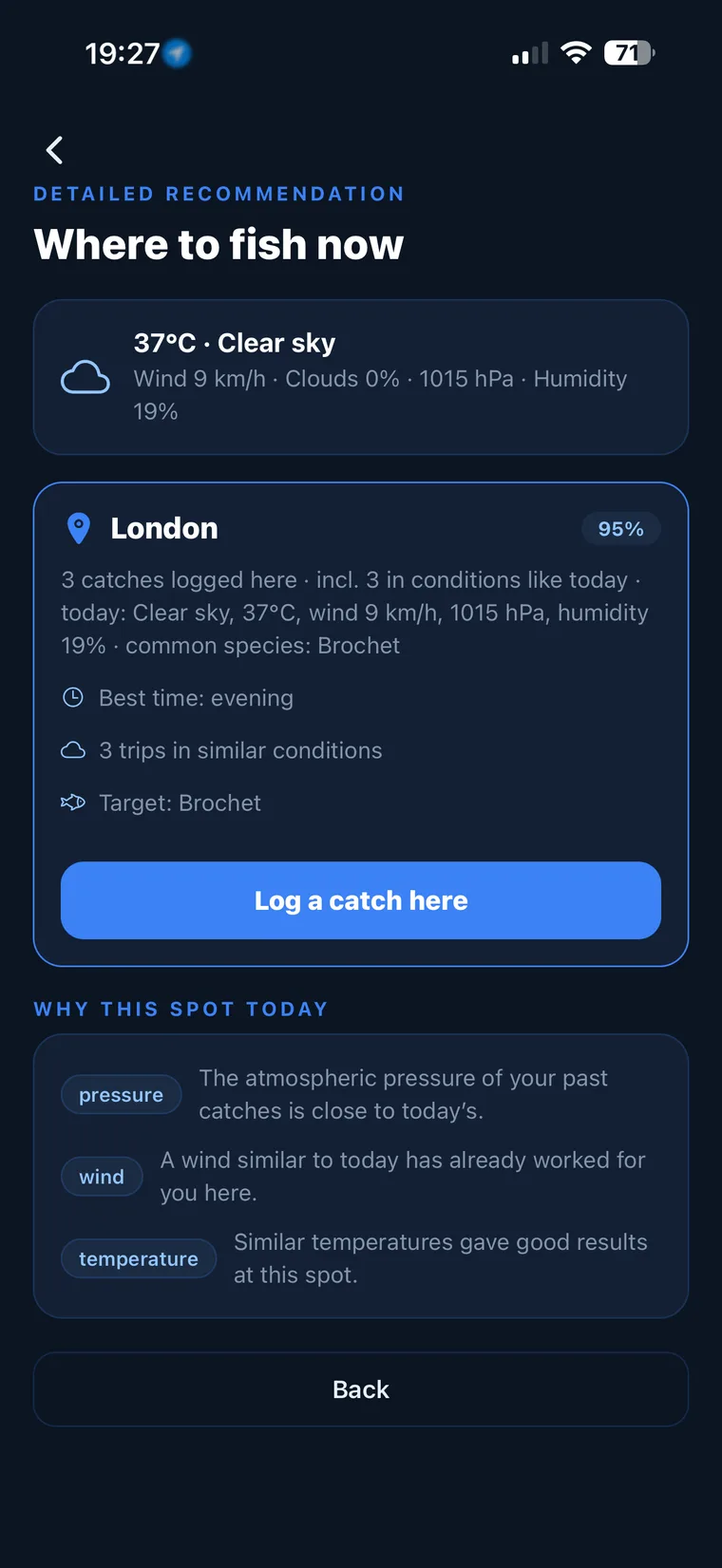
Not sure what to tie on?
Photograph your spot: CarnaFish reads the scene, cross-checks the conditions and gives you the zone, the lure and the retrieve. Free on iOS and Android.
Where it rescues a session, and where it is pointless
Its windows are precise:
- Over sandy bottoms and sand tongues between rocks, at low water or early on the flood, when the bass are rooting.
- In the middle of a summer's day, in clear bright water, when the active methods only produce at either end of the day.
- Shore fishing from a beach or a breakwater, on marks where you can afford to let it sit.
- After a storm, when the swell has torn worms loose and the fish come in to pick them up.
Its limits are just as clear. On an active fish hunting at the surface, it is ridiculously slow and you are wasting your time. In a strong tidal run it pins to the bottom or starts spinning without ever presenting properly. And on a session where you have to cover a lot of ground, its rhythm makes searching impossible.
Sandworm or Gulp! Alive Minnow: two answers to two behaviours
These two share the same formula but do not address the same fish.
The Berkley Gulp! Alive Minnow imitates a small fish. It is fished on a slow straight retrieve or in a sawtooth, on a jig head, and it addresses a bass that is still hunting, even half-heartedly. It keeps the logic of a lure: there is an action, a path, a speed.
The Sandworm offers none of that. It has no action of its own, no vibration, and it works exclusively on scent, silhouette and passive movement. It addresses a bass that has stopped hunting and is grazing the bottom — a behaviour on which fish imitation does not work.
The most effective way to use them is in sequence: you search with the Alive Minnow, and if you identify fish that are present but indifferent, you drop a gear with the Sandworm over the same area. Our guide to sea bass lure fishing places that switch within a typical session. And if you are unsure which rig to pick when you arrive over a bottom you do not know, CarnaFish reads a photo of the spot and answers.
Key takeaways
- Water-based formula: fast, wide diffusion, but the lure dries out of its juice and tears easily.
- The rig is chosen on the nature of the bottom: jig head on sand, drop shot on rock, sliding rig in current.
- The retrieve is counted in seconds of pause, not handle turns. Three to five minutes per cast.
- The bite is read on the line drifting sideways, not felt in the rod tip.
- No use on active fish or in strong current: this is a lure for fish that are rooting.
FAQ
How do I store a Gulp! Sandworm between sessions?
In its original pot, submerged in its juice, lid firmly closed. Left in the air it shrinks and hardens within a few hours. Never store it against classic soft plastics: the two materials damage each other.
Should the Gulp! Sandworm be animated?
As little as possible. A very slow draw of thirty to fifty centimetres, followed by a ten to twenty second pause in contact with the bottom. It is during the pauses that the scent works and that most bites happen.
Which rig for shore sea bass?
A 3 to 8 g round jig head over clean sand, a drop shot with a 10 to 20 g weight as soon as the bottom is cluttered, and a 15 to 30 g sliding rig if you have to cast far or hold in current.
How long does a worm last?
A properly hooked fish often tears the body, and the material tires after several casts. Plan on changing regularly: it is a consumable, closer to a bait than to a durable soft plastic.
How do you detect bites in fishing this slow?
By watching the line rather than the rod tip. A bass sucking up a worm moves sideways: your line drifts twenty or thirty centimetres to one side. Give a little line, count two seconds, then tighten progressively.
Does the Gulp! Sandworm work in fresh water?
Yes, particularly on perch and on difficult fish on a drop shot. But its marine worm profile and size range are built for the sea, and that is where it gives the best return for the slowness it imposes.
The full sea bass lure guideSeason-by-season strategy: which family of lure, when, and why.Go from theory to fish
CarnaFish reads your spot from a photo and gives you the game plan: zone, lure, retrieve. Free on iOS and Android.