Berkley Gulp! Shrimp: the shrimp a fish keeps in its mouth
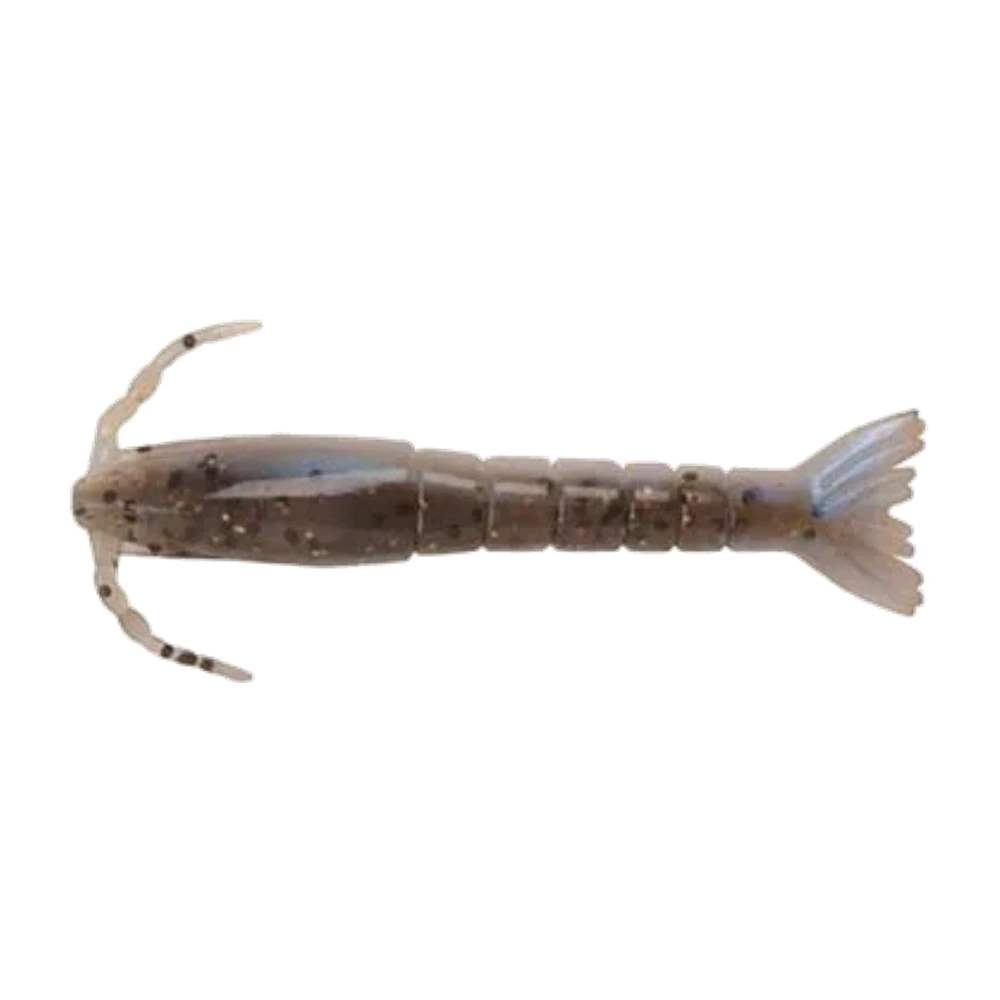
One lure, endless conditions. CarnaFish reads your spot from a photo so you are not just guessing.
A harbour in late winter, water at eight degrees, bass that are there but will not chase anything. You run a shad past them, nobody. You slow down, nobody. You drop a size, you finally get a touch — one short knock, then nothing. The fish took, spat it out, and you did not even have time to work out what happened.
That scenario is daily life in slow cold-water fishing, and it is fixed neither by colour nor by size. It is fixed by time: how many tenths of a second the fish holds the lure before rejecting it.
That is the only argument the Gulp! Shrimp has, and it is a real one. Its material is not soft plastisol but a water-based compound loaded with attractant, which diffuses continuously into the water. A bass with it in its mouth does not have the immediate reflex to spit out a piece of inert plastic — and that delay is often enough to turn a missed bite into a fish.
What the material really changes
Do not be wrong about the effect to expect. The attractant does not pull fish in from thirty metres and it does not replace reading a mark properly. It acts on two precise things:
- How long the fish holds it. That is the main effect, and the only one that really counts. You gain a fraction of a second, sometimes a full second, on the hookset.
- The decision of a fish that is inspecting. On a bass pinned to the bottom in a harbour, coming over to sniff the lure without attacking, the scent plume can be enough to turn inspection into a take.
On the other hand, the material does not vibrate, does not thump, and puts out no mechanical signal at all. It is stiffer and less elastic than classic plastisol. This lure does not work by itself: you have to give it a slow movement and let it do its job.
The trade-off: it is a consumable
Best to say it straight away, because it is what disappoints anglers discovering the product.
It dries out. Out of its juice and left in the air, it hardens within a few hours and loses most of its point. It has to go back into its tub or original bag after every session, juice included.
It tears. Its mechanical strength is below that of a classic shad. Budget one or two fish per lure, sometimes fewer over shelly ground.
It attracts everything else. Crabs, gobies, small rock fish: in a harbour you will be mobbed by the local wildlife, and it is sometimes unbearable.
A dried-out lure can be partly rehydrated by putting it back in its juice for several hours, but it never fully recovers its original softness. Buy in small quantities and use it quickly.
On the water: do not strike on the bite. With this lure, when you feel the first contact, count a full "and one" before you lean into it. That is the exact opposite of the reflex you build on hard lures, and it is what justifies paying more for the material — if you strike instantly, you are fishing a soft shrimp with no advantage whatsoever.
The retrieve: drag, do not animate
- Cast and let it drop on a semi-tight line, counting. Note the depth of contact; it is your reference for the whole mark.
- Do not lift the lure. Simply slide it along the bottom in very slow twenty-centimetre draws, rod horizontal.
- Make five to eight second pauses. The lure sits still and the scent diffuses around a fixed point.
- On a contact, let it go for a second, then set the hook by leaning into it, without a big movement. Because the material is not very elastic, the hookset comes through well.
- Along a quay or the foot of a wall, fish vertically: hold the lure ten centimetres off the bottom and barely move it, on the spot, for one to two minutes.
Head weight according to the current
| Situation | Jig head | Note |
|---|---|---|
| Sheltered harbour, calm water, under 3 m | 3 to 5 g | Slow drop, more diffusion time |
| Harbour, slack-water turn | 7 to 10 g | Keeps contact without dragging away |
| Estuary, strong current | 12 to 20 g | Cast up-current and let it swing |
| Cluttered bottom, blocks, shells | 5 to 10 g offset hook | Fewer snags, less breakage |
The choice of head matters as much as its weight: a round head stays the most versatile in a harbour, but over shell or block ground an offset worm hook cuts breakage sharply and saves you sacrificing three lures an hour on a product that cannot be repaired.
Take the lightest head that still lets you feel the bottom. Here more than anywhere, a slow drop counts: it is extra diffusion time in the zone where the fish is.
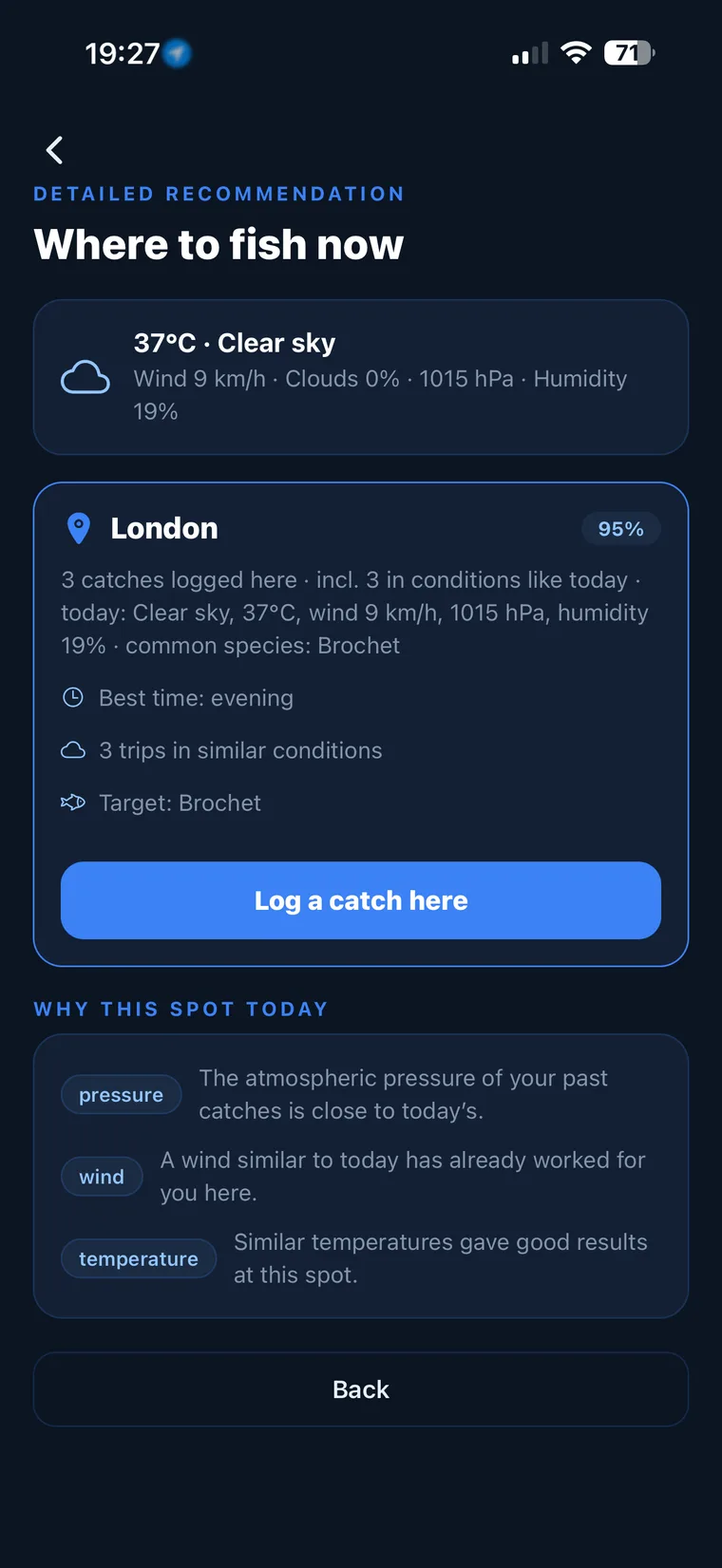
Not sure what to tie on?
Photograph your spot: CarnaFish reads the scene, cross-checks the conditions and gives you the zone, the lure and the retrieve. Free on iOS and Android.
Where it is no use
- Fast searching and active fish: when bass are hunting, they will take any shad, which is tougher and cheaper.
- Long-range straight-retrieve fishing: the lure has no action of its own, you are fishing an inert lump.
- Bottoms heaving with crustaceans: you feed the crabs for an hour.
- Long sessions with no storage: if you cannot put the lures back in their juice, you are throwing away the rest of the bag.
Gulp! Shrimp or a plastisol shrimp
The Reins Bubbling Shrimp plays a different card: soft plastisol, legs that genuinely move on the slightest displacement, and far better durability. On active fish or in slightly stained water, it is more versatile and cheaper to run.
The Gulp! Shrimp takes the edge exactly where mechanics are no longer enough: cold water, fish sitting still, short bites that do not convert, a mark already fished by five people before you. It is an effective last-resort lure, not an everyday one. Rigged on a light jig head, it gives its best.
Our guide to sea bass lure fishing explains when to switch to this kind of presentation. And if you are unsure what head weight to fit in front of a harbour mark, CarnaFish reads a photo of the spot and answers.
Key takeaways
- Its only real advantage is how long the fish holds it, not any long-range pulling power.
- Wait a second after the bite before setting the hook, or the product is pointless.
- No action of its own: slow draws on the bottom and five to eight second pauses.
- It is a consumable — it dries in the air and tears quickly, put it back in its juice after every session.
- A cold-water lure for fish sitting still; on active bass a classic shad does better and costs less.
FAQ
Does Gulp! really pull fish in from a distance?
Not on the scale people imagine. Its demonstrable effect on the water is retention in the mouth, longer than with inert plastisol, and converting fish that come over to inspect the lure. It is not a bait that brings a shoal in from twenty metres.
How do I store a Gulp lure?
In its tub or original bag, with its juice, closed after every session. Left in the air it hardens within a few hours. A dried lure can be partly rehydrated by soaking it for several hours, but it does not recover its initial softness.
When should I set the hook with this lure?
A good second after the first contact. The material encourages the fish to hold on, and an instant hookset loses you exactly the advantage you paid for.
What head weight for harbour sea bass?
3 to 5 g in a sheltered basin of under three metres, 7 to 10 g through the turn of the tide, and 12 to 20 g in an estuary with a strong run. Always choose the lightest that still lets you feel the bottom.
Is the Gulp Shrimp good value?
For heavy use, no. It tears quickly and spoils if it dries. Save it for difficult situations — cold water, fish sitting still, bites that do not convert — and keep classic shads for searching.
Can it be used in fresh water?
Nothing prevents it, and the retention logic works just as well. But in shallow fresh water, small coarse fish and crayfish destroy it very quickly, which makes it an expensive way to fish.
The full sea bass lure guideSeason-by-season strategy: which family of lure, when, and why.Go from theory to fish
CarnaFish reads your spot from a photo and gives you the game plan: zone, lure, retrieve. Free on iOS and Android.