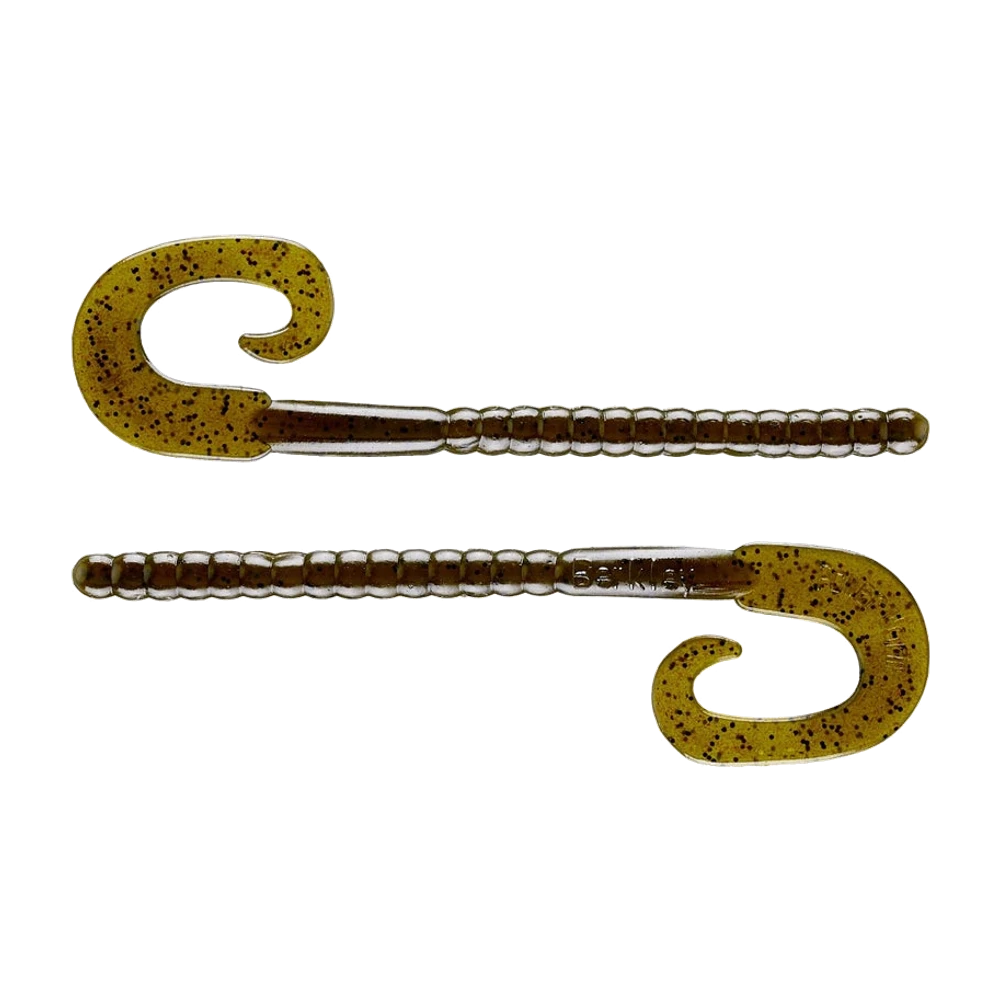
Berkley PowerBait Power Worm: the worm that put taste to work for anglers
Rather not fish it blind? Photograph your spot — CarnaFish cross-checks the conditions and points you the right way.
Before PowerBait, a soft plastic bait was judged purely on shape and colour. Berkley changed that in 1996 by injecting an amino-acid-based attractant directly into the plastic, designed to mimic the taste and smell of real prey. The bet paid off: independent studies from the time showed fish held onto a PowerBait lure noticeably longer than plain plastic — often enough to turn a hesitant bite into a solid hookset before the first turn of the reel handle.
An action that owes everything to its flat tail
Under the taste-and-scent marketing, the Power Worm remains, at its core, a classic ribbontail worm: a flat, thin paddle at the back that undulates on the slightest movement transmitted through the line, even during a free fall with no rod action at all. That combination — proven mechanical action plus chemical attractant — explains the product's staying power in a market where trends move fast.
Three rigs for three situations
Texas rig with a bullet weight
The simplest coverage rig: a 7-10 g bullet weight free-sliding on the line, a wide-gap hook rigged weedless through the body. Classic cast-and-retrieve near structure, letting the worm fall back to bottom regularly between hops.
Carolina rig
A fixed weight up the line, a leader around a metre long, Texas-rigged hook. This setup keeps the worm close to bottom over long distances, ideal for covering a flat or a gentle slope without endless recasting.
Shaky head
A light 3-7 g jighead with the worm nose-hooked, left free at the back. The shake technique — gently trembling the rod tip without moving the bait forward — works the tail in place, a deadly presentation on a holding, wary fish.
A rule that applies to every bottom-fished soft worm: the bite almost always comes on the pause, never during the hop. Resist the urge to reel continuously.
The mistake that costs bites
Setting the hook too fast on the first sensation. Thanks to the attractant, a fish often holds the worm longer than it would plain plastic — which buys time to wait for real tension before setting, rather than reacting to the first twitch of the line.
What size and colour to pick
The 7-inch size remains the most versatile, effective year-round and across most bass sizes. For colour:
- All-purpose, clear to stained water: Green Pumpkin, the single most trusted soft plastic colour across every brand.
- Dark water or low light: Black Grape, a dense, high-contrast silhouette.
- Stained water, vegetation: June Bug, a dark purple that shows up well without being too flashy.
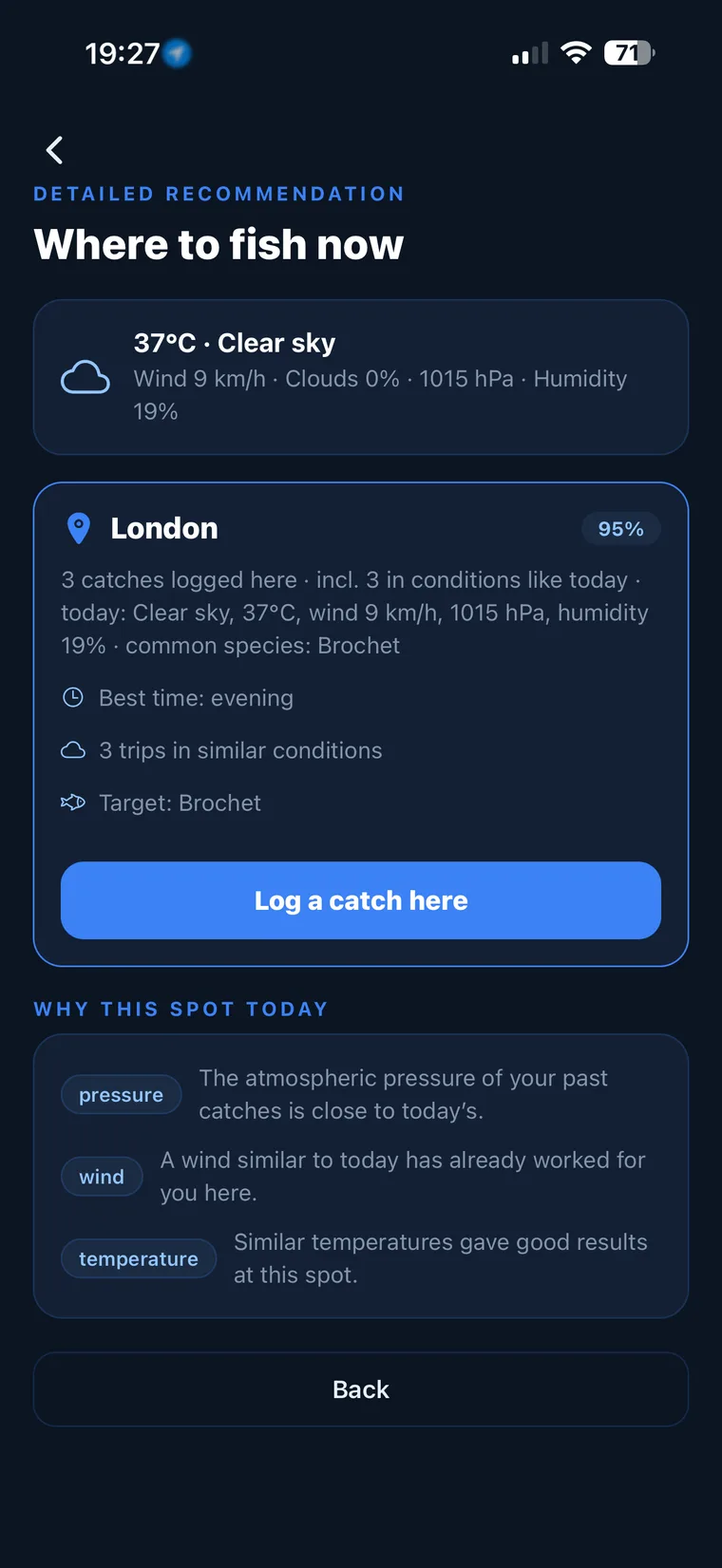
Not sure what to tie on?
Photograph your spot: CarnaFish reads the scene, cross-checks the conditions and gives you the zone, the lure and the retrieve. Free on iOS and Android.
Power Worm and other finesse approaches
The Power Worm leans on bulk, bottom contact and attractant rather than an ultra-subtle presentation. On heavily pressured water where even this worm stops working, it's worth downsizing to a Yamamoto Kut Tail Worm on a ned rig, or leaning on a dramatic vertical fall near specific structure with a Strike King Rage Tail Craw coming out of winter.
The best worm in the world won't make up for fishing the wrong zone. That's the whole point of CarnaFish: a photo of your spot, and the app identifies a zone and a rig suited to the day's conditions. For tackle basics and typical spots, our beginner's guide to bass fishing is a solid reference.
Key takeaways
- Attractant built into the plastic: fish hold onto the bait longer, giving you time to set the hook properly.
- Ribbontail that undulates on the slightest movement, even on a free fall.
- Three complementary rigs: Texas to cover water, Carolina for long distance, shaky head for a precise spot.
- 7-inch is the most versatile size, Green Pumpkin the all-purpose colour.
FAQ
Does the PowerBait attractant actually make a difference?
Yes, independent tests have shown fish hold onto a PowerBait lure noticeably longer than plain plastic, giving you more time to set the hook properly.
What rig should I start with on this worm?
A Texas rig with a bullet weight remains the simplest and most versatile: easy to cast, weedless out of the box, and effective across most spots.
What size Power Worm should I use?
The 7-inch size covers most situations. For bigger bass or very stained water, going up a size can help the bait stand out more.
Why am I still missing bites despite the attractant?
Usually because the hookset comes too early. Let the fish load real tension on the line before setting, rather than reacting to the first twitch.
Does the Carolina rig work with the Power Worm?
Very well, especially for covering large stretches of hard bottom or gentle slope while keeping the worm close to the ground through the whole retrieve.
What's a more subtle alternative if the Power Worm stops working?
A Yamamoto Kut Tail Worm on a ned rig offers a noticeably more subtle presentation, often effective on heavily pressured water.
The full bass lure guideSeason-by-season strategy: which family of lure, when, and why.Go from theory to fish
CarnaFish reads your spot from a photo and gives you the game plan: zone, lure, retrieve. Free on iOS and Android.