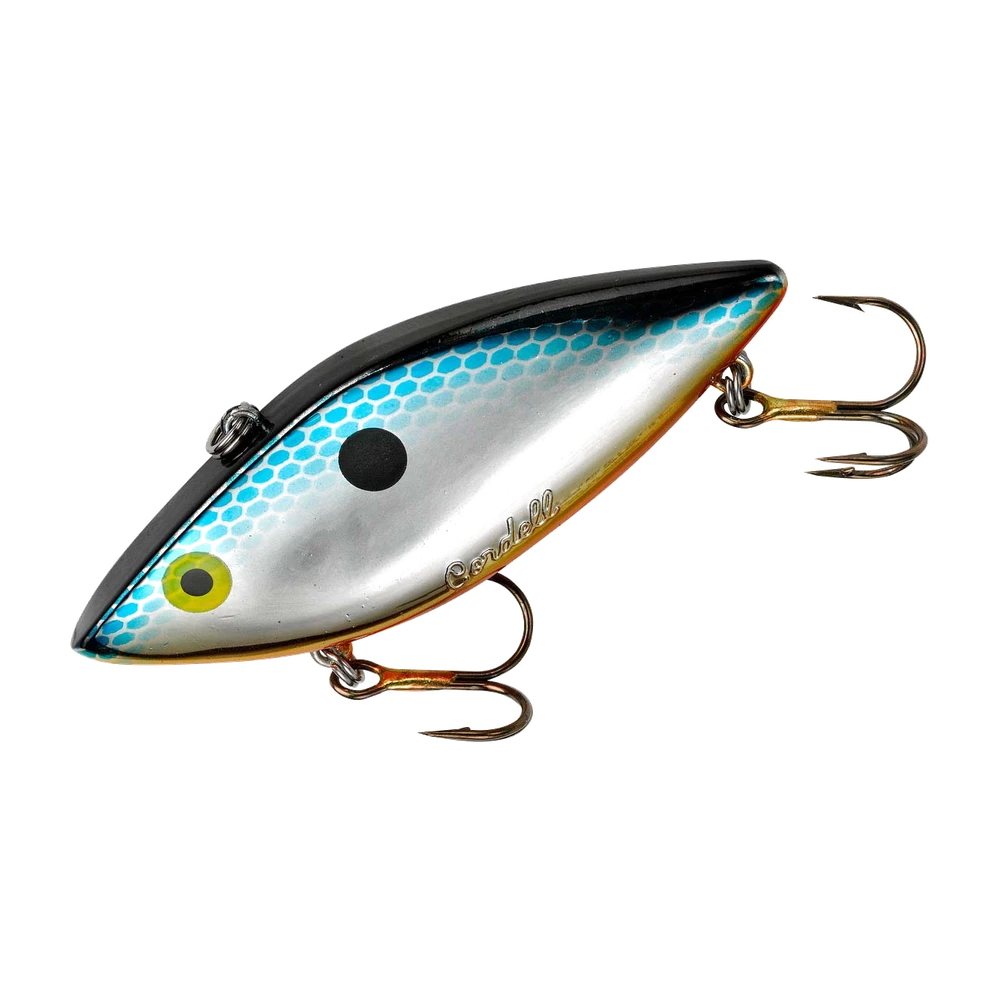
Cotton Cordell Super Spot: the vintage lipless crank that still holds up
Not sure this lure fits YOUR spot today? CarnaFish tells you in 10 seconds, from a photo.
Before soft plastic shads and modern crankbaits took over, there were already lures built to cover water fast with a strong vibration. The Super Spot belongs to that pioneering generation: it's one of the very first lipless crankbaits on the market, popularised in the US as early as the 1950s, and it still earns a spot in the boxes of zander and bass anglers who don't chase every new release.
Why such an old lure still holds up
A lure's longevity is never a marketing accident — it's measured by whether it keeps catching fish year after year. The Super Spot owes its staying power to one specific trait, rarer than it looks: a pronounced wobble on the free fall, different from the straight-line drop of many more recent lipless cranks. That trembling fall catches a predator's eye in a way many modern models, optimised purely for retrieve vibration, have somewhat lost along the way.
Four sizes by depth and species
- 2" (5 cm, 5.3 g): the most low-key size, suited to perch and smaller zander.
- 2.5" (6.5 cm, 7 g): versatile, a solid default choice.
- 3" (7.5 cm, 14 g): the reference size for zander and bass in normal conditions.
- 3.5" (9 cm, 14 g): reserved for bigger fish or when you want longer casts.
The technique that exploits the fall, not the retrieve
Unlike a standard fast cast-and-retrieve use, the Super Spot often gets its best strikes when you let it fall back on a tight line after a rip, especially over or through sparse vegetation. The lure wobbles its way through the weeds, and that fall frequently triggers a strike right when the fish least expects its prey to slow down. It's a technique with a long history in the US for bass along thin weed edges, and it works just as well on zander in France, especially along sparse lily pads or milfoil.
On an old-school lipless like the Super Spot, don't judge the lure by its retrieve. It's the fall, with its distinctive wobble, that triggers most of the strikes.
No complicated rigging
The Super Spot ships with its two factory #4 treble hooks already in place, no adjustment needed. That simplicity makes it an easy lure to carry without the rigging fuss of a soft plastic, which requires picking a jighead and hook every time out.
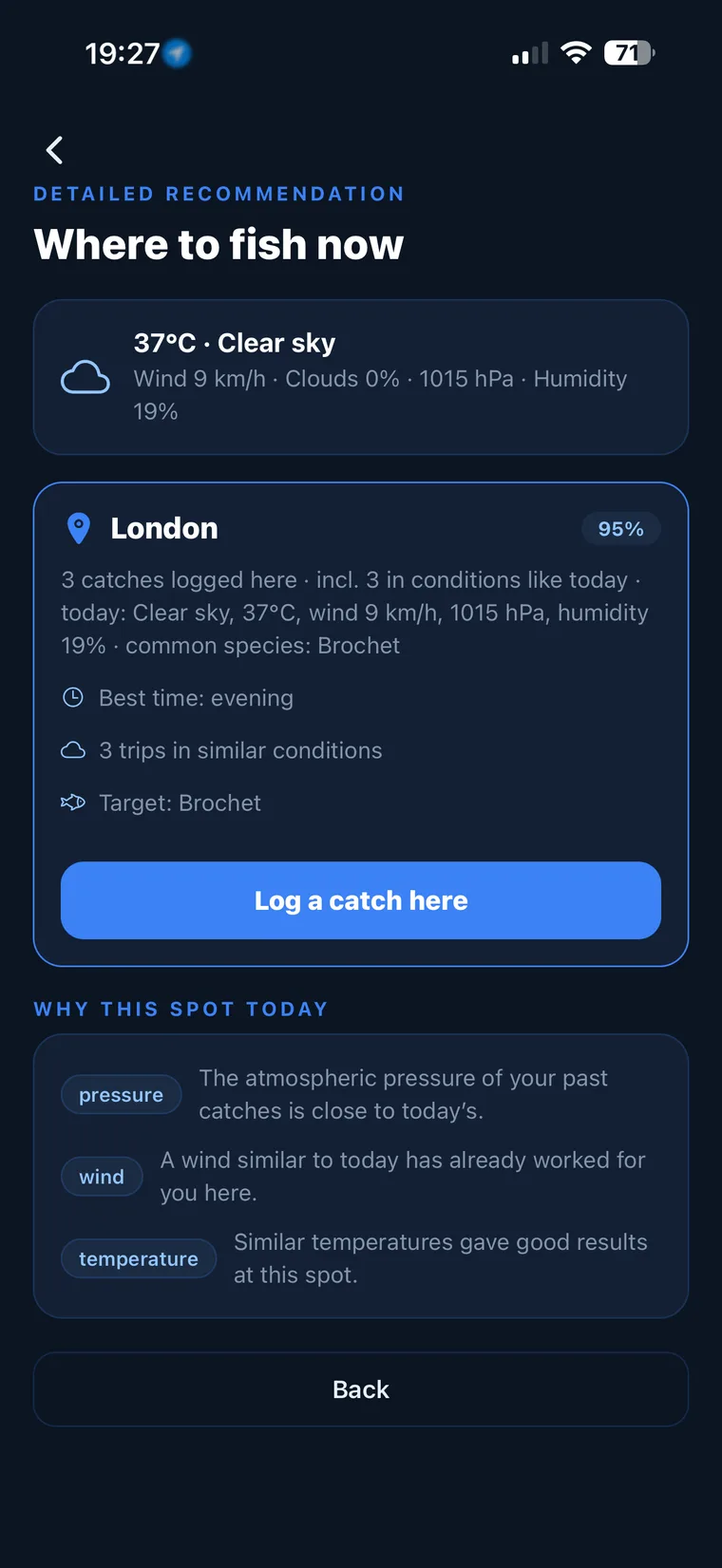
Not sure what to tie on?
Photograph your spot: CarnaFish reads the scene, cross-checks the conditions and gives you the zone, the lure and the retrieve. Free on iOS and Android.
Getting through cover without constantly snagging
The Super Spot's dense, compact body, combined with hooks sitting close to the body, lets it pass reasonably well through sparse vegetation by bending it slightly rather than snagging every time. In dense vegetation, though, switch to a weedless rig or a spinnerbait, which handles that kind of cover far better.
Colour by water clarity
- Clear water: a chrome tone that reflects light well without being too aggressive.
- Overcast skies: a crawfish pattern, particularly effective on bass around rock or weed cover.
- Murky water: a bright colour, to make up for reduced visibility with stronger contrast.
Zander and bass: two different traditions
For zander, the 3" Super Spot works well cast-and-retrieved with marked pauses near sparse weed edges, an approach covered in our beginner's guide to zander fishing. For bass, it's a still-relevant American classic for working weed edges in summer, and our beginner's guide to bass fishing covers the basics of finding those spots.
Knowing where the sparse vegetation worth targeting actually is, instead of guessing by eye, is exactly what CarnaFish simplifies: one photo of the spot is enough for the AI to read the scene and suggest a zone suited to this kind of technique.
Key points
- The Super Spot is one of the very first lipless crankbaits on the market, still effective today.
- Its strength lies in the wobble on the fall, not just retrieve vibration.
- 3" is the reference size for zander and bass in normal conditions.
- Passes through sparse vegetation without constantly snagging, contrary to common assumptions about older lipless cranks.
FAQ
Is the Cotton Cordell Super Spot still effective despite its age?
Yes, and that longevity is exactly what makes it a benchmark lure: its distinctive wobble on the free fall remains a strike trigger that many newer models have lost by focusing purely on retrieve vibration.
What size Super Spot should I choose for zander?
The 3" (7.5 cm) is the reference size in normal conditions. Save the 3.5" for bigger zander or when you want longer casts.
How do you work the Super Spot to trigger the most strikes?
Alternate rips and pauses, letting the lure fall back on a tight line, especially over sparse vegetation. Most strikes come during that wobbling fall phase.
Does the Super Spot work in dense vegetation?
No, it gets through sparse vegetation fine but snags in dense weed beds. In that case, a weedless rig or a spinnerbait is a much better fit.
Should I swap the Super Spot's factory hooks?
Not necessarily — the two factory #4 trebles are well matched to the lure's size. Just check their condition after repeated sessions around cover.
Does the Super Spot work for bass?
Yes, it's one of its historic uses in the US, especially along thin weed edges in summer, where its wobbling fall triggers reaction strikes.
The full zander lure guideSeason-by-season strategy: which family of lure, when, and why.Go from theory to fish
CarnaFish reads your spot from a photo and gives you the game plan: zone, lure, retrieve. Free on iOS and Android.