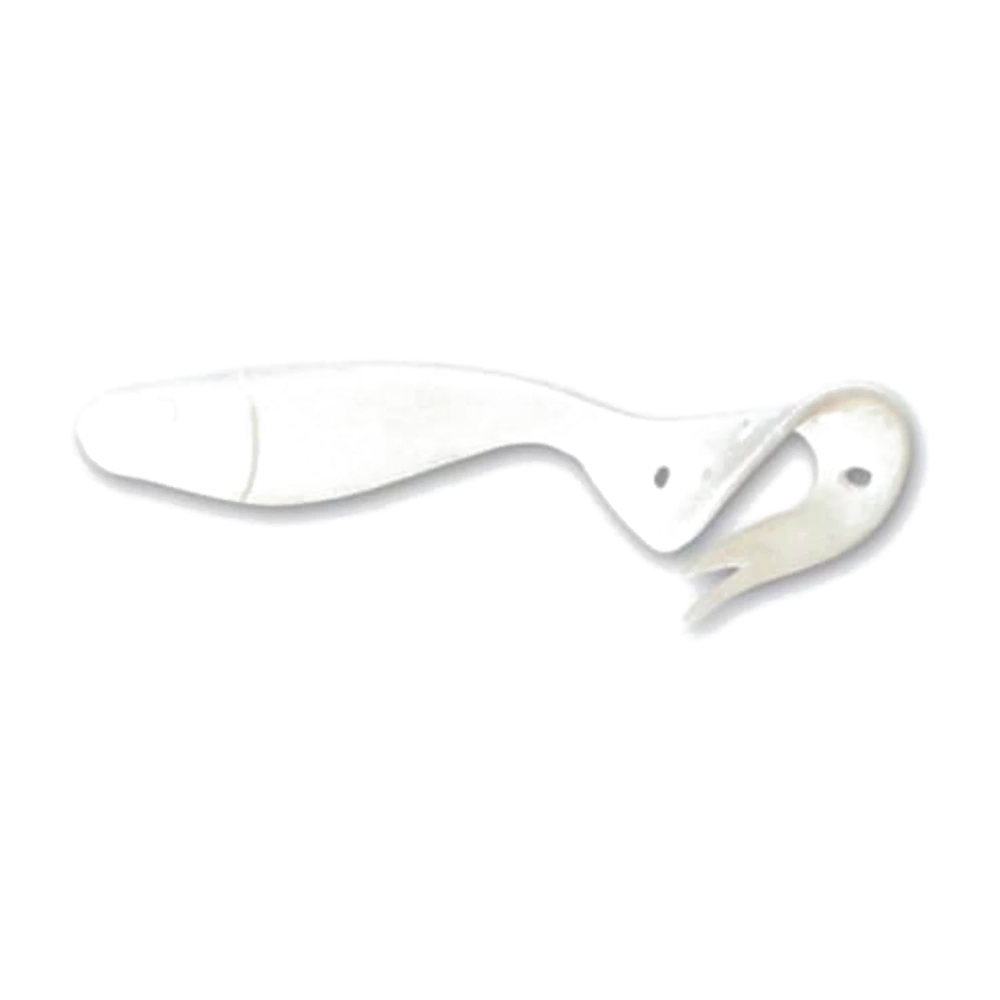
Delalande Sandra 23cm: the French classic gone giant for catfish
Not sure this lure fits YOUR spot today? CarnaFish tells you in 10 seconds, from a photo.
Before it was a catfish lure, the Sandra was first and foremost the French soft plastic, sold in a good dozen sizes since the days when soft lures were only just landing in French tackle boxes. The 23 cm size copies the exact same curl-tail silhouette as the small 7 cm model used for perch — just scaled up threefold, with everything that implies for gear.
A French classic gone giant
The Sandra's strength has never been an original shape, more its simplicity: a streamlined body and a curl tail that kicks the moment you pull, with no fussy tuning or exotic rigging. At 23 cm, that same principle holds, but the scale changes everything: a body this size moves a real volume of water, making it a perfectly readable lure for a catfish, even from a distance and in moderately stained water.
The right jighead weight for each situation
The bare Sandra 23cm body weighs 78 g, but the jighead sets the actual depth reached and the fall speed:
- Margins and shallow water (up to 3 m): a 40 g head is enough, for a fall still slow enough to suit an unhurried fish.
- Mid-water (3 to 6 m): 50 to 60 g, the default compromise on a spot you don't yet know.
- Deep water or strong current (past 6 m): up to 80 g to hold bottom contact without constantly recasting.
The rig that fits catfish fishing
The most common mistake on a lure this size is undersizing the hook to save money. For a 23 cm body, a strong single hook in 6/0 to 8/0 keeps the silhouette straight and the hookset clean on a fish whose jaw is nothing like a pike's or a zander's. Always check the split ring and swivel clip after every fight — they're the most frequent failure points on this XXL size, well before the soft body itself.
Two rigs dominate:
- A pole rig for vertical fishing, often paired with a slip-float drift setup from a boat, particularly effective for working a precise open-water spot.
- A classic cast-and-retrieve from the bank or a dock, when the spot is accessible and you're covering a wider area.
On a lure this size, catfish rarely strike on the first pass. Work the same spot two or three times before writing it off — it's almost always on the third or fourth pass that it happens.
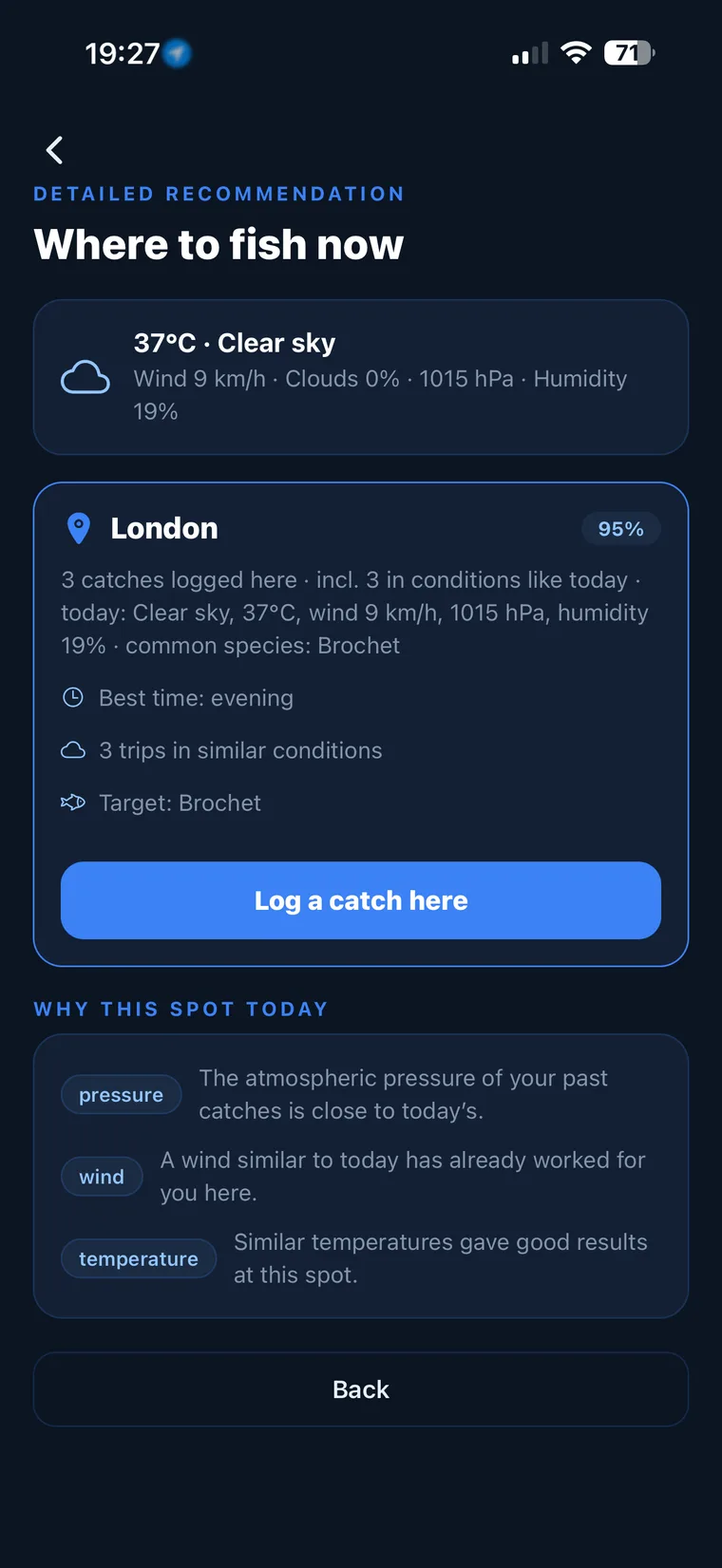
Not sure what to tie on?
Photograph your spot: CarnaFish reads the scene, cross-checks the conditions and gives you the zone, the lure and the retrieve. Free on iOS and Android.
Night settings for catfish
At night, slow the retrieve down even further compared to a daytime outing: catfish then hunt more by vibration and water displacement than by sight. A very slow straight retrieve, with long pauses at slope breaks or the mouths of dead channels, remains the safest bet. The best spots stay the same as by day — isolated obstacles, drop-offs, confluences — but activity is generally more decisive after sunset.
Colour: contrast before realism
Catfish pick out silhouettes and contrast far more than the fine detail of a specific colour:
- Black: the night-time go-to, a clean silhouette regardless of ambient light.
- Red or orange: a good compromise in slightly stained water, visible without being garish.
- Pearl white: best saved for clearer water or full daylight, for a softer contrast.
This XXL size pairs well with other big catfish lures: the Pro Shad Loaded 23cm from Fox Rage covers a similar bottom-hugging approach, while the Magic Swimmer 228 from Sebile suits open-water trolling better.
Working out which spots are worth pushing before casting a lure this size is exactly what CarnaFish does: a photo of the lake and its banks, and the AI points you toward the most promising areas for the day's conditions.
For the full strategy — spots, timing, gear — our complete catfish lure guide covers everything worth knowing before heading out.
Key takeaways
- 23 cm body, 78 g unrigged; jighead weight by depth: 40 g in margins, 50-60 g mid-water, up to 80 g past 6 m.
- A strong 6/0 to 8/0 single hook is mandatory to keep the silhouette straight.
- Work the same spot several times before writing it off.
- Contrast before realism: black at night, red/orange in stained water, pearl white in clear water.
FAQ
What jighead weight should I choose for the Sandra 23cm?
Between 40 and 80 g depending on depth: 40 g in margins and shallow water, 50-60 g mid-water up to 6 m, up to 80 g beyond that to hold bottom contact against current.
What hook size fits this XXL size?
A strong single hook in 6/0 to 8/0, matched to a catfish's jaw and sturdy enough to handle a long fight without bending.
Should I fish the Sandra 23cm on a pole rig or by casting?
Both work: a pole rig paired with a slip-float drift rig suits precise vertical fishing from a boat, while a classic cast-and-retrieve covers a wider area from the bank.
Does the Sandra 23cm work as well at night as by day?
Yes, and often better at night, provided you slow the retrieve down even further. Catfish then hunt more by vibration than sight, which suits the curl tail's heavy kick perfectly.
How many passes should I make over the same spot?
At least two to three before moving on. On a lure this size, catfish rarely strike on the first pass, especially if they're not in an active feeding phase.
What colour should I favour in stained water?
Red or orange, tones that carry good contrast without being too aggressive. Save black for night outings and pearl white for clearer water.
The full catfish lure guideSeason-by-season strategy: which family of lure, when, and why.Go from theory to fish
CarnaFish reads your spot from a photo and gives you the game plan: zone, lure, retrieve. Free on iOS and Android.