Wels Catfish Fishing: Tackle, Techniques and Where to Find Them
The wels catfish is by far the largest freshwater fish you can hook in European waters. A one-metre fish is routine; two metres is nothing exceptional on the big rivers. That size changes everything — tackle, safety, handling. Here's how to approach it without being caught out.
Understanding the wels catfish
The wels is a fish of the bottom, of structure and of smell. Unlike pike, which hunt by sight, it locates prey with its barbels and its lateral line — which is why it fishes so well at night, in stained water, and in holes where visibility is zero.
Two practical consequences:
- It doesn't patrol at random. It occupies precise lies and returns to them. Find a lie and you've found fish for the long term.
- Vibration matters more than colour. A lure that pushes water will be detected from far further away than a subtle one.
It's also a fish that switches on in waves: long inactive spells, then short windows where everything happens at once. Patience is part of the technique.
Tackle: this is not where you economise
This is the one area you can't improvise. A pike outfit will not hold.
- Rod: 2.40 to 2.70 m, rated 100-200 g for lure fishing. A catfish rod is short and above all very powerful in the butt — that's what does the work of turning the fish.
- Reel: size 8000 to 10000, or a heavy baitcaster. The drag must handle 10 kg without flinching.
- Braid: 40 to 60/100. That isn't excessive: you're fishing tight to abrasive structure.
- Leader: 80 to 100/100 fluorocarbon, 1 to 1.5 m. A wels has no cutting teeth but a mouth like sandpaper that saws through anything fine.
- Hooks: heavy-gauge singles or trebles, never standard tackle. A hook that opens means a lost and injured fish.
- Gripping gloves: essential. Landing a wels bare-handed strips the skin off your fingers.
The three main techniques
1. Lure fishing
The most accessible from the bank. A big shad of 15 to 25 cm on a heavy jig head (30 to 80 g), worked slowly in contact with the bottom. Strong-vibration lures — paddle tails, bladed rigs — are the ones to favour.
Work a single lie for a long time: the wels doesn't move much, so it's up to you to go to it and make it commit.
2. Clonking
The signature technique, from a boat. The clonk is a wooden tool you strike against the surface; it produces a deep "plop" that intrigues the catfish and brings it up. The lure or bait is presented directly below, vertically, while the boat drifts over a hole.
It's highly effective on the big rivers, but it demands a boat and some practice to find the right rhythm.
3. Bottom fishing
A weighted rig with bait placed on an identified lie, and a lot of patience. It's the simplest technique to set up and often the most productive at night.
Note that night fishing and the use of live bait are strictly regulated and vary by region. Check the local rules before you go.
Where to find wels catfish
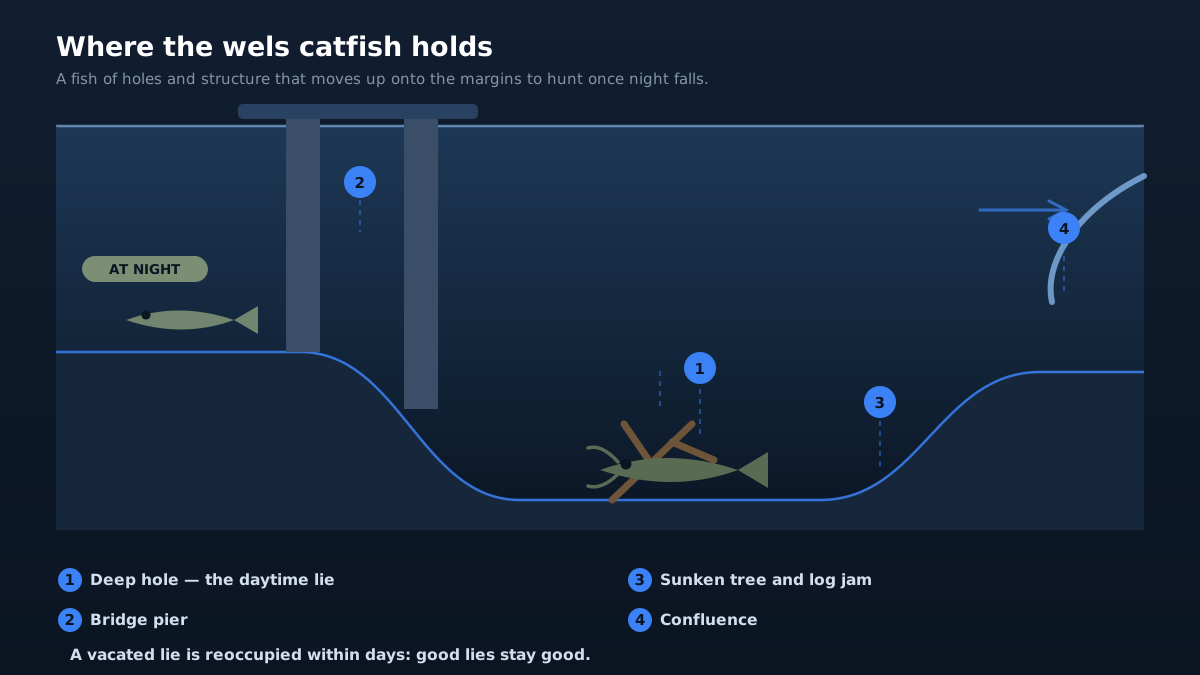
Wels occupy the same types of lie everywhere, and they can be identified before you even cast — exactly the exercise described in our guide on how to read a fishing spot.
- Holes: the number one lie. The deepest zones of a stretch concentrate the big fish during the day.
- Bridge piers: vertical structure, broken current, depth. A magnet.
- Sunken trees and log jams: hard to fish, therefore rarely fished, therefore full.
- Confluences: where two currents meet, food accumulates.
- The edges of holes at night: wels move up onto the shallows to hunt once the light fades.
A wels taken off a lie leaves a vacancy. Another will occupy it within days: good lies stay good.
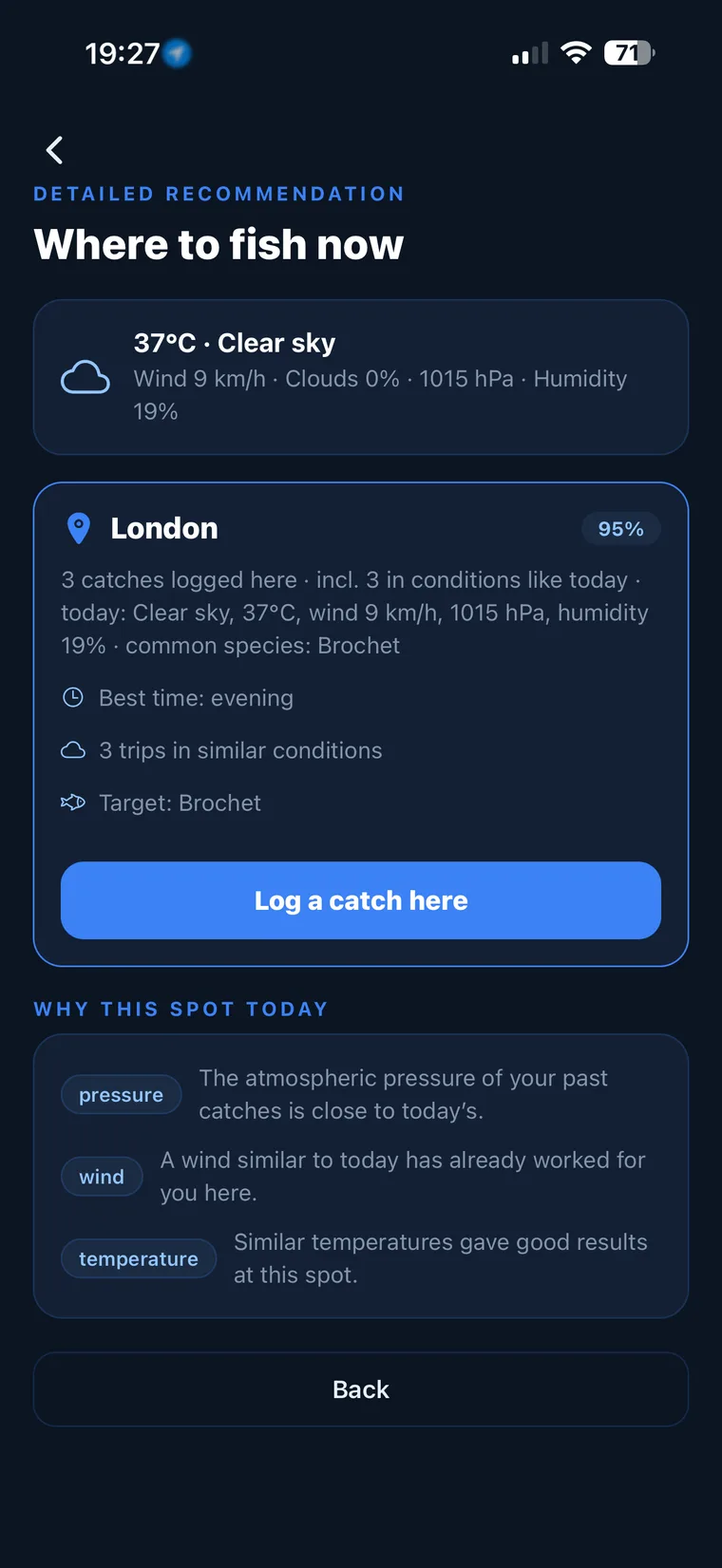
Not sure what to tie on?
Photograph your spot: CarnaFish reads the scene, cross-checks the conditions and gives you the zone, the lure and the retrieve. Free on iOS and Android.
Wels catfish season by season
- Spring: the water warms and activity restarts. The pre-spawn period is often very productive, with fish on mid-depth zones.
- Summer: the best season. Warm water, metabolism at its peak, intense nocturnal activity. This is the time to fish early, late and at night.
- Autumn: fish feed up before winter and gradually group onto the holes. Big lure volumes.
- Winter: activity drops right off. Wels pack into the bottom of the holes and barely move. Extremely slow retrieve, long pauses. Bites are rare but often big.
The fight and handling
This is where catfish fishing genuinely stands apart.
During the fight: don't try to win line by force. A wels heads for the nearest snag; your job is to work it sideways and tire it in open water. Keep the rod low and apply pressure laterally rather than upwards.
Landing: never lift a wels by the gills or by the tail alone. Slide a gloved hand into the lower jaw and support the belly. A fish over a metre should stay in the water as much as possible.
Releasing: hold it facing into the current until it swims off under its own power. A wels released too soon rolls over and sinks. On a big fish, that can take several minutes.
Never land one alone on a slippery bank. It's the leading cause of accidents in this kind of fishing.
The mistakes that cost fish
- Undersizing the tackle: a pike outfit breaks, or worse, lets a fish swim off with the lure.
- Working the lure too fast: the wels is powerful but not quick. A lure that races past simply doesn't register.
- Leaving a lie too soon: activity comes in windows. An hour without a bite doesn't mean nobody's home.
- Fishing too high: as with zander, if you can't feel your weight touch down, you're passing over them.
- Neglecting the conditions: water temperature, level and colour dictate activity entirely. That's exactly where CarnaFish, the AI fishing app, saves time: photograph your spot and the AI cross-checks the scene with the conditions of the moment to tell you where to insist and how to work the lure.
Tempted by other predators? The reasoning about deep lies is very close to that of zander lure fishing, and the choice of big volumes echoes picking a pike lure in autumn.
Key takeaways
- Oversized tackle, no exceptions: it's a matter of safety and of respect for the fish.
- The wels is a fish of holes, structure and darkness.
- Vibration and slowness beat colour and speed.
- Summer is the peak; winter is very slow but produces the biggest fish.
- Gloves, careful catch and release, and never alone on a difficult bank.
FAQ
What tackle do I need for wels catfish on lures?
A 2.40 to 2.70 m rod rated 100-200 g, an 8000-10000 reel, 40-60/100 braid and an 80-100/100 fluorocarbon leader. Add heavy-gauge hooks and a pair of gripping gloves. A pike outfit won't hold: the wels breaks undersized tackle, and a fish that swims off with a lure in its mouth rarely survives.
What lure works for wels catfish?
A big shad of 15 to 25 cm on a 30 to 80 g jig head, worked slowly in contact with the bottom. Favour strong-vibration lures — wide paddle tails, blades — because the wels detects with its lateral line far more than by sight. Colour matters little compared with depth and vibration.
Where do wels catfish hold in a river?
In the holes, against bridge piers, in sunken trees and log jams, and at confluences. These are precise lies they occupy for long periods. At night they move up onto the edges of holes and the shallows to hunt.
When is the best time of year for wels catfish?
Summer, without question: warm water pushes their metabolism to its peak and their nocturnal activity is intense. Pre-spawn spring and autumn are also good. In winter they pack into the bottom of the holes and become very difficult, though the rare bites often involve big fish.
Do wels catfish feed at night?
Yes, and in summer it's often the best window. They locate prey with their barbels and lateral line, so darkness is no obstacle. Be aware, though, that night fishing is strictly regulated and its permissibility varies by region and by venue — always check the rules in force.
How do I land and release a wels catfish safely?
Never by the gills or by the tail alone. Slide a gloved hand into the lower jaw and support the belly with the other. Keep the fish in the water as much as possible, especially beyond a metre. To release, hold it facing into the current until it swims off by itself — on a big fish that can take several minutes.
Can you catch wels catfish from the bank?
Yes, and it's the usual way to start. Look for lies that give you depth within casting range: bridge piers, quays, below weirs, outside bends. Limited access to the big holes is offset by fishing early, late or at night, when the wels moves up onto the margins.
Are wels catfish dangerous?
For the angler, the risk isn't the fish but the situation: slippery bank, very heavy fish, fighting in the dark. Never fish a difficult mark alone, wear gloves and carry a light. Wels don't attack humans, but a 50 kg fish thrashing at the edge of a steep bank is a genuine injury risk.
Go from theory to fish
CarnaFish reads your spot from a photo and gives you the game plan: zone, lure, retrieve. Free on iOS and Android.