Delalande Sandra 12 cm: the lure that outlasted every trend
The right lure in the wrong spot still catches nothing. CarnaFish spots the zone that works, from a single photo.
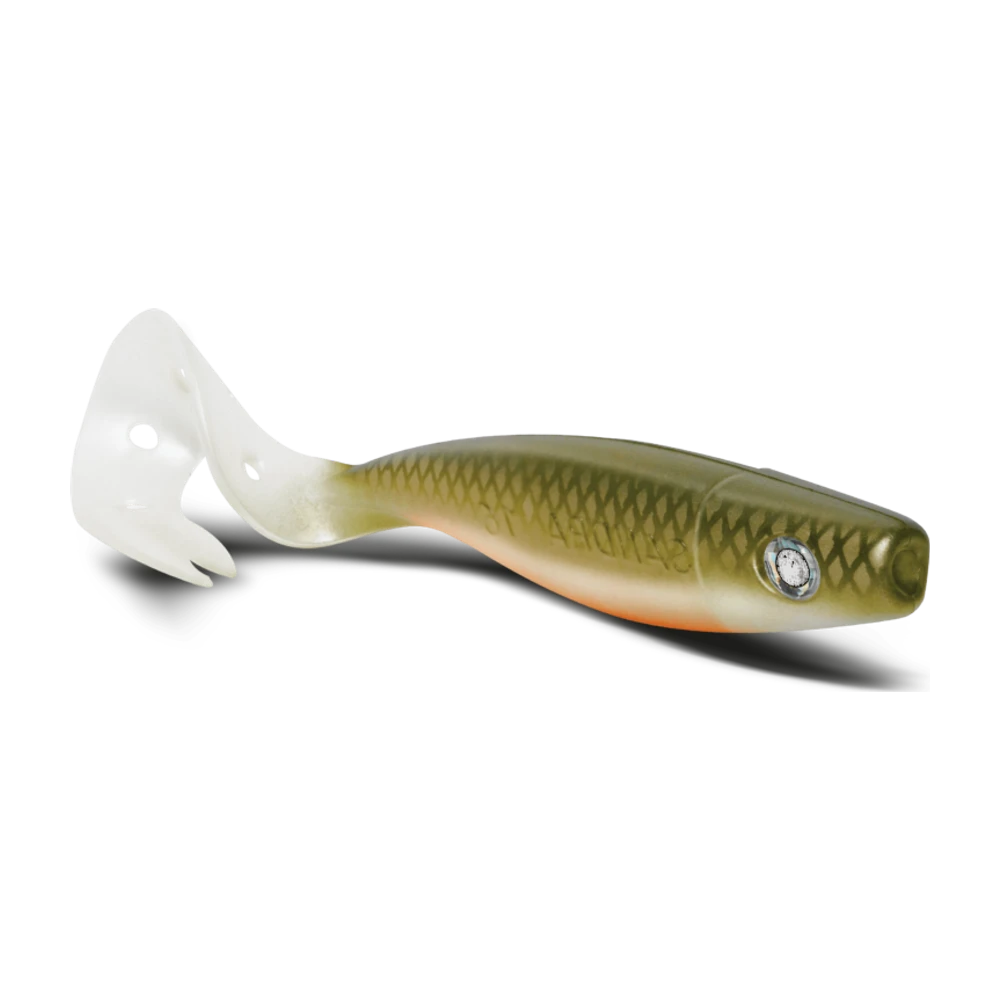
If you learned predator fishing from someone who'd been at it a while, there's a decent chance a Sandra turned up in their box at some point. This soft plastic, designed by Delalande in the 1980s, has outlasted trend after trend without ever really disappearing from shelves — which, in a category where new releases pile up every season, says more about its actual fish-catching ability than about nostalgia alone.
A design that hasn't aged a day
The Sandra's body is fairly stocky, ending in a long comma-shaped tail, perforated with holes and lightly serrated at the tip. That specific shape — a triangular-section body and comma tail — generates a low-frequency vibration you can feel even at very slow retrieve speeds, something many modern, slimmer, faster-oriented shads struggle to match on a slow retrieve. On a zander sitting mid-water or a pike in cold water, that ability to vibrate without needing speed is a genuine edge.
The 12 cm size at roughly 11 g unrigged is the most versatile in the Sandra range, which also comes in smaller sizes and much bigger ones for bulk presentations.
The jighead does all the depth work
As with most soft plastics of this type, it's the jighead weight that sets depth and fall speed, not the body itself.
- Margins and shallow water (1-2 m / 3-6 ft): a 7-10 g head is enough, for a slow fall suited to an unhurried fish.
- Mid-water (2-3 m / 6-10 ft): step up to 10-15 g, the most common setup for working a standard spot.
- Deep water or current (3-5 m / 10-16 ft): 15-20 g to stay in contact with bottom without constant recasting.
The retrieve that built its reputation
The Sandra is fished above all on a slow straight retrieve, almost at the edge of where the tail would stop kicking. That's counterintuitive if you're used to more modern shads built for a faster pace, but it's exactly where this lure shines.
- Slow straight retrieve near bottom: the baseline, particularly effective on zander early and late in the season.
- Short pulls followed by a pause: two or three cranks, a one-to-two-second pause. The comma tail keeps kicking lightly even at rest.
- Avoid a fast retrieve: it simply isn't this lure's game — the tail loses its vibration past a certain speed.
Field rule: if the Sandra isn't producing, the first thing to check isn't colour — it's speed. Slow down before you switch lures.
The rigging detail not to overlook
A hook sized to a 2/0 keeps the silhouette straight on the 12 cm body and delivers a clean hookset. A common mistake is undersizing the hook to gain subtlety: the lure then bends around the jighead, the tail loses its natural alignment, and the Sandra's signature vibration falls apart.
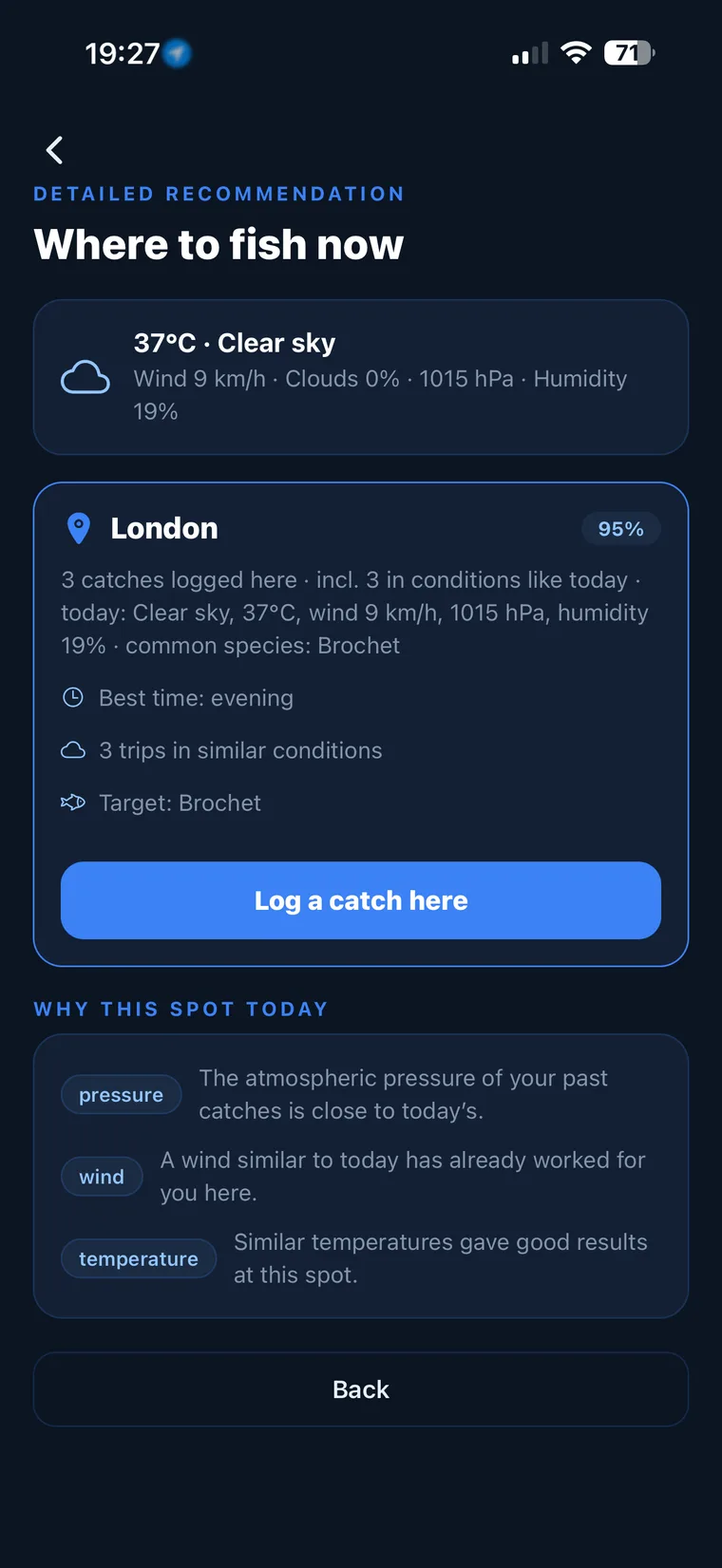
Not sure what to tie on?
Photograph your spot: CarnaFish reads the scene, cross-checks the conditions and gives you the zone, the lure and the retrieve. Free on iOS and Android.
Colour by conditions
- Clear water: a natural perch or roach tone, consistent with the dominant local prey.
- Stained water: chartreuse or orange, to stay visible without losing credibility.
- Very murky water: black, a silhouette that reads by contrast rather than resemblance.
A classic against modern shads
Compared with a shad built for more versatile speed like the Squad Shad 65, the Sandra stays superior in one specific register: vibration at very low speed, in cold water or on inactive fish. It loses the edge of versatility, though, as soon as you need to speed up on an aggressive fish — that's where a more modern shad takes back the advantage. Keeping both in the box covers the full range of situations without compromise.
For zander specifically, this lure's historic target, our beginner's guide to zander lure fishing covers the spots where a slow retrieve like the Sandra's makes the difference. And rather than guessing at the right jighead weight on unfamiliar water, CarnaFish reads a photo of your spot and suggests a starting depth and cadence.
To sum up
- 12 cm body, 7-20 g jighead depending on depth: the most versatile size in the Sandra range.
- The perforated comma tail vibrates even at very low speed, a rare trait in this style of retrieve.
- Slow straight retrieve or short pull-and-pause; avoid a fast retrieve that doesn't showcase the lure.
- Use a 2/0 hook to keep the silhouette straight — never undersize it to "gain subtlety."
FAQ
How long has the Delalande Sandra been around?
The lure was designed by Delalande in the 1980s and has barely changed since, evidence of its lasting effectiveness in a category where new releases turn over every season.
What jighead should you pick for the Sandra 12 cm?
Between 7 and 20 g depending on depth: 7-10 g in the margins, 10-15 g mid-water, 15-20 g past 3 m (10 ft) or in current.
Why isn't the Sandra working for me?
The most common cause is a retrieve that's too fast. The perforated comma tail is built to vibrate at very low speed — slow down before considering a different lure.
Is the Sandra a good lure for zander?
Yes, it's historically one of its strongest uses, particularly on a slow retrieve near bottom early and late in the season, when zander are reluctant to chase fast-moving prey.
What hook size should you use with the Sandra 12 cm?
A hook sized to a 2/0 keeps the silhouette straight and delivers a clean hookset. Too small a hook bends the lure around the jighead and throws off the tail's alignment.
Is the Sandra outdated compared with modern shads?
No, it stays superior in one specific register: vibration at very low speed in cold water. It does lose versatility once you need to speed up on an active fish, where a more modern shad takes the advantage.
The full pike lure guideSeason-by-season strategy: which family of lure, when, and why.Go from theory to fish
CarnaFish reads your spot from a photo and gives you the game plan: zone, lure, retrieve. Free on iOS and Android.