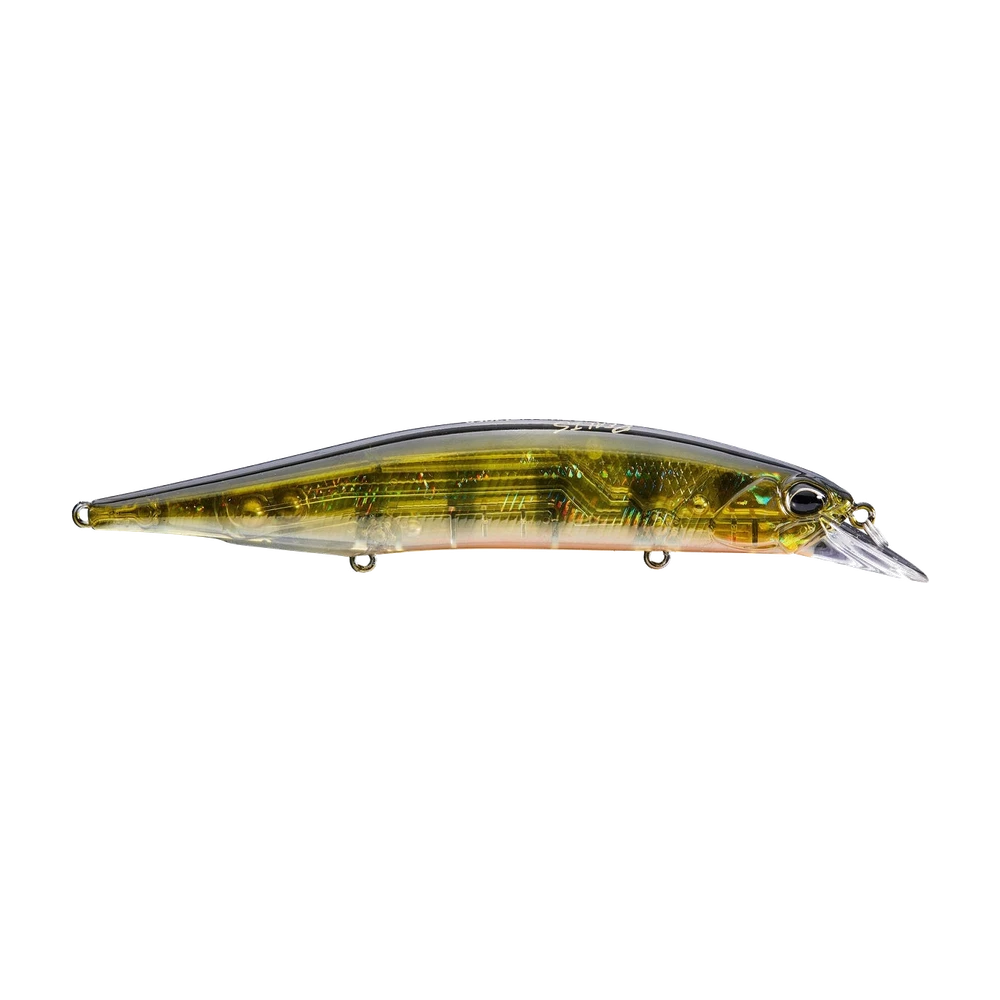
DUO Realis Jerkbait 120SP: the fix for zander that follow but don't bite
Before tying this one on, it helps to know if the spot actually calls for it. CarnaFish reads the scene from a photo.
You know the moment: a zander tracks your lure right to the boat, noses up against it, then peels off without touching it. It happens with any jerkbait, but it happens noticeably less with DUO's Realis Jerkbait 120SP. The reason comes down to a manufacturing detail few lures share: a tracked ball-bearing system running on an internal rail, giving the lure an almost unnervingly consistent glide and a dead-still suspend at rest. That kind of stability is exactly what turns a hesitant follow into a committed strike.
The system that makes the difference
Most jerkbaits use a simple loose ball in a chamber for casting weight and balance. DUO instead built a rail that guides the ball along a fixed path: the centre of gravity barely shifts during the swim, which stabilises the lure even mid-water, at a full stop. In practice, the 120SP can hang suspended, perfectly horizontal, for several seconds without drifting or rolling onto its side — a common failure point on budget jerkbaits.
For zander, a species with a reputation for inspecting a bait at length before committing, that dead-still hang matters almost more than the action itself.
Depth built for mid-water
The Realis Jerkbait 120SP runs between 1 and 1.8 m (3-6 ft), a range that lines up almost exactly with where zander sit mid-water or where pike hold on a shallow drop-off. Two starting points:
- On a gentle drop-off (1-2 m): a slow cadence, two short twitches followed by at least a 3-second pause. This is where the lure's suspend earns its keep.
- Open water over a baitfish shoal: work it more steadily, with shorter pauses, to cover ground and trigger a following fish into a reflex strike.
The cadence that unlocks hesitant fish
The classic mistake is working the Realis like a generic jerkbait, with twitches too close together that never let it truly settle. Its whole strength rests on that stillness.
- Two short, sharp twitches.
- A 3-5 second pause, longer still in cold water.
- Watch the line during the pause: a zander take often shows as a subtle twitch, not a hard pull.
Field rule: on a fish that follows without biting, lengthen the pause before you reach for a different lure. Nine times out of ten, that's the setting that was missing.
Rigging: leave the split rings alone
The stock size 5 trebles are well matched to the 12 cm body and don't need replacing unless worn. The real point of attention is the split rings: they're factory-reinforced to handle big zander and pike without opening up. Swapping them for thinner rings to "gain subtlety" is a false economy that tends to end with a lost fish on the hookset.
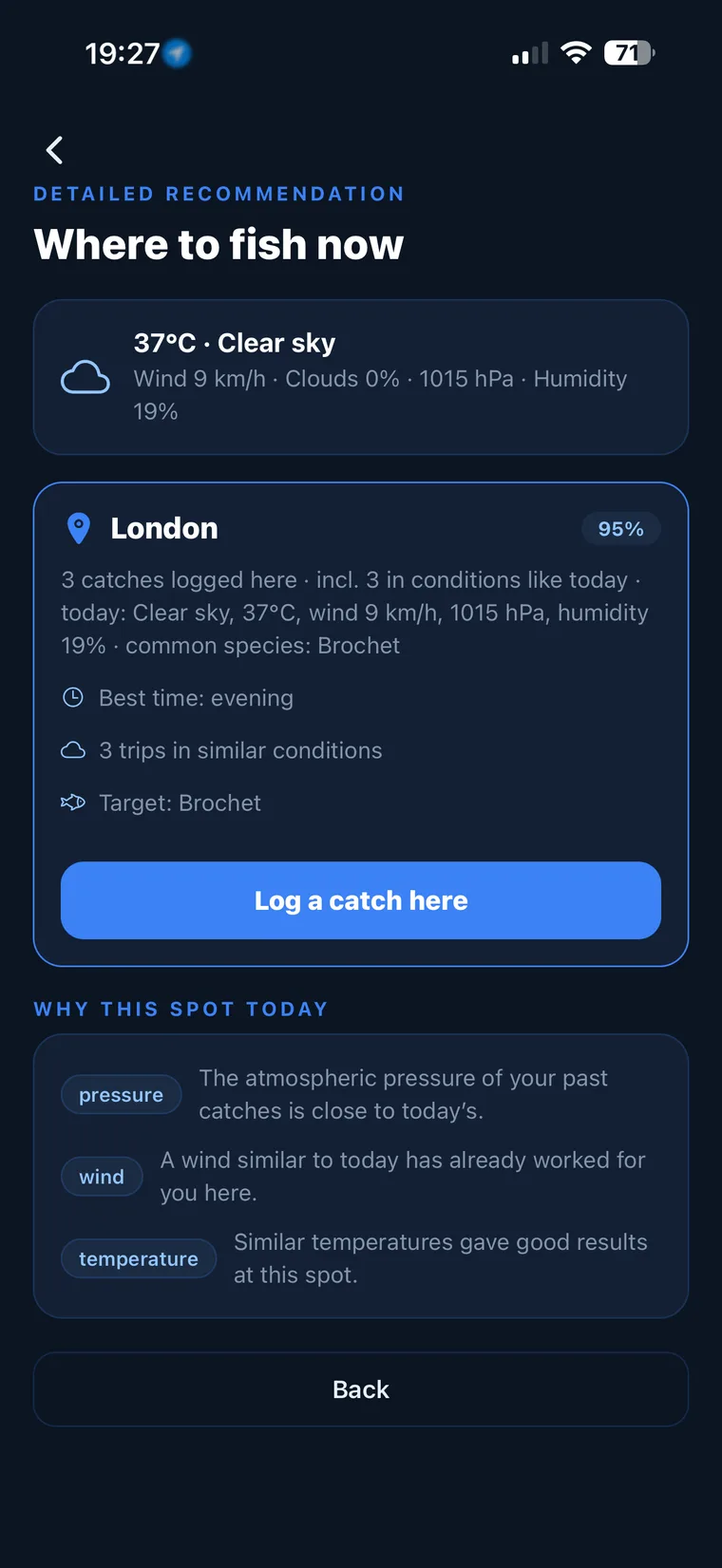
Not sure what to tie on?
Photograph your spot: CarnaFish reads the scene, cross-checks the conditions and gives you the zone, the lure and the retrieve. Free on iOS and Android.
Colour by water clarity
- Clear water: a translucent silver tone, so you don't oversell the lure's presence to a wary fish.
- Slightly stained water: a chartreuse-back pattern, keeping the flanks understated while staying visible from a distance.
- Low light or darker water: a dark tone, whose silhouette reads better against ambient light than realism does here.
Against the X-Rap: two schools of jerkbait
The Rapala X-Rap Jerkbait 10 leans on a violent, unpredictable side dart to trigger a reaction strike. The Realis 120SP does the opposite: a wide, steady glide and, above all, unmatched stability at rest, reassuring a hesitant fish rather than startling it. On a zander that follows without biting, the Realis is usually the right call; on an active pike that needs winding up, the X-Rap has the edge. The two complement each other more than they compete.
If zander is your main target, our beginner's guide to zander lure fishing covers the spots and seasons where this kind of slow cadence works best. And rather than guessing blind which setting to try first on an unfamiliar spot, CarnaFish reads a photo of your water and suggests a starting zone and retrieve — a solid jumping-off point before you dial in the pause that unlocks the day's fish.
The point that matters most
- 12 cm body, 18 g, running depth 1-1.8 m: built for mid-water and shallow drop-offs.
- The tracked ball-bearing system gives an unmatched dead-still suspend — exploit it with long pauses.
- Don't replace the stock split rings, factory-reinforced for big fish.
- Complementary to the X-Rap: Realis to reassure a hesitant fish, X-Rap to surprise an active one.
FAQ
Why does zander follow my lure without biting?
It's very common with a jerkbait worked too fast: the fish never gets time to commit. Stretch the pause to 3-5 seconds with the Realis Jerkbait 120SP before considering a different lure.
How deep does the Realis Jerkbait 120SP run?
Between 1 and 1.8 m (3-6 ft) depending on cadence, which matches well with zander holding mid-water or pike sitting on a shallow drop-off.
Should you change the hooks on the Realis 120SP?
No, unless visibly worn: the stock size 5 trebles are well suited to the 12 cm body, and the same goes for the reinforced split rings, which should never be swapped for thinner ones.
Is the Realis Jerkbait 120SP better than the X-Rap for zander?
Not better, different: its dead-still suspend reassures a hesitant fish, which fits zander behaviour well. The more erratic X-Rap suits an active pike that needs surprising.
What cadence unlocks a difficult zander?
Two short twitches, then a 3-5 second pause minimum, longer still in cold water. That pause, more than the lure itself, is often what makes the difference.
What colour should you pick in very clear water?
A translucent silver tone, which stays subtle against a wary zander or pike. Save the bright or chartreuse-back patterns for stained or murky water.
The full pike lure guideSeason-by-season strategy: which family of lure, when, and why.Go from theory to fish
CarnaFish reads your spot from a photo and gives you the game plan: zone, lure, retrieve. Free on iOS and Android.