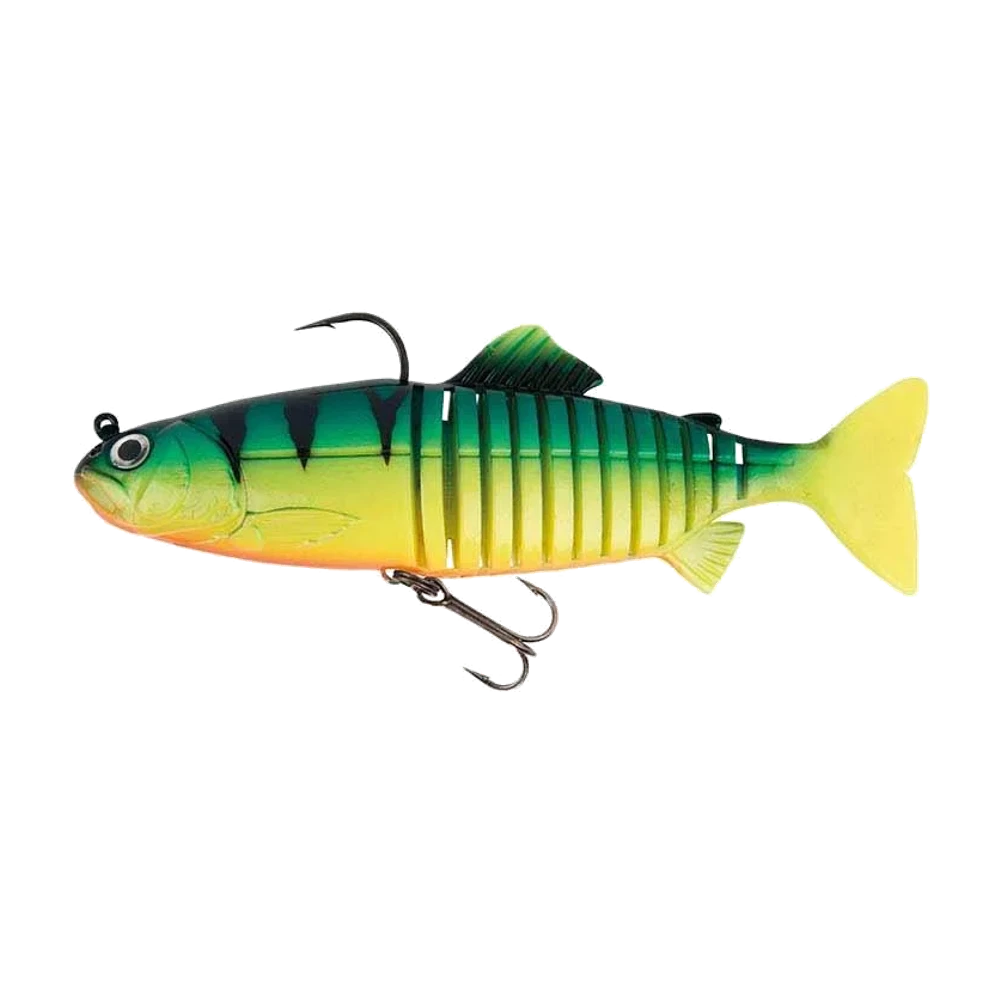
Fox Rage Replicant: the realistic shad that survives pike teeth
Rather not fish it blind? Photograph your spot — CarnaFish cross-checks the conditions and points you the right way.
Most soft shads share the same flaw: they are destroyed after a handful of fish. On pike it is worse still — a single well-placed take is enough to tear the body and turn a ten-euro lure into waste. The Fox Rage Replicant was built around that problem, with two answers: a denser material, and versions supplied already rigged, where an internal harness absorbs part of the load.
Realism, and what it is actually worth
The Replicant is known for its photorealistic finishes: printed scales, gradients, a raised eye. It is worth being honest about what that brings.
- In clear water, on a fish that follows without committing, realism can make the difference at the moment of final inspection. That is where it counts most.
- In stained water or on a fast search, it is next to useless: the fish reacts to silhouette and vibration, not to detail.
In other words, the finish is a real argument but limited to specific conditions. What genuinely makes the lure's value is its construction.
The rigged versions: the real contribution
Fox Rage offers the Replicant in ready-to-fish versions, supplied with an internal harness and hooks fitted.
What that changes:
- The rig is balanced from the factory. The lure swims straight from the first cast, with no need to adjust jig head positioning.
- The harness spreads the load. During a take, the pull passes through the harness rather than only the plastic, which markedly extends the lure's life.
- Hooking is better in the larger sizes, because the hooks sit in the right places rather than bunched at the front.
What it costs: you lose flexibility. You can no longer adjust the weight to change depth, nor switch to weedless. On a cluttered spot, the unrigged version on a Texas hook remains the right option.
Choosing the size
- 7.5 to 10 cm: zander, perch, and pike in cold water when you need to cut the volume.
- 12 to 15 cm: the heart of the range for pike, and the size covering the most situations.
- 18 to 23 cm: big pike on large waters. Dedicated tackle is mandatory, and the bite count drops markedly in exchange for a higher average size.
The retrieve
Nothing exotic, and that is a quality: the Replicant fishes like a classic shad.
- Slow straight retrieve near the bottom or along a drop-off. It is the retrieve that takes the most pike, and it mainly demands patience.
- Lift-and-drop to cover the water column: two or three turns of the handle, then a pause during which the lure falls back, wobbling.
- Bottom contact between two lifts: on clean ground, letting the lure touch before setting off again often triggers a fish holding there.
Field rule: with a shad of this volume, slow down more than your instinct suggests. A pike that moves for a big lure does so because it has time to watch it coming — not because it is racing.
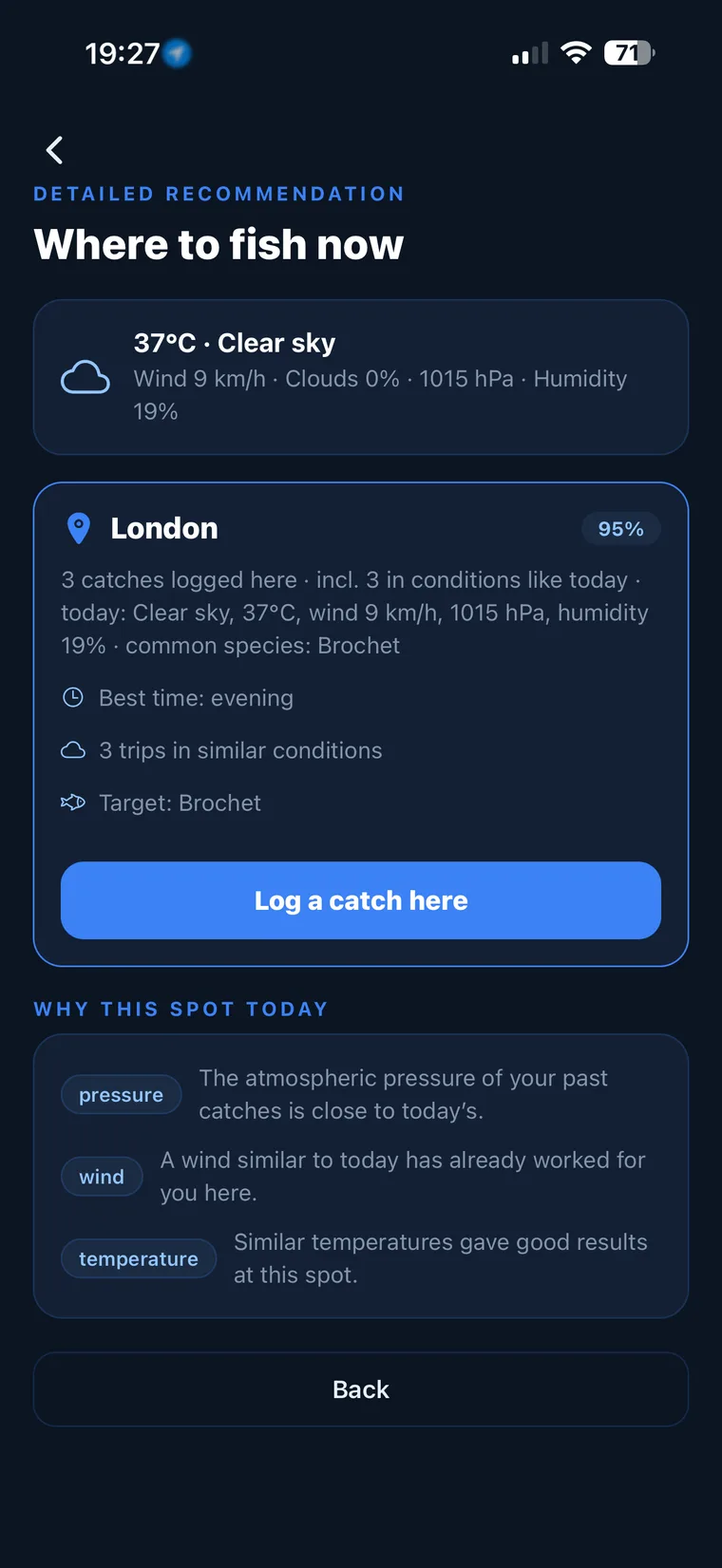
Not sure what to tie on?
Photograph your spot: CarnaFish reads the scene, cross-checks the conditions and gives you the zone, the lure and the retrieve. Free on iOS and Android.
The leader, non-negotiable
The Replicant is a pike lure. The take is frontal, the lure often disappears entirely into the mouth, and the teeth land exactly on the knot. Steel or titanium, 40 to 50 cm, no discussion. Fluorocarbon, even in heavy diameter, is cut clean through.
Check the body regularly around the anchor points too: even reinforced, that is where the plastic eventually gives way.
Colours
- Clear water: photorealistic finishes, roach or perch, playing to the lure's strength.
- Slightly stained water: a dark back over pale flanks, reinforcing the silhouette without losing realism.
- Coloured water: switch to frankly contrasting tones. Realism adds nothing once visibility drops below a metre.
Replicant or a generalist shad
A generalist shad such as the Cannibal vibrates more, costs less and rigs freely — the better choice for learning and for searching. The Replicant takes the lead in clear water on wary fish, and in the larger sizes where the rigged construction makes a real difference to durability.
For the complete pike strategy, our pike lure guide covers the seasonal logic. And on an unfamiliar spot, CarnaFish analyses a photo and suggests a zone and a lure family.
Key points
- Realism counts in clear water on a hesitating fish, very little elsewhere.
- Rigged versions last longer and swim straight out of the packet, at the cost of rigging flexibility.
- 12 to 15 cm covers most pike situations.
- Slow down: a big shad is fished slowly.
- Steel or titanium leader is mandatory.
FAQ
Should I buy the rigged version or the bare lure?
The rigged version if you fish open water and want durability and a factory-balanced rig. The bare lure if you want to adjust the weight or go weedless in weed.
What size of Replicant for pike?
12 to 15 cm covers most situations. Go below in cold water or on difficult fish, go above only on waters known for big specimens.
Does realism really change anything?
In clear water on a fish that follows and inspects, yes. In stained water or on a fast retrieve, no: the fish then reacts to silhouette and vibration.
How many fish does a Replicant survive?
Markedly more than a standard shad thanks to its denser material, but it is not indestructible. Watch the plastic around the hook anchor points — that is where it fails first.
Can it be rigged weedless?
Yes, but only the unrigged version, on a wide-gap Texas hook. The rigged version has its hooks fixed and does not suit that setup.
Is a fluorocarbon leader enough?
No. On a lure this size aimed at pike, the take is frontal and the teeth land on the knot. Steel or titanium only.
The full pike lure guideSeason-by-season strategy: which family of lure, when, and why.Go from theory to fish
CarnaFish reads your spot from a photo and gives you the game plan: zone, lure, retrieve. Free on iOS and Android.