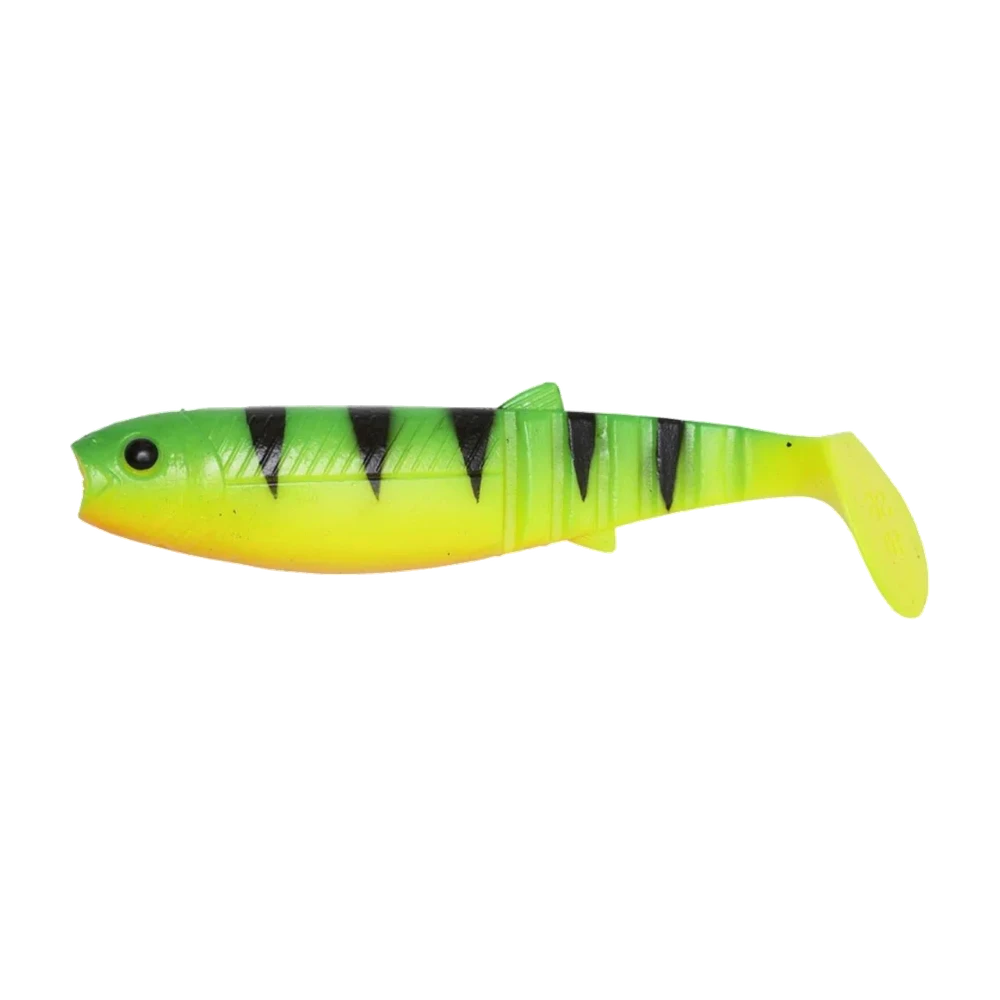
Savage Gear Cannibal Shad: the do-everything shad that forgives mistakes
This lure shines under specific conditions. CarnaFish tells you in 10 seconds if today is one of them.
There is one quality lure reviews rarely mention that matters enormously when you are starting out: tolerance to error. Some shads demand a precise speed, a well-matched jig head and a clean retrieve to swim properly. The Cannibal Shad works more or less whatever you do to it — and that is exactly what made it one of the best-selling shads in Europe.
A tail that starts immediately
The difference lies in the geometry of the tail. The Cannibal has a wide paddle mounted on a thin, supple wrist. In practice, a few centimetres of pull are enough to set it beating, where a shad with a smaller paddle or a stiffer wrist needs a minimum speed before it comes alive.
Three practical consequences:
- The action stays alive even very slowly, which is decisive on a cold-water zander refusing anything quick.
- The lure works on the drop, not only on the retrieve: the tail vibrates as soon as the lure has a little vertical speed.
- There is no minimum speed to find. You can slow down as much as you like without the lure going dead.
The stocky body adds a pronounced roll, throwing more vibration than a slim shad of the same length. The trade-off: it is less subtle in very clear water on educated fish.
Choosing the size
- 6.8 to 8 cm: perch, difficult zander, fine searching. Head of 5 to 10 g.
- 10 cm: the reference format, versatile for zander and average pike. Head of 10 to 15 g.
- 12.5 to 15 cm: pike, and zander on big spots. Head of 15 to 25 g.
The simple rule: start at 10 cm. It is the size that catches the widest range of species and forgives the most on jig head choice.
The real setting: the jig head
As with any soft lure, it is not the body that sets the depth, it is the head. And the commonest mistake is choosing one that is too heavy.
- Too heavy: the lure drops like a stone, the tail has no time to work on the way down, and you lose the phase where most takes happen.
- Too light: you lose contact with the bottom, you no longer know where your lure is, and you drift without control.
- Right: you feel the bottom contact distinctly, and the drop lasts about one second per metre of depth.
Field rule: pick the lightest head that still lets you feel the bottom. That is almost always the right compromise, and it is almost always lighter than what you instinctively reach for.
Two retrieves are enough
The slow straight retrieve
A steady retrieve, no jerks, at mid-depth or near the bottom. It is the most effective retrieve for pike, and the simplest to execute correctly. Make it genuinely slow: the tail is already beating at a speed where you feel you are doing nothing.
Lift-and-drop
Two or three turns of the handle, then a pause during which the lure falls back, wobbling. This is the zander retrieve: the take almost always comes on the drop, and shows as a sharp tap or, more often, as line moving sideways.
On the pause, keep contact without tightening: a completely slack line hides the take, a tight line restricts the fall.
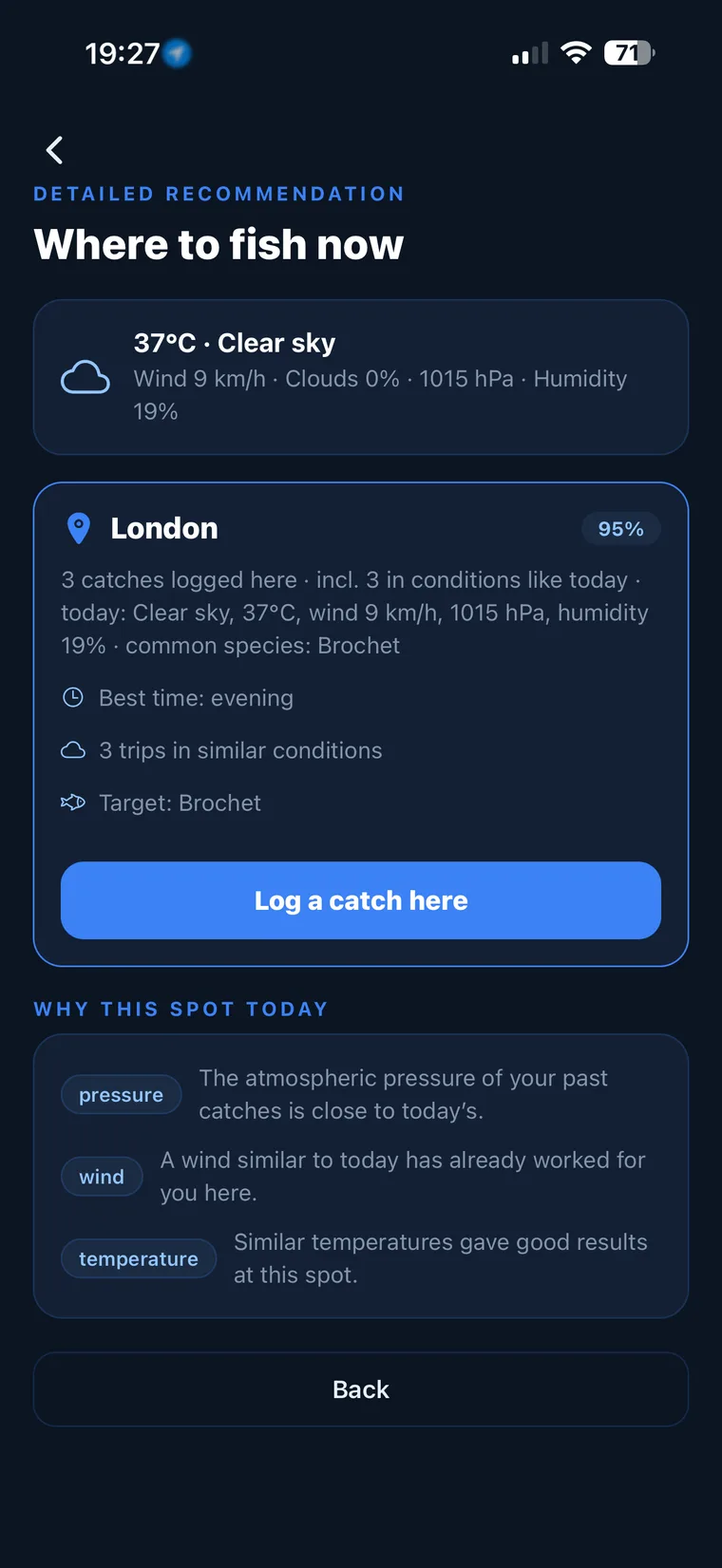
Not sure what to tie on?
Photograph your spot: CarnaFish reads the scene, cross-checks the conditions and gives you the zone, the lure and the retrieve. Free on iOS and Android.
Weedless when it gets complicated
On a plain jig head the hook is exposed and fouls in vegetation. In weed or branches, switch to a Texas rig: a wide-gap offset hook with the point tucked back under the shad's back. You lose a little hooking efficiency and gain the ability to fish spots others avoid.
Colours
- Clear water: natural tones, roach or perch, imitating the local prey.
- Slightly stained water: add contrast without going fluorescent — a dark back over pale flanks.
- Coloured water: fire tiger or chartreuse. With reduced visibility, silhouette and vibration matter more than realism.
Cannibal or a more technical shad
The Cannibal is a generalist shad: easy, vibrating, forgiving. On a difficult fish in clear water, a slimmer shad such as the Fox Rage Zander Pro Shad will be more subtle and more credible. Conversely, in stained water or on an active fish, the Cannibal's vibration carries further and triggers better.
For zander, our beginner's guide to zander lure fishing covers reading the spots, which matters more than shad choice. And on an unfamiliar water, CarnaFish analyses a photo and suggests a starting zone and retrieve.
Key points
- Wide paddle and supple wrist: the action starts at the slightest pull, even very slowly.
- Start at 10 cm, the most versatile size.
- The jig head sets the depth: take the lightest one that still lets you feel the bottom.
- Slow straight retrieve for pike, lift-and-drop for zander.
- Go weedless as soon as the spot is cluttered.
FAQ
What size of Cannibal Shad should I start with?
The 10 cm, on a 10 to 15 g head. It is the format that catches the widest range of species and forgives the most rigging approximations.
What jig head weight should I choose?
The lightest that still lets you feel bottom contact. Too heavy and the lure drops too fast, removing the fall phase where most zander takes happen.
Why do my zander takes come during the pause?
Because zander attack prey that is sinking, not fleeing. The shad's wobbling descent reproduces exactly that behaviour, which is why keeping contact without tightening the line during the pause matters.
Is the Cannibal suited to very clear water?
Less so than a slim shad. Its stocky body produces a lot of vibration, an advantage in stained water but off-putting to an educated fish in clear water. Drop a size and switch to natural tones.
Do I need a steel leader?
Yes, as soon as pike use the spot. Even when targeting zander, a pike take is always possible, and fluorocarbon alone does not survive its teeth.
How do I rig the Cannibal weedless?
On a wide-gap offset hook, with the point brought out then tucked just under the skin of the back. Check the lure sits perfectly straight on the hook: a shad rigged crooked spins on itself and twists the line.
The full pike lure guideSeason-by-season strategy: which family of lure, when, and why.Go from theory to fish
CarnaFish reads your spot from a photo and gives you the game plan: zone, lure, retrieve. Free on iOS and Android.