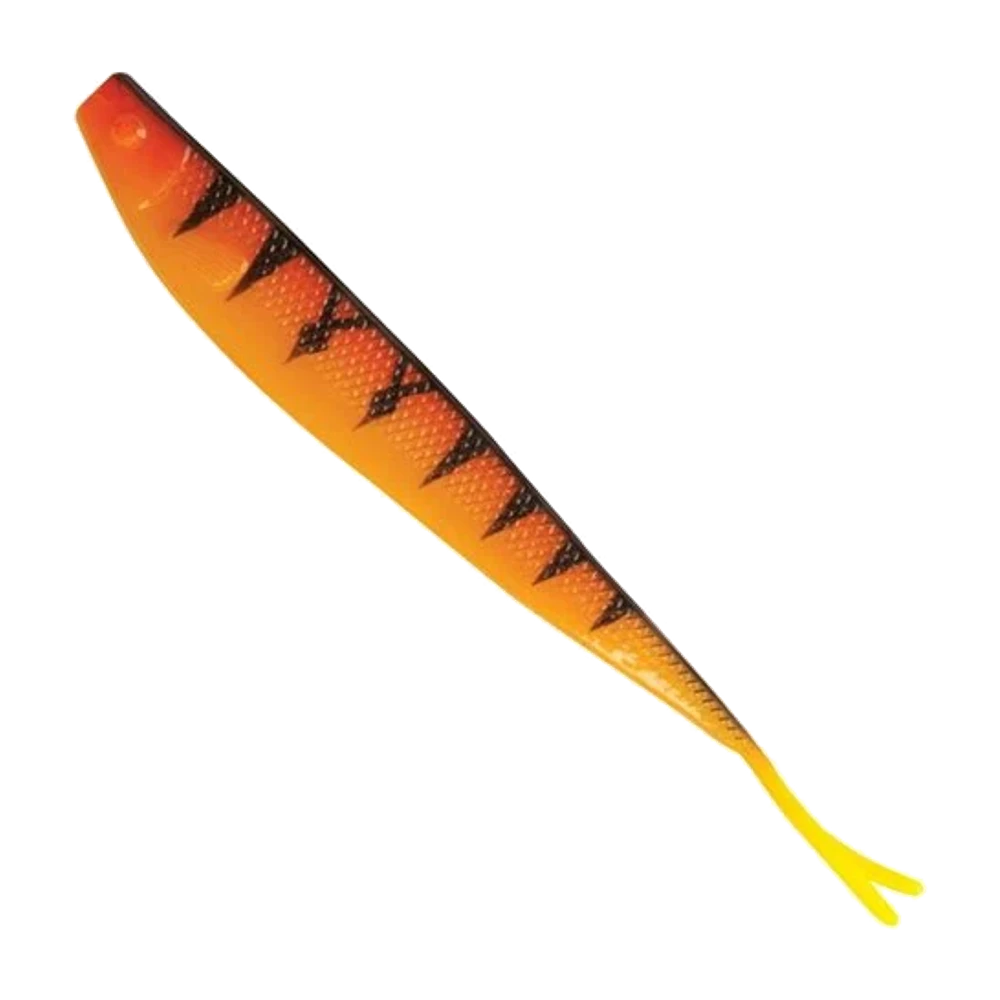
Fox Rage Fork Tail: the shad that barely vibrates
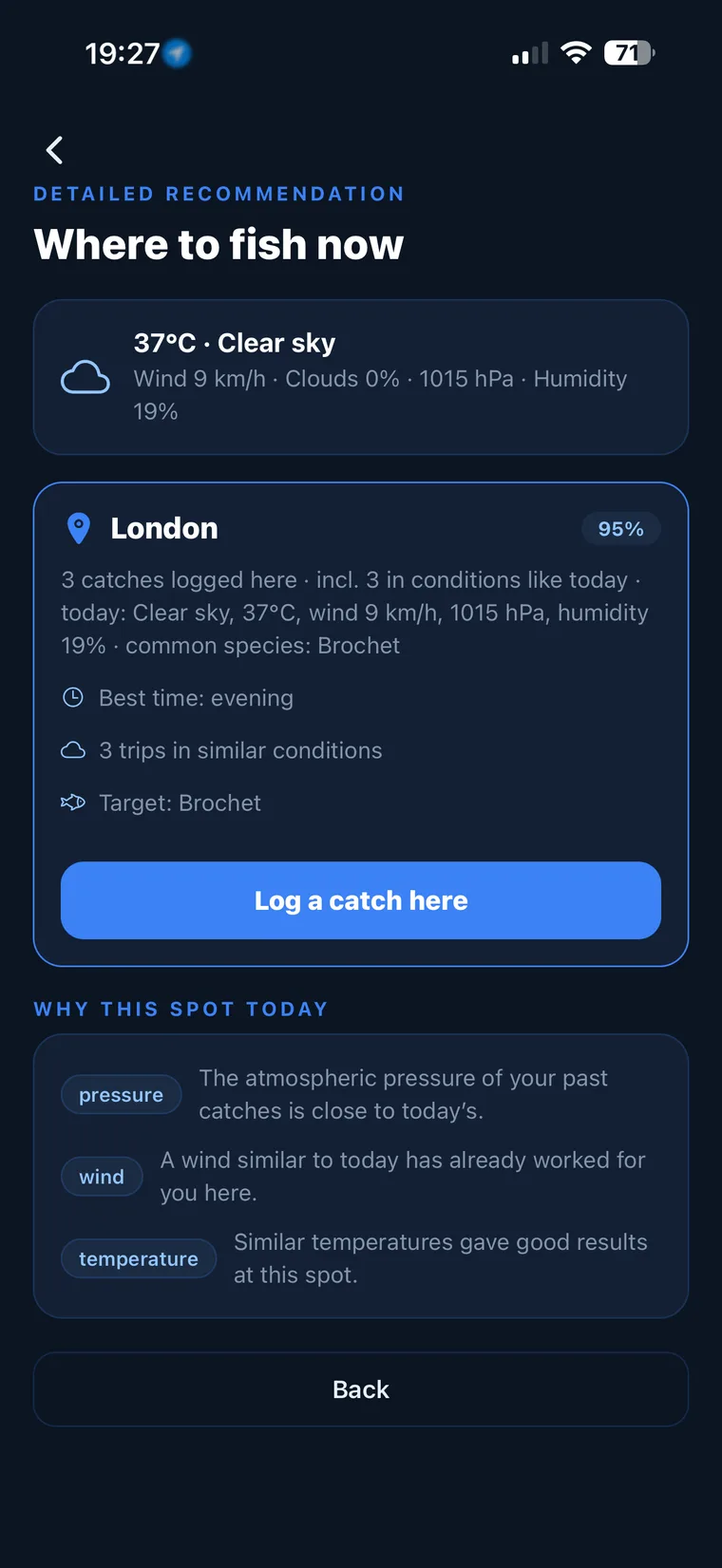
Before tying this one on, it helps to know if the spot actually calls for it. CarnaFish reads the scene from a photo.
On a busy water, there comes a point where paddle tail shads stop working. Not because they are bad: because the local zander has seen two hundred of them this year, all with the same metronomic kick and the same pressure signature on its lateral line. It follows you, it stops half a metre short, it turns away.
The answer is not to change colour. It is to change the signal. A forked tail shad does not kick: the two tips of the tail move in opposite directions and largely cancel each other out. All that remains is a body roll and a barely perceptible quiver. To the fish's lateral line, that reads as a baitfish swimming quietly — not a lure hammering away.
The Fork Tail is built on exactly that, and it is what makes it a situational lure rather than an everyday one.
What a forked tail actually does
Break the movement down. A paddle tail is a blade perpendicular to the lure's axis: water hits it head on, it tips one way then the other, and drags the whole rear of the body with it. The result is a powerful low-frequency wave that carries a long way.
A forked tail sits in line with the axis. The two lobes slice the water instead of pushing it. Three consequences:
- A short-range signal. The lure does not announce itself at five metres. The fish has to see it or cross it, which looks like a flaw — and becomes an asset on wary fish, because the lure arrives without warning instead of being tracked and analysed for ten metres.
- Very low water resistance. At equal speed, the Fork Tail pulls far less on the rod. You feel the bottom better, you control your depth better, and the lure does not rise the moment you speed up.
- An action that holds at high speed. A badly tuned paddle spins out when you wind fast. The Fork Tail keeps a straight path even on a quick retrieve, which lets you search fast without turning the action into a caricature.
The retrieve: straight, genuinely straight
This is the counter-intuitive part. Plenty of anglers try to compensate for the lack of vibration by adding lifts. Bad idea: you are breaking the very regularity that makes this lure credible.
- Cast and count the sink, line semi-tight. Note the count at which the line goes slack: that is your reference depth.
- Come back into contact, then start a constant straight retrieve, reel only, rod at 9 o'clock pointed at the lure.
- Hold the rhythm through the whole retrieve. No lifts, no twitches. About one turn of the handle per second to start.
- Every ten or fifteen seconds, mark a one-second stop — just one — and pick up again at the same pace. The lure drops slightly then resumes its line.
- Wind the pace up a notch on the next cast if nothing happens, rather than changing lure.
On the water: if you feel your Fork Tail "is not working", do not slow down — speed up. A forked tail shad needs a minimum of speed before the body roll sets in. Below that threshold it slides along flat and does absolutely nothing. The useful window starts higher than with a paddle, not lower.
Jig heads: lighter than your reflex says
The tail's low resistance changes the usual weights. At equal depth, you can drop one or two notches compared with a paddle tail shad.
| Depth | Jig head, 12 cm | Jig head, 18 cm |
|---|---|---|
| 2 to 3 m | 7 to 10 g | 12 to 15 g |
| 3 to 5 m | 10 to 14 g | 15 to 21 g |
| 5 to 7 m | 14 to 21 g | 21 to 30 g |
| More than 7 m or current | 21 to 28 g | 30 to 40 g |
The basic rig is covered on our simple jig head rig page. Two points specific to the Fork Tail: favour a round or bullet head rather than a flat one — a flat head adds a planing effect the tail does not offset — and use a hook whose shank reaches a third of the way down the body, otherwise the lure folds and the fork sits crooked.
For pike, a stinger is compulsory: strikes on this lure are often engulfs from behind, with no intention of swallowing the whole thing.
Not sure what to tie on?
Photograph your spot: CarnaFish reads the scene, cross-checks the conditions and gives you the zone, the lure and the retrieve. Free on iOS and Android.
Where it changes things, and where it is useless
Three contexts where it beats a classic shad:
- Clear water and heavy fishing pressure. Big reservoirs, busy gravel pits, club waters. The fish is used to the paddle's signal, not this one.
- Slim, elongated baitfish. Where the forage base is bleak, slim roach or smelt, a slender lure with a sober action matches better than a paddle 2 cm wide.
- Fast retrieves at mid-depth. When you are hunting zander off the bottom or pike on the feed, you can wind fast without the lure spinning out.
Conversely it is frankly bad in heavily stained water or at night: with no strong signal, the fish simply does not find it. It is also poorly suited to pure vertical fishing, where a forked tail produces nothing as the lure rises and falls on the spot — a paddle stays far more effective there. Finally, in a fast river, its low resistance makes it deviate and you lose control of the path.
Fork Tail or paddle tail shad
The Fox Rage Zander Pro Shad is the exact opposite in the same range: wide paddle, clear vibration, a signal that carries. It is the searching lure, the one you start the day with to find fish, in stained water as much as in clear.
The Fork Tail is the second pass. Once you have located the fish but it refuses, when you see follows without strikes, when the sounder shows arches lifting and settling again: you go back over the same zone with the Fork Tail and you change the whole message. The Fox Rage Slick Shad sits in between, with a smooth body and a wider action than the Fork Tail but less brutal than the Zander Pro.
Our beginner's guide to zander fishing with lures explains how to run those three passes over the same spot. And if you are torn between paddle and fork when you arrive on unfamiliar water, CarnaFish analyses a photo of the spot and answers.
Key takeaways
- The forked tail cancels most of the vibration: what remains is body roll and a very short-range signal.
- It needs speed, not slowness. Below a certain threshold the lure slides flat and produces nothing.
- Straight retrieve, no lifts. Just one one-second stop now and then.
- Jig heads one or two notches lighter than with a paddle, round or bullet shaped.
- Clear water and pressured fish. Bad in stained water, at night, vertically and in strong current.
FAQ
Does the Fox Rage Fork Tail vibrate enough for zander?
It vibrates little, and that is the point. On pressured fish in clear water, a discreet signal goes down better than a paddle. If the water is stained or you are fishing at night, though, choose a paddle tail shad: the zander then needs the vibration to locate the lure.
How fast should I retrieve it?
About one turn of the handle per second to start, then speed up if you cannot feel the lure working. A forked tail needs a minimum speed threshold to set up the body roll, unlike a paddle which starts almost from a standstill.
Which jig head should I choose?
A round or bullet head, between 10 and 21 g for the mid sizes depending on depth. You can drop one or two notches compared with a paddle tail shad of the same length, because water resistance is far lower.
Do I need a stinger with this lure?
For pike, yes, always: strikes are often nips from behind. For zander in clear water you can do without if you feel your bites well, since a stinger adds visibility to a lure chosen precisely for its discretion.
Can it be fished vertically?
That is not its ground. Vertically, a forked tail produces nothing on the lifts and drops on the spot. A paddle tail shad or a purpose-built vertical lure keeps a clear advantage there.
What is the difference with a paddle tail from the same brand?
The paddle sends out a low-frequency signal that carries far: it is a searching lure. The fork sends out a short, sober signal: it is a conversion lure, to be pulled out once the fish is located but reluctant.
The full zander lure guideSeason-by-season strategy: which family of lure, when, and why.Go from theory to fish
CarnaFish reads your spot from a photo and gives you the game plan: zone, lure, retrieve. Free on iOS and Android.