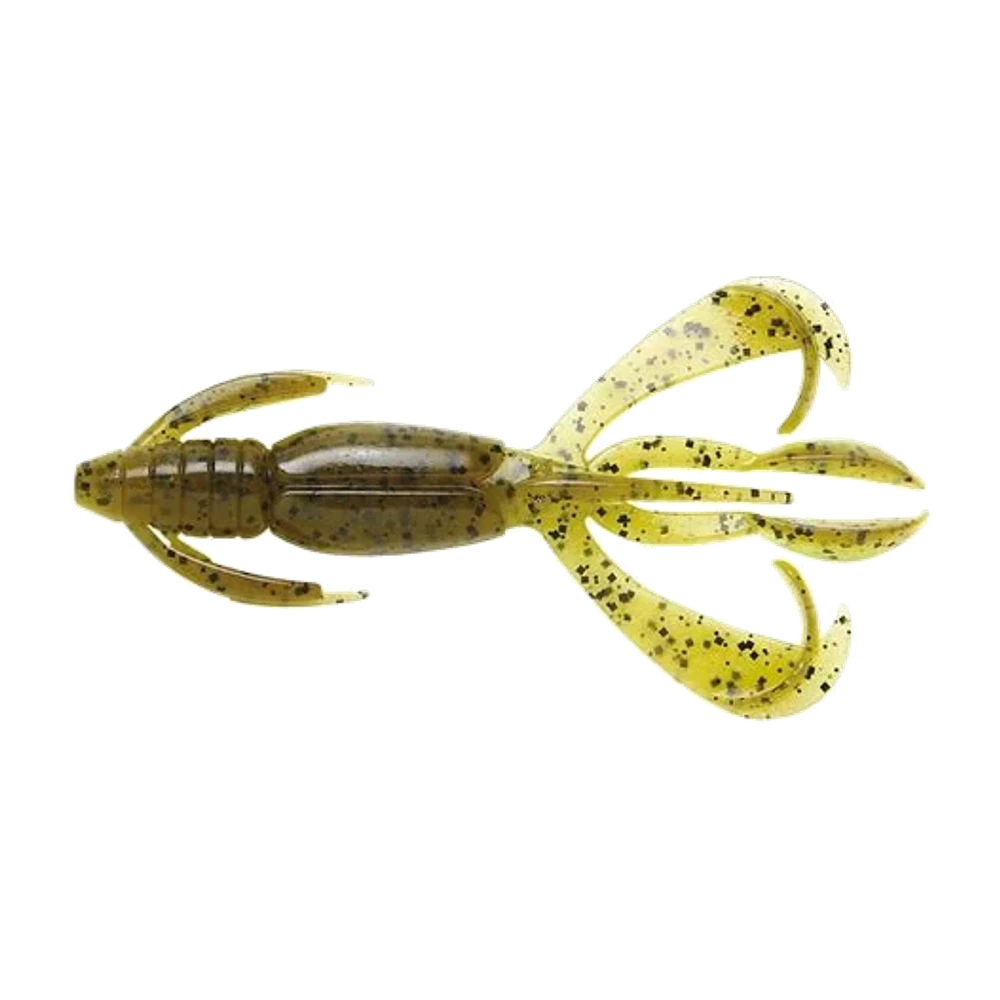
Keitech Crazy Flapper: the craw that stands itself up on the bottom
Not sure this lure fits YOUR spot today? CarnaFish tells you in 10 seconds, from a photo.
A real crawfish under threat does not immediately flee. It flattens onto the bottom, turns to face the threat and raises its claws vertically in a defensive stance. That is the posture a bass recognises instantly.
Most soft plastic craws never reproduce it: sitting on the bottom, they stay flat, claws on the deck, silhouette shapeless. The Crazy Flapper is built around that single detail.
Claws that float
The Crazy Flapper's claws are moulded in a more buoyant material than the body, and their internal volume makes them rise the moment the bait stops moving.
The result: on every pause, the lure tips nose-down with its claws standing up. You get the defensive posture for free, simply by stopping.
That has a direct tactical consequence. On a standard soft plastic, the pause is visual dead time; here, it is the moment the silhouette becomes most recognisable. The pause is no longer a wait, it is a presentation.
The three rigs that work
The weighted Texas rig is the most versatile. A 3.5 to 10 g tungsten bullet, a wide-gap Texas hook, and you can fish branches and vegetation without snagging. Work it with short 20 to 30 cm pulls, then let it drop back and wait three to five seconds.
The jig trailer is the commonest use in the United States. Rigged behind a brush jig, the Crazy Flapper adds the bulk and the claw flap the jig on its own does not have. It is a big-fish rig, to be fished very slowly on structure.
The Carolina rig lets you search large flats. The weight scrapes the bottom, the bait follows behind on a 60 cm to 1 m leader, keeping its freedom of movement. It is the most efficient rig for covering ground without losing the presentation.
On the water: with a soft plastic craw, the bite almost always comes during the pause, not during the pull. If you are not catching, it is usually not your retrieve that is wrong — it is your pauses that are too short.
Size is chosen on the water, not on the species
Unlike a shad, where you size up with the fish you are targeting, a craw is mostly set by water clarity and fishing pressure.
| Context | Size |
|---|---|
| Clear water, pressured fish | 7.1 cm |
| General use, moderately clear water | 8.6 cm |
| Stained water, big fish, jig trailer | 11.4 cm |
In very clear water, dropping one size usually produces more bites than a colour change.
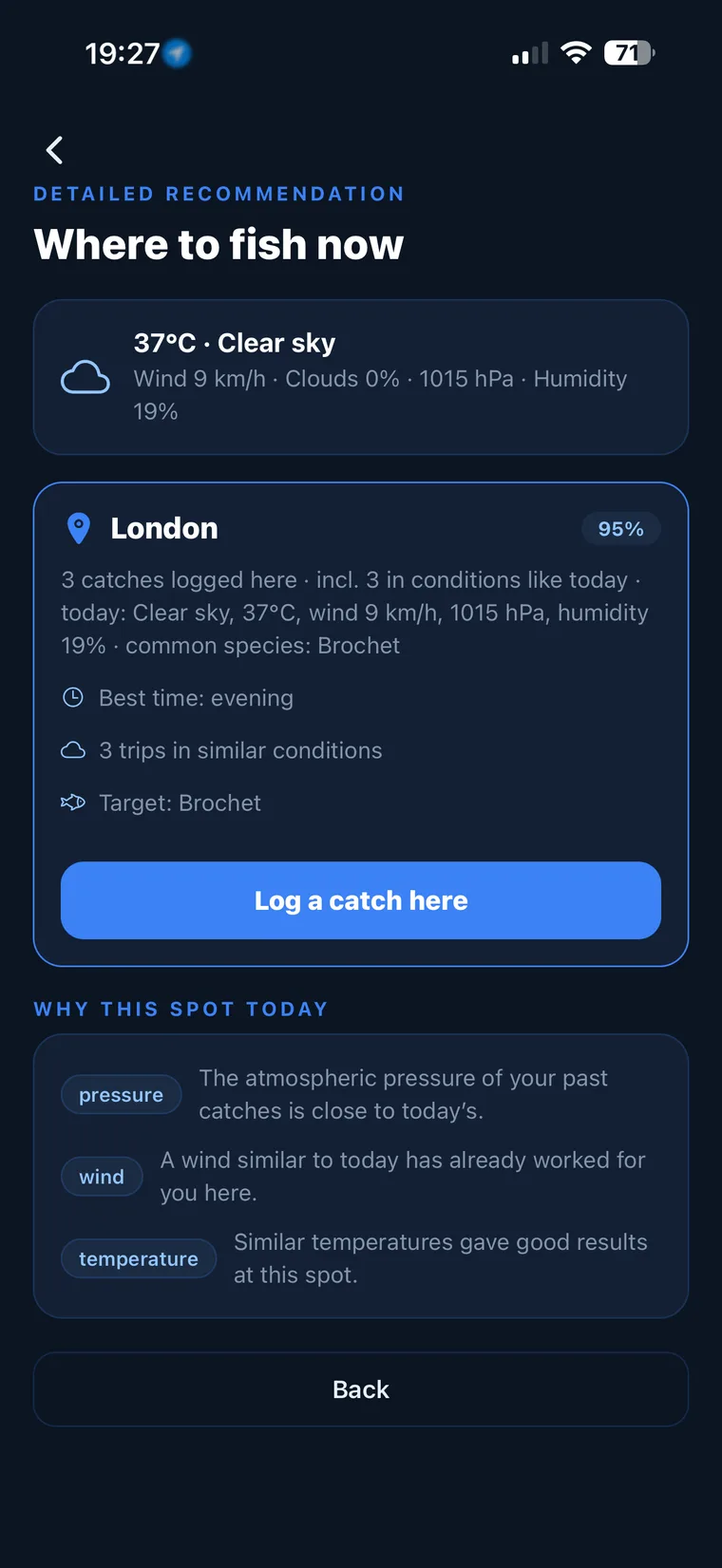
Not sure what to tie on?
Photograph your spot: CarnaFish reads the scene, cross-checks the conditions and gives you the zone, the lure and the retrieve. Free on iOS and Android.
When the craw beats the shad
A shad imitates a baitfish: it works when predators are hunting in open water. A craw imitates a bottom-dwelling prey: it works when they are rooting around.
Three situations where the craw clearly takes the lead:
- Rocky bottoms and rock armour, the crawfish's natural habitat, where bass actively hunt for them.
- Late spring and summer, when crawfish moult and become an abundant resource.
- Fish pinned to the bottom on a hot day, which will not rise into open water to chase a shad.
Conversely, in cold water or on fish active in open water, a soft plastic shad or a crankbait will be more productive.
Colours
Three families are enough. Craw tones — brown, olive green, orange claws — for general use. Dark naturals in clear water and bright light. Contrasted patterns with bright tips in stained water, where only the silhouette and the claw movement stay visible.
Our beginner's guide to bass fishing covers the periods when bottom fishing beats the open water. And if you are torn between a craw and a shad when you reach the bank, CarnaFish analyses a photo of the spot and answers.
Key takeaways
- The claws float: on the stop, the bait stands itself up in a defensive posture.
- The bite comes during the pause. Stretch them to three to five seconds minimum.
- Weighted Texas for versatility, jig trailer for big fish, Carolina for searching.
- Choose the size on water clarity, not on the species.
- A lure for rocky bottoms and rooting fish, not for fish hunting in open water.
FAQ
Why do the claws stand up on the stop?
They are moulded in a more buoyant material than the body. As soon as the bait stops moving they rise vertically and it takes on the defensive posture of a real crawfish under threat, which a bass recognises immediately.
Which rig should I start with?
The weighted Texas with a 3.5 to 10 g tungsten bullet. It goes everywhere without snagging, lets you fish cover, and suits the majority of situations.
How long should the pauses be?
Three to five seconds minimum, longer on inactive fish. The bite almost always comes during the pause: pauses that are too short are the commonest cause of failure with this type of bait.
What size should I choose?
7.1 cm in clear water or on pressured fish, 8.6 cm for general use, 11.4 cm in stained water or as a jig trailer. In very clear water, downsizing is often more effective than changing colour.
Can it be used for perch?
Yes, mainly in 7.1 cm, on a light Texas rig or a jig head. Big perch eat crawfish regularly, particularly over rocky bottoms.
When should I prefer a shad to a craw?
When predators are hunting in open water, in cold water, or on active fish that chase. The craw takes the lead over rocky bottoms, in summer, and on fish pinned to the bottom that root around instead of chasing.
The full bass lure guideSeason-by-season strategy: which family of lure, when, and why.Go from theory to fish
CarnaFish reads your spot from a photo and gives you the game plan: zone, lure, retrieve. Free on iOS and Android.