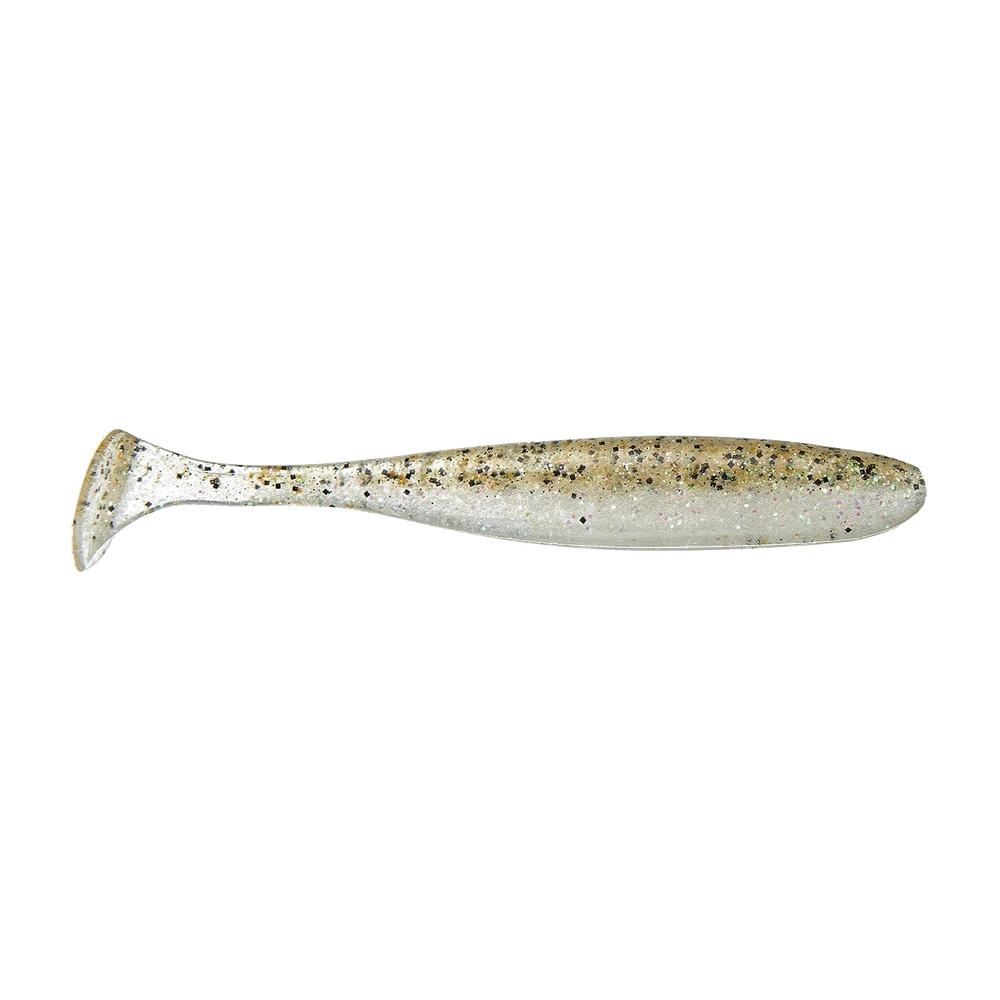
Keitech Easy Shiner 3": the finesse shad that keeps working dead slow
Not sure this lure fits YOUR spot today? CarnaFish tells you in 10 seconds, from a photo.
Any shad can swim well retrieved fast. Very few swim well retrieved at a near-standstill, and that's exactly where the Easy Shiner 3" built its reputation. This small Japanese shad was designed for finesse fishing — the kind where the predator has no intention of chasing, and where the smallest animation mistake costs you the bite.
A plastic built for action, not for looking good in the packet
Most budget shads use a stiff plastisol that survives well in a tackle box but swims stiffly. Keitech does the opposite: its super-soft PVC body is injection-molded in two tones, with salt-infused plastic placed in the lower half. That drops the centre of gravity slightly, stabilising the horizontal posture and triggering a pronounced side-to-side roll even when you're barely reeling. That's what lets the Easy Shiner keep working through a pause, or on a dead-slow straight retrieve for a zander that won't chase anything.
The other detail that shows up on the water: the bait is scented with squid, an attractant that encourages fish to hold on a fraction of a second longer. On a slightly late hookset, that fraction of a second can be the whole difference.
Matching jighead weight to the situation
The Easy Shiner 3" weighs only 2.3 g unrigged — the jighead does all the work of depth and fall speed.
- Finesse fishing in the margins (0-2 m): 1.5-3.5 g. The fall is slow, almost suspended, ideal for a perch or zander holding tight in shallow water.
- Mid-water (2-4 m): 5-7 g, the default setup for exploring a new spot.
- Drop-offs and current (4-5 m): 8-10 g to stay in bottom contact without constant re-casting.
Past that depth, it's not the right tool anymore — a longer shad like the Squad Shad 65 will hold depth and current better.
The rigging detail that preserves the swim
The body is slim for its length, so an oversized hook throws off the balance and sends the lure into a spiral. For zander or perch, a #1-equivalent jighead hook is plenty; only step up to a 1/0 for bass on a heavier head. Take the time to thread the lure perfectly straight on the shank before casting — with a body this soft, even a slight misalignment shows up immediately in the swim.
With this kind of finesse shad, the rule is simple: if you have to crank fast just to feel the swim, the head is too light for the depth you're fishing.
Three retrieves that exploit the slow-speed swim
- Dead-slow straight retrieve near bottom: the Easy Shiner's signature move. Deadly on a tough zander in cold water, when nothing else is working.
- Short crank, long pause: two turns of the handle, then let the lure fall on a tight line. Perch strike very often during the pause.
- Vertical jigging over a marked spot: from a boat or bridge, drop the lure to bottom and work it with small lifts. Brutally effective on a holding zander.
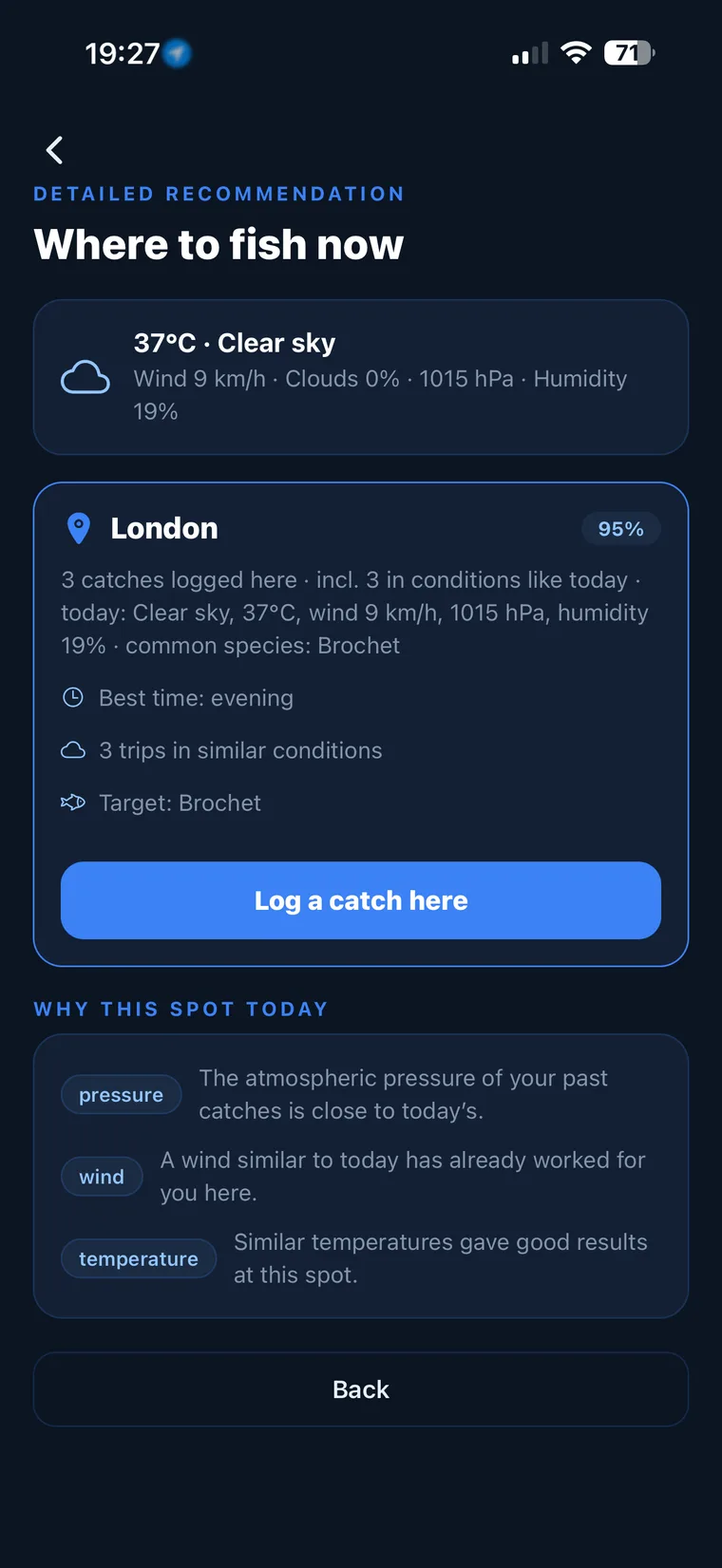
Not sure what to tie on?
Photograph your spot: CarnaFish reads the scene, cross-checks the conditions and gives you the zone, the lure and the retrieve. Free on iOS and Android.
Colour by water clarity
- Clear water: Electric Shad, a translucent tone that stays subtle in bright sun.
- Overcast, slightly stained water: Ghost Minnow, a solid balance of visibility and realism.
- Murky water: Motor Oil / Chartreuse, a strong contrast that carries well even in heavily coloured water.
Zander, perch or bass: who prefers what
Zander is clearly the number one target for this lure — its slow-speed swim matches a fish that refuses to chase down fast-moving prey. Perch respond very well to smaller sizes fished shallow, especially along the edge of a shoal. Bass, more used to this kind of finesse presentation across the Atlantic, respond well to a slow straight retrieve in clear water, particularly on pressured spots where louder lures have already been seen. If you're new to that species, our beginner's guide to bass fishing covers spot selection basics.
That kind of call — which speed, which depth, which spot to prioritise today — is exactly what CarnaFish is built to simplify: you photograph your spot, the AI reads the scene and conditions, and hands you a starting zone and retrieve instead of guessing blind.
The key takeaway
- 7.6 cm body, 1.5-10 g jighead depending on depth, #1 hook for zander/perch.
- The two-tone salted plastic stabilises the swim even on a dead-slow retrieve.
- Three retrieves to try: dead-slow straight, crank-and-pause, vertical jigging.
- Zander first, but very effective on perch and bass in clear water too.
FAQ
Is the Easy Shiner 3" good for learning finesse fishing?
Yes, it's an excellent entry point: the swim kicks in from the very first inches of the retrieve, which forgives a retrieve that's too slow. Start with a 5-7 g head mid-water before exploring lighter heads in the shallows.
What jighead weight should I use with the Easy Shiner 3"?
Between 1.5 and 10 g depending on depth: 1.5-3.5 g from the surface to 2 m, 5-7 g from 2 to 4 m, 8-10 g beyond that. A heavier head means a faster fall, which changes what retrieves are possible.
Why is my Easy Shiner swimming crooked?
Almost always a rigging alignment issue: the soft body wasn't threaded perfectly straight on the jighead's hook. Pull it off and re-rig, making sure the back seam stays perfectly in line with the shank.
Can you catch zander on the Easy Shiner 3"?
Yes, it's arguably its strongest use. Fished dead-slow near bottom on a 5-7 g head, it reads exactly like a tired baitfish — precisely what an inactive zander in cold water is looking for.
What hook size should I use with the Easy Shiner 3"?
A #1-equivalent for most zander and perch situations. Only step up to a 1/0 if you're rigging a heavier head for bass, to keep the body straight without deforming it.
Does the Easy Shiner actually smell like anything?
Yes, the plastic is impregnated with a squid-based attractant at the factory. It's not a gimmick: on a hesitant strike, that extra cue often makes the fish hold the lure long enough to get a solid hookset.
The full zander lure guideSeason-by-season strategy: which family of lure, when, and why.Go from theory to fish
CarnaFish reads your spot from a photo and gives you the game plan: zone, lure, retrieve. Free on iOS and Android.