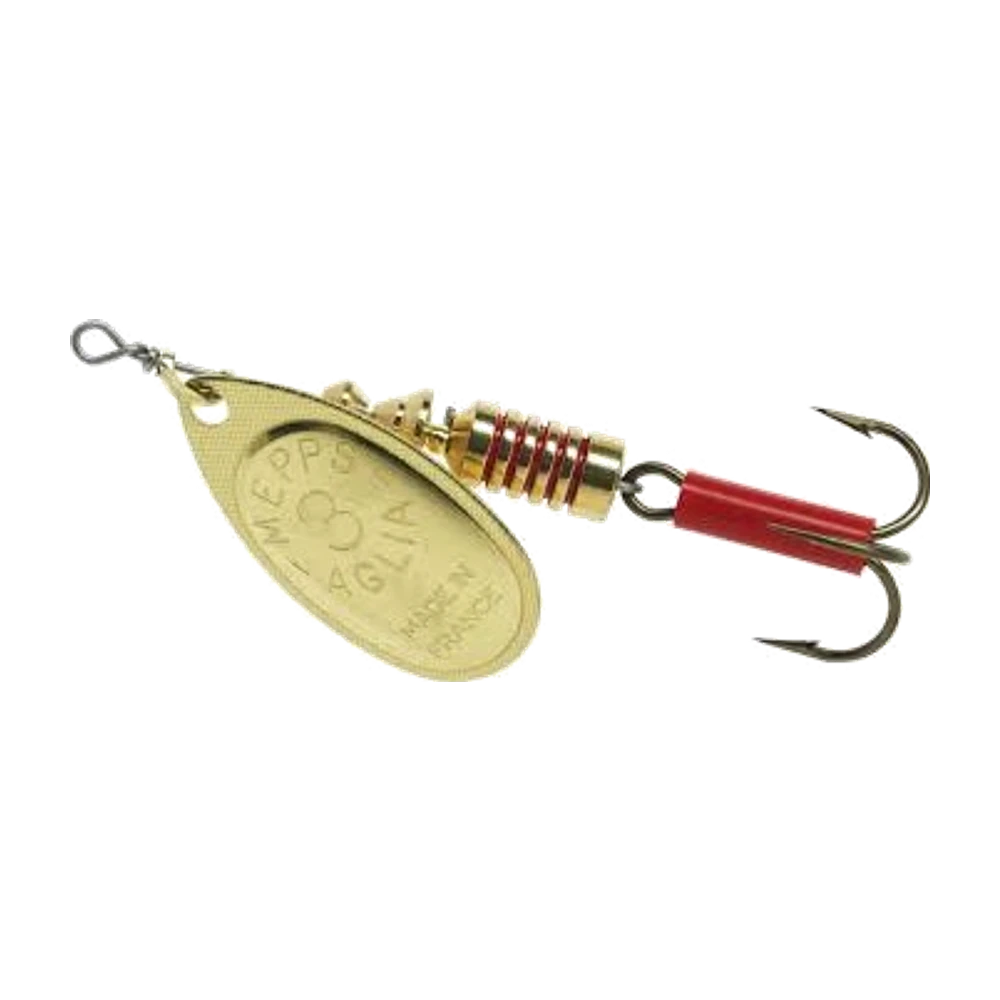
Mepps Aglia #3: the spinner that invented modern lure fishing
Rather not fish it blind? Photograph your spot — CarnaFish cross-checks the conditions and points you the right way.
Before shads, before jerkbaits, before the first injection-moulded plastic lures ever existed, there was already the Mepps Aglia. Created in France in 1938 by André Meulnart (Mepps stands for "Manufacture d'Engins de Précision Pour la Pêche Sportive"), this inline spinner has crossed nearly a century without changing its core design. The #3 is its most versatile size — the one that's sat in three generations of anglers' tackle boxes.
A simple mechanism that's never been dethroned
The Aglia's principle fits in one part: a slightly cupped blade that spins freely around a central shaft, driven purely by water resistance on the retrieve. That wide rotation — close to a 60° angle, one of the widest on the market — produces both a strong flash and a low-frequency vibration fish detect even in murky water or low visibility. Unlike a wobbling spoon, which mimics a swimming baitfish, the Aglia doesn't imitate anything specific — it relies on raw sensory stimulation, which is why it works equally well on trout, perch or pike.
Why #3 over any other size
Mepps runs the Aglia from #0 (2 g, fine stream fishing) to #5 (21 g, big-volume pike and salmon fishing). The #3, at 6.5 g, sits right in the middle: heavy enough to cast far and hold in light current, light enough to not look oversized to an average perch or river trout. It's the size to reach for when you don't yet know what species will bite, or what size of fish holds the spot.
A spinner that isn't already spinning the instant it hits the water will never catch anything — always check the blade is turning before your first crank.
Retrieve speed: the only real dial
The Aglia #3 has exactly one setting to master: speed. Too slow and the blade stops turning, sinking the lure without any vibration. Too fast and it rises too quickly through the water column, losing contact with where the fish actually holds. The right speed is whatever keeps the blade spinning steadily while holding depth — something you feel through the reel handle, not a number you calculate.
- River trout: slow to medium retrieve, cast across the current, letting the spinner drift slightly.
- Perch in lakes or canals: medium retrieve with short pauses, letting the spinner sink gently during the stop.
- Margin pike: steady, slightly faster retrieve, to maximise flash and vibration on a fish that reacts from a distance.
Colour: a rule as old as the lure itself
- Silver: clear water, bright sun — the subtlest, most natural flash.
- Gold or copper: overcast skies or slightly stained water, for a warmer, more visible reflection.
- Bright colours (fluoro, red, orange): murky water, where vibration matters more than flash and contrast carries further.
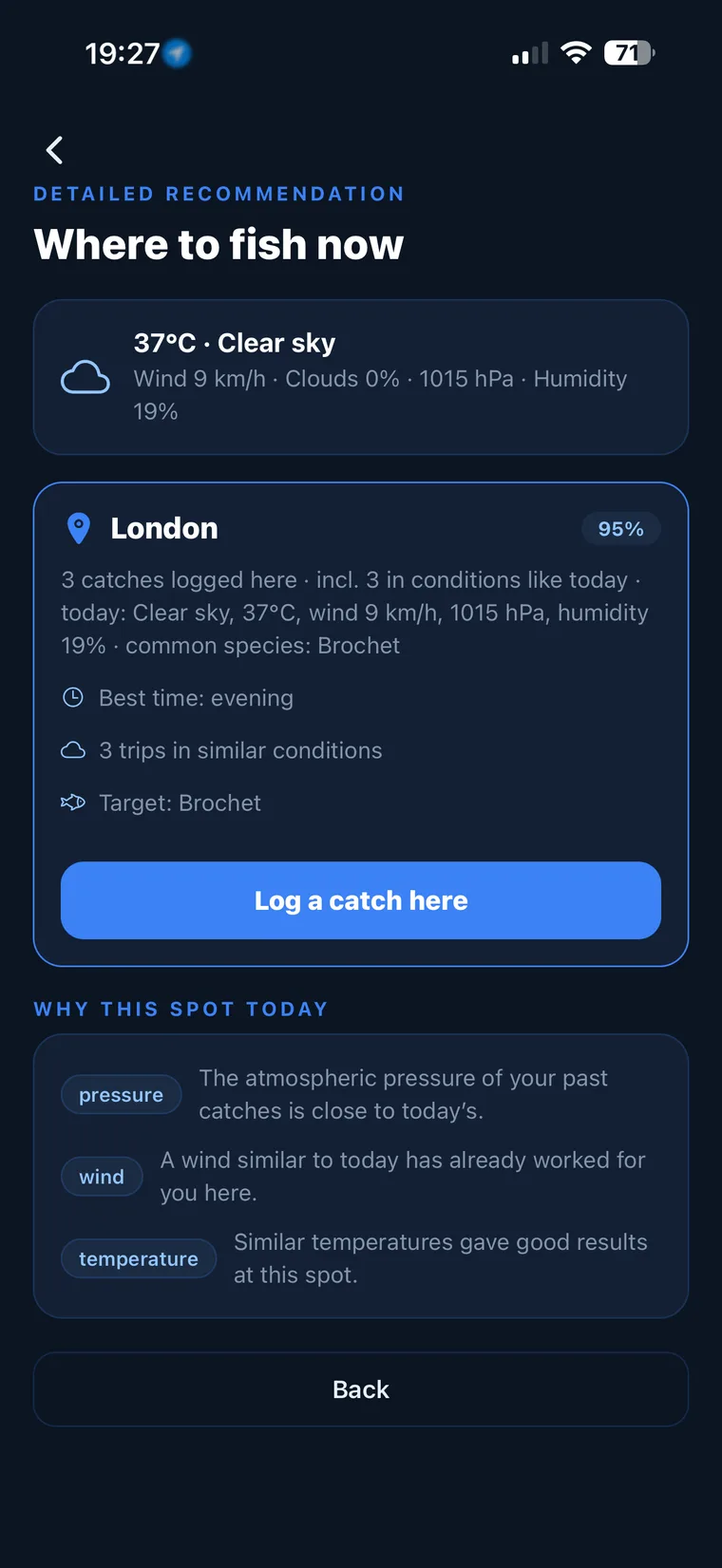
Not sure what to tie on?
Photograph your spot: CarnaFish reads the scene, cross-checks the conditions and gives you the zone, the lure and the retrieve. Free on iOS and Android.
What a beginner should know
The Aglia #3 has a genuine design flaw: fished on braid with no swivel, its continuous rotation quickly twists the mainline. A clip swivel at the line end, or better, a small ball-bearing swivel a few inches above the lure, fixes it in seconds and saves you from a badly twisted line after a session.
Up against the competition
The Aglia isn't the only spinner on the market: the Blue Fox Vibrax, with its more cupped blade on a metal body, produces stronger vibration and less flash. The choice between the two often comes down to water clarity: clearer for the Aglia and its wide flash, more stained or with current for the Vibrax and its stronger thump.
Picking the right spinner never replaces reading the spot properly — that's exactly the point of CarnaFish, the app that reads a photo of your spot and suggests a zone and an approach before you make a single cast. To go further on river trout, our guide to river trout fishing pairs well with this one.
Key takeaways
- 6.5 g, wide-rotation blade: the most versatile size in the Aglia range.
- Retrieve speed is the one setting you actually need to control.
- Silver in clear water, gold/copper under overcast skies, bright colours in murky water.
- Always run a swivel to avoid twisting your line.
FAQ
How long has the Mepps Aglia existed?
Since 1938, created in France. It's one of the very first inline spinners ever sold commercially, and nearly a century later it's still one of the market's benchmarks.
What Aglia size should a beginner start with?
The #3 (6.5 g) is the best starting point: easy to cast, needs no special tackle, and catches trout, perch and pike equally well.
Do I need a swivel with the Mepps Aglia?
Yes, absolutely. The blade's continuous spin quickly twists a line without one, on braid or mono alike. A simple clip swivel at the line end solves the problem.
What retrieve speed suits the Aglia #3?
A medium-to-slow speed that keeps the blade spinning steadily without letting the lure rise too fast through the water column. It's a feel you develop through the retrieve, not a fixed number.
What's the difference between the Aglia and the Blue Fox Vibrax?
The Aglia's more open blade produces mostly flash, while the Vibrax's more cupped blade produces stronger vibration. The Aglia suits clear water better; the Vibrax suits stained or moving water.
Does the Mepps Aglia #3 work in river current?
Yes, it's one of its best uses, especially for trout. Cast slightly upstream and let the spinner work across the current, adjusting speed to keep the blade turning steadily.
The full trout lure guideSeason-by-season strategy: which family of lure, when, and why.Go from theory to fish
CarnaFish reads your spot from a photo and gives you the game plan: zone, lure, retrieve. Free on iOS and Android.