River Trout Fishing: Lures, Lies and How to Approach
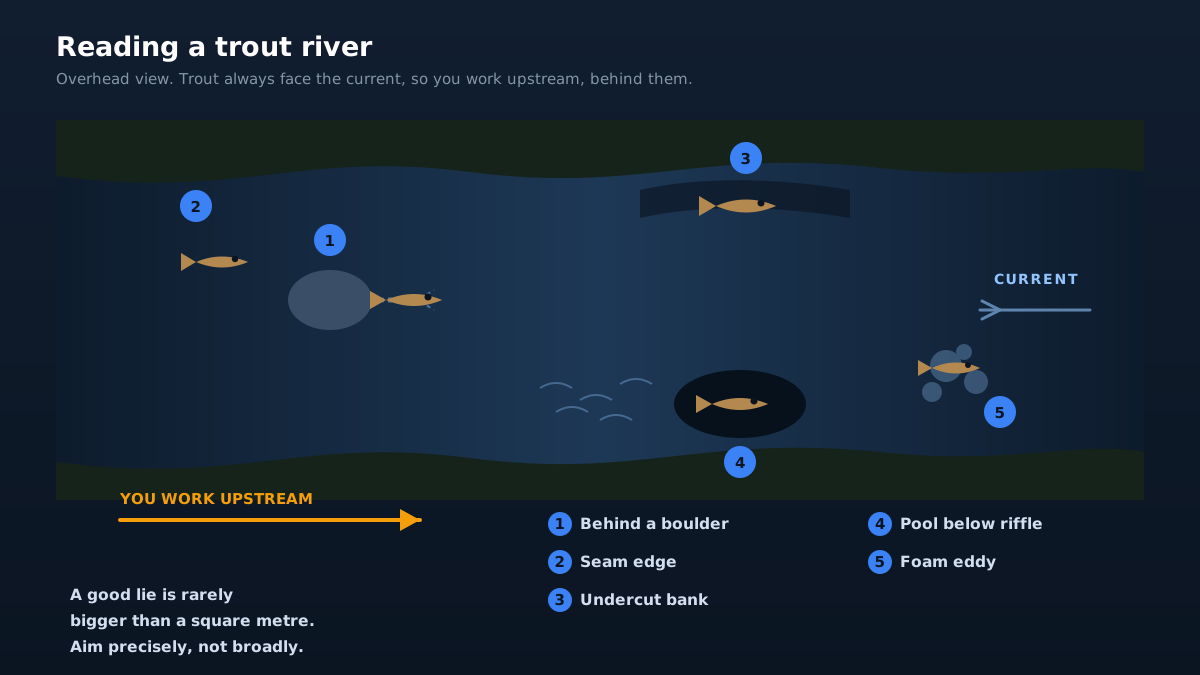
Trout are often the first fish anglers set out to catch, and paradoxically one of the most demanding. Not because of the tackle — that part is simple — but because they see everything. On a river, 80 % of the result is decided before your first cast: in how you approach and how you read the water.
Understanding river trout
A trout is a territorial, wary and economical fish. It picks a lie where the current brings food without it having to fight, and it defends that lie. Three principles follow:
- It sits in the calm, beside the current — never in the middle of it, except to attack.
- It always faces upstream, so it looks up the river. Approaching from downstream means arriving behind it.
- It bolts at the slightest alarm: a cast shadow, a vibration on the bank, a silhouette against the sky.
A lie burned by a bad approach won't produce again for a good half hour.
Tackle: light and short
A trout river is cluttered. Too long a rod stops you casting under branches.
- Rod: 1.80 to 2.10 m, rated 3-12 g. Short and sensitive.
- Reel: size 1000 to 2500, light.
- Main line: 16-20/100 mono, or fine 8/100 braid with a fluorocarbon leader.
- Leader: 14 to 18/100 fluorocarbon. In clear water, that's the difference between a bite and a refusal.
- Rubber-mesh net: far kinder to the mucus and fins if you're releasing.
A pair of waders opens up the lies nobody fishes — often the single best investment in this kind of fishing.
The three lure families
1. The spinner
The timeless classic, and the best choice to start with. It casts far, covers water fast and triggers through flash and vibration. Sizes 0 to 2 cover almost every situation.
Cast across or slightly upstream and let the spinner work in the current: the blade must be turning within the first few centimetres.
2. The hard minnow
Deadly on bigger trout, particularly models of 4 to 7 cm. The real strength is the twitch: small, irregular flicks of the rod tip followed by pauses. The take usually comes on the pause.
3. Soft plastics
Small shads and finesse baits of 4 to 7 cm on a light jig head. They come into their own when the water is up or stained, and when trout refuse metal.
Reading a trout river
The lies look the same from one river to the next. The logic is the one in our guide on how to read a fishing spot, transposed to moving water.
- Behind a boulder: the back eddy immediately downstream of the obstacle is the most classic lie there is.
- The current seam: trout sit on its edge, in the calm, and dart out to intercept.
- Undercut banks: shade, protection, broken current. Often the biggest fish, and almost never fished.
- The pool below a riffle: where fast water slows and deepens, food accumulates.
- Foam eddies: foam oxygenates and conceals. In summer, that's the refuge lie.
A good trout lie is rarely more than a square metre. Aim precisely, not broadly.
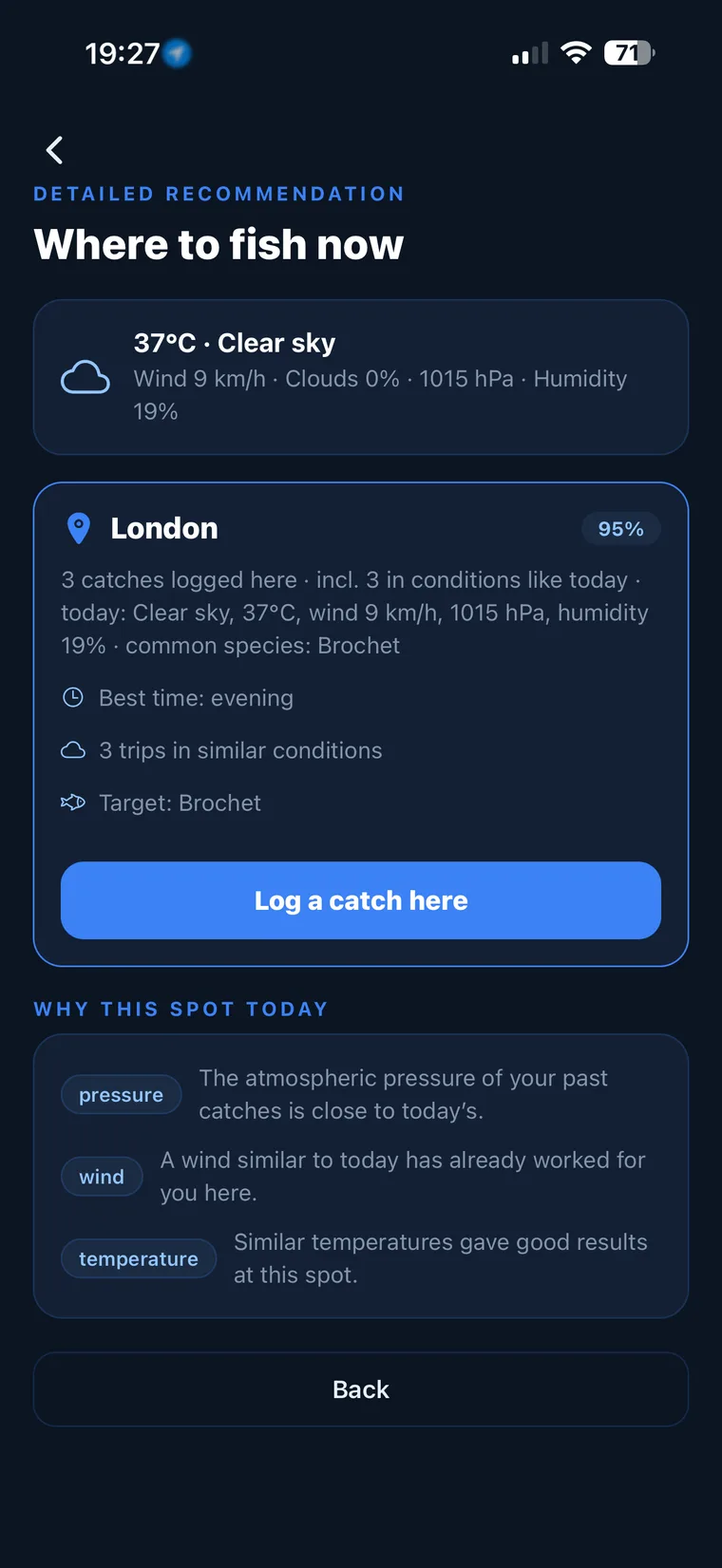
Not sure what to tie on?
Photograph your spot: CarnaFish reads the scene, cross-checks the conditions and gives you the zone, the lure and the retrieve. Free on iOS and Android.
The approach: the real technique
This is what most beginners neglect, and it explains the majority of blank sessions.
- Work upstream. Trout face upstream, so moving that way puts you behind them and out of their field of view.
- Stay low and back from the edge. Don't outline yourself against the sky. On an open bank, crouching changes everything.
- Watch your shadow. A shadow cast across a lie empties it instantly. Fish with the sun in front of you where you can.
- Fish the nearest lie first. Cast straight out to distance and you retrieve your lure back through the close lies, burning them.
- Wade quietly. Vibrations travel extremely well: one heavy step alerts fish several metres away.
The season
In France, trout are fished in first-category water during a defined open season, generally from spring to early autumn. The exact dates are set annually by prefectural order and vary from one department to the next — always check before you go. Our guide on French fishing regulations covers this in detail, and the same principle of locally variable seasons applies across most of Europe.
- Opening (spring): cold, often high water. Fish slow and deep, bigger lures, calm lies.
- Late spring: the most productive period. Water warms, trout switch on and spread across every lie.
- Summer: low, clear water and ultra-wary fish. Fish early and late, and look for oxygenated, shaded water.
- End of season (early autumn): trout prepare to spawn and turn aggressive. A fine window for big fish, provided you release them carefully.
The most common mistakes
- Approaching from upstream: you arrive inside the fish's field of view. This is mistake number one.
- Casting long straight away: the close lies produce first, and are the first to be burned.
- Working a lie too long: unlike perch, a trout refuses quickly and definitively. Two or three passes, then move.
- Too heavy a leader in clear water: in low summer flows, dropping from 20/100 to 14/100 can multiply your bites.
- Ignoring the conditions: flow, temperature and light completely change activity from one session to the next. With CarnaFish, the AI fishing app, you photograph your spot and the AI cross-checks the scene with the conditions of the moment to suggest a zone, a lure and a retrieve.
If you also fish predators, the logic of reading current comes back almost identically in our guide to perch lure fishing on rivers.
Key takeaways
- Work upstream, stay low, watch your shadow.
- Trout sit in the calm immediately beside the current.
- Spinner to cover water, hard minnow for the big ones, soft plastics when the water is up.
- In low, clear water, drop your leader diameter before you change lure.
- Check the season dates: they vary locally and change every year.
FAQ
What lure should I start with for trout?
A size 0 to 2 spinner. It casts far, covers water fast and triggers through flash and vibration, which forgives mistakes in the retrieve. Add a small 4 to 7 cm hard minnow to target the bigger trout, and a few 4 to 7 cm soft plastics for days when the water is up or stained.
What rod for river trout fishing?
A short rod of 1.80 to 2.10 m rated 3-12 g, on a 1000-2500 reel. The reduced length is deliberate: a trout river is cluttered with branches and vegetation, and a long rod quickly becomes unmanageable. Finish with a 14 to 18/100 fluorocarbon leader.
Should I work upstream or downstream?
Upstream, always. Trout position themselves facing the current, so they look upstream: moving that way puts you behind them and out of their field of view. Working downstream means announcing yourself at every lie.
Where do trout hold in a river?
In the calm water immediately beside the current: behind a boulder, on the edge of a seam, under a cut bank, in the pool below a riffle, or in foam eddies. They never sit in the main flow except for the moment of an attack. A good lie is often less than a square metre.
Why am I catching nothing when there are clearly trout?
In the vast majority of cases it's the approach, not the lure. A cast shadow, a silhouette against the sky, a heavy step in the water or a first cast placed too far — burning the close lies on the retrieve — is enough to empty a stretch. Stay low, work upstream, and fish what's at your feet first.
What line diameter for trout?
A 14 to 18/100 fluorocarbon leader covers most situations. In summer, when the water is low and gin-clear, dropping to 14/100 or even 12/100 makes a real difference to the number of bites. In high, stained spring water you can go back up to 20/100 with no penalty.
Can I release a trout without harming it?
Yes, provided you're quick and handle it properly: wet hands, rubber-mesh net, fish kept in the water, unhooked with pliers. Crushing your barbs speeds unhooking enormously. To release, hold the fish facing into the current until it swims off under its own power.
Is the trout season the same everywhere?
No. In France it's set annually by prefectural order and varies by department, and specific stretches can have their own dates. Across Europe the picture is similar: seasons are set regionally and change from year to year. Always check the current rules for the exact water you intend to fish.
Go from theory to fish
CarnaFish reads your spot from a photo and gives you the game plan: zone, lure, retrieve. Free on iOS and Android.