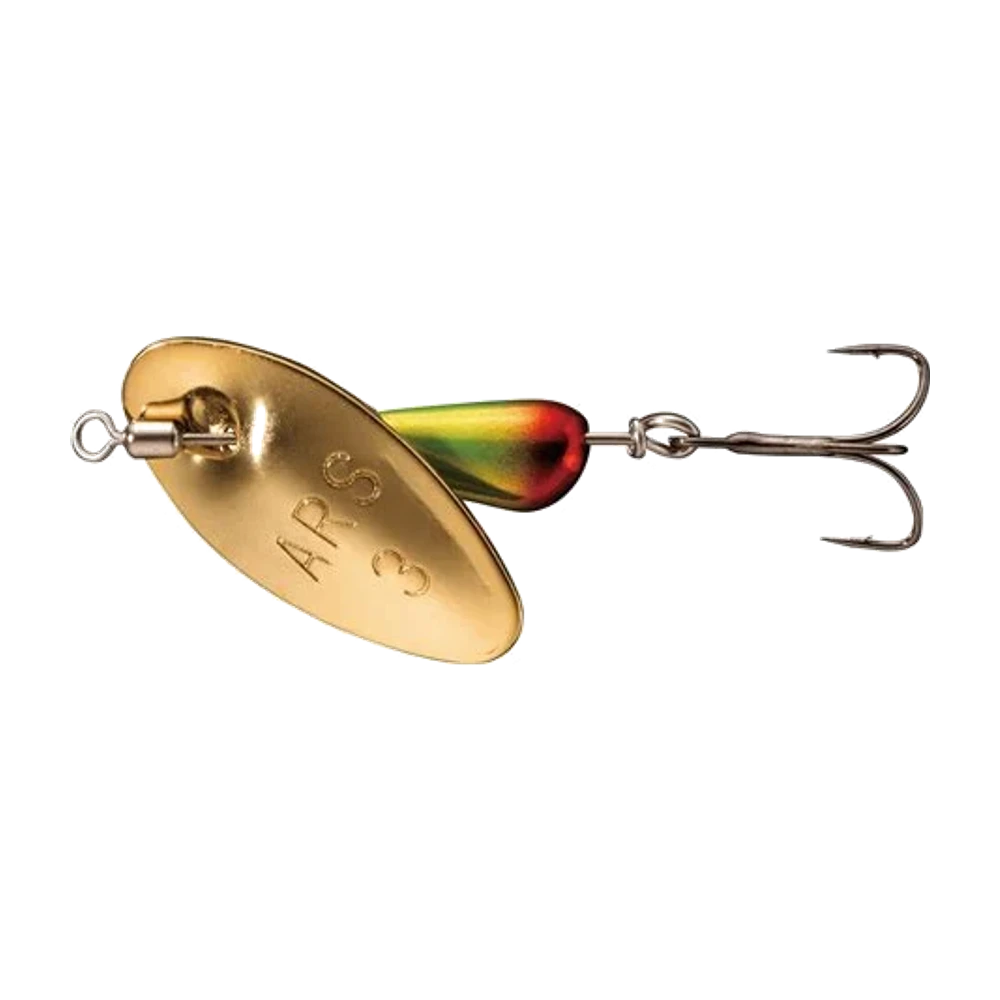
Smith AR-S Spinner: the inline spinner that starts in ten centimetres of water
Before tying this one on, it helps to know if the spot actually calls for it. CarnaFish reads the scene from a photo.
On a trout stream, the problem is neither the colour nor the size of the lure: it is how long the lure takes to start working. The holding spots are two metres long, there is twenty centimetres of water, and you get one three-second retrieve before the lure reaches the branches.
An inline spinner that needs a metre to get its blade turning is unusable in those conditions. The AR-S solves exactly that problem.
A blade that starts without a run-up
The mechanism comes down to two design details.
The shaft is short and the blade is light, with a pronounced angle of attack. It grips the water within the first few centimetres of pull, without needing speed to get going.
A loose lead shot inside the body adds mass that helps the start and produces a discreet click while the blade turns. That sound is an extra signal in fast water, where the background noise is already busy.
The result: you can cast into a two-metre pool and the lure works over the whole length of the spot instead of only being effective on the second half.
Fishing the stream
The basic technique on a small river fits in one sentence: walk up the current and fish upstream.
- Work your way upstream, against the flow. Trout hold facing the current: coming up behind them, you stay invisible.
- Cast above the spot, not into it. Aim for the top of the current line.
- Retrieve just fast enough for the blade to turn, letting the current bring the lure back to you.
- Run the lure alongside structure, not over it: undercut banks, boulders, sunken trunks.
On the water: trout sit in the resting water next to the current, not in the current itself. Aim for the seam between fast and slow water — the lure should pass through the slow side, not the main flow.
Choosing the size
| Blade | Weight | Use |
|---|---|---|
| No. 0 | 1.6 g | Narrow stream, very clear and low water |
| No. 1 | 2.1 g | Small river, general trout work |
| No. 2 | 3.5 g | Medium river, perch, coloured water |
| No. 3 | 6 g | Wide river or hard current |
In low, clear summer water, dropping to the No. 0 is often the only way not to spook the whole spot. Conversely, after rain, going up a size helps detection.
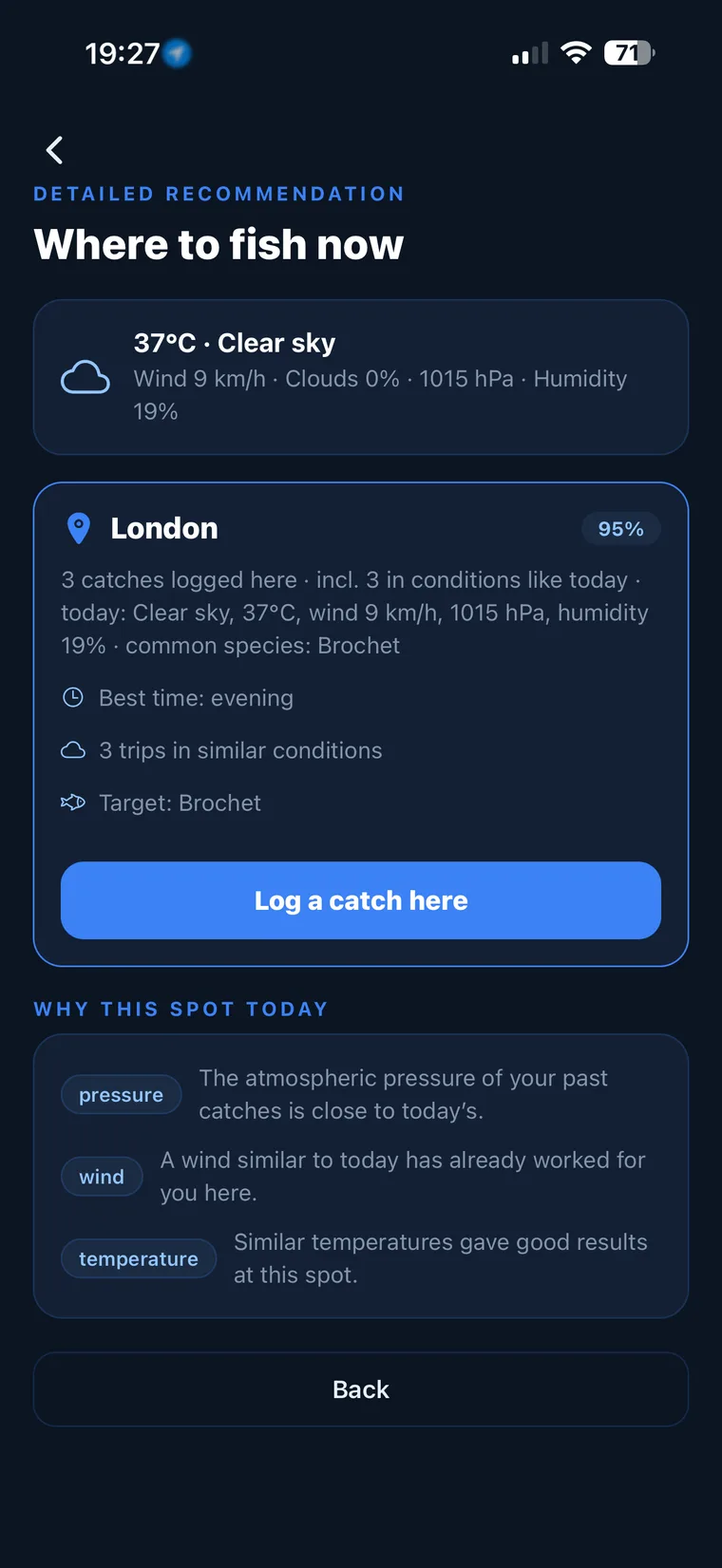
Not sure what to tie on?
Photograph your spot: CarnaFish reads the scene, cross-checks the conditions and gives you the zone, the lure and the retrieve. Free on iOS and Android.
Swivel and line twist
Every inline spinner twists line — that is inherent to a blade turning around a shaft. The point is not to avoid it but to absorb it.
A quality ball-bearing swivel at the head of the leader is essential, not optional. Without one, an hour of fishing is enough to turn your line into a useless spring.
Second point: line that is too stiff twists faster. Supple nylon or thin fluorocarbon in 0.14 to 0.18 mm behaves clearly better than heavy line.
Trout or perch
On trout, the AR-S is a river and stream lure. It excels from spring to autumn, and particularly in fast water where its ability to start quickly makes up for short holding spots.
On perch, it works mostly in the No. 2 and No. 3 sizes, along margins, jetties and rock armour. It beats a soft plastic when the perch are active and feeding — the spinner covers ground faster.
Compared to a Mepps Aglia, the AR-S is slimmer, starts faster and suits small spots better. The Aglia puts out a stronger signal, preferable on a wide river or in stained water.
Our guide to river trout fishing covers how to read holding spots. And if you are unsure which size to tie on facing a given stream, CarnaFish analyses a photo and answers.
Key takeaways
- The blade starts within the first few centimetres: usable on two-metre spots.
- The internal lead shot helps the start and produces a click that is useful in fast water.
- Fish upstream, working your way up the current — you stay behind the trout.
- Aim for the seam between fast and slow water, not the main flow.
- A ball-bearing swivel is compulsory, with supple 0.14-0.18 mm line.
FAQ
Why does the AR-S start so quickly?
Its short shaft and light blade with a strong angle of attack grip the water within the first few centimetres of pull, without needing speed. A loose lead shot inside the body also helps the start.
What size should I choose for trout?
The No. 1 at 2.1 g for general small-river work. Drop to the No. 0 in low, clear summer water, and move up to the No. 2 after rain or on a wider river.
How do I fish a stream with an inline spinner?
By working your way up the current and casting upstream: trout hold facing the flow, so you arrive behind them unseen. Aim for the top of the current line and run the lure along the seam between the current and the calm water.
Does an inline spinner twist the line?
Yes, that is inherent to the design. A quality ball-bearing swivel at the head of the leader is essential to absorb it. Supple line in 0.14 to 0.18 mm also twists less than thick, stiff line.
Does it work on perch?
Yes, above all in the No. 2 and No. 3 sizes along margins, jetties and rock armour. It covers ground faster than a soft plastic when perch are active.
What is the difference with a Mepps Aglia?
The AR-S is slimmer and starts faster: it suits small spots and low water better. The Aglia puts out a stronger signal, preferable on a wide river or in stained water.
The full trout lure guideSeason-by-season strategy: which family of lure, when, and why.Go from theory to fish
CarnaFish reads your spot from a photo and gives you the game plan: zone, lure, retrieve. Free on iOS and Android.