Picasso Rusty Squeaker Buzzbait: the rusted rivet that squeaks on purpose
Not sure this lure fits YOUR spot today? CarnaFish tells you in 10 seconds, from a photo.
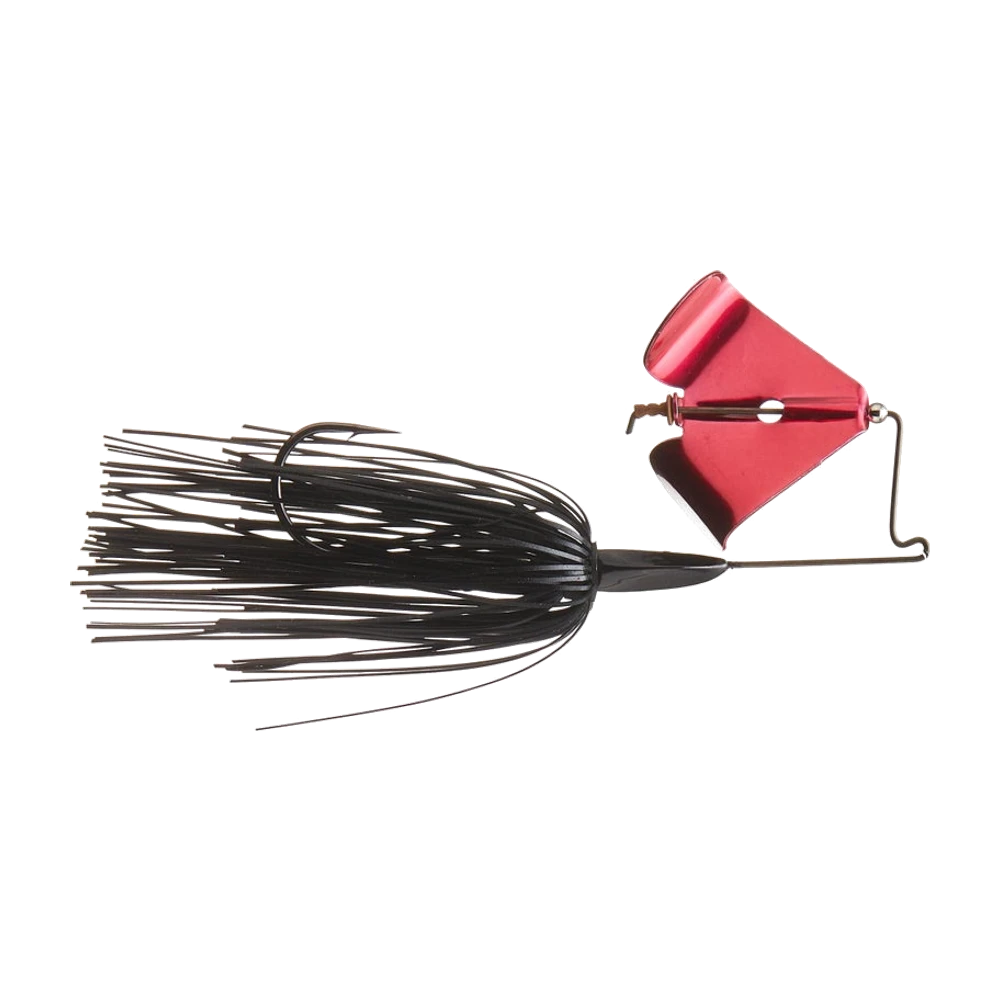
Most anglers spend their lives keeping rust off their lures. Picasso does the opposite on the Rusty Squeaker: the rivet holding the blade is oxidised on purpose during manufacture, because rusted metal squeaks instead of turning silently. On a bank that three conventional buzzbaits have already covered since dawn, that unfamiliar noise is exactly what buys another chance.
A squeak, not a clack
The two sounds in the maker's description need separating. The first, the one that names the lure, comes from the pre-rusted rivet: a high, continuous squeak that Picasso presents as a noise fish are not used to hearing. That is the brand's claim rather than a measurement, but the principle lines up with what any buzzbait left to age in a damp box eventually does, except that here it is repeatable straight out of the packet instead of being an accident.
The second sound is the classic buzzbait clack, produced when the blade strikes the head on every rotation. Picasso states the blade can be set up for that contact on top of the squeak, and describes the result as a one-two combination. The wire arm can also be bent clear so there is no contact at all, leaving nothing but the high squeak, a far more discreet signature that many anglers prefer.
That is the whole point of this bait, and it is also what separates it from the same brand's Picasso Hog Snatcher Buzzbait, which trades purely on blade-to-head contact. The Rusty Squeaker adds a layer of sound that stays present even in its quietest setting.
When to run the squeak alone
Clear water, a glassy surface, pressured fish, a busy lake: those are the conditions where a hard metallic clack often does more harm than good. The fish rises, closes in and refuses at the last metre. The squeak alone stays audible up close without saturating the spot. Conversely, as soon as the wind picks up or the water stains, put the contact back on, because the squeak alone does not carry far enough to announce the lure ten metres away.
A planer head and a thinner wire
The description lists a planer head creating instant lift with straight tracking. It is the same logic as the brand's other buzzbaits: the bait comes up straight away, so you can retrieve slowly without it dropping back under the surface. In practice that instant lift is what makes a buzzbait fishable rather than tiring, because it lets you set your speed by the fish's mood rather than by the lure's requirements.
The wire is a heat-treated Inviz Wire in .040 inch gauge, about 1 mm. Picasso presents it as the right balance between function and durability, and it is genuinely a different compromise from the Hog Snatcher's .051 inch frame. Thinner wire flexes more on the strike, which helps pin a fish that swats without really committing, but it also distorts faster when you drag it through pad stems or a pike chews on it. At that diameter, get into the habit of checking the arm's alignment after every fish.
Before you cast, spin the blade by hand out of the water and listen. The squeak should be clean and even. If it goes dull or intermittent, a strand of skirt or a fibre of weed has usually jammed between rivet and blade. Ten seconds of checking beats a quarter of an hour fishing a lure that has gone silent without you noticing.
What the manufacturer does not say
It is worth being straight about the gaps in the spec sheet. Picasso's description gives no weight, no length and no hook size: it only mentions a Mustad Ultra Point hook and a wire keeper for a soft trailer. Several versions exist depending on the references offered for sale, but no weight-and-hook grid is published the way it is for other models in the range. If the exact weight matters to you, whether you want distance into wind or a very light bait for a crawling retrieve, check the specific reference before buying rather than trusting an assumed figure.
Another undocumented point: nothing says the rusted rivet keeps its squeak over time. Metal worked by water and weed is bound to change. Treat it as a consumable sound and keep a spare in the box if you intend to fish that noise all season.
Not sure what to tie on?
Photograph your spot: CarnaFish reads the scene, cross-checks the conditions and gives you the zone, the lure and the retrieve. Free on iOS and Android.
Working it and setting the hook
The retrieve is the one every buzzbait wants: steady, even, never jerky. Cast past the spot, give one or two turns of the handle before the lure lands so it planes immediately, then hunt for the slowest speed that keeps the blade turning cleanly. Rod tip high at the start, dropping as the lure works its way back to you.
The mistake that costs the most fish
Setting the hook the moment you see the boil. The natural reaction is violent and instant, and nine times out of ten it pulls the lure out of the fish's mouth. You have to keep reeling at the same pace until you feel weight in the rod. A medium-heavy rod with a slightly progressive tip helps hold that pause; a very fast rod makes it almost impossible to respect.
The choice of sound also changes how often you miss. With the double noise, squeak plus clack, strikes are often more violent but missed more often because the fish is aiming at the sound. With the squeak alone, fish come up slower, better framed, and the conversion rate climbs. If you miss three in a row, bend the arm clear and go quiet before you change lures altogether.
In Europe, this kind of buzzbait regularly picks up pike in summer along weed edges. If the spot holds them, fit a steel leader: the thin frame of the bait is not protection.
Colours by light level
- Low light or slightly stained water: black skirt with a metallic red blade, the combination in the photo. The blade throws a dark, warm flash while the black skirt keeps a readable silhouette from below.
- Clear water, bright sky: white skirt with a nickel blade, to match silver forage and stay consistent with transparent water.
- Night fishing: all black, blade included. The surface acts as a screen, and it is the contrast of the silhouette rather than the colour that triggers the take.
Knowing how to tune your buzzbait counts for nothing if you run it along an empty bank. That is exactly what CarnaFish saves you: one photo of the spot, and the AI suggests the zone, the depth and the lure family that fit the day's conditions. For the broader method, our guide to getting started with bass fishing covers the spots and families worth knowing.
What to remember
- The rivet is rusted at the factory to squeak: a sound signature that stays present even when the blade no longer touches the head.
- Two settings, squeak alone or squeak plus clack, chosen by water clarity and fishing pressure.
- A .040 inch frame, about 1 mm, softer than the Hog Snatcher's: better hook penetration, but it wants checking more often.
- Picasso publishes no weight, no length and no hook size for this model, so check the exact reference before buying.
FAQ
Why would a brand new lure have a rusted rivet?
Because rust makes the metal squeak instead of turning silently. Picasso oxidises the rivet deliberately during manufacture to get that high squeak straight out of the packet, rather than waiting for a buzzbait to age in a tackle box.
How much does the Rusty Squeaker weigh?
The manufacturer's description gives no weight, no length and no hook size. Several versions circulate depending on the references on sale, so if weight matters to you, check it on the specific reference rather than relying on an estimate.
Should the blade be set to touch the head?
It depends on conditions. In stained water or wind, the contact adds a clack that carries further. In clear water, over fish that have already been covered, the squeak alone usually goes down better and produces better framed rises.
How does it differ from the brand's Hog Snatcher?
The Picasso Hog Snatcher Buzzbait trades purely on blade-to-head contact and uses a thicker wire, .051 inch against .040. The Rusty Squeaker adds the rivet squeak, present in both settings, on a softer frame.
Does the squeak last over time?
The maker makes no promise on that, and it should be taken as such. Metal changes with water and with trips through vegetation, so treat the sound signature as something that may well shift over a season.
Can it be fished without a trailer?
Yes, it fishes bare, the skirt giving enough bulk on its own. The wire keeper is there for anglers who want to add a soft trailer, useful for lengthening the silhouette and slowing the retrieve slightly when fish are hitting short.
The full bass lure guideSeason-by-season strategy: which family of lure, when, and why.Go from theory to fish
CarnaFish reads your spot from a photo and gives you the game plan: zone, lure, retrieve. Free on iOS and Android.