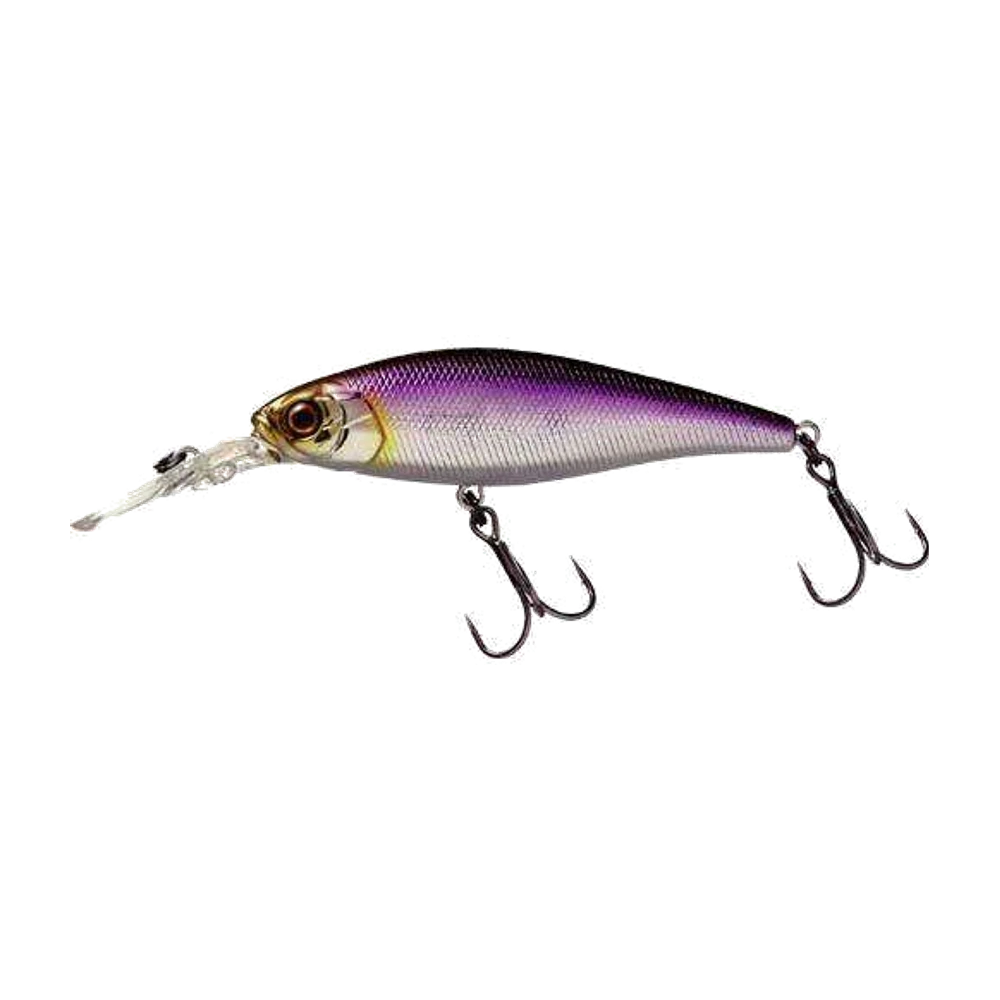
Illex Squad Shad 65: the shad that fishes every depth
Rather not fish it blind? Photograph your spot — CarnaFish cross-checks the conditions and points you the right way.
Some lures get bought because they look good in the packet, and then there's the Squad Shad 65. This one earns its place in the box because it flat-out works: a clean swim across a wide speed range, a profile that reads as a roach or small perch depending on colour, and a price that lets you lose three in the brush without flinching. Here's how to get the most out of it instead of just tying it on and hoping.
What sets it apart from a generic shad
Most budget shads only swim well at one speed: too slow and the tail stops kicking, too fast and the body starts to spiral. The Squad Shad 65 has a wider belly profile than most 6.5 cm shads, which stabilises the swim across an unusually broad speed range. In practice, you can crawl it for a sluggish zander, then rip it fast for an active pike, without changing lures or feeling the action fall apart.
That makes it a genuinely good spot-scouting lure: before you know what's working, you can test several retrieve speeds on the same lure and isolate the variable, instead of wondering whether it's the lure or the retrieve that's wrong.
Matching jighead weight to depth
The Squad Shad 65 body itself weighs almost nothing — the jighead does all the work of depth and fall speed.
Shallow water and margins (0-2 m)
A 3-5 g head is enough, giving a slow, almost suspended fall. Very effective post-spawn, when fish won't chase down a bait that drops too fast.
Mid-water (2-4 m)
Step up to 7-10 g. This is the most versatile setup, and the one to start with if you don't yet know the bottom contour of the spot.
Deep water or current (4-6 m)
12-15 g keeps you in contact with bottom without constant re-casting. Past that depth, the Squad Shad 65 isn't the right tool anymore — switch to a longer shad or a deep-diving hardbait.
The rigging detail that changes everything
The most common mistake is pairing it with a hook too big for the body: the lure bends, the swim turns erratic, and missed strikes pile up. For a 6.5 cm body, a hook sized around a 1/0 keeps the silhouette straight and the hookset clean. Also check that the belly slit closes flush around the hook — a millimetre of misalignment is enough to send the lure into a spiral.
Simple rule: if the lure starts spiralling on the very next cast, it's almost never the lure — it's the rig.
Colour by light and water clarity
- Clear water, bright sun: Ayu or a translucent silver tone, to stay subtle.
- Overcast, slightly stained water: Ghost Minnow, a solid visibility/realism compromise.
- Murky water or low light: Chartreuse Back or another bright-backed colour — contrast carries further than realism here.
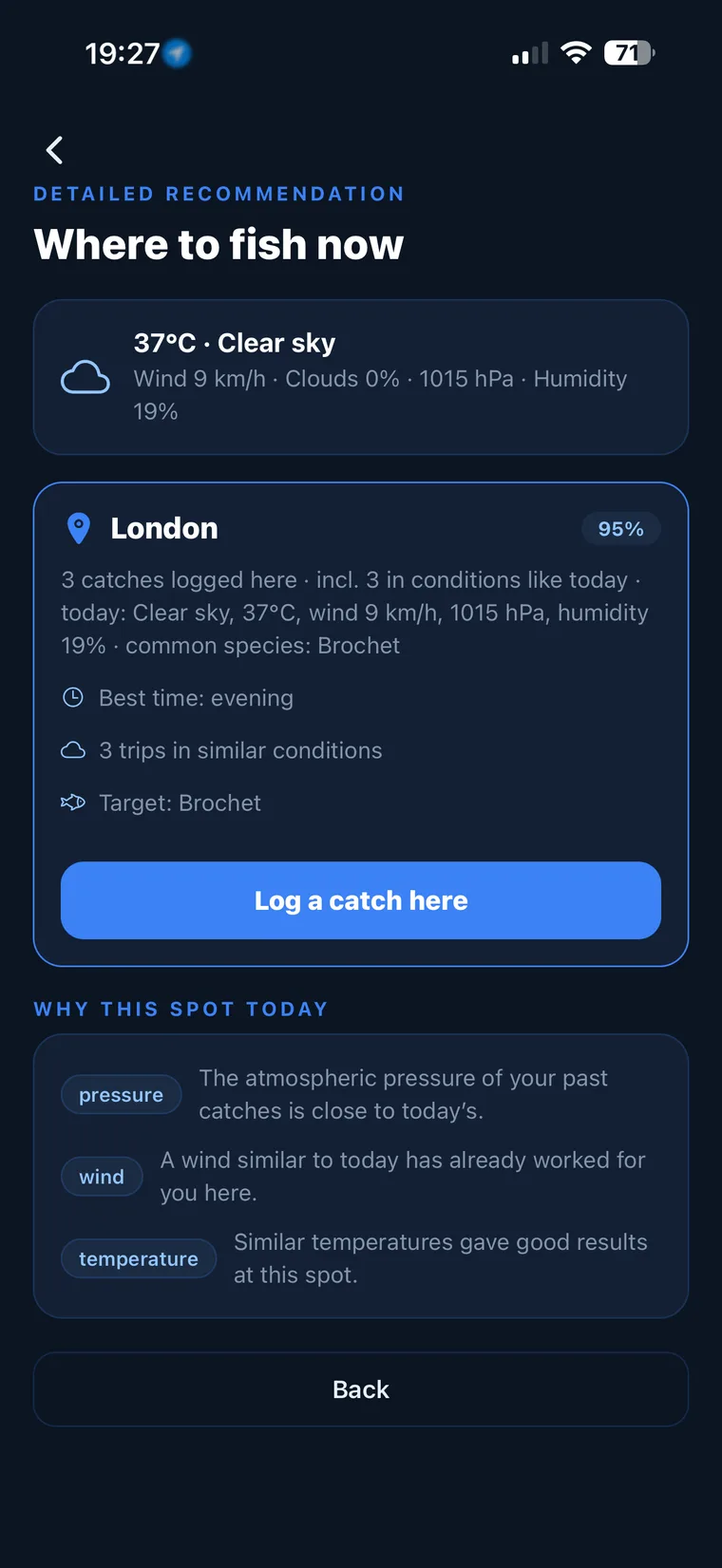
Not sure what to tie on?
Photograph your spot: CarnaFish reads the scene, cross-checks the conditions and gives you the zone, the lure and the retrieve. Free on iOS and Android.
Three retrieves for three situations
- Dead-slow straight retrieve: the baseline. Effective in cold water and on inactive fish, especially zander early and late in the season.
- Short rip-and-pause: two or three cranks, then a one-second pause. The Squad Shad 65's tail keeps kicking even at rest thanks to its shape, which triggers reaction strikes on the pause.
- Fast straight retrieve: reserved for active pike in warmer water. This is where the wide belly profile earns its keep — the swim stays stable where thinner shads start to break down.
Where this lure isn't the right call
Let's be honest: in heavy cover (thick weed, dense brush) the exposed hook of a plain jighead snags constantly. If that's your spot, reach for a weedless Texas rig or a spinnerbait instead — both handle cover far better. The Squad Shad 65 does its best work in open water, along drop-offs or clean margins, not buried in vegetation.
Picking the right lure never replaces reading the spot in the first place — that's the whole point of learning to read a fishing spot before tying anything on. It's exactly why CarnaFish exists: you photograph the water, the AI reads the scene and the day's conditions, and hands you a zone and a retrieve — leaving you to pick the right jighead weight.
Key takeaways
- 6.5 cm body, jighead weight set by depth: 3-5 g shallow, 7-10 g mid-water, 12-15 g past 4 m.
- Stable swim across a wide speed range — great for testing retrieves before switching lures.
- Use a 1/0-equivalent hook to keep the silhouette straight; always check the belly slit after a snag.
- Avoid heavy cover: go weedless or switch to a spinnerbait in thick vegetation.
FAQ
Is the Squad Shad 65 beginner-friendly?
Yes, it's one of the better lures to start with: its swim forgives retrieve-speed mistakes that would kill the action on other shads. Start with a slow straight retrieve on a 7-10 g head, then adjust for depth.
What jighead weight should I use with the Squad Shad 65?
Between 3 and 15 g depending on depth: 3-5 g from the surface to 2 m, 7-10 g from 2 to 4 m, 12-15 g beyond that. Weight also sets the fall speed, which shapes what retrieves are possible.
Can you catch zander on the Squad Shad 65?
Yes, and it's one of its strongest uses. Fished dead-slow near bottom on a 7-10 g head, it reads very well as a tired baitfish — exactly what an inactive zander is looking for.
Why does my Squad Shad 65 keep spiralling?
It's almost always a rigging issue: a hook too large for the body, or a belly slit that didn't close properly after hitting cover. Check the lure sits straight on the hook before casting again.
What's a good alternative for heavily weeded spots?
In thick weed or brush, a weedless Texas-rigged soft plastic or a spinnerbait will handle cover far better than the exposed hook on the Squad Shad 65's standard jighead.
The full pike lure guideSeason-by-season strategy: which family of lure, when, and why.Go from theory to fish
CarnaFish reads your spot from a photo and gives you the game plan: zone, lure, retrieve. Free on iOS and Android.