Savage Gear Fat Vibes: the lipless that searches fastest
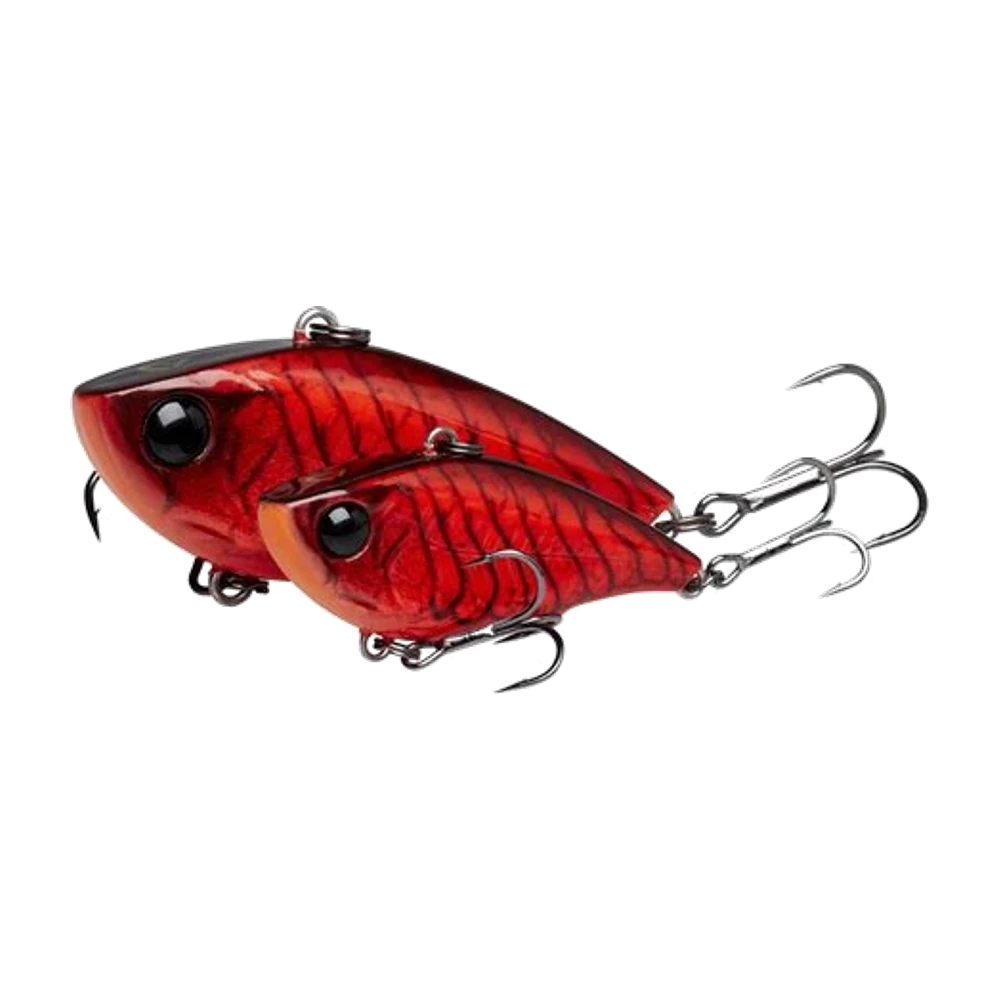
One lure, endless conditions. CarnaFish reads your spot from a photo so you are not just guessing.
When you arrive at a water you do not know, the first problem is not choosing the right lure: it is finding the fish. A soft plastic fished well catches fish, but it covers 200 m of bank an hour. At that rate you can spend a whole day over dead water without knowing it.
The lipless solves exactly that problem. The Fat Vibes casts far, sinks fast, vibrates hard and comes back quickly: it is the most efficient locating tool in the box.
No lip, so no depth limit
A standard crankbait has a lip that fixes its running depth. A lipless has none: it sinks, and you decide the water layer by counting the descent.
That gives three practical advantages.
It fishes every depth with one lure. Three seconds of sink for 1.5 m, ten seconds for 5 m. You explore the column without changing model.
It casts a very long way. With no lip, the profile is aerodynamic and the mass is concentrated. On an open bank or with the wind behind you, you double the distance compared with an equivalent crankbait.
It vibrates from the first centimetre. No dead time, no wind-up phase.
The yo-yo: the retrieve that catches zander
On a straight retrieve the Fat Vibes catches perch and pike. On zander, it is the yo-yo that makes the difference.
- Cast and let it sink to the bottom, line half-tight.
- Two fast turns of the handle or a wide rod pull: the lure lifts off, vibrating hard.
- Stop everything and let it drop back with the line just tight, no slack.
- Repeat as soon as it touches bottom.
On the water: the bite comes during the descent, almost never on the way up. It shows as a clear tap, or more often as a line that stops sinking earlier than expected. Strike at the slightest anomaly.
This is fishing where you follow your line with your eyes as much as you feel through the rod. A line that goes abnormally slack is a bite.
Choosing the weight
| Depth | Weight |
|---|---|
| Under 2 m | 11 to 14 g |
| 2 to 4 m | 14 to 17 g |
| 4 to 7 m | 17 to 21 g |
| Over 7 m or in current | 21 to 24 g |
The reflex of always reaching for the heaviest is a mistake: too heavy a lure sinks too fast and shortens the gliding phase, which is precisely when the zander makes up its mind.
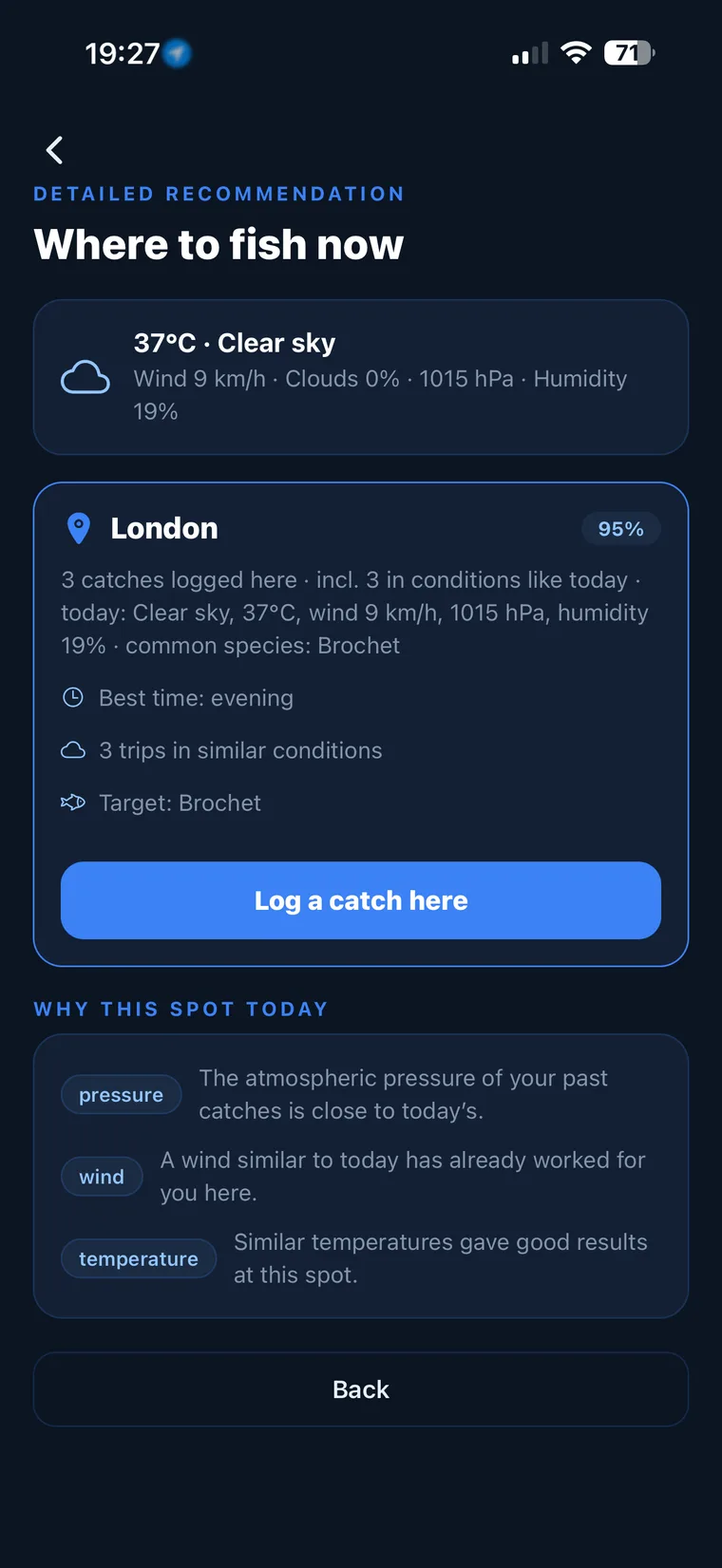
Not sure what to tie on?
Photograph your spot: CarnaFish reads the scene, cross-checks the conditions and gives you the zone, the lure and the retrieve. Free on iOS and Android.
Why it excels in cold water
The lipless has a reputation as a winter lure, justified by two mechanisms.
First, the vibration carries far in cold, clear water, where fish are grouped up and barely mobile. A strong signal pulls in a fish that would not have moved for a discreet lure.
Second, the gliding descent demands little effort from the predator. A zander in water at 6 °C will not chase over five metres, but it will open its mouth on prey sinking slowly thirty centimetres away.
It is also an excellent early spring lure, when the crawfish come out: red and brown colours are particularly productive then.
The rig, no compromises
Braid is all but mandatory. The lipless is fished far and deep, and nylon or fluorocarbon straight through absorb too much of the subtle bites on the drop. Fine braid with a metre of 0.30 mm fluorocarbon leader gives the sensitivity you need while staying discreet.
For pike, go up to 0.50 mm or add a short titanium trace: a lipless's exposed trebles easily bring the line into contact with teeth.
The stock trebles are decent but blunt quickly on rocky bottoms. Check them regularly — a lipless spends its life scraping.
Our guide to zander lure fishing covers reading spots in cold water. And if you do not know which water layer to explore first, CarnaFish analyses a photo of the spot and suggests a starting point.
Key takeaways
- No lip: you choose the depth by counting the descent.
- It is the fastest locating tool you have — cast far, retrieve fast, cover ground.
- For zander, fish it on a yo-yo: the bite comes during the descent.
- Do not automatically take the heaviest: a slow descent is what makes the fish decide.
- Braid with a 0.30 mm fluorocarbon leader is essential to feel the bites.
FAQ
How do I set the running depth of a lipless?
By counting the sink time before starting the retrieve. The Fat Vibes drops about 50 cm per second depending on weight: three seconds for 1.5 m, ten seconds for 5 m.
Which retrieve works best for zander?
The yo-yo. Let it sink to the bottom, give two fast turns of the handle or a wide pull, then let it drop back with the line kept tight. The bite comes during the descending phase.
Which weight should I choose?
11 to 14 g under 2 m, 14 to 17 g down to 4 m, 17 to 21 g down to 7 m, 21 to 24 g beyond that or in current. Avoid overloading: too heavy a lure shortens the gliding descent that triggers the attack.
Why does the lipless work so well in winter?
Its vibration carries far in cold, clear water, where fish are grouped up and barely mobile. And its slow descent allows an effortless attack, which matches how a predator behaves in cold water.
Do I need to fish it on braid?
Yes, it is all but essential. Bites on the drop are too subtle to be felt on nylon or fluorocarbon straight through. Fine braid with a metre of 0.30 mm fluorocarbon leader is the right compromise.
Do I need a steel leader for pike?
0.50 mm fluorocarbon is enough in most cases, but a short titanium trace is safer. A lipless's exposed trebles often bring the line into contact with the teeth.
The full zander lure guideSeason-by-season strategy: which family of lure, when, and why.Go from theory to fish
CarnaFish reads your spot from a photo and gives you the game plan: zone, lure, retrieve. Free on iOS and Android.