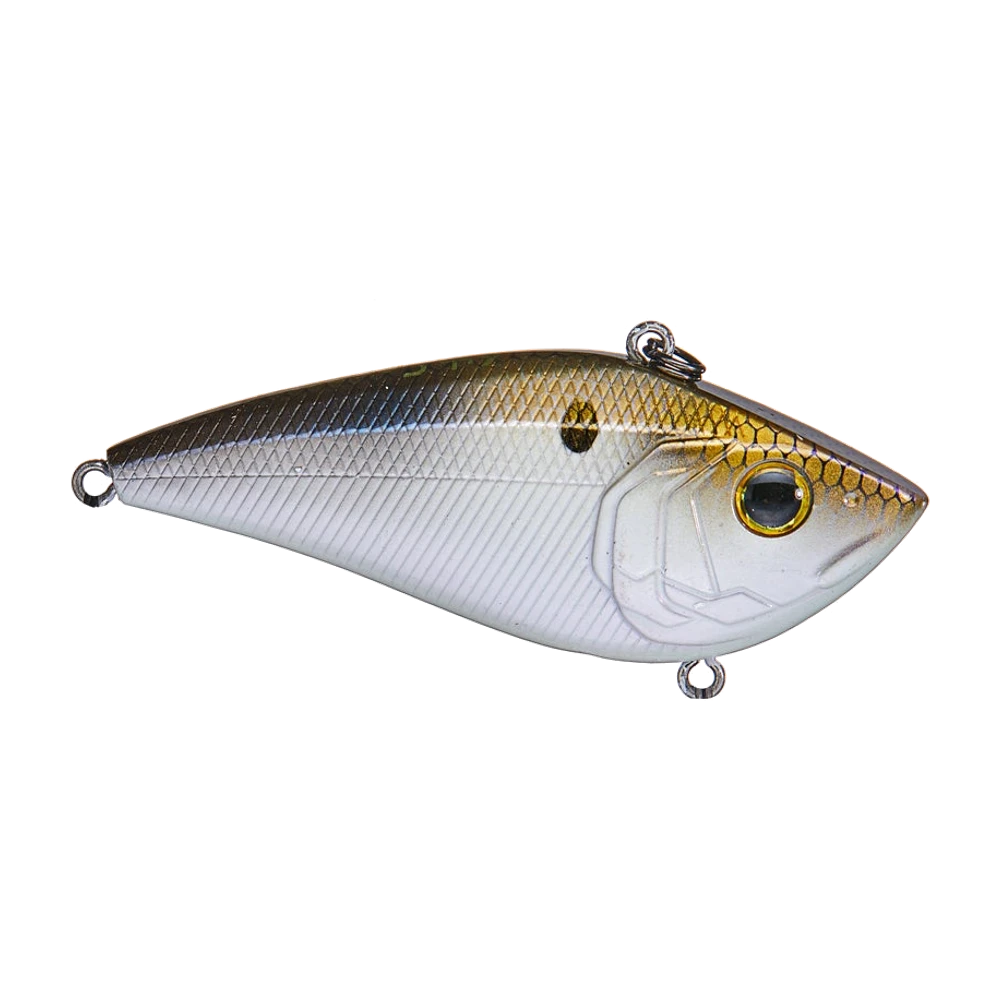
6th Sense Snatch 70X: the high-pitch lipless that shimmies down
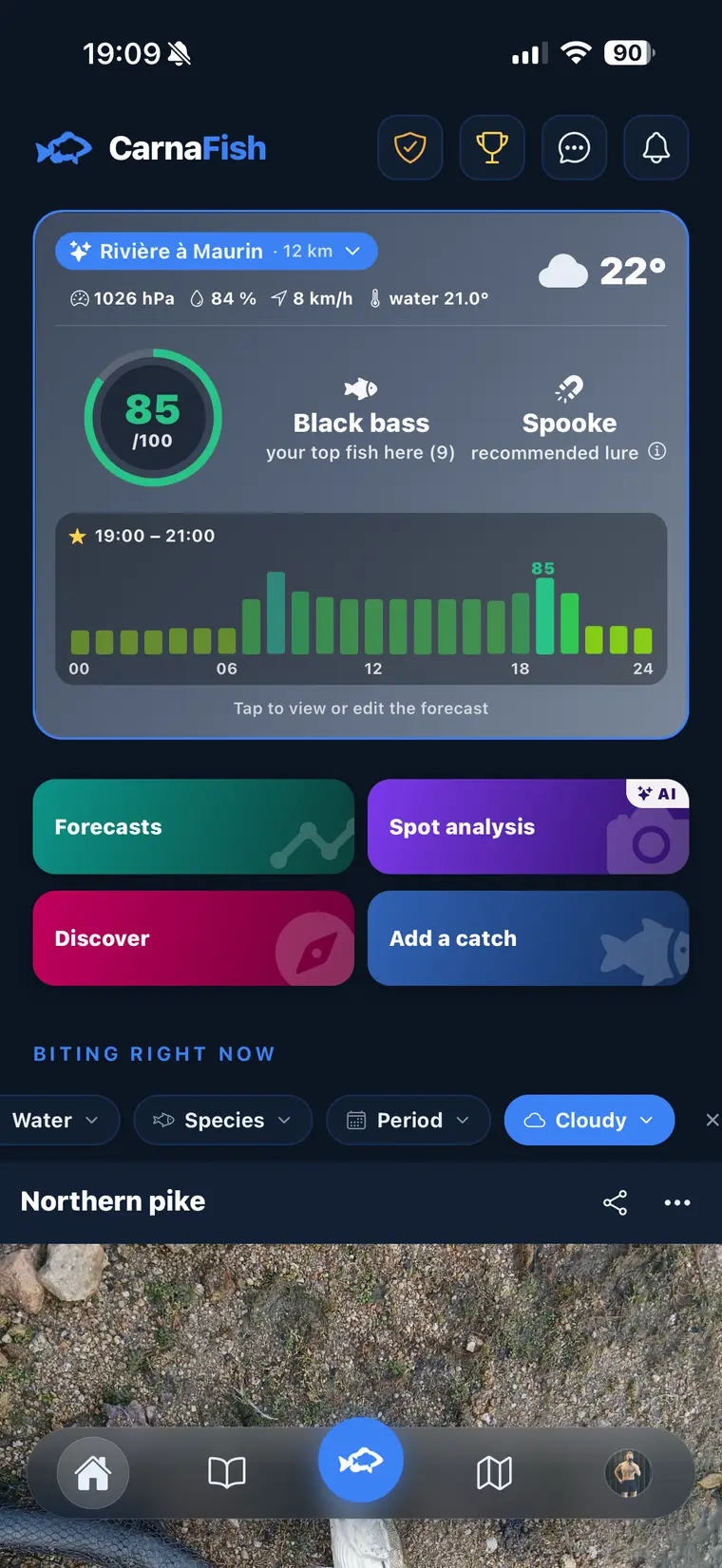
The right lure in the wrong spot still catches nothing. CarnaFish spots the zone that works, from a single photo.
A twelve-mile-an-hour crosswind, a big grassy flat to cover, and three quarters of the zone out of reach with the crankbait you had tied on. That is exactly the problem a dense lipless solves: no bill to brake the flight, a compact body, and another thirty yards on every cast. The 6th Sense Snatch 70 X is built on that logic, with a calibrated weighting system that serves it on the cast as much as on the drop.
A high-pitch rattle, not a low one
Every lipless makes noise, but not the same noise. 6th Sense steered the Snatch 70 X toward a high-frequency rattle — a dry, sharp clatter rather than the low knock that lipless baits with large tungsten weights produce. That difference has practical consequences.
A high-pitched sound carries less far through water than a low one, but it cuts far better through an already noisy environment: moving grass, chop, gravel bottom. It also imitates the sound of a panicking bait ball more faithfully, where dozens of small fast impacts overlap. In practice the Snatch 70 X is at its best on a fish actively working a school, and slightly less so on an isolated fish you need to call in from twenty yards through dirty water — there, a lower-pitched lipless keeps the edge.
Three settings, three ways to work it
6th Sense sum up the lure's use in three verbs, and each one maps onto a type of spot.
In the grass. Cast past the zone, let the bait drop until it touches the top of the vegetation, then retrieve feeling for contact. When the lure grabs a strand, snap your wrist to rip it free — that violent release, which frees the bait in a burst of vibration, is the number one trigger in this kind of fishing. You are not trying to avoid the grass, you are trying to hit it.
Over rock. Same logic, different substrate: let the lure bang the rocks and accept the deflections. A lipless has no bill protecting the trebles, so you will lose baits — that is the price of the technique. In exchange, each unplanned contact produces a direction change nothing else reproduces as well.
In open water. Over blow-ups or schools marked on the sonar, the Snatch 70 X gets burned: a very fast retrieve, no bottom contact, straight through the zone. It also fishes on the yo-yo — three turns of the handle, pause, the bait shimmies back down, then you pick it up again.
The classic mistake: fishing a lipless at one depth
A sinking lipless has no running depth. Unlike a billed crankbait that mechanically tops out, the Snatch 70 X keeps going down as long as you let it, and its running depth depends on exactly two things: the sink time you give it before you start, and how fast you reel.
The beginner's instinct is to always reel at the same cadence and conclude the bait does not work. The right method is to count the drop. Cast, count five, retrieve. Nothing? Cast, count ten, retrieve. That way you sweep the whole water column with one bait in three or four casts — the main reason a lipless stays in the box all year.
The shimmy on the drop is the lure's most productive phase, and nobody fishes it. Keep the line just tight on the fall, rod at eleven o'clock: half the bites come during those two seconds when you are doing nothing.
A weighting system that works twice
6th Sense advertise a precise weighting system on this model, and it pays off in two places. On the cast, mass concentrated toward the rear stabilises the bait in flight, and that is what keeps distance into a headwind — a decisive argument when you fish from the bank on an exposed body of water. On the drop, that same balance means the lure does not fall flat but shimmies sideways, nose slightly up.
At 2.75 in and about 0.63 oz, the density is high: this bait sinks decisively, somewhere around three feet per second depending on how much you hold the line. Keep that figure in mind when you count your drops.
Rigging and hooks
The line tie is on the back, and it needs free play: a quick snap or a loop knot, never a knot cinched against the eye. A restricted lipless loses vibration amplitude exactly as a restricted crankbait loses swim amplitude.
Twenty-pound braid for long-range hooksets and for feeling contact in the grass, with a yard of 15 lb fluorocarbon leader. The stock VMC trebles are good quality and do not need replacing as a matter of course. In vegetation, though, check the rear treble's points every fifteen casts: a point blunted on rock or bent by ripping grass costs you the first serious bite of the day.
Not sure what to tie on?
Photograph your spot: CarnaFish reads the scene, cross-checks the conditions and gives you the zone, the lure and the retrieve. Free on iOS and Android.
Colours by water and bottom
- Clear water over sand: a natural silver with a blue or sea-green back. Open-water forage is silver everywhere, and a fast-moving lipless is seen as a blurred silhouette anyway.
- Rock or gravel bottom: a craw tone, brown-orange. That is the dominant prey over this substrate in spring and autumn, and the colour makes a real difference in clear water.
- Stained water or low light: chartreuse, gold or firetiger. You give up realism in favour of contrast and short-range visibility.
What it complements in a tackle box
Against a Rippin' Rap, with its narrow body and more metallic rattle, the Snatch 70 X has a slightly fuller profile and a wider swim — it calls more, while the Rippin' Rap drops straighter and threads dense vegetation better. Compared with the Red Eyed Shad, the historic benchmark of the class, it gains pitch and casting distance without rewriting the technique. Against a TN 70, a Japanese lipless of the same length, it is louder and less subtle: the TN 70 stays better on heavily pressured fish in clear water.
And if water temperature drops and fish glue themselves to the bottom in twenty feet, the right tool is no longer a lipless but a Slice blade bait, which sinks twice as fast and fishes vertically.
Knowing whether today's fish are on a grass flat or pinned in twenty feet is in fact the question that determines everything else. That is exactly what CarnaFish is for: a photo of the spot, and the AI suggests a zone, a depth and a presentation style matched to the conditions. To understand how spots and lure families shift over the year, our season-by-season predator fishing guide sets the framework.
Key takeaways
- A high-frequency rattle: excellent on a fish working a school, less effective for calling from a distance in dirty water.
- One size only, 2.75 in for about 0.63 oz, sinking: running depth is set by counted sink time and retrieve speed.
- The bite often comes during the shimmying drop: keep the line just tight instead of casting again straight away.
- Ripping a grass strand free is a trigger, not an accident: look for contact with vegetation rather than avoiding it.
FAQ
Does the Snatch 70X come in several sizes?
No, 6th Sense offer it in a single format, the Snatch 70 X, listed at 2.75 in for 5/8 oz — about 7 cm and 17.5 g — in the sinking class. Variation comes through colours, not sizes.
How deep does this lipless run?
At every depth, and that is the point. Because it sinks and has no bill, its depth depends only on the sink time you allow before retrieving and on your reel speed. Count the drop in seconds and vary that count from cast to cast to sweep the column.
Can you fish it in grass without snagging constantly?
Yes, as long as you accept contact. You retrieve touching the top of the vegetation and rip free with a wrist snap as soon as the bait grabs: that abrupt release is precisely what draws strikes. In truly dense grass that mats up to the surface, switch to a Texas-rigged soft plastic instead.
Does the Snatch 70X work for zander?
Yes, mostly on a yo-yo retrieve over clean bottom between six and thirteen feet, in late autumn. The shimmy on the drop matches what a zander is looking for well. For deep vertical work, though, a blade bait remains better suited.
Should I replace the stock trebles?
No, they are VMC and they are good. The real vigilance is about wear: fishing rock and vegetation, check the rear treble's points regularly and replace it as soon as it is blunted or bent, without waiting for a failure.
How does it differ from a Rippin' Rap?
The Rippin' Rap has a narrower body, a more metallic rattle and a more vertical drop, which helps it get through dense vegetation. The Snatch 70 X has a wider swim and a higher-pitched sound, and it casts better into wind. The two complement each other more than they compete.
The full bass lure guideSeason-by-season strategy: which family of lure, when, and why.Go from theory to fish
CarnaFish reads your spot from a photo and gives you the game plan: zone, lure, retrieve. Free on iOS and Android.