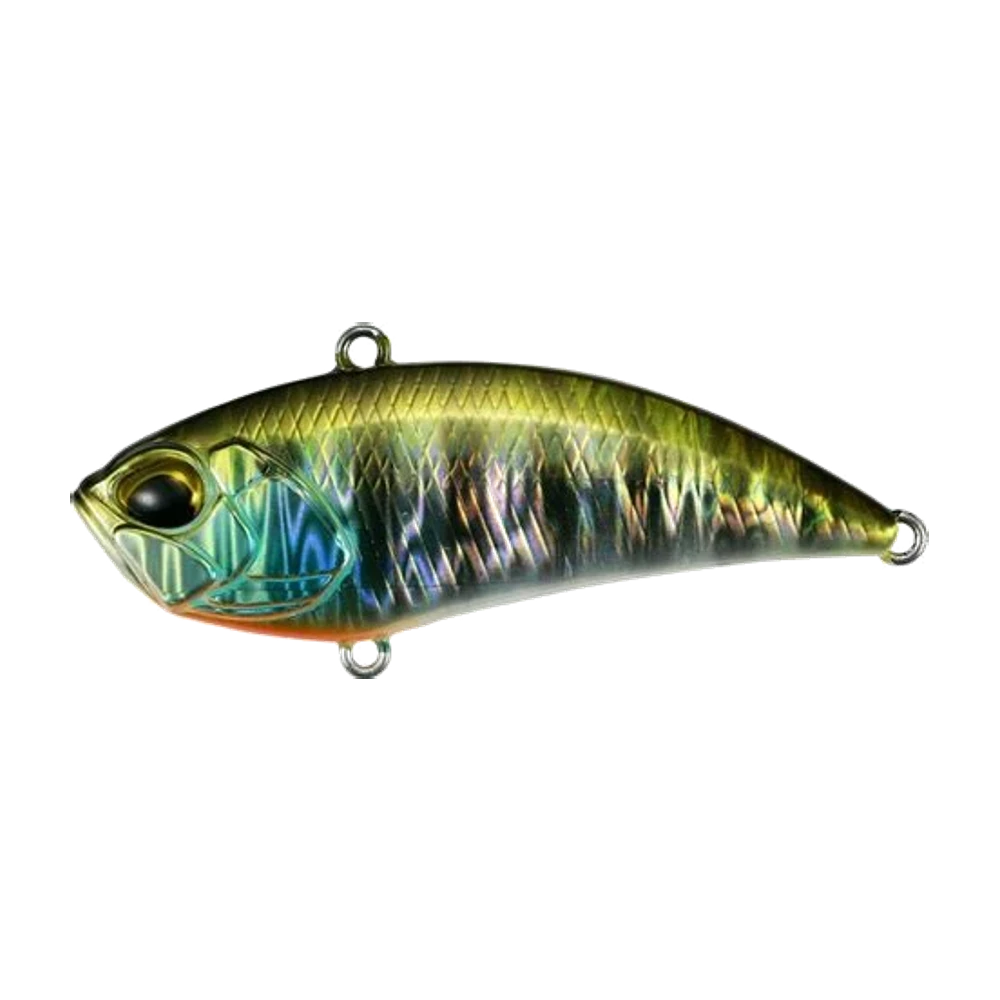
DUO Realis Vibration 62: find the fish, then make them bite
Before tying this one on, it helps to know if the spot actually calls for it. CarnaFish reads the scene from a photo.
On a fifteen-hectare gravel pit in November, the real problem is not getting a zander to bite. It is knowing where they are. The fish gather on a handful of precise flats or drop-offs, and the rest of the water is empty. You can spend the whole day fishing a soft plastic immaculately over a zone that holds nothing.
A compact lipless solves that problem in a way few other lures can: it first covers water fast to locate fish, then works slowly over the zone you found, without changing lure. The Realis Vibration 62 is built for that double duty — heavy enough to cast far and sink fast, small enough to stay credible for zander that refuse big profiles in cold water.
This page covers the two phases separately, because they really are two different kinds of fishing with the same object on the end of the line.
Phase 1: covering water, with a count in your head
The aim is to cover as much ground as possible and pick up changes in bottom depth. The retrieve is straight, moderately fast, just above the bottom.
- Cast as far as you can and count the seconds until it touches down. Note the number.
- Start the moment it touches with an even straight retrieve. You should feel the vibration constantly in the rod tip.
- Recount the sink on every fan cast. If the count goes from 9 to 6 seconds, you have just found a rise. If it goes to 13, you are over a hole.
- Note the transition zones mentally. They are what concentrate fish, not the big even flats.
This phase goes quickly: ten to fifteen fan casts from one point on the bank, then move thirty metres. In an hour you have a mental map of the stretch.
Phase 2: the yo-yo, once the zone is identified
As soon as you get a bite, a suspicious contact or a drop-off you have located, you change register. The yo-yo means lifting the lure off the bottom and letting it fall back, working its drop.
- Let it touch bottom on a tight line.
- Lift the rod firmly, from the 9 o'clock position to 11 o'clock, about a metre of travel.
- Lower the rod with the lure, line semi-tight, never fully slack. The lure glides down at an angle.
- Wait for bottom contact before starting again. Count the seconds: the bite almost always comes during that fall, and usually shows up as a contact that never arrives.
- Take a turn of the handle between each cycle to work your way forward.
| Water temperature | Lift amplitude | Time between cycles |
|---|---|---|
| Above 15 °C | 1 to 1.5 m, firm | continuous |
| 10 to 15 °C | 1 m | 1 s resting on the bottom |
| 6 to 10 °C | 50 to 70 cm | 2 to 3 s on the bottom |
| Below 6 °C | 30 to 50 cm | 3 to 5 s on the bottom |
On the water: with a lipless on the yo-yo, the only bite you will genuinely notice is an absence. The lure should have hit bottom after four seconds and it has touched nothing: a fish has intercepted it mid-fall. Set on the silence, not on the thump. That one reflex radically changes how many zander you land.
What high frequency buys you, and who it hurts
A compact lipless vibrates faster and tighter than a big one. The signal it puts out is high-pitched rather than deep, and it does not carry as far — but it stays much closer to what a small, nervous baitfish produces.
What that buys you: on zander in clear, cold water that refuse most strong signals, this high-pitched profile often gets through where a big vibration only draws follows. On perch it is even more marked — high frequency is exactly what they are looking for.
What it costs you: in very stained water or at night, the signal does not carry far enough to call a fish from a distance. There, a bulkier, deeper-toned model will do better, even if it looks less subtle.
One more practical point: the vibration transmits straight into the rod. If you stop feeling anything during a straight retrieve, something is going on — weed caught on a treble, algae on the line tie, or the lure riding too high. Check every time.
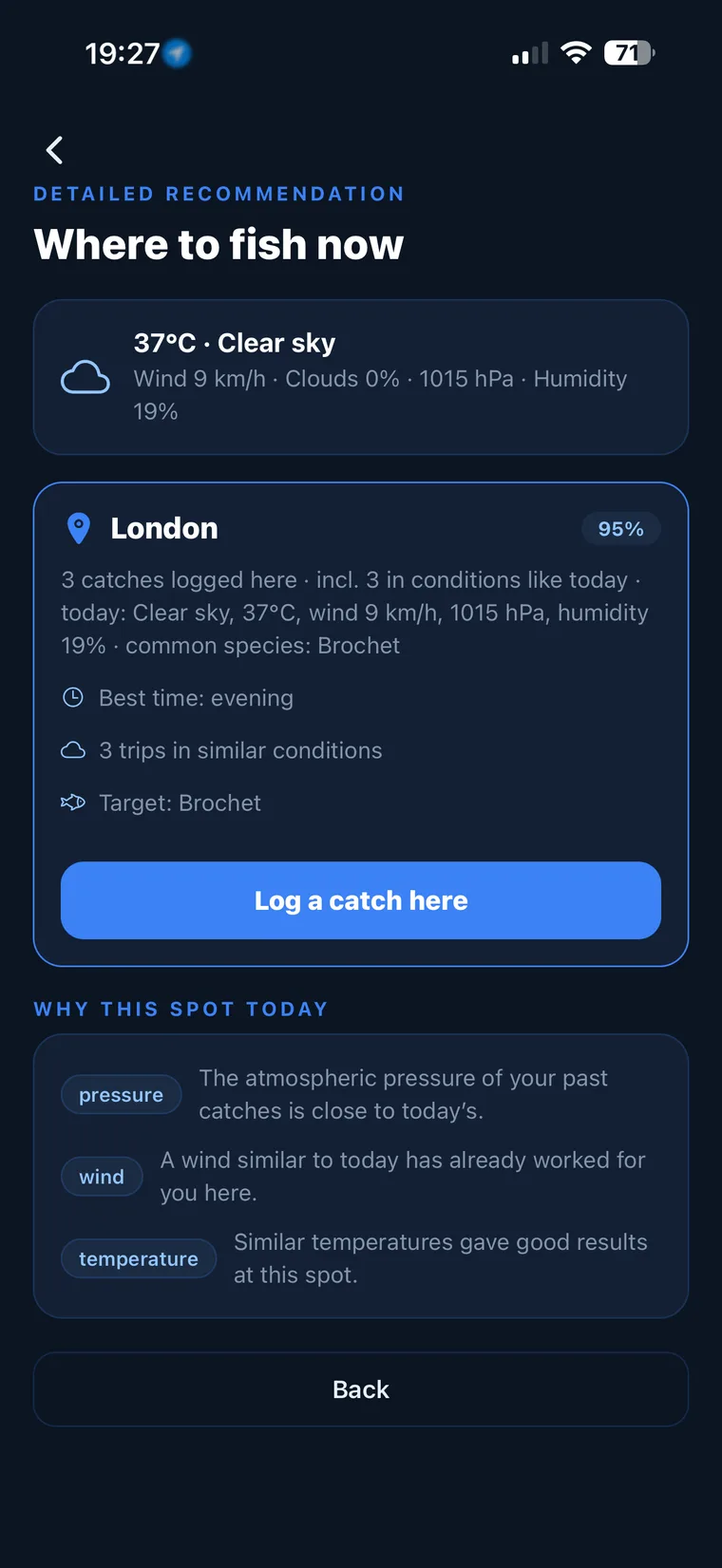
Not sure what to tie on?
Photograph your spot: CarnaFish reads the scene, cross-checks the conditions and gives you the zone, the lure and the retrieve. Free on iOS and Android.
Snags, and how to limit them
Two trebles under a lure working right on the bottom is an invitation to get hung up. Three measures that work:
- Remove the front treble on rocky or branch-strewn bottoms. You lose very little hooking ability — zander almost always take from behind — and you halve the snags.
- Never let the lure lie flat for too long. On soft bottom it beds in; on rock it wedges. Two to three seconds maximum in cold water.
- Run a fluorocarbon leader of at least a metre. It takes the abrasion against rock, where braid in direct contact parts cleanly.
For the occasional pike, a short wire trace is an option, but it slightly restricts the action at low speed.
Realis Vibration 62 or a big lipless
Against a bulkier lipless such as the Rapala Rippin' Rap, the split is clear: the big model calls from further away, produces a deep signal and suits stained water, wind and large areas to cover. The 62 aims at finesse — clear water, cold water, wary fish, and smaller targets like perch.
Against a soft vibration lure such as the Savage Gear Fat Vibes, the difference is in the feel: the soft plastic is more forgiving of a fish that nips at it, while the hard lure hooks more decisively but gets spat out faster.
Our beginner's guide to zander fishing with lures places the lipless among the other cold-season families. And if you cannot decide between covering water with a vibration lure or working a soft plastic on a given spot, CarnaFish analyses a photo of the spot and answers.
Key takeaways
- Two kinds of fishing with one lure: straight retrieve to cover water, then the yo-yo over the zone you found.
- Count the sink on every cast: it is your bank-side echo sounder.
- The yo-yo bite shows up as a bottom contact that never comes. Set on the silence.
- Reduce the lift and lengthen the rest on the bottom as the water gets colder.
- Take off the front treble on cluttered bottoms; you lose almost nothing in hooking.
FAQ
How do you fish a lipless on the yo-yo?
Let it touch bottom, lift the rod about a metre, then lower it with the lure on a semi-tight line. Wait for bottom contact before starting again, and take a turn of the handle between each cycle.
Why can I not feel the bites with this lure?
Because the bite comes during the fall and shows up as an absence of contact rather than a thump. If the lure does not reach the bottom when you expect it to, set the hook immediately.
Does the Realis Vibration 62 work in winter?
Yes, it is one of its best periods for zander. Reduce the lifts to 30 or 50 cm and let the lure rest on the bottom for three to five seconds between cycles.
Should you remove one of the trebles?
On rocky or branch-strewn bottoms, taking off the front treble greatly reduces snags without really costing you hook-ups, since zander mostly take from behind.
What line should you use with a lipless?
Braid for sensitivity, with a fluorocarbon leader of at least a metre against bottom abrasion. Straight through, 0.22 to 0.28 mm fluorocarbon works well but transmits the drops less finely.
Small or big lipless?
The small model vibrates higher and tighter: that is the choice in clear water, in cold water and on wary fish. The big model carries further and suits stained water, wind and large areas to search.
The full zander lure guideSeason-by-season strategy: which family of lure, when, and why.Go from theory to fish
CarnaFish reads your spot from a photo and gives you the game plan: zone, lure, retrieve. Free on iOS and Android.