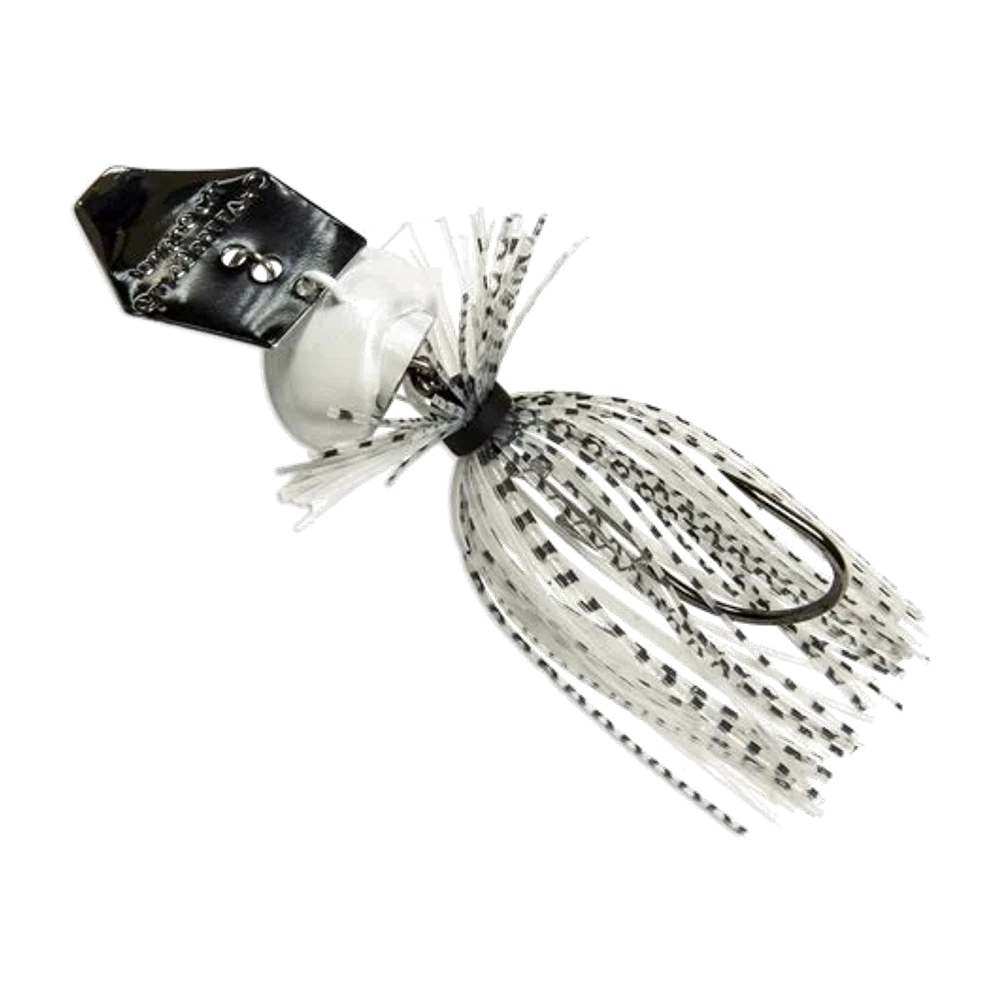
Z-Man ChatterBait Freedom CFL: the chatterbait whose skirt swaps in ten seconds
Before tying this one on, it helps to know if the spot actually calls for it. CarnaFish reads the scene from a photo.
You arrive at a backwater, tie on a white chatterbait, make three casts and realise the water is clearer than you expected. The right call is to switch to a natural skirt. The call you actually make is to stay on white, because changing lures means cutting, re-tying, digging the box back out and losing five minutes.
The Freedom CFL solves exactly that. The skirt and hook come off the head without tools, which turns a colour or size change into a ten-second job with the line still tied on.
It is a mechanical detail, not a revolution in action. But over a day where you test eight combinations instead of two, it ends up mattering more than most of the vibration differences between models.
The CFL system, in practice
On a standard chatterbait, the jig head, hook and skirt form one welded unit. The Freedom CFL separates all three.
- The head carries the blade and a socket that receives the hook.
- The single hook, mounted on its skirt collar, clips into that socket and locks in place.
- The silicone skirt is fixed to that hook assembly and changes with it.
The consequence is twofold. First, you travel light: one 14 g head plus six skirt-and-hook assemblies take up less room than six complete chatterbaits. Second — and few anglers see this one coming — the hook is no longer rigidly fixed to the head. It keeps a little play and swings somewhat independently during the retrieve.
That play adds a stray movement at the skirt, on top of the blade's vibration. On active fish it makes no difference. On fish that follow without committing, that out-of-sync wobble often decides it.
Fishing a chatterbait as something other than a straight retrieve
The straight retrieve is the default setting, and it catches fish. It uses maybe half of what the lure can do.
- Cast and let it sink with light contact. Count the seconds so you know where you are in the water column.
- Start the retrieve with an upward flick of the rod tip, to get the blade going. A blade that fails to start is the number-one problem with this type of lure.
- Retrieve steadily, medium speed, feeling the vibration in the handle at all times. If you stop feeling it, the blade has stalled or you have picked up a twig.
- Break the rhythm every five or six turns: a clean one-second stop, then a sharp restart. The lure tips over, the skirt flares, and the blade kicks back in abruptly.
- Make it hit something. A post, a sunken branch, the top of a weed bed. The deflection from that contact is a more reliable trigger than any change of speed.
On the water: keep a single head tied on for the whole session and change only the skirt-and-hook assembly. You remove the reluctance to change, and you will end up testing combinations you would never have tried if they had cost you a knot.
Choosing the weight for the depth you want
The weight drives both running depth and vibration intensity. A heavy model thumps harder but drops fast; a light one stays high but loads the hand less.
| Weight | Useful depth | Typical situation |
|---|---|---|
| Around 10 g | 0.3 to 1 m | Shallow margin, weed near the surface, calm water |
| Around 14 g | 0.8 to 2 m | The do-everything setting, flats, medium margins |
| Around 18-21 g | 1.5 to 3 m | Wind, current, a pronounced drop-off, covering water fast |
The trailer changes things too. A wide-tailed shad slows the drop and widens the action; a slim, compact trailer lets the lure fall faster and tightens the profile. Start with an 8 to 10 cm soft shad and only change once you know why.
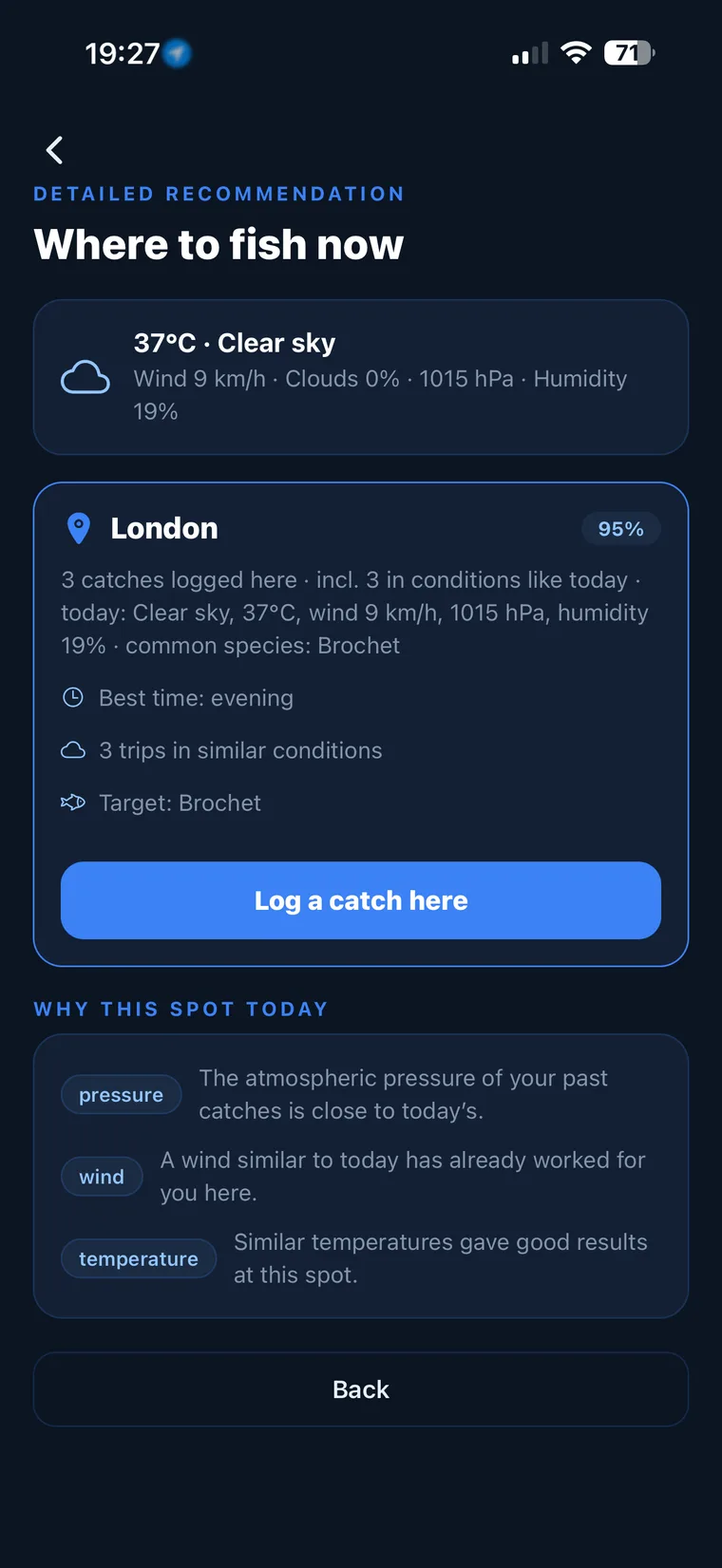
Not sure what to tie on?
Photograph your spot: CarnaFish reads the scene, cross-checks the conditions and gives you the zone, the lure and the retrieve. Free on iOS and Android.
Where it comes out ahead, and where it is useless
The Freedom CFL is a searching lure for coloured or cluttered water.
- Stained water after a rise, when fish hunt with the lateral line more than the eye.
- Weed beds and drowned timber, where the upward-facing single hook goes through places a treble-armed crankbait would hang up.
- Test days, exactly the window the detachable system exists for: changing water, fussy fish, a need to sweep through colours fast.
On the other hand it suits very clear, cold midwinter water poorly, where vibration that strong often sends fish running. It is also a weak choice on tiny, precise spots: this is a lure that wants distance and speed, not centimetre-perfect placement.
One honest last point: the locking mechanism is a wearing part. Check the assembly is properly clipped in after every fish, and especially after pulling free of a branch.
Freedom CFL, Jackhammer or Elite
The ChatterBait Jackhammer is still the benchmark when you want the hardest vibration and the most immediate blade start-up: the choice for the angler who ties on one chatterbait and never takes it off. The ChatterBait Elite aims at the same use with a plainer finish.
The Freedom CFL does not claim to vibrate harder. It claims to let you change configuration without thinking about it, and that is an advantage of a different kind: it does not show up over three casts, it shows up over a whole day. Against the Strike King Thunder Cricket, very stable at speed, the Freedom CFL needs a bit more attention on start-up but offers that free-swinging hook the one-piece models do not have.
Our beginner's guide to bass fishing places the chatterbait among the lure families worth carrying. And if you are unsure which skirt colour to clip on when you reach the bank, CarnaFish analyses a photo of the spot and answers.
Key takeaways
- Skirt and hook detach from the head: a configuration change in ten seconds, line still tied.
- The free-mounted hook swings independently and adds a movement one-piece chatterbaits do not have.
- Break the rhythm every five or six turns and make it hit cover: that is where the bites come.
- Around 14 g covers most situations; go to 18-21 g as soon as there is wind or current.
- Check the lock after every fish and after every snag you pull free.
FAQ
How do you change the skirt on a ChatterBait Freedom CFL?
The skirt-and-hook assembly unlocks from the head by hand, no tools, and another assembly clips into its place. The line stays tied to the head, which makes the change far quicker than with a standard chatterbait.
Does the detachable system weaken the lure when fighting a fish?
The lock normally holds fish fine, but it is one more mechanical part. Get into the habit of checking it is properly clipped after every catch and after every snag in timber.
Which weight should I start with?
Around 14 g is the most versatile setting: it runs between 0.8 and 2 m at medium speed and stays castable on a medium-heavy casting rod. Go heavier only if there is wind, current, or a deeper layer to reach.
Should I always run a soft trailer?
Yes, in almost every case. The trailer stabilises the action, adds bulk and slows the fall. An 8 to 10 cm shad is the starting point; a slim, compact trailer if you want the lure to drop faster.
Does a chatterbait work in clear water?
Less well than in stained water. In clear, cold water its strong vibration becomes an excessive signal and fish often refuse at the last moment. In that case, drop the weight, speed up slightly and switch to natural skirts.
What is the difference with the Jackhammer?
The Jackhammer prioritises a very hard vibration and instant blade start-up, on a welded one-piece body. The Freedom CFL trades some of that immediacy for the ability to swap skirt and hook in seconds, and for the swing of a free-mounted hook.
The full bass lure guideSeason-by-season strategy: which family of lure, when, and why.Go from theory to fish
CarnaFish reads your spot from a photo and gives you the game plan: zone, lure, retrieve. Free on iOS and Android.