Z-Man TRD CrawZ: the micro craw that stands up on a Ned rig
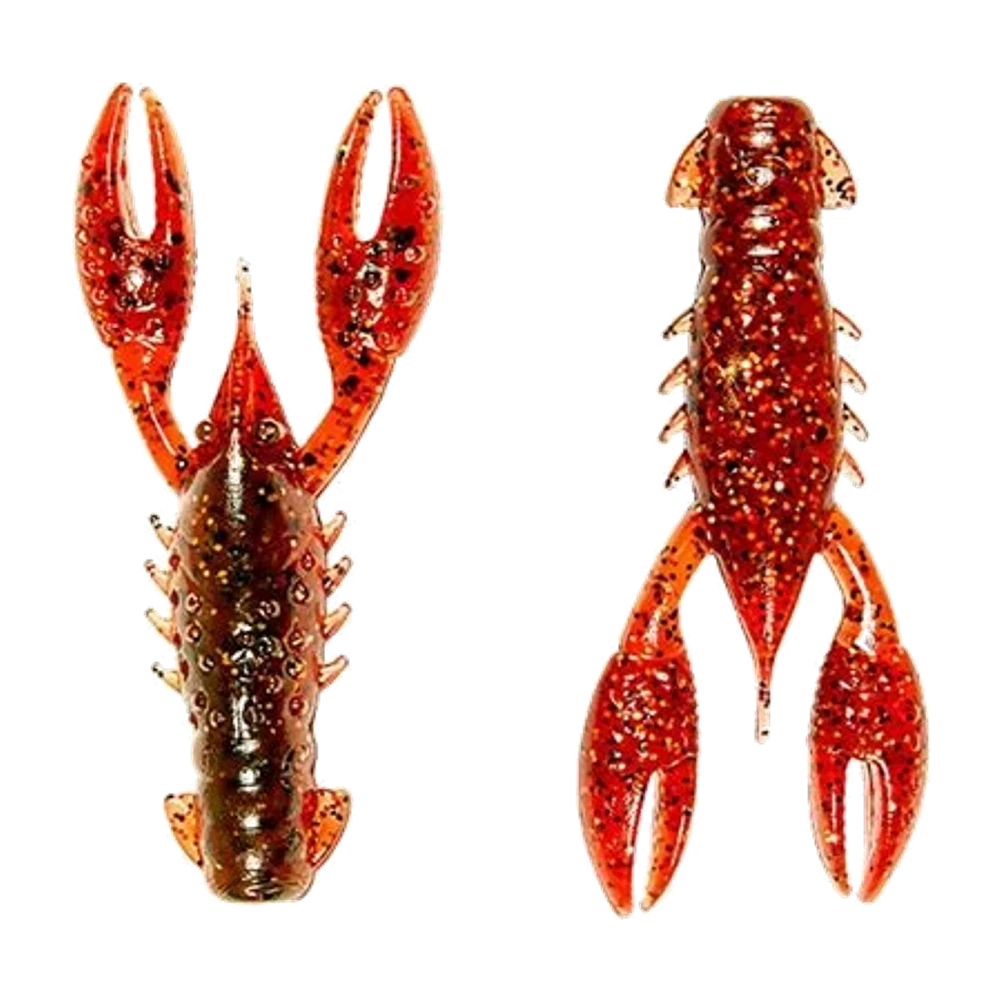
This lure shines under specific conditions. CarnaFish tells you in 10 seconds if today is one of them.
There are days when nothing works any more. Cold front, rising pressure, fish glued to the bottom and completely inert. The shad goes past with no reaction, the jerkbait is ignored, the crankbait triggers nothing.
The Ned rig exists for days like that. It is the most discreet presentation in the repertoire, and the TRD CrawZ is its most effective version on fish that are rooting around.
Why this lure stands up
The TRD CrawZ is moulded in ElaZtech, a material that genuinely floats — not "less dense than other plastics", but floating.
Rigged on a mushroom jig head, the result is immediate: the head sits on the deck, the lure's body points straight up, and the claws wave freely at the slightest movement of water.
You get a crawfish in a defensive stance, motionless on the bottom, that keeps moving without you doing anything at all. That is exactly what an inactive predator will take: an accessible, motionless prey item that costs no effort.
The Ned rig, precisely
It is a simple rig, but one that tolerates no sloppiness.
The jig head must be the mushroom type — flat at the front, with a keeper collar. It is that flat face that lets the lure stand up instead of tipping onto its side.
The weight: 1.8 g down to 3 m, 3.5 g between 3 and 5 m, 5 g beyond or in light current. The reflex to overweight kills the presentation completely.
Threading it on must be perfectly straight. A lure rigged crooked spins on itself when dragged and never stands up properly.
On the water: a Ned rig is not worked, it is dragged. Two or three centimetres of movement, then ten seconds of stillness. If you feel like you are doing nothing, you are fishing it correctly.
The retrieve, or rather its absence
- Cast and let it sink to the bottom, line semi-tight.
- Wait ten seconds doing nothing. The claws work on their own.
- Drag the lure two or three centimetres, very slowly, simply by tightening the line.
- Wait another ten seconds.
- Repeat until you have covered a few metres, then cast again.
The bite is almost always very subtle: a weight that settles, a line that moves gently off to one side. On perch it often reads as nothing more than a feeling of "heavy". Set the hook by tightening progressively, not by ripping.
ElaZtech changes the lifespan
The material has a second property: it is extremely tough. Where a standard soft plastic lasts one or two fish, a TRD CrawZ easily takes twenty or thirty.
Two precautions: never store it in contact with standard soft plastic — the two materials react and deform each other — and use a hook with a properly sized keeper collar, since the elasticity makes it harder to hold in place.
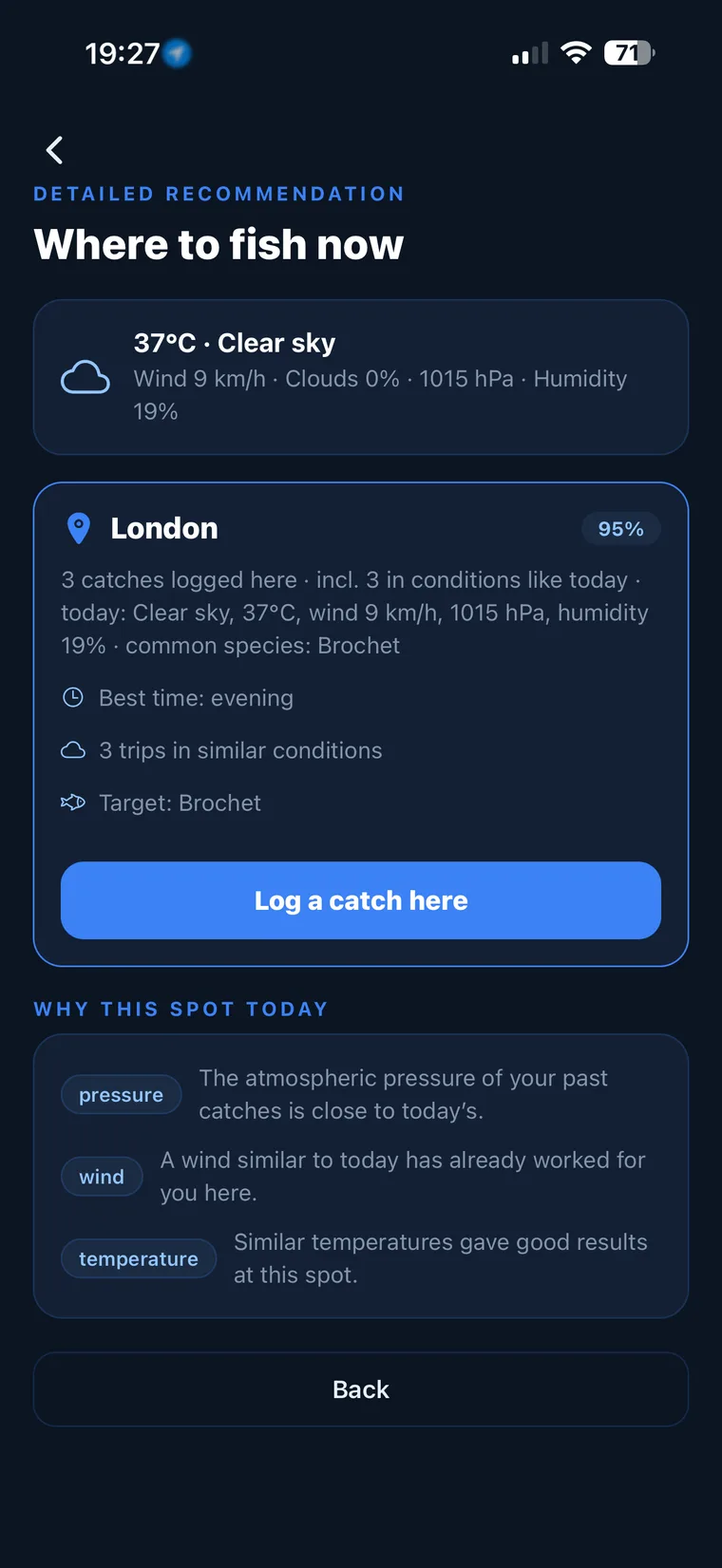
Not sure what to tie on?
Photograph your spot: CarnaFish reads the scene, cross-checks the conditions and gives you the zone, the lure and the retrieve. Free on iOS and Android.
Where and when
- Tough days: cold front, high pressure, inactive fish. That is its main window.
- Hard bottoms — rock, gravel, riprap — where crawfish are natural prey.
- Clear, cold water, when every strong signal is refused.
- Fish marked on the sounder that are not reacting to anything.
It is useless for covering water, though: you search very little ground per hour. Locate first with a lipless or a crankbait, then come back and work the zone on a Ned rig.
TRD CrawZ or the standard TRD
The standard TRD is a plain truncated stick: minimal profile, no appendages, the most discreet signal possible. It is the choice for extremely wary fish in very clear water.
The CrawZ adds two claws that wave constantly. It produces slightly more signal and imitates a crawfish precisely: the better choice over rocky bottoms and when fish are rooting on the deck rather than ignoring everything.
Our guide to perch fishing with lures places the Ned rig among the finesse approaches. And if you have located fish that refuse everything, CarnaFish analyses a photo of the spot and suggests a line of attack.
Key takeaways
- ElaZtech floats: the lure stands vertically on the bottom, claws permanently in motion.
- A mushroom head is compulsory, 1.8 to 5 g maximum. Overweighting kills the presentation.
- Drag it two or three centimetres, then wait ten seconds. Nothing else.
- Exceptional toughness: twenty to thirty fish per lure.
- A tough-day tool for located fish, never for covering water.
FAQ
What exactly is a Ned rig?
It is a finesse rig made up of a small floating soft plastic on a flat, mushroom-shaped jig head. The lure stands vertically on the bottom and is fished by dragging it very slowly with long pauses.
What jig head weight?
1.8 g down to 3 m of water, 3.5 g between 3 and 5 m, 5 g beyond or in light current. The Ned rig relies on a light presentation: overweighting stops the lure standing up properly.
Do you need to work a Ned rig?
Very little. Drag the lure two or three centimetres simply by tightening the line, then wait ten seconds or so. The claws wave on their own during the stillness — that is when the bite comes.
Why does the lure stand up?
Because ElaZtech genuinely floats. Sat on a flat jig head, the body rises vertically while the head stays on the deck, which reproduces the defensive posture of a crawfish.
Is the lure really tougher?
Yes, markedly. A TRD CrawZ routinely takes twenty to thirty fish where a standard soft plastic lasts one or two. Be careful, though, never to store it touching ordinary soft plastic: the two materials deform each other.
What is the difference with the standard TRD?
The standard TRD is a plain stick with no appendages and a minimal signal, for the wariest fish in clear water. The CrawZ adds moving claws and imitates a crawfish: better over rocky bottoms and on fish that are rooting on the deck.
The full perch lure guideSeason-by-season strategy: which family of lure, when, and why.Go from theory to fish
CarnaFish reads your spot from a photo and gives you the game plan: zone, lure, retrieve. Free on iOS and Android.