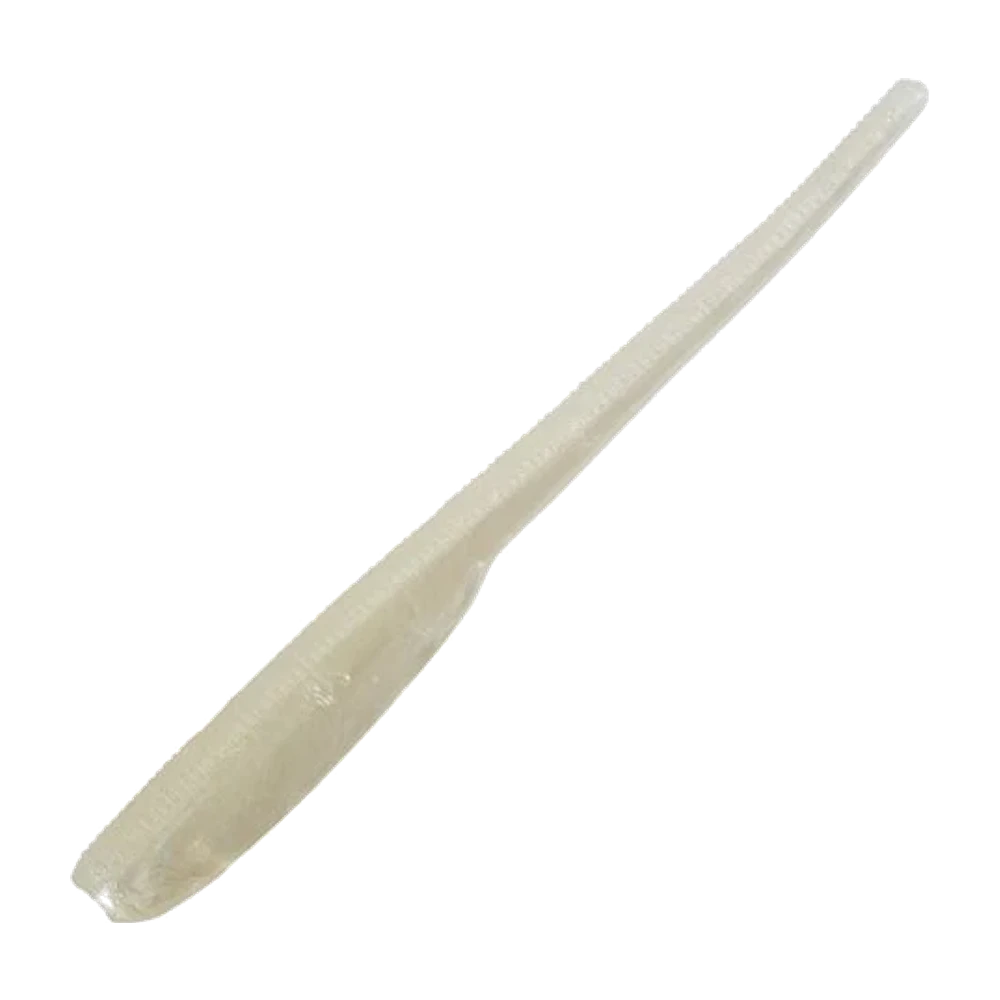
Z-Man Finesse ShadZ: the shad that floats and stands up on the bottom
One lure, endless conditions. CarnaFish reads your spot from a photo so you are not just guessing.
In finesse fishing, the lure spends more time still than moving. You drop it, you wait, you give it two small pulls, you wait again. Over a slow session, your shad is sitting on the bottom maybe sixty percent of your fishing time.
And during that sixty percent, a standard soft shad is lying flat in the silt, tail on the deck, profile squashed. It says nothing any more. A fish coming past sees a long shape with no relief, barely different from a twig.
The Finesse ShadZ solves that through material rather than shape. Its plastic floats, which is enough to keep the back of the lure permanently off the bottom — and, incidentally, to let it take dozens of perch without tearing.
A plastic that floats, a posture that changes everything
Z-Man's ElaZtech is not conventional soft PVC. It is a material lighter than water, far more elastic, and it contains none of the usual plasticisers. Three direct consequences on the water.
The tail stays up. Rigged on a Ned head or a light jig head, the lure settles with the lead on the deck and the body angled up, somewhere between thirty and sixty degrees depending on the weight. That standing profile is exactly what a small fish rooting on the bottom looks like. It stays readable however long the pause lasts.
The slightest movement transmits. Because the body rests on a single point — the head — and is held upward by its own buoyancy, a simple quiver of the rod tip sets the whole rear section swaying. You animate the lure without moving it a centimetre.
Lifespan goes through the roof. Where a standard shad shreds after three or four perch, this one stretches and comes back into shape. That is not just a budget point: above all it is fishing time you do not spend re-rigging.
The trade-off is that the material is slippery and very elastic. Threading it on straight takes a bit of practice, and you have to get it right first time because a badly placed hole stays there.
The retrieve: working the tail without moving the lure
That is the whole point of this lure, and it is where most anglers go too fast.
- Cast and let it drop on a semi-tight line. Watch the fall with your eyes or on the line: a good share of bites come in this phase, especially on perch.
- Wait for bottom contact, then do nothing for five to ten seconds. The body rights itself on its own. This phase is not wasted time, it is a presentation.
- Two quivers of the rod tip, wrist only, taking up no line. The lure stays put, the tail flutters. This is the key move.
- One short pull of twenty to thirty centimetres, then let it drop back under control.
- Repeat and only retrieve in small stages. A ten-metre stretch can take five minutes.
When nothing is happening, the variation that often unlocks it is a very slow straight retrieve at mid-depth, without touching bottom at all: the tail beats, the body rolls slightly, and you cover a layer that drop-and-pull ignores completely.
On the water: when you fish this lure on a Ned rig, stop hunting for bottom contact on every release. One time in three, let it drop back on a tight line and stop it thirty centimetres up: the floating tail then holds the lure horizontal, suspended. That is a third posture very few lures can hold, and it catches perch that refuse a lure sat on the bottom.
Weights and rigs
| Situation | Rig | Weight |
|---|---|---|
| Perch on the margin, 1 to 3 m, calm water | Ned rig | 2 to 3.5 g |
| Perch or bass on a drop-off, 3 to 6 m | Ned rig or round head | 4 to 7 g |
| Fish suspended in the column | Drop shot, lead 30-50 cm below | 5 to 10 g lead |
| Cluttered margin, drowned timber | Unweighted or lightly weighted Texas rig | 0 to 3 g |
| Moderate river current | Round jig head | 7 to 10 g |
The principle is simple: the lightest weight that still lets you feel the bottom. As soon as you lose track of where your lure is, go up one step, no more. Too much weight cancels the body's buoyancy and you lose the raised posture that makes the model worth using.
For line, a fine 0.08-0.12 mm braid with a 0.18-0.22 mm fluorocarbon leader covers perch. For bass near cover, go up to 0.25 mm.
Two precautions the material forces on you
They are not trivia, and they are the number-one nasty surprise for people discovering the range.
Never store these lures with standard soft plastics. ElaZtech and soft PVC react badly to prolonged contact: you open the box to find your lures melted into each other. Keep them in their original bag or in a dedicated compartment.
Ordinary soft-plastic glues do not grip well. If you want to fix the lure to the jig head, use a glue made for this material, or pick a head with a pronounced keeper barb. It is rarely necessary anyway: the material holds on its own far longer than standard plastic.
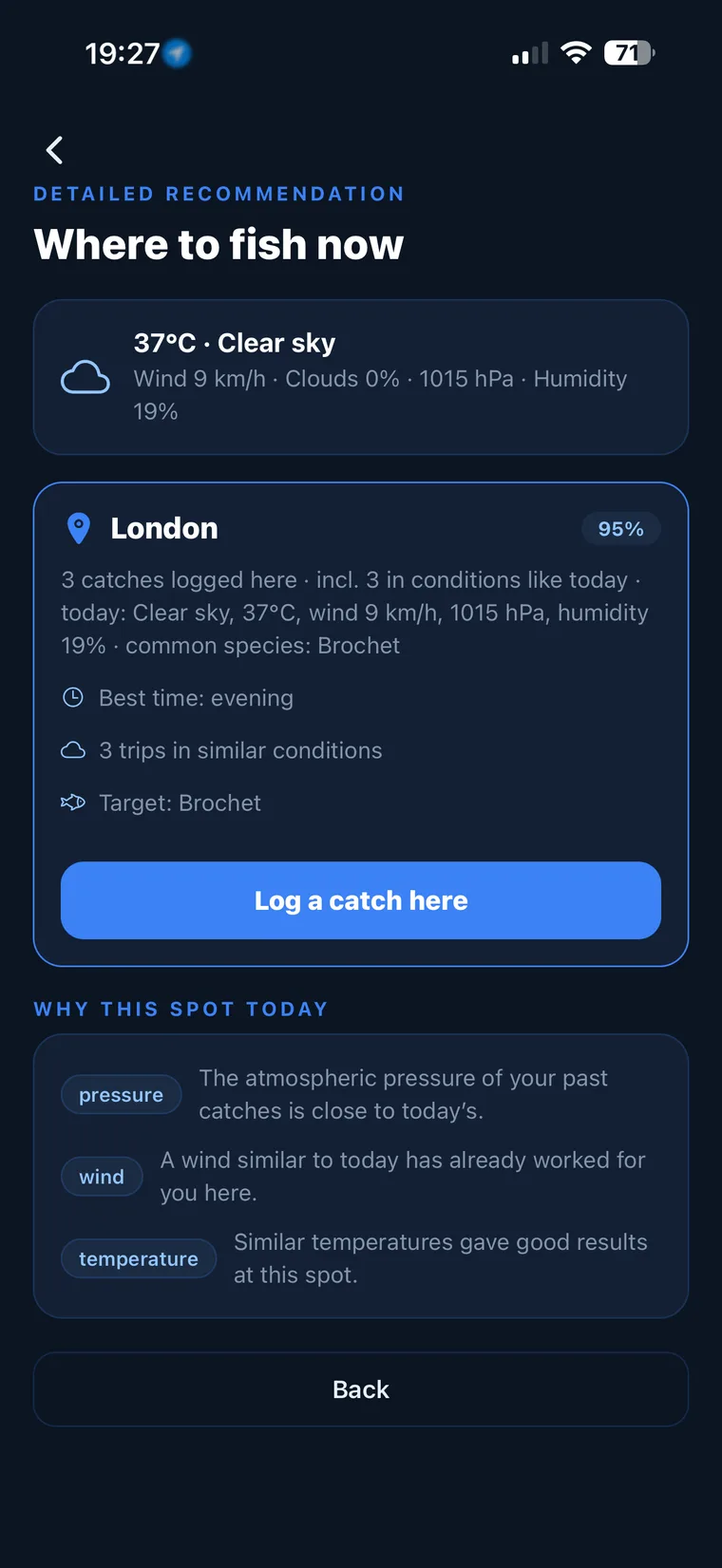
Not sure what to tie on?
Photograph your spot: CarnaFish reads the scene, cross-checks the conditions and gives you the zone, the lure and the retrieve. Free on iOS and Android.
Where it excels, where it is the wrong call
Its ground is slow, precise fishing:
- Perch holding on an isolated piece of cover — a post, a sunken tree, the corner of a dock — where you can spend two minutes on one square metre.
- Clear water and pressured fish, late summer or midwinter, when a 10 cm shad on a straight retrieve stops producing.
- Late-season bass, on fish that have dropped into three to five metres and no longer follow anything fast.
It is badly suited to covering water, though: you search very little ground per hour, and its buoyancy makes it sensitive to strong current. In a fast river or over a large area to sweep, rig a heavier shad with a pronounced paddle tail. Nor is it a pike lure: the material stands up to teeth but a finesse Ned rig is not built for that.
Finesse ShadZ or a standard shad
Against a conventional soft shad on a jig head, the difference is not in the swimming action — that is comparable, if anything more subtle on the Finesse ShadZ. It is in what happens at rest. The standard shad lies down, the Finesse ShadZ stays standing. If your fishing consists of retrieving steadily, the former does the job just as well and costs less. If your fishing consists of leaving the lure in place, there is no contest.
It is exactly the logic of the same brand's TRD Ned rig, in baitfish form rather than stubby form: the TRD imitates an unspecified prey item sat on the bottom, the Finesse ShadZ keeps a small-fish profile, which works better as soon as the water is clear and the forage is fry. On a drop shot rig the relationship flips again: the buoyancy holds the lure nicely horizontal above the lead instead of letting it hang down.
Our guide to perch fishing with lures covers when to switch from a straight retrieve to slow finesse. And if you are unsure what weight to rig when you reach the bank, CarnaFish analyses a photo of the spot and answers.
Key takeaways
- The plastic floats: the tail stays raised at rest, which no standard shad does.
- The useful move is a quiver on the spot, not a retrieve.
- Minimum weight: 2 to 5 g on a Ned rig, up to 10 g in current only.
- Store it away from standard soft plastics or everything glues together.
- A slow, precise fishing tool, useless for covering water fast.
FAQ
Why does the Finesse ShadZ float?
Because Z-Man's ElaZtech is a material less dense than water, unlike the soft PVC of standard shads. It is the body's buoyancy that keeps the tail raised when the lure is sitting on the bottom.
What Ned head weight should I choose?
2 to 3.5 g down to three metres, 4 to 7 g between three and six. Always take the lightest weight that still lets you feel bottom contact: too heavy and you crush the raised posture that makes the lure interesting.
Can I store it with my other soft plastics?
No. In prolonged contact with standard soft PVC the material reacts and the lures deform or fuse. Keep them in their original bag or in a box reserved for them.
How many fish does one lure last?
Far more than a standard soft plastic: several dozen perch on the same body is common, as long as the hook stays in the same place. The weak point is not tearing but the rigging hole, which widens as you keep repositioning the lure.
Is it any good for pike?
Not really. The material handles teeth well, but the sizes and finesse rigs involved are not built for pike. For that species, go for a bulkier shad with a stinger and a suitable leader.
What is the difference with a standard soft shad?
On the retrieve, little difference, if anything a subtler action. At rest, everything changes: the standard shad lies down on the bottom, this one stays angled up and keeps moving at the slightest quiver of the rod tip.
The full perch lure guideSeason-by-season strategy: which family of lure, when, and why.Go from theory to fish
CarnaFish reads your spot from a photo and gives you the game plan: zone, lure, retrieve. Free on iOS and Android.