Float Tube and Boat Fishing: Where to Start
Going from the bank to the water changes fishing completely. It isn't just about reaching further: it's about accessing lies nobody fishes, approaching structure from the right angle, and unlocking techniques that are impossible from shore. Here's what each option actually gives you, and what it demands.
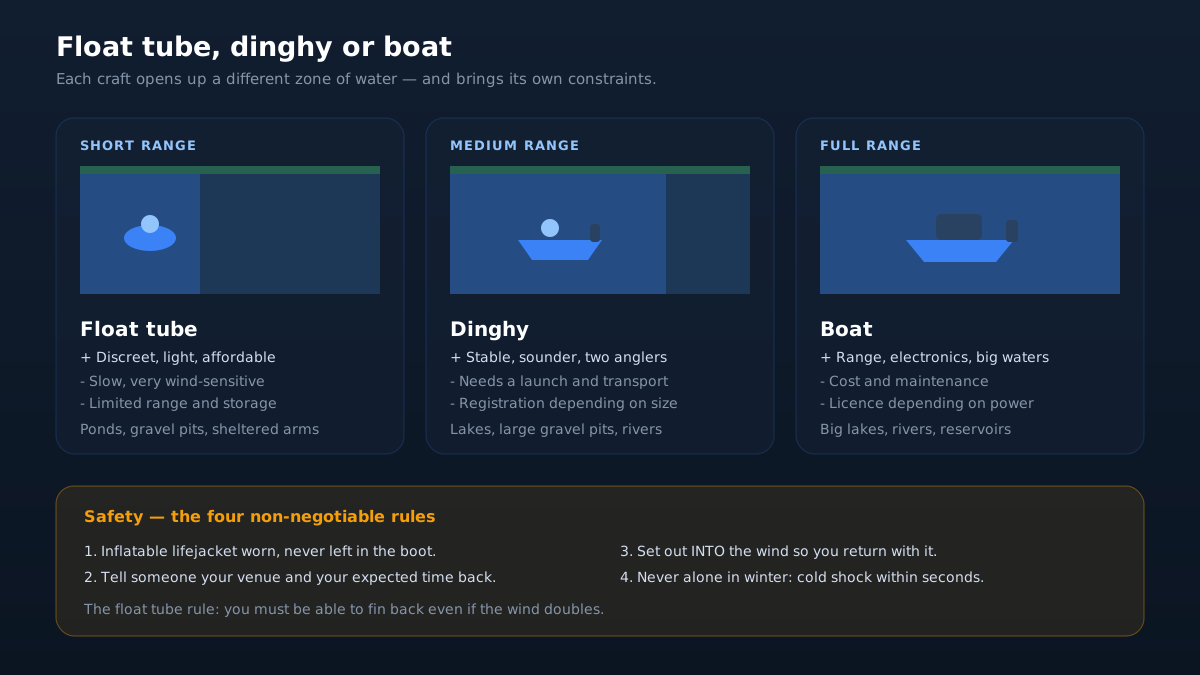
Float tube, dinghy or boat
The float tube
A small inflatable craft where you sit with your legs in the water, propelled by fins. It's the most accessible option: compact, fits in a car boot, usable on waters closed to engines.
- For: discreet, silent, affordable, launches from any bank.
- Against: slow, at the mercy of the wind, limited range, cold in winter, very little storage.
- Best for: ponds, small lakes, gravel pits, sheltered arms.
The dinghy
An aluminium or plastic boat, with or without an electric motor. The most common compromise.
- For: stability, room for tackle and a fish finder, two anglers, far faster than a float tube.
- Against: needs a launch point, a trailer or roof bars, registration depending on size.
- Best for: lakes, large gravel pits, calm rivers.
The boat
Rigid hull and combustion engine. A different scale, in budget as much as in possibilities.
- For: big waters, main rivers, full range, onboard electronics.
- Against: cost, maintenance, licence depending on power, dedicated slipways.
- Best for: large lakes, rivers, reservoirs, catfish fishing.
Safety: the non-negotiable part
This is what genuinely separates fishing afloat from fishing the bank. The great majority of accidents involve experienced anglers who got used to going without.
- An inflatable lifejacket, worn and not stowed. A lifejacket in the boot has never saved anyone. In a float tube it's essential even in a metre of water: fins and waders leave you nearly unable to swim.
- Tell someone which water you're on and when you'll be back. Always.
- Check the forecast, and above all the wind. In a float tube, a wind that gets up can leave you unable to fin back. Always set out into the wind so you return with it.
- Never go alone in winter. A fall into cold water triggers a cold-shock response that cuts your breathing within seconds.
- Light and a waterproof phone if you plan to come back at dusk.
The float tube rule is simple: you must be able to get back under fin power even if the wind doubles. If you can't, you've gone too far.
The rules, in brief
They vary by water and by country, but some constants:
- Float tubes are banned on many waters. It is never permitted by default: check the venue's rules before you inflate.
- Navigation can be regulated independently of fishing (swimming zones, reserves, shipping channels).
- Registration and licences depend on the size of the craft and the power of the engine.
- Mandatory safety equipment depends on the navigation category.
For France specifically, licences, categories and annual orders are covered in our guide to French fishing regulations. Wherever you are, the local fisheries authority will answer quickly.
What being afloat really unlocks
Vertical jigging
Impossible from the bank. The lure stays directly below you, 20-50 cm off the bottom, while you drift over zones marked on the sounder. It's the most efficient way to cover deep water, and by far the best school for learning to recognise a zander bite.
Controlled drifting
You let the wind or current move you slowly along a drop-off or a plateau, fishing continuously. You cover a huge amount of water while keeping a clean presentation.
The right angle on structure
This is the most underrated benefit. From the bank you can only fish a sunken tree from one side. Afloat you can present it from three different angles — and a fish that refuses head-on will often accept a presentation coming from somewhere else.
Access to water nobody fishes
The middle of a lake, a bank unreachable on foot, a cluttered arm. These zones see very few lures, and it shows immediately.
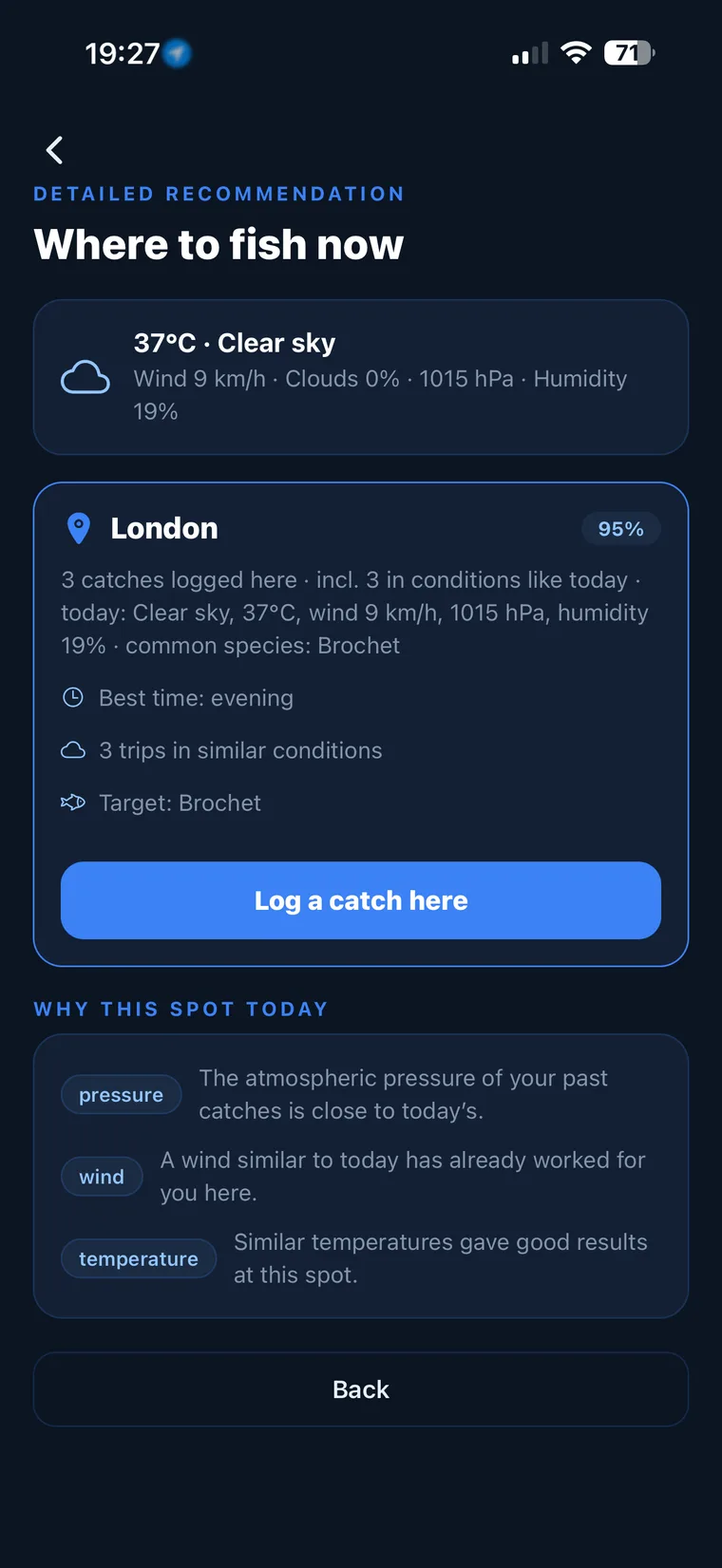
Not sure what to tie on?
Photograph your spot: CarnaFish reads the scene, cross-checks the conditions and gives you the zone, the lure and the retrieve. Free on iOS and Android.
Using a fish finder without drowning in data
A sounder isn't a fish detector, it's a relief reader. That's where its real value lies.
Look for structure first: drop-offs, plateaus, sunken timber, changes in bottom composition. Fish arches are a bonus, not the objective. A sharp drop-off with no visible fish beats a shoal in open water — predators come to the structure, not the other way round.
Log your waypoints. A lake is built over several sessions, and a marked lie stays good from one season to the next.
Beginner mistakes
- Setting out downwind: you drift away effortlessly and then can't get back. Always head out into the wind.
- Taking too much tackle: in a float tube especially, anything not tethered ends up in the water. Two rods is plenty.
- Fishing above the fish: on the drift it's easy to keep the lure too high. Re-establish bottom contact regularly.
- Underestimating the cold: in a float tube you're sitting in the water. What's comfortable for 30 minutes is grim after three hours.
- Ignoring the conditions: wind, pressure and light decide where the fish sit that day. CarnaFish, the AI fishing app, cross-checks the scene of your spot with the conditions of the moment to suggest a zone, a lure and a retrieve — handy when you're discovering a venue from the water.
Key takeaways
- Float tube for discretion and budget, dinghy for the compromise, boat for range.
- Lifejacket worn, forecast checked, someone told: every session, no exceptions.
- Head out into the wind so you come back with it.
- Being afloat unlocks vertical jigging, drifting and above all the right angle on structure.
- A sounder is for reading relief, not chasing arches.
FAQ
Do I need a licence to fish from a float tube?
No boat licence is required for a float tube, but a fishing licence remains mandatory just as from the bank. Its use is banned on many waters, though: it is never permitted by default, so check the venue's rules or ask the local fisheries authority before you set out.
What safety kit do I need for a float tube?
An inflatable lifejacket worn at all times, a light if you're returning at dusk, a phone in a waterproof pouch, and a whistle. Waders and fins leave you virtually unable to swim, so the lifejacket is not an excessive precaution even in shallow water. Always tell someone which water you're on and when you expect to be back.
Float tube or dinghy to start with?
A float tube if you fish ponds and small gravel pits, want a modest budget and easy transport. A dinghy if you're targeting bigger lakes, want to carry a sounder and tackle, or often fish as a pair. The float tube is more discreet; the dinghy is far more versatile and much less at the mercy of the wind.
How do I handle wind in a float tube?
Always set out into the wind so you return with it, never the other way round. Wind almost always strengthens during the day, and finning back against it is exhausting or impossible. Keep the rule that you must be able to get back even if the wind doubles: if you can't, you've gone too far.
What is a fish finder actually for?
For reading the relief and the nature of the bottom, not for chasing fish. Look for drop-offs, plateaus, sunken timber and changes in substrate: those are the structures that hold predators. Fish arches are useful confirmation, not the objective. Log your waypoints — an identified lie stays good from one season to the next.
Which techniques become possible from a boat?
Vertical jigging, impossible from the bank, where the lure stays directly below you 20-50 cm off the bottom while you drift. Controlled drifting along a drop-off. And above all, the ability to present the same structure from several angles, which unlocks a lot of fish that refuse a head-on presentation.
Can you use a float tube in winter?
It's possible but considerably more exposed: you're sitting in the water, so you cool down fast, and a fall into cold water triggers a cold-shock response that cuts your breathing within seconds. If you go, never go alone, limit the session length, layer up under your waders and stay close to the bank.
Go from theory to fish
CarnaFish reads your spot from a photo and gives you the game plan: zone, lure, retrieve. Free on iOS and Android.