Fishing in France: Licence, Seasons, Size Limits and Bag Limits
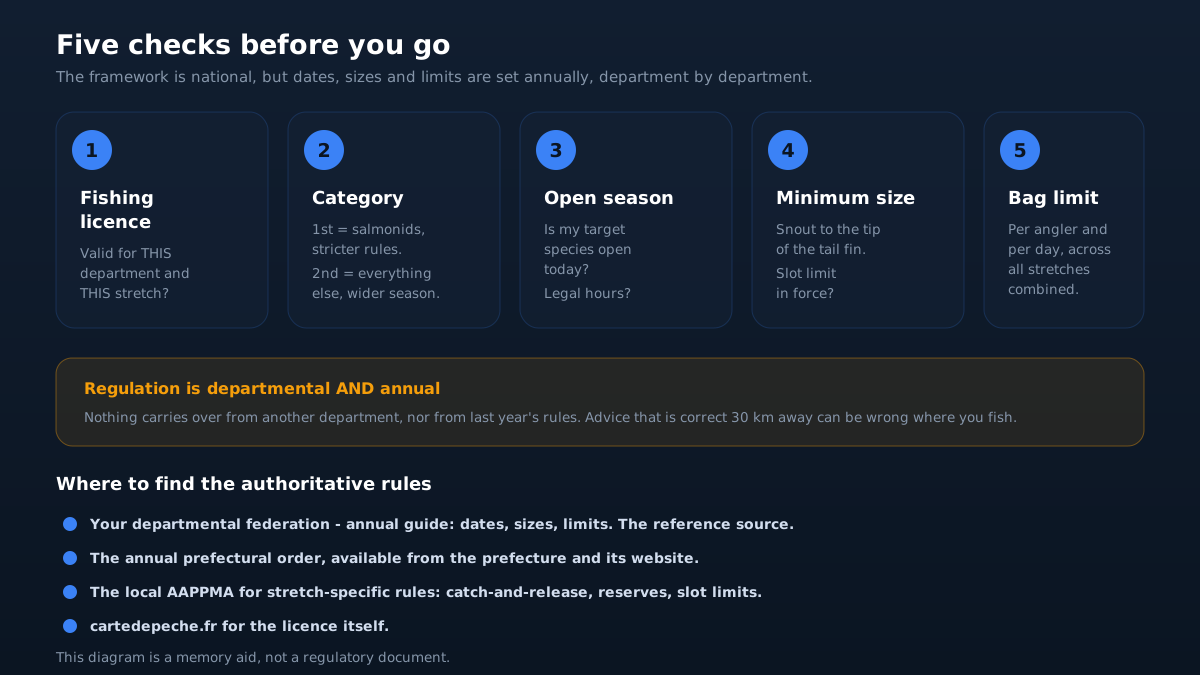
French fishing regulation has one feature that catches out most visitors: it isn't national. The framework is, but the dates, sizes and bag limits are set every year by prefectural order, department by department. This guide explains the structure and where to find current information — it never replaces the rules published by your local federation.
No figure in this article should be applied without local verification. The values described are the most widespread cases, not universal rules.
1. The fishing licence: mandatory, no exceptions
To fish freshwater on public water or on a stretch managed by an AAPPMA (the local angling association), you need a valid licence. You buy it online on the federations' official site (cartedepeche.fr) or from an approved retailer.
Several options exist by duration and profile:
- Annual, the most common.
- Weekly and daily, ideal for holidays or a first try.
- Youth, for 12-18 year-olds, at a reduced rate.
- Under-12 discovery, at a heavily reduced rate.
- Women's discovery, daily, single rod.
The licence includes the CPMA aquatic environment levy. An inter-federation licence or a "reciprocity" option lets you fish in several departments — check exactly what yours covers before travelling.
At sea, no fishing licence is required for recreational shore fishing, but a declaration is needed for certain species and gear, and size and bag rules apply in full.
2. The water category
This is the concept that structures everything else.
- First category: salmonids dominate, mainly trout. The season is closed for much of the year and the rules are stricter.
- Second category: everything else, dominated by cyprinids and predators. A far wider open season, with species-specific closures.
The same river can change category along its course. The category map is published by your departmental federation.
3. Open seasons
This is where the variation between departments is greatest.
- Trout on first-category water traditionally opens in spring and closes in late summer or early autumn. Exact dates are set annually.
- Pike has a specific spring closure on second-category water to protect spawning.
- Zander is often, though not always, aligned with the pike calendar.
- Legal hours: fishing is generally permitted from half an hour before sunrise to half an hour after sunset.
- Night fishing is prohibited by default, and permitted only on specific stretches, usually for carp.
This directly shapes what you can realistically target at any point in the year — see our guide to predator fishing season by season.
4. Minimum sizes
A minimum size is the length below which a fish must be returned immediately. It is measured from the tip of the snout to the end of the tail fin.
Minimum sizes apply notably to pike, zander, black bass, trout and grayling. Values vary by department, and some rivers apply sizes above the national minimum.
Some stretches also operate a slot limit: fish that are too small and too large must both be released, to protect breeding stock. This is increasingly common on predator waters.
Keep a soft tape measure in your box. Judging a length by eye is the surest way to commit an offence in good faith.
5. Daily bag limits
Most departments limit the number of predators kept per day per angler — typically a handful of fish, with a sub-limit on pike. Bag limits also exist for salmonids on first-category water.
Note that the limit applies per angler per day, across all stretches combined, not per venue visited.
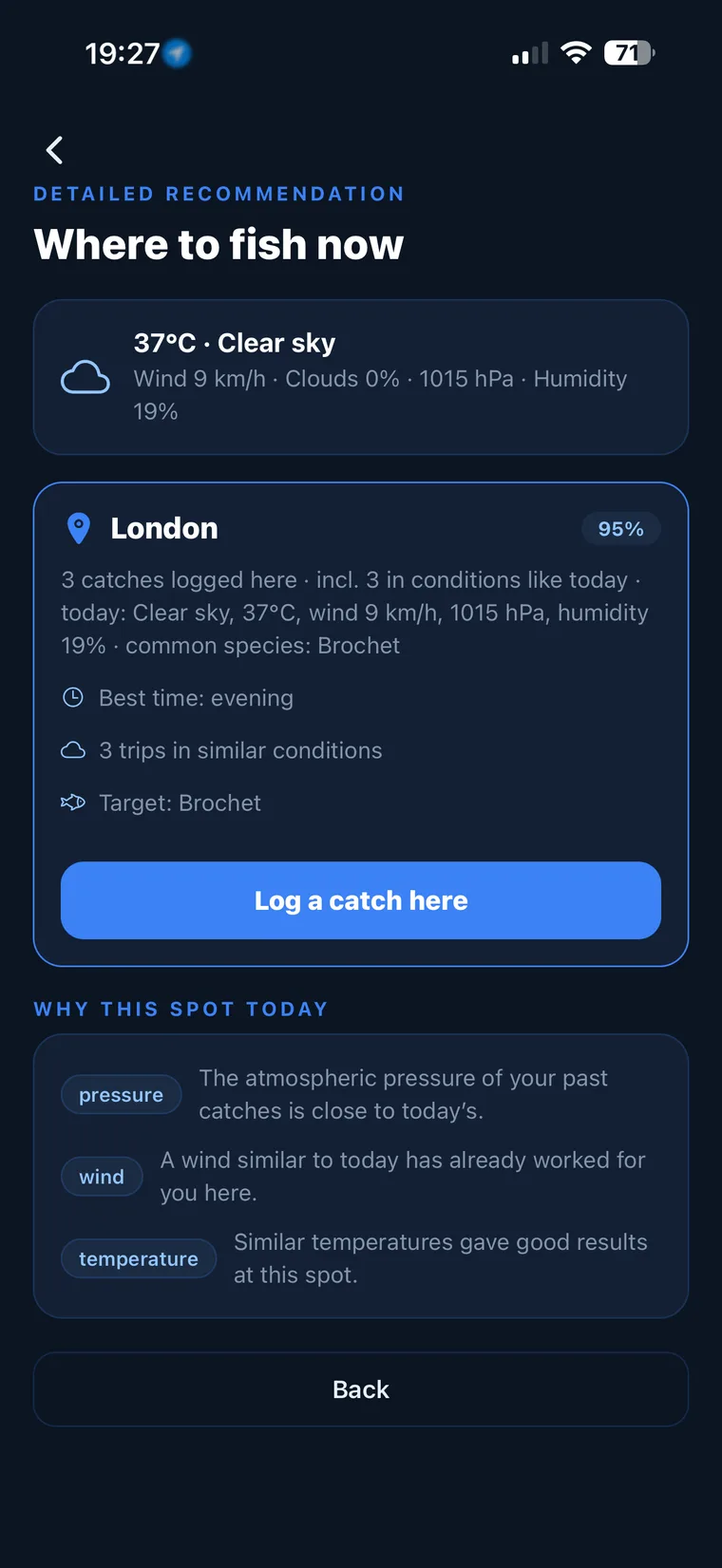
Not sure what to tie on?
Photograph your spot: CarnaFish reads the scene, cross-checks the conditions and gives you the zone, the lure and the retrieve. Free on iOS and Android.
6. Other rules worth knowing
- Number of rods: generally a single rod on first-category water, more on second category.
- Live bait: its use and transport are regulated, and prohibited on first-category water. Using a species liable to cause biological imbalance as live bait is forbidden.
- Protected species must never be retained.
- Species liable to cause biological imbalance (black bullhead, pumpkinseed and others) must not be returned alive.
- Bank access: a bank is not public by default. Fishing rights belong to the riparian owner, except on public waterways or where an AAPPMA holds an agreement.
- Craft have their own regulations, separate from fishing rules. That's covered in our guide to float tube and boat fishing.
Where to find the official rules
In this order:
- Your departmental fishing federation. It publishes an annual guide summarising dates, sizes and limits for its department. This is the reference source.
- The annual prefectural order, available from the prefecture and on its website.
- The local AAPPMA for rules specific to a stretch (catch-and-release, slot limits, reserves).
- cartedepeche.fr for the licence and general information.
Be wary of forums and videos: information that is correct in one department can be wrong thirty kilometres away, and last year's rules don't apply this year.
Five checks before you go
- Is my licence valid for this department and this stretch?
- Is the water first or second category?
- Is the species I'm targeting open today?
- What is the minimum size here, and is there a slot limit?
- What is the daily bag limit, and am I within legal hours?
If you release everything, questions 4 and 5 matter less — but the first three remain unavoidable, and a release should be done properly: wet hands, rubber-mesh net, fish kept in the water, unhooked with pliers.
Key takeaways
- Regulation is departmental and annual: nothing carries over from another department or from last year.
- A fishing licence is mandatory in freshwater, without exception.
- First category = salmonids and stricter rules; second category = everything else.
- Measure your fish, don't estimate them.
- The departmental federation is the only authoritative source.
FAQ
Do I need a licence to fish in France?
Yes, without exception, to fish freshwater on public water or on a stretch managed by an AAPPMA. You buy it online at cartedepeche.fr or from an approved retailer, as an annual, weekly, daily, youth or discovery licence. At sea, recreational shore fishing needs no licence, but size and bag rules apply in full.
What is the difference between first and second category water?
First category covers rivers dominated by salmonids, mainly trout: the season is closed for much of the year and rules are stricter (often a single rod, live bait prohibited). Second category covers everything else, with a much wider open season and species-specific closures, notably for pike in spring.
When does the pike season open in France?
Pike has a specific spring closure on second-category water to protect spawning, generally reopening in late spring or early summer. Exact dates are set annually by prefectural order and vary between departments: check your departmental federation's annual guide, which is the only authoritative source.
How do I measure a fish for the minimum size?
From the tip of the snout to the end of the tail fin. Keep a soft tape measure in your box: judging by eye is the most common way to commit an offence unintentionally. Also check whether your stretch applies a slot limit, which requires releasing fish that are too large as well as too small.
Can you fish at night in France?
Not by default: fishing is generally permitted from half an hour before sunrise to half an hour after sunset. Night fishing is only possible on specifically authorised stretches, most often dedicated to carp. Check with the local AAPPMA before any night session.
How many predators can I keep per day?
Most departments apply a daily limit of a handful of predators per angler, often with a specific sub-limit on pike. The limit applies per angler per day across all stretches combined — not per venue visited. Exact figures are in your departmental federation's rules.
Where do I find up-to-date rules for the area I'm visiting?
From the departmental fishing federation, which publishes an annual guide covering dates, sizes and limits. Supplement it with the annual prefectural order and, for stretch-specific rules, with the local AAPPMA. Avoid relying on forums and videos: a rule that is correct in one department can be wrong thirty kilometres away, and last year's rules don't apply this year.
Can I fish from any bank?
No. A bank is not public by default: fishing rights belong to the riparian owner, except on the public waterway network or where an AAPPMA has secured an agreement. Accessible stretches are mapped by the federations and the AAPPMAs — that's the first thing to check before exploring a new area.
Go from theory to fish
CarnaFish reads your spot from a photo and gives you the game plan: zone, lure, retrieve. Free on iOS and Android.