Jig head rig: picking the right weight matters more than picking the bait
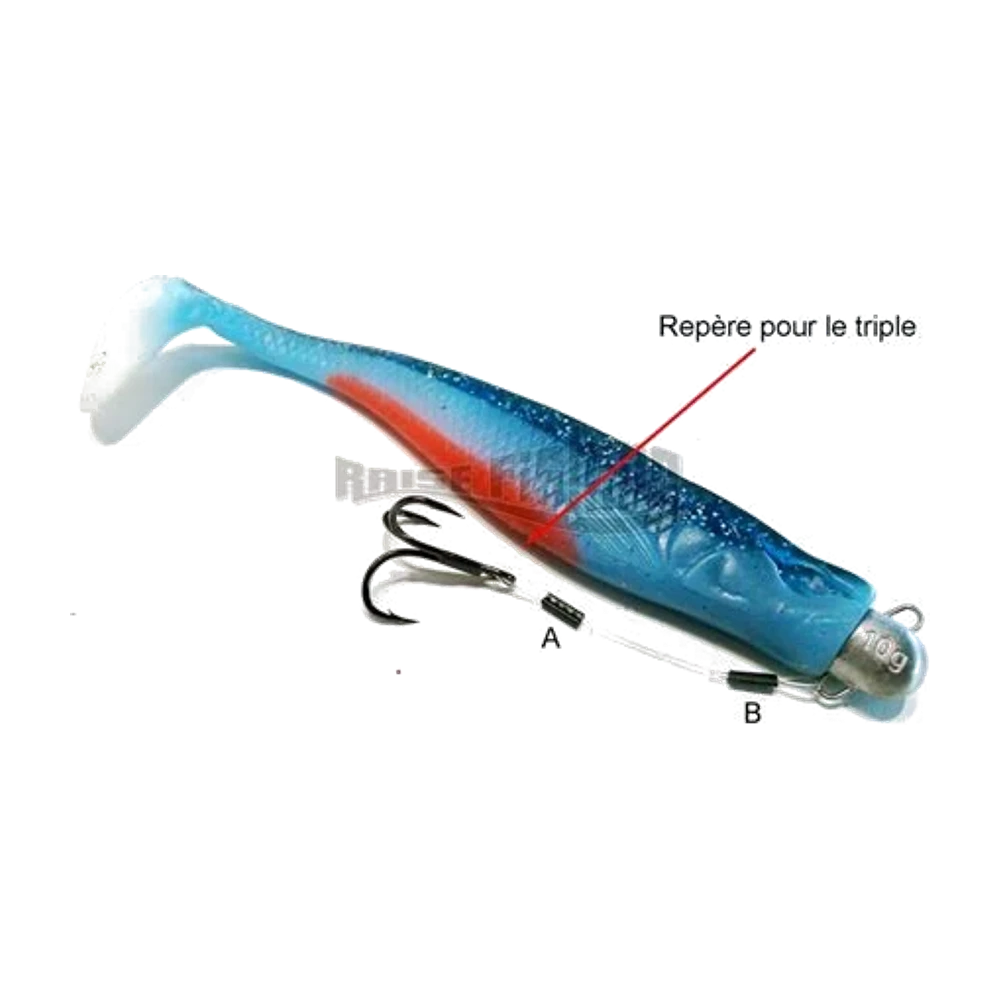
Not sure this lure fits YOUR spot today? CarnaFish tells you in 10 seconds, from a photo.
It is the most widely used rig in soft plastic fishing, and the one nobody asks questions about. You thread a shad onto a jig head, you cast, you retrieve.
And yet the weight and the shape of the head influence the result far more than the model or the colour of the bait. That is the main adjustment, and it is the one most anglers ignore.
Weight: the adjustment that counts
The rule fits in one sentence: take the lightest head that still lets you feel the bottom.
| Depth / conditions | Weight |
|---|---|
| Margins, under 2 m, no current | 5 to 7 g |
| 2 to 4 m, calm water | 7 to 12 g |
| 4 to 6 m or light current | 12 to 18 g |
| 6 to 10 m or strong current | 18 to 25 g |
| Deep water, heavy current | 25 to 30 g |
Why the lightest? Because the sink phase is when most of the bites happen. Too heavy a head shortens that phase: the bait drops like a stone instead of gliding, and the fish has no time to make up its mind.
On the water: if you cannot feel the bottom, go up one step. If you can feel the bottom but the bait gets there in two seconds, go down one step. The right weight is the one where you keep contact while still getting a fall lasting several seconds.
Head shape
Each shape has a precise job.
The round head is the most versatile. It suits a straight retrieve, goes through most ground reasonably well, and favours no particular behaviour. It is the default choice.
The football head is wide and flattened at the sides. It sits better on rocky bottoms without jamming, and tips the bait nose-down on every pause, which lengthens the presentation. It is the choice over rip-rap and gravel.
The bullet or torpedo head offers the least water resistance: it sinks faster and lets you fish deep or in current with less apparent weight.
The flat darter head kicks the bait sideways on every pull, adding an unpredictable movement. Useful on apathetic fish.
Rigging the bait straight
This is the step everybody rushes, and the one that wrecks the most sessions.
- Lay the bait against the head to work out where the hook point has to come out.
- Thread the bait on through the nose, following the central axis of the body exactly.
- Bring the point out at the spot you marked, on the back of the bait.
- Check it head-on and side-on: the bait must be perfectly straight.
A bait rigged crooked spins on itself on the retrieve. It puts twist in your line, loses all credibility, and catches nothing. If that is what you have, pull it off and start again.
The stinger: when to add one
A stinger is an extra treble hook linked to the jig head and hooked into the rear of the bait.
For pike, it is close to essential. Rear attacks are frequent and a plain rig lets a big share of the bites go by.
For zander, it is optional. Zander generally engulf the whole bait, and a stinger increases snagging on the bottom. Fit one only if you record several unconverted bites in the same session.
For perch, it is rarely useful and it costs you discretion.
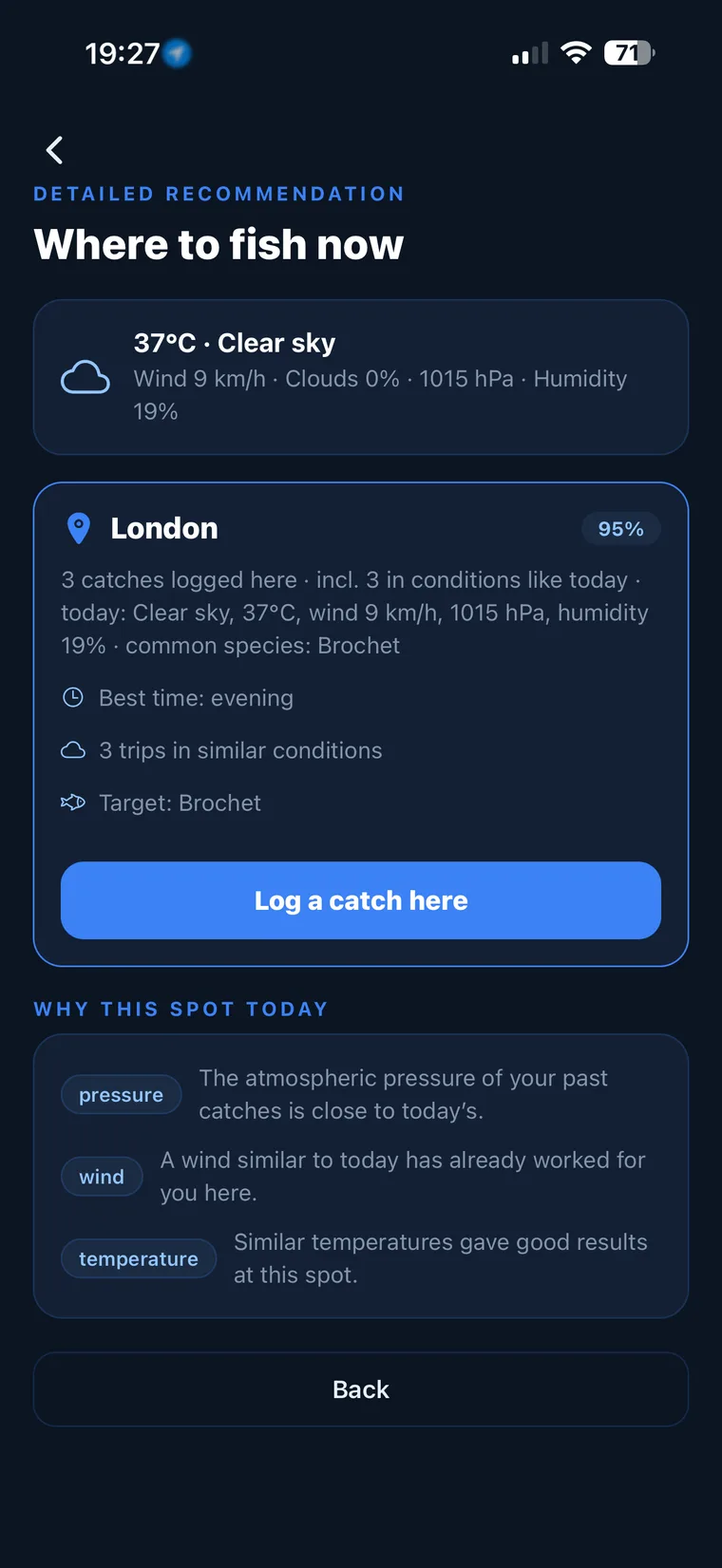
Not sure what to tie on?
Photograph your spot: CarnaFish reads the scene, cross-checks the conditions and gives you the zone, the lure and the retrieve. Free on iOS and Android.
The basic retrieves
The straight retrieve in contact. Cast, let it sink to the bottom, retrieve slowly while keeping contact. It is the foundation for zander and the most consistent option.
Pulls with pauses. One or two 30 to 50 cm rod pulls, then let it drop back on a semi-tight line. The bite comes during the fall, signalled by a knock or by a line that stops too early.
Vertical jigging. From a boat, over a piece of structure you have marked. The bait lifts and drops on the spot, with no horizontal travel.
The right baits
Almost any soft plastic can go on a jig head, but the best results come from those whose action does not depend on the rig:
- Flat-tailed shads like the ShadTeez, which swim from the minimum speed upwards.
- Ribbed shads like the Spikey Shad in stained water.
- Finesse baits and slugs for a more discreet presentation.
Our guide to zander fishing with lures covers adapting the rig to the spot. And if you do not know what weight to fit when you reach the bank, CarnaFish analyses a photo of the spot and gives you a starting point.
Key takeaways
- The weight matters more than the model or the colour of the bait.
- Take the lightest head that keeps bottom contact: the fall is the productive phase.
- Round head by default, football over rock, bullet in current.
- A bait rigged crooked spins and catches nothing: check that it is straight.
- Stinger close to compulsory for pike, optional for zander, pointless for perch.
FAQ
What jig head weight should I choose?
The lightest that still lets you feel the bottom: 5 to 7 g in the margins, 7 to 12 g down to 4 m, 12 to 18 g down to 6 m, 18 to 25 g down to 10 m. Too heavy a head shortens the fall, which is when most bites happen.
Which head shape should I pick?
The round head is versatile and works as a default. The football holds rocky bottoms better and tips the bait nose-down on the pause. The bullet sinks faster for current and depth.
Why does my bait spin on itself?
Because it is rigged crooked. The bait has to be threaded exactly along its central axis and come out perfectly straight. Check it head-on and side-on before you cast, and start again if you need to.
Do I need a stinger hook?
For pike, yes: rear attacks are frequent. For zander, only if you are missing several bites, because it increases snagging. For perch it is rarely useful and costs you discretion.
When does the bite come on this rig?
Most often during the fall, after a pull or after the cast. It shows up as a sharp knock or as a line that stops sinking earlier than expected. Stay alert throughout the drop.
What retrieve for zander?
A slow straight retrieve in contact with the bottom is the most consistent. As an alternative, one or two rod pulls followed by a drop on a semi-tight line, with the bite coming during the fall.
The full zander lure guideSeason-by-season strategy: which family of lure, when, and why.Go from theory to fish
CarnaFish reads your spot from a photo and gives you the game plan: zone, lure, retrieve. Free on iOS and Android.