Megabass Bottle Shrimp: the lure that works while you do nothing
Rather not fish it blind? Photograph your spot — CarnaFish cross-checks the conditions and points you the right way.
You have spotted an obvious spot: a pile of rocks at the foot of a jetty, three metres of water, bass and perch on it. You run a shad through, a craw, a crankbait. Nothing. Yet you know they are there, and you end up convincing yourself they are inactive.
In those cases the problem is rarely the fish's activity level. It is the duration of the presentation. A lure that crosses the spot in eight seconds gives the fish eight seconds to decide. An unmotivated fish needs far more than that — sometimes a full minute — and it will not move to intercept something that is leaving.
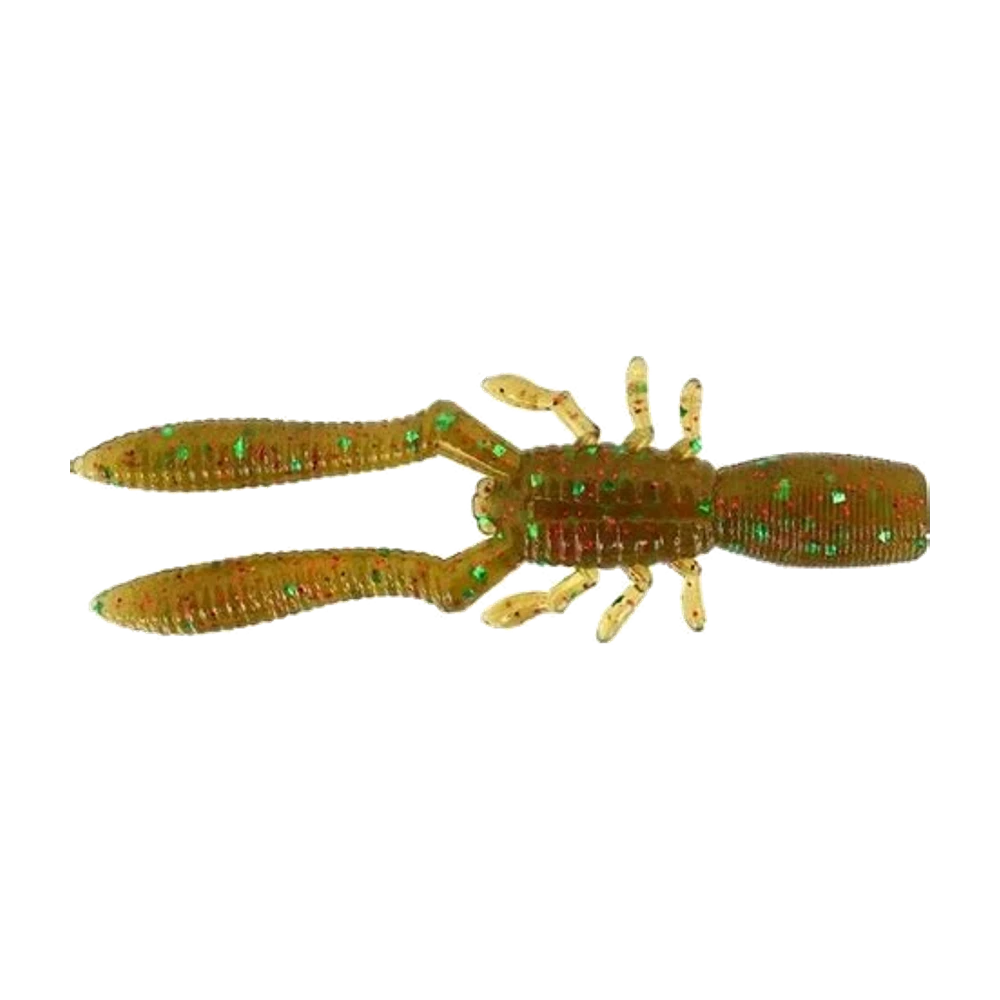
The answer is a lure you can leave in place without it ceasing to exist. That is exactly the Bottle Shrimp's brief: a short, stocky creature bait whose appendages keep waving while the body is sat on the bottom and your line is slack.
What moves when nothing moves
A searching soft plastic depends on the water movement you give it: stop the animation and it becomes an inert piece of plastic. A finesse creature bait is built the opposite way, on appendages fine and supple enough to react to tiny forces.
In practice, with the lure at rest:
- The claws and side legs react to the slightest water movement: a residual current, a fish passing, the varying tension of your line under the wind.
- The stocky profile holds the lure slightly propped up on its appendages rather than flat, which exposes the silhouette instead of gluing it to the substrate.
- The line transmits micro-tensions constantly. Even when you think you are doing nothing, the slack line is moving, and that is enough to animate the extremities.
The short, bulky body also plays a role: it gives volume in the water without lengthening the silhouette, which stays credible for a perch as much as for a bass. That is why this type of lure works for both species while most crawfish imitations are too big for perch.
The retrieve: count seconds, not handle turns
The whole technique consists of resisting the urge to do something.
- Cast beyond the spot, a metre or two past it, and let it sink on a semi-tight line, following the slack with your eyes.
- Wait for bottom contact. The line goes slack, or stops running out. Do nothing for a full ten seconds.
- Tighten the line very gently, just enough to feel the lure, without moving it.
- Move it twenty centimetres, pulling slowly with the rod, never with the reel.
- Let it settle, and wait again for fifteen to thirty seconds. Actually count.
- Take up the slack and repeat. Three to five moves are enough to cover a spot; then cast somewhere else.
On a very precise spot you have already marked, you can push the logic further and leave the lure a full minute without touching it, simply watching the line. Bites then often show as a simple sideways movement of the line, with no sensation in the rod at all.
On the water: in this kind of fishing, watch your line, not your rod tip. A bass that inhales a resting creature bait does not pull: it sucks it in and stays put. The only clue is a line moving two or three centimetres to the side, or suddenly going slack. If you wait for a knock in the rod, you will miss half your bites.
Choosing the rig by depth and bottom
| Rig | Weight | Depth | Situation |
|---|---|---|---|
| Weightless Texas | none | 0 to 1.5 m | Margins, under low branches, very slow fall |
| Ned rig | 2 to 4 g | 1.5 to 4 m | Clean bottom, gravel, rock — the reference rig |
| Drop shot | 3 to 7 g | 2 to 6 m | Fish off the bottom, vertical, sounder fishing |
| Weighted Texas | 5 to 10 g | 2 to 5 m | Weed beds, drowned wood, where you have to punch through |
The ned rig is the rig that gets the most out of this lure: the light jig head keeps it standing on the bottom, appendages in the air, in exactly the position where they work hardest. The drop shot is the option to take when fish are sitting thirty centimetres to a metre off the bottom, typically in summer on a drop-off.
Keep the line fine: fluorocarbon of 0.16 to 0.22 mm as a leader. A heavier diameter stiffens the whole rig and stops the lure settling naturally, which cancels out the entire point of it.
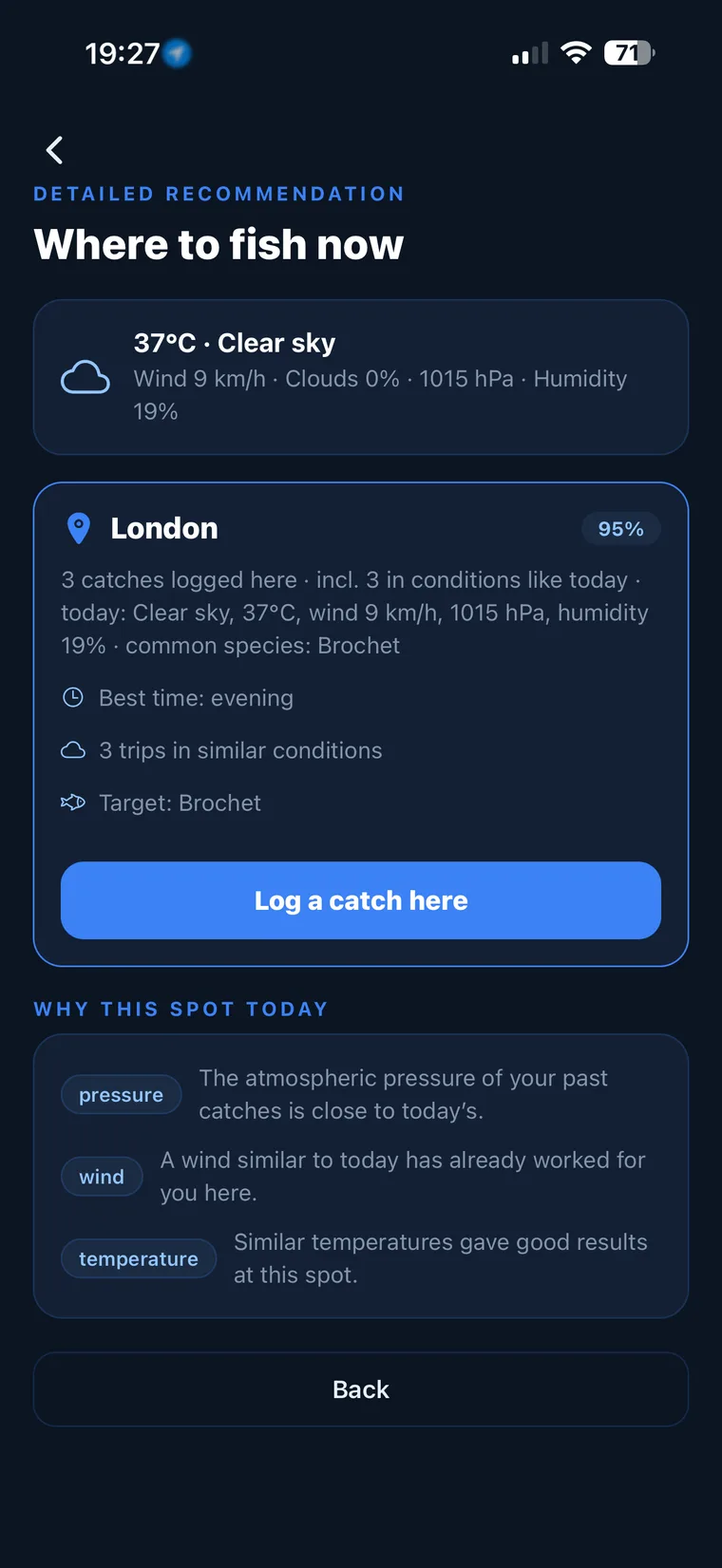
Not sure what to tie on?
Photograph your spot: CarnaFish reads the scene, cross-checks the conditions and gives you the zone, the lure and the retrieve. Free on iOS and Android.
Where it works, and where it is a waste of time
Its window:
- Precise, known spots: rock piles, bridge pilings, an isolated stump, the corner of a jetty.
- Located fish that are refusing, after a searching lure has been ignored.
- Clear water, where the visual presentation matters and the fish can examine it at length.
- Heavily fished waters, where fish used to fast lures will still accept something motionless.
- Late summer and autumn, when crawfish are abundant and fish are holding on the bottom.
It is useless, on the other hand, for covering ground: with three moves per cast and thirty-second pauses, you fish a few square metres at a time. If you do not know where the fish are, start with a searching lure and only bring this one out once the zone is identified. It is also poorly suited to fast-flowing water, where the lure does not stay put, and to genuinely murky water, where a static, discreet lure will never be found.
Bottle Shrimp or a classic craw
A Strike King Rage Craw works on opposite logic: its broad claws thrash violently the moment the lure moves, which makes it an excellent fast-fall and flipping searching bait. It needs movement to exist. The Bottle Shrimp is designed for the reverse — it works at rest and loses its edge as soon as you work it hard.
Against a ZMan TRD CrawZ, also fished on a ned rig, the difference comes down to volume and the fineness of the appendages: the TRD is more compact and more neutral, while the Bottle Shrimp offers more moving surface and a more pronounced profile, which makes it more visible in clear water to fish that look at it for a long time. If you want an even softer shrimp imitation for perch, the Reins Bubbling Shrimp covers that slot.
Our beginner's guide to bass fishing explains how to string searching and finesse fishing together in the same session. And if you are unsure which rig to choose in front of a rocky margin, CarnaFish analyses a photo of the spot and answers.
Key takeaways
- The lure's strength is that it keeps working at a dead stop, appendages in motion.
- Count your pauses: fifteen to thirty seconds minimum, sometimes a full minute on a known spot.
- Move it with the rod in twenty-centimetre steps, never with the reel.
- Watch your line, not your rod tip: the bite is a sideways move, not a knock.
- A targeted-spot lure for clear water, useless for searching or in flowing water.
FAQ
Which rig should I choose for the Bottle Shrimp?
The ned rig with a 2 to 4 g head is the reference: it keeps the lure standing on the bottom with the appendages exposed. The drop shot takes over when fish are off the bottom, and the weighted Texas when you have to punch through vegetation.
How long should I leave the lure still?
Fifteen to thirty seconds between each move, and up to a minute on a precise spot you have already marked. It is the duration of the presentation, more than the animation, that persuades an unmotivated fish to come.
How do I detect a bite on a resting lure?
By watching the line rather than the rod tip. A bass inhales the lure without moving: the only visible sign is a line that shifts two or three centimetres to the side or suddenly goes slack. Set the hook as soon as you see that movement.
Is this lure suitable for perch?
Yes, especially in the shorter sizes. Its stocky body gives volume without lengthening the silhouette, which stays within a perch's reach, unlike most crawfish imitations designed for bass.
What fluorocarbon diameter should I use?
A leader of 0.16 to 0.22 mm. A heavier diameter stiffens the rig and stops the lure settling naturally on the bottom, which removes precisely the position in which the appendages work.
Can it be used for searching?
No, that is a bad strategy. With three moves per cast and long pauses, you only cover a few square metres. Locate the fish first with a fast lure, then come back and work the zone with this rig.
The full bass lure guideSeason-by-season strategy: which family of lure, when, and why.Go from theory to fish
CarnaFish reads your spot from a photo and gives you the game plan: zone, lure, retrieve. Free on iOS and Android.