Daiwa Prorex Duckfin Shad: the tail that vibrates at snail's pace
One lure, endless conditions. CarnaFish reads your spot from a photo so you are not just guessing.
January, five degrees in the water, a plateau at six metres. You know the zander are there, you can even see them on the screen. You drag, you pause, you slow down — and nothing. The problem is usually the same: at the speed you are forced to fish to stay in the zone, your shad's tail has stopped working. The lure crosses the zone dead.
Nobody checks this, because it happens under six metres of water. A classic spade-shaped paddle needs a minimum speed to kick in. Below it, it just trails without producing anything — and a cold-water zander, which decides on vibration long before it decides on sight, has no reason to move.
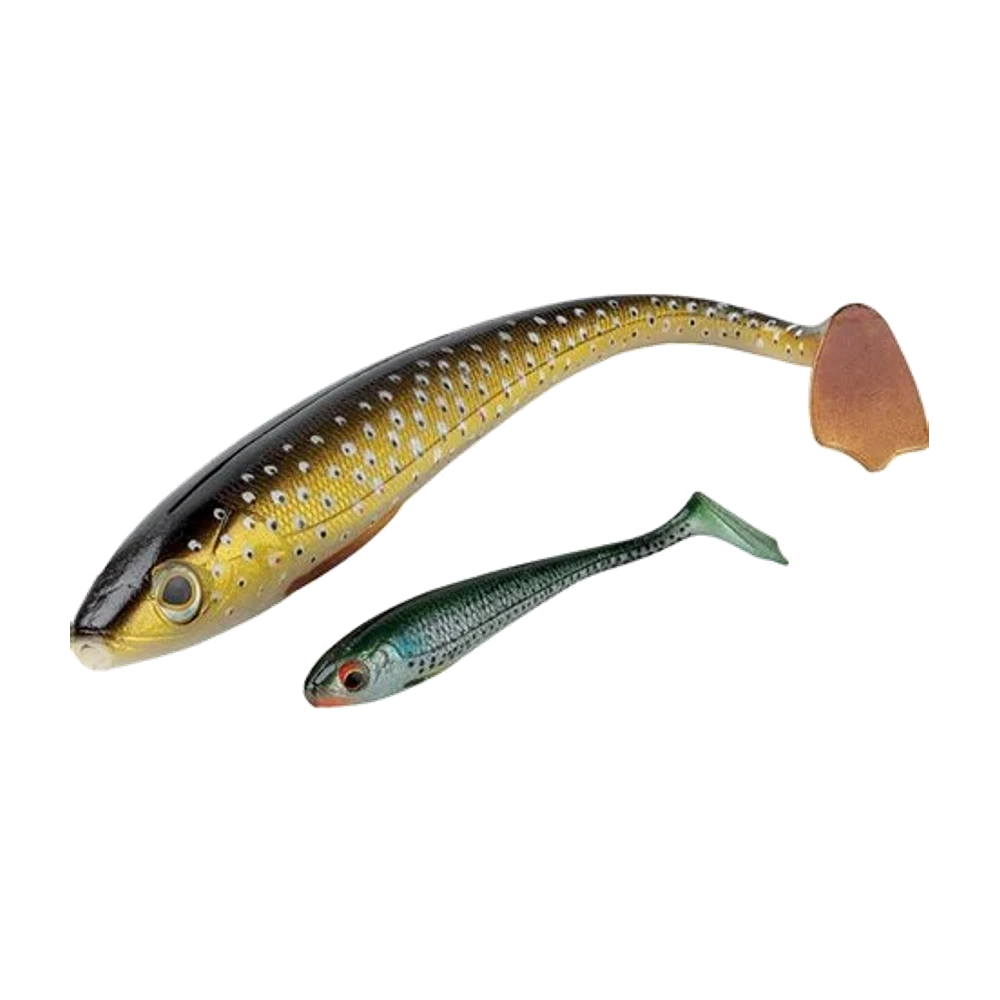
The Duckfin Shad attacks that exact threshold. Its tail is shaped like a webbed foot, wider and thinner than the usual spade, and it starts up at a speed where most shads stay inert.
A web instead of a spade
Three consequences you can measure on the water:
- The start-up threshold is lower. You can retrieve at a speed you would think ridiculous and still see the paddle beating. That is the lure's whole reason for existing.
- Low frequency, wide amplitude. The signal produced is a slow, spaced-out thump, not a nervous buzz. That is precisely the signature a zander's lateral line picks up best in cold, turbid water.
- The vibration comes back up the rod. You feel the paddle beating in the blank. That feedback is the best control tool you have: as long as you feel the beat, your lure is fishing; the moment it stops, you are either too slow or you have picked up a dead leaf.
The trade-off is that this wide web brakes the lure. Allow for a gram or two more than with an equivalent shad to hold the same depth, particularly in current.
The slow straight retrieve: a technique in its own right
Plenty of people treat the straight retrieve as a beginner's method, fit only for searching. On cold-water zander it is on the contrary the most demanding technique there is, because it is played out over thirty centimetres of water depth.
- Cast and let it drop on a tight line, counting. Note the number of seconds to contact.
- Lift off immediately with two turns of the handle. You are now thirty or forty centimetres off the bottom, the right height.
- Retrieve continuously, very slowly, setting yourself by the feel of the beat. Do not look for a speed on a stopwatch, look for the threshold where you can just feel the paddle.
- Touch bottom again every twenty seconds by stopping the handle for two seconds, then lift off again. That is how you stay in the useful layer as the bottom changes.
- Do not set on a simple stop in the vibration. Wait for resistance. A cold-water zander engulfs the lure from behind and goes with it; striking too early means missing it.
On the water: a cold-water zander almost always gives you a soft bite, one that feels like a strand of weed. The reflex is to strike hard, and half the time you pull the lure straight out of the fish's mouth. The right answer is to speed up by half a turn of the handle before setting: the fish clamps down, and the hookset happens on a line that is already tight.
Jig head and stinger
| Depth | Shad size | Jig head |
|---|---|---|
| 1 to 3 m | 10 cm | 7 to 10 g |
| 3 to 5 m | 12.5 cm | 10 to 14 g |
| 5 to 8 m | 12.5 to 15 cm | 14 to 18 g |
| River current | 12.5 cm | +4 g minimum |
On the jig head itself, prefer a ball shape to a flat one. A flat head planes on the drop and turns sideways under the pull of the web, which makes the lure spin on its axis instead of swimming straight. A round or ball head, with a well-centred eye, keeps the track clean even when the paddle is pulling hard.
The rear stinger is not optional on this lure in winter. Inactive zander nip at the tail: without a second hook you register bites and hook nothing. Mount it on a short piece of supple wire, pinned mid-body, never in the paddle itself — a stinger driven into the web kills the action and removes the whole point of the model.

Not sure what to tie on?
Photograph your spot: CarnaFish reads the scene, cross-checks the conditions and gives you the zone, the lure and the retrieve. Free on iOS and Android.
Where it excels, where it falls behind
- Cold water, November to March, on plateaux, drop-offs and the tail ends of holes. That is its main window.
- Stained or coloured water, where low-frequency vibration replaces sight. On a reservoir after a flood, it makes the difference.
- Autumn perch on a straight retrieve, in 10 cm, over shoals located on the sounder.
It falls behind as soon as you need vertical fishing or firm lift-and-drop work: its wide web makes it plane and drop back slowly, which gets in the way of the constant bottom contact vertical fishing depends on. On very educated fish in clear, low water, its pronounced vibration is sometimes too much — a shad with a slim paddle and a discreet action then goes ahead of it. Finally, it does not cast well: the web brakes in flight and costs several metres of distance.
Duckfin Shad or Zander Pro Shad
The Fox Rage Zander Pro Shad is the direct competitor in this slot. Its body is slimmer and its paddle more compact: it casts better, drops straighter and lends itself more to lift-and-drop and vertical work. On a deep spot where you are fishing under the boat, it is more practical.
The Duckfin takes the advantage on one thing only, but it is a decisive one in winter: it is alive at a speed where the other is no longer. If your fishing consists of crawling very slowly over a plateau, this is the one to rig.
Against a Keitech Easy Shiner 4 the comparison is different: the Easy Shiner plays on a refined action and on scent, in more modest sizes, and targets perch and finesse zander instead. Our simple jig head rig page covers choosing the hook to match the body. The beginner's guide to zander lure fishing puts these options back into a season. And if you are unsure what head weight to fit for the spot in front of you, CarnaFish analyses a photo of the spot and gives you an answer.
Key takeaways
- The webbed paddle starts up at a speed where a classic shad stays inert.
- Fish by the beat you feel in the rod, not by a theoretical speed.
- Thirty to forty centimetres off the bottom, on a continuous straight retrieve.
- A rear stinger is essential in cold water, pinned mid-body and never in the web.
- It casts badly and suits vertical work or firm lift-and-drop poorly.
FAQ
What is a duckfin tail?
It is a paddle shaped like a webbed foot, wider and thinner than a classic spade tail. It starts up at a far lower retrieve speed and produces a slow, wide vibration.
What jig head should I use with a Duckfin Shad?
Reckon on 7 to 10 g down to 3 m, 10 to 14 g between 3 and 5 m, 14 to 18 g beyond. Add at least four grams in a flowing river, as the web noticeably brakes the drop.
Do I need a stinger hook?
Yes in cold water. Inactive zander attack from behind and are happy just to nip the tail. Mount the stinger mid-body on a short piece of wire, never in the web itself.
How fast should I retrieve?
At the threshold where you can just feel the paddle beating in the blank of the rod. It is a feel setting, not a timed one: if the vibration disappears, speed up very slightly.
Why do you miss winter zander bites?
Because you set too early on a soft bite. The right reaction is to speed up by half a turn of the handle to tighten the line and let the fish clamp down, then set.
Is it suitable for vertical fishing?
Not really. Its wide paddle makes it plane on the drop, which gets in the way of the constant bottom contact vertical fishing depends on. A slimmer shad with a compact paddle is preferable under the boat.
The full zander lure guideSeason-by-season strategy: which family of lure, when, and why.Go from theory to fish
CarnaFish reads your spot from a photo and gives you the game plan: zone, lure, retrieve. Free on iOS and Android.