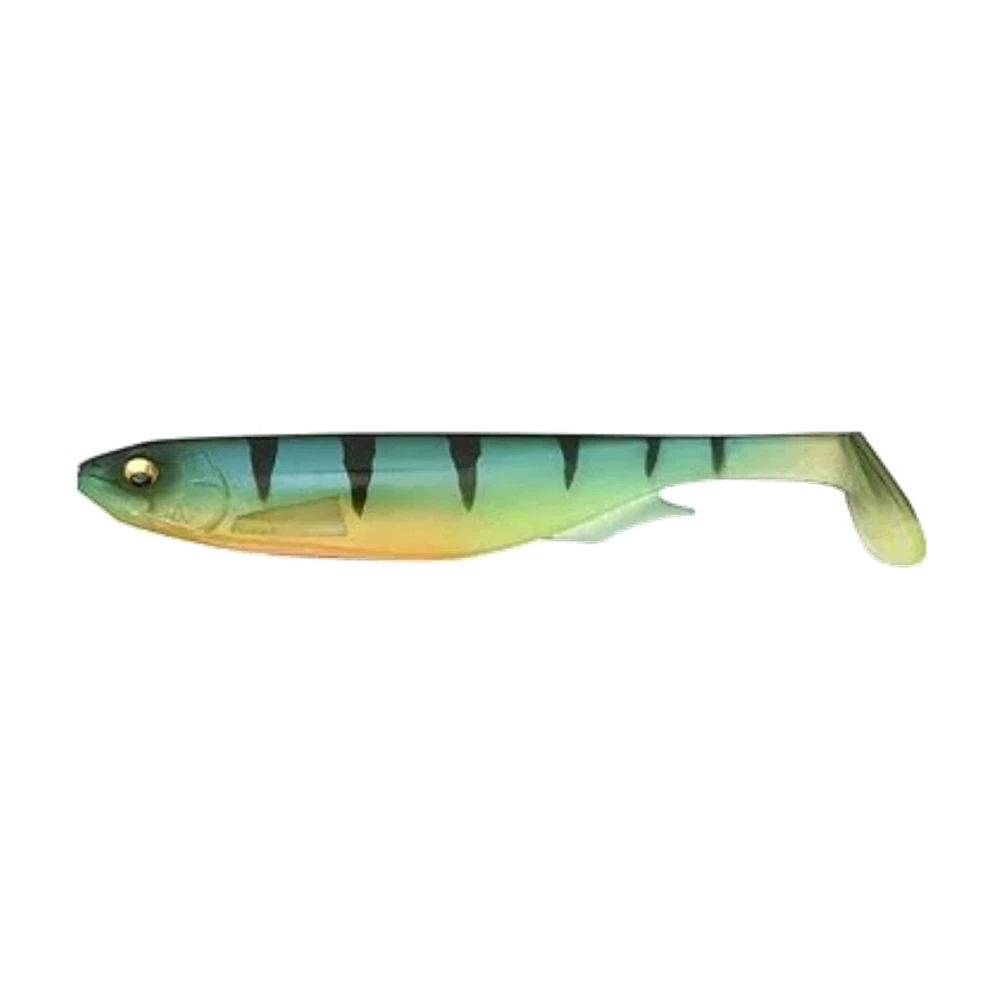
Megabass Spark Shad: the shad that keeps swimming when you slow down
Rather not fish it blind? Photograph your spot — CarnaFish cross-checks the conditions and points you the right way.
Every soft shad looks the same in the bag. On the water, the real difference between two models comes down to a number nobody prints on the packaging: the minimum speed at which the tail keeps beating. Below that threshold, your paddle stops, the lure drags along like a rag, and you stop catching.
That threshold decides everything when you fish for zander. This fish often refuses to chase: you have to pass the lure in front of it, slowly, a few tens of centimetres off the bottom. If your shad needs to be pushed to come alive, you are forced to go too fast — and you pass over the fish without knowing it.
The Spark Shad is built for a low threshold. A thin tail on a soft wrist, a ribbed body: it starts working on very little energy.
Three construction details, three effects
The wrist. This is the join between the body and the tail paddle. On the Spark Shad it is noticeably thinner than the body, which decouples the tail from the rest. The result: the tail beats even when the body is almost still, including during a simple fall.
The body ribs. Those grooves are not decoration. They do two concrete jobs: they create micro-turbulence that reinforces the signal at low speed, and above all they grip the jig head. A smooth body slides up the hook after three casts; a ribbed body holds noticeably longer.
The plastic density. The material is on the soft side, which helps the tail get going — and logically makes it less durable than a hard plastic. That is the accepted trade-off: you fish better and you get through more lures. On zander, with teeth and repeated strikes, budget one body for every two to four fish.
Picking the jig head: the real setting
The shad only does half the job. The jig head decides the depth, the fall speed and the swimming angle.
| Head weight | Situation | Indicative fall speed |
|---|---|---|
| 5 to 7 g | Margins, under 2 m, fish high up | slow, around 25 cm/s |
| 10 g | The do-it-all between 2 and 4 m | around 35 cm/s |
| 12 to 15 g | 4 to 6 m, light current, wind fast, firm contact | |
| Over 18 g | Deep water or strong current | you lose the read on bites |
Two principles beat an exhaustive table. First, always take the lightest head that lets you keep contact with the bottom. A head that is too heavy crushes the action and removes the fall phase, which is when zander strike most. Second, on soft or silty bottoms prefer a round head; on hard, rocky bottoms a football head stands up better and snags less.
The hook must be heavy wire and come out perfectly straight from the lure's back. A shad rigged crooked swims crooked, and you will only see it at the bank.
The retrieve: two rhythms are enough
The slow straight retrieve, for searching and for perch.
- Cast, let the lure reach the bottom while counting.
- Two turns of the handle to lift it off, then retrieve very slowly, looking for the lowest speed at which you can still feel the tail vibrating in the rod tip.
- Every six or seven metres, stop for a second. The lure drops back and the tail keeps beating.
- Pick it up again and carry on to the bank.
The straight hop, for holding zander.
- Let it touch bottom.
- Two to three slow turns of the handle.
- Stop and let it drop back on a semi-slack line, until it contacts the bottom.
- Repeat. The lure works forward in steps, staying permanently within the first fifty centimetres above the bottom.
On the water: when you are not sure whether your lure is still swimming, rest your index finger on the line above the reel. The tail's vibration is felt there long before it reaches the handle. If it disappears, you have dropped below swimming speed — speed up by ten per cent, no more. That ten per cent margin, just above the threshold, is what produces the most zander bites.
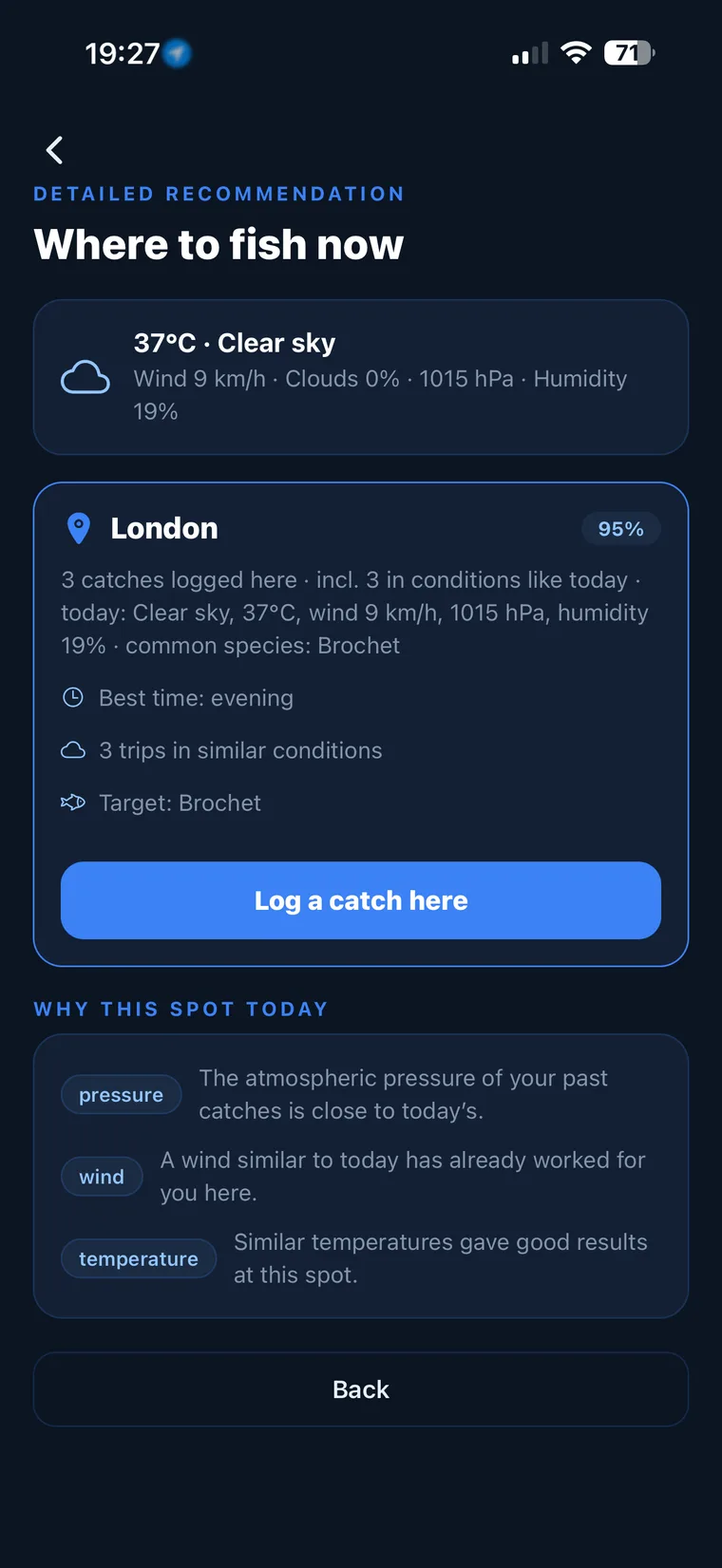
Not sure what to tie on?
Photograph your spot: CarnaFish reads the scene, cross-checks the conditions and gives you the zone, the lure and the retrieve. Free on iOS and Android.
Where it is good and where it is not
Its natural ground:
- Large gravel pits and reservoirs, on flats and drop-offs between 2 and 6 m, all year round.
- Slow rivers, fishing the deep margins and the holes.
- Cold water, where slowness is compulsory and the tail's low start-up becomes a real advantage.
- Schooling perch on a shallow hump, with a light head and a slow steady retrieve.
Its limits:
- Strong current: you have to go so heavy that you crush the action, and a denser lure will do better.
- Very cluttered spots: on a jig head, it snags. Switch to a Texas rig or a weighted offset hook.
- Very active fish hunting at the surface: a fast hard lure covers the ground far more efficiently.
- Durability: fish a whole day on pike and you will leave a handful of bodies behind.
Spark Shad or Easy Shiner
The Keitech Easy Shiner 4 is the obvious benchmark on the shelf. Its wider tail produces a broader vibration that is detectable from farther away, and its salted, scented plastic gives it an edge in how long a fish holds it. It is often the better choice in stained water, or when the fish has to detect the lure at a distance.
The Spark Shad plays finer: slimmer profile, tighter vibration, lower start-up. In clear water, on pressured zander or wary perch, that discreet profile often gets through better. Against a Fox Rage Zander Pro Shad, also designed for zander, the difference is mainly the plastic: softer here, so more alive at low speed but less durable.
The choice of rig matters as much as the choice of lure: our page on the simple jig head rig covers hook alignment, and our beginner's guide to zander fishing with lures goes over reading deep spots. And if you are unsure what head weight to tie on when you reach an unfamiliar spot, CarnaFish analyses a photo of the spot and answers.
Key takeaways
- Thin wrist and ribbed body: the tail starts at very low speed, exactly what zander demand.
- The ribs grip the jig head and limit the body sliding up the hook.
- Always take the lightest head that keeps contact with the bottom.
- Feel the vibration on the line with your index finger, and fish ten per cent above the swimming threshold.
- Soft plastic, so not very durable: that is the price of the low start-up.
FAQ
What jig head for the Spark Shad?
A 10 g head covers the 2 to 4 m range, which is most situations. Go lighter if the fish are high or the water is shallow, heavier only if you are losing contact with the bottom.
How fast should you retrieve it?
At the lowest speed at which you can still feel the tail vibrating, plus a very slight margin. That is the central setting on this lure: too slow and the tail stops; too fast and you pass over the zander.
Why does the body slide up the hook?
It is the flaw of every shad on a jig head, reduced here by the body ribs. Push the hook through perfectly straight, and add a drop of superglue on the head's collar to hold for several more fish.
Spark Shad or Keitech Easy Shiner?
The Easy Shiner has a wider tail and a stronger signal: favour it in stained water or to attract from a distance. The Spark Shad is slimmer and more discreet, with a better start-up at low speed, which helps in clear water and on wary fish.
Does it suit perch?
Yes, in the small sizes, on a 5 to 7 g head and retrieved slowly over a shallow hump or along a margin. The slender profile and tight vibration suit schooling perch well.
Does it stand up to pike teeth?
Badly, like any soft plastic. If you catch pike regularly on a zander spot, bring plenty of spare bodies or switch to a model in a denser plastic.
The full zander lure guideSeason-by-season strategy: which family of lure, when, and why.Go from theory to fish
CarnaFish reads your spot from a photo and gives you the game plan: zone, lure, retrieve. Free on iOS and Android.