DUO Wriggle ND Slim: the buoyant ned worm that stands up on the bottom
One lure, endless conditions. CarnaFish reads your spot from a photo so you are not just guessing.
The ned rig has a quirk few rigs share: it mostly catches when you're doing nothing. The bait is sitting there, the line is semi-tight, your rod isn't moving — and that's the moment the fish comes. Which only works if the bait itself keeps living through the pause. That's the entire reason the Wriggle ND Slim exists: a body that stands up and quivers when nothing is pushing it.
A worm that floats, and why that matters
DUO pours this bait in a soft, stretchy elastomer the maker describes as highly buoyant. Paired with a ned head, which concentrates all the lead up front, the body stands vertical the moment the rig touches bottom. The worm sits upright, swaying slightly in the smallest water movement, like a worm emerging from the substrate.
That posture is what makes the ned rig work, and plenty of generic soft plastics can't hold it: too dense, they lie flat on the bottom and vanish visually. The Wriggle ND Slim stays readable to a fish patrolling a metre above.
A second stated property: a deliberately thick rear section, which adds vibration and extra shake. On a 7.6 cm bait with no appendages at all, that mass at the end of the body is the only way to produce a signal. The result isn't a swimming action, it's a short, tight pulse that fires at the slightest displacement.
7.6 cm, and one figure the maker doesn't publish
The description gives a size of 3 in, that is 7.6 cm, and a pack of 7. No unit weight is published, however. That's no handicap for a soft plastic meant for the ned rig — the fishing weight comes entirely from the jighead — but it deserves saying plainly rather than inventing a number.
The elliptical body shape is, according to the maker, carried over from the Wriggle Stick in the same range, condensed here into a short, slim profile. The elastomer is also described as heavily scented and durable, which has real practical value on a rig where the fish holds the bait in its mouth for several seconds before you set.
On a ned rig, never set on first contact. The fish inhales the bait and holds it; set within the second and you pull it straight back out. Wait for the weight to settle in, drop the rod, then come back by lifting rather than striking.
The rig, in detail
The jighead
A standard ned head, short shank, round or bullet-shaped body, between 1.8 and 3.5 g / 1/16 and 1/8 oz. You choose by depth and wind, never out of a wish to get down faster. Too heavy a head flattens the body on the bottom and cancels the very buoyancy you came for.
Rod and line
A light outfit, 3-10 g / 1/8-3/8 oz, with a sensitive but not sloppy tip, and 6 to 8 lb fluorocarbon. Plenty of anglers fish the ned on braid with a fluoro leader; both work, with straight fluoro being more discreet and more forgiving of a delayed hookset.
Where to put it
Hard bottom: gravel, rock slabs, the edges of riprap, boat ramp slopes. The ned rig is a clean-bottom technique. In dense weed the rig fouls and loses all its point — that's where a weedless Texas rig takes over.
The classic mistake
Working it. The temptation is constant, especially when nothing has bitten for twenty minutes. But every extra pull you add brings the ned rig closer to a badly worked ordinary shad. The right sequence is three moves: drop it, leave it five to ten seconds, move it thirty centimetres. Nothing else.
When to tie this on, and when not to
The ned rig is the tough-day weapon: clear water, fishing pressure, fish glued to the bottom after a cold snap or in high summer. It catches when search baits have stopped producing, but it doesn't search: you cover very little water per hour.
So the right method is to use it second. Run a fast bait first to locate activity, then come back with the ned rig on the exact zone that gave you a sign. Leading with it on unfamiliar water means spending the day on ten square metres.
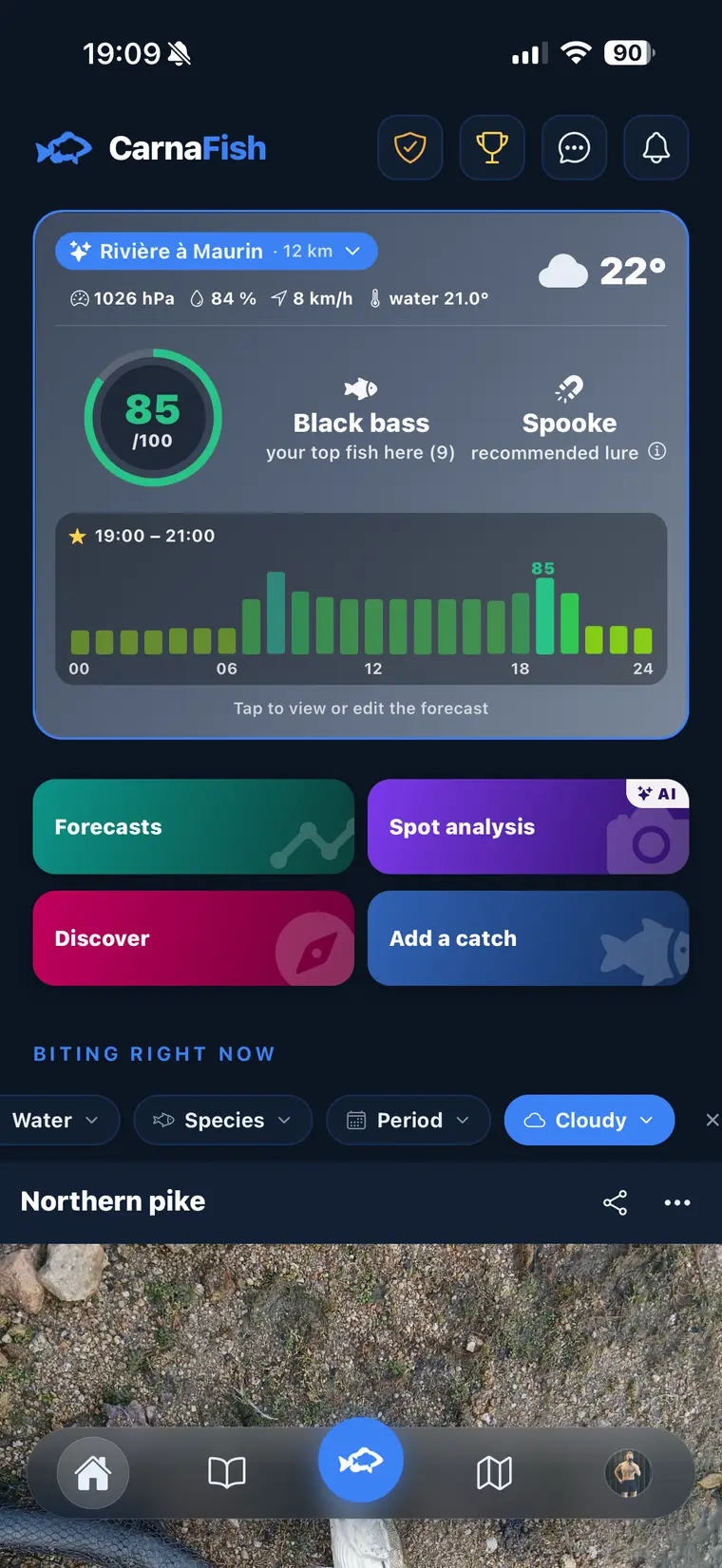
Not sure what to tie on?
Photograph your spot: CarnaFish reads the scene, cross-checks the conditions and gives you the zone, the lure and the retrieve. Free on iOS and Android.
Durability, scent and looking after the pack
The maker stresses two properties of the material: a strong scent and a toughness built to take several fish without tearing. That isn't a comfort detail. A worm that tears on the first fish costs ten seconds of re-rigging per catch, and more importantly it slides on the shank: as soon as the bait shifts a centimetre, the body loses its alignment and no longer stands up properly.
The scent plays on retention time. A bass that inhales an inert soft plastic spits it out within a second if it detects a foreign body; with a heavily scented elastomer it holds on longer, which gives you time to feel the weight and set properly. On a rig where the hookset is systematically delayed, that's the difference between a missed bite and a fish in hand.
On storage, this kind of elastomer doesn't tolerate being mixed with other materials: kept in contact with a standard plastisol bait, it can soften or bleed colour. Keep it in its original bag, laid flat, out of the sun.
Colour by water clarity
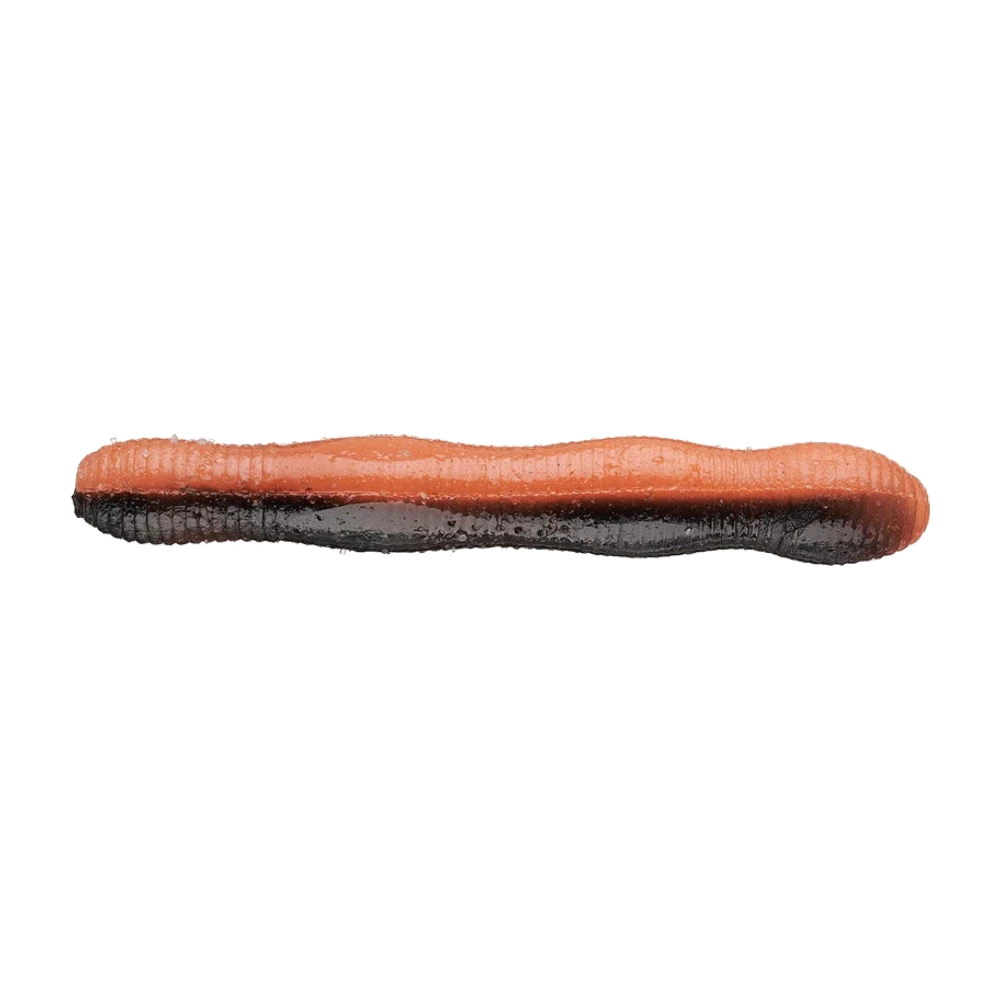
- Stained water or dark bottom: the orange and black laminate of the photo, whose contrast stays readable as visibility drops.
- Clear water over hard bottom: green pumpkin, the universal finesse tone, which passes equally well for a worm or a young crayfish.
- Bright light, clear water: a translucent natural tone that nearly disappears and lets the movement do all the work.
A well-placed ned rig is only worth it if the spot is right, because you'll spend time there. That's exactly the time CarnaFish saves you: a photo of the spot, and the app suggests the zone, the depth and the presentation consistent with the day's conditions. For soft-plastic bass fundamentals, our beginner's guide to bass fishing sets the scene.
For comparison, the Zman TRD Ned Rig remains the family benchmark, with a very different elastic material, and the 6th Sense Ned Fry Worm offers an even slimmer profile. If the rig itself is new to you, our ned rig setup page walks through it step by step.
Key takeaways
- 7.6 cm / 3 in, 7 per pack, in an elastomer described as buoyant and heavily scented.
- The body stands vertical on the bottom: that posture is what makes the ned rig work.
- The rear of the body is deliberately thick to produce a short vibration at the slightest movement.
- No unit weight published by the maker: the fishing weight comes only from the jighead.
FAQ
What jighead should I use with the Wriggle ND Slim?
A short-shank ned head of 1.8 to 3.5 g / 1/16 to 1/8 oz depending on depth and wind. Stay on the lightest weight that still keeps you in contact: a heavy head lays the bait down and kills its vertical stand.
How much does this soft plastic weigh?
The maker publishes no unit weight, only the 3 in (7.6 cm) size and a pack of 7. That has no consequence for rigging, since all the fishing weight comes from the jighead.
Does this worm really float?
Yes, the maker states a high buoyancy for its elastomer, which lets the body stand vertical while the jighead rests on the bottom.
Can it be rigged weedless Texas-style?
It's possible with a wide-gap hook, but that isn't its purpose: the short body leaves little room to tuck the point cleanly. For dense weed, a longer worm remains the better tool.
Does the ned rig work for perch?
Yes, very well, simply by dropping to a 1.8 g / 1/16 oz head. Perch often take the bait at a complete standstill, over gravel bottoms or along the edges of rock.
Why do I keep missing bites on the ned rig?
Almost always from setting too fast. The fish inhales the bait and holds it for a few seconds; wait for the weight to settle in properly, then come back by lifting the rod rather than striking.
The full bass lure guideSeason-by-season strategy: which family of lure, when, and why.Go from theory to fish
CarnaFish reads your spot from a photo and gives you the game plan: zone, lure, retrieve. Free on iOS and Android.