Ned rig: the presentation that rescues blank days
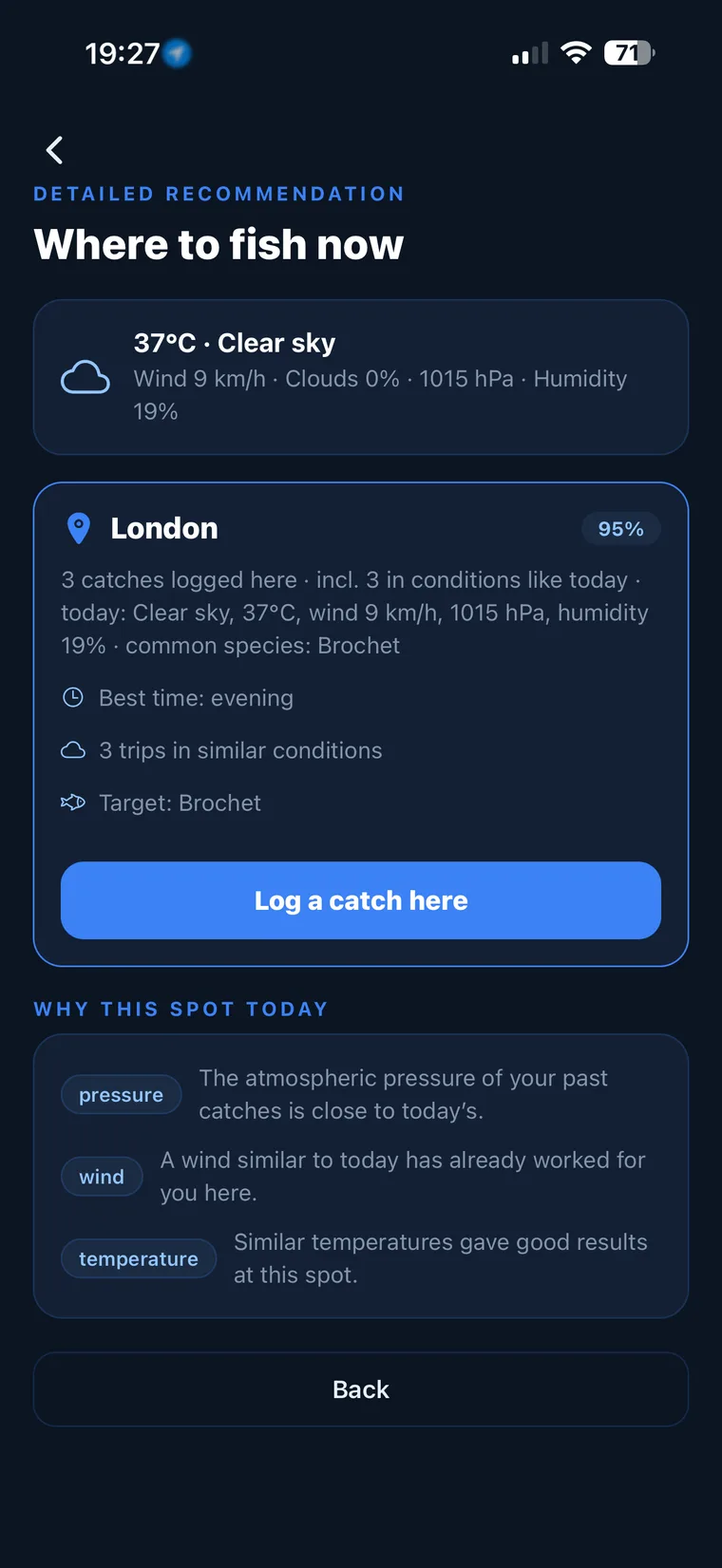
Rather not fish it blind? Photograph your spot — CarnaFish cross-checks the conditions and points you the right way.
The Ned rig comes from the American Midwest, where it was developed for the days when bass refuse everything. It reached Europe through perch fishing, and it has taken a place there that no other finesse rig occupies.
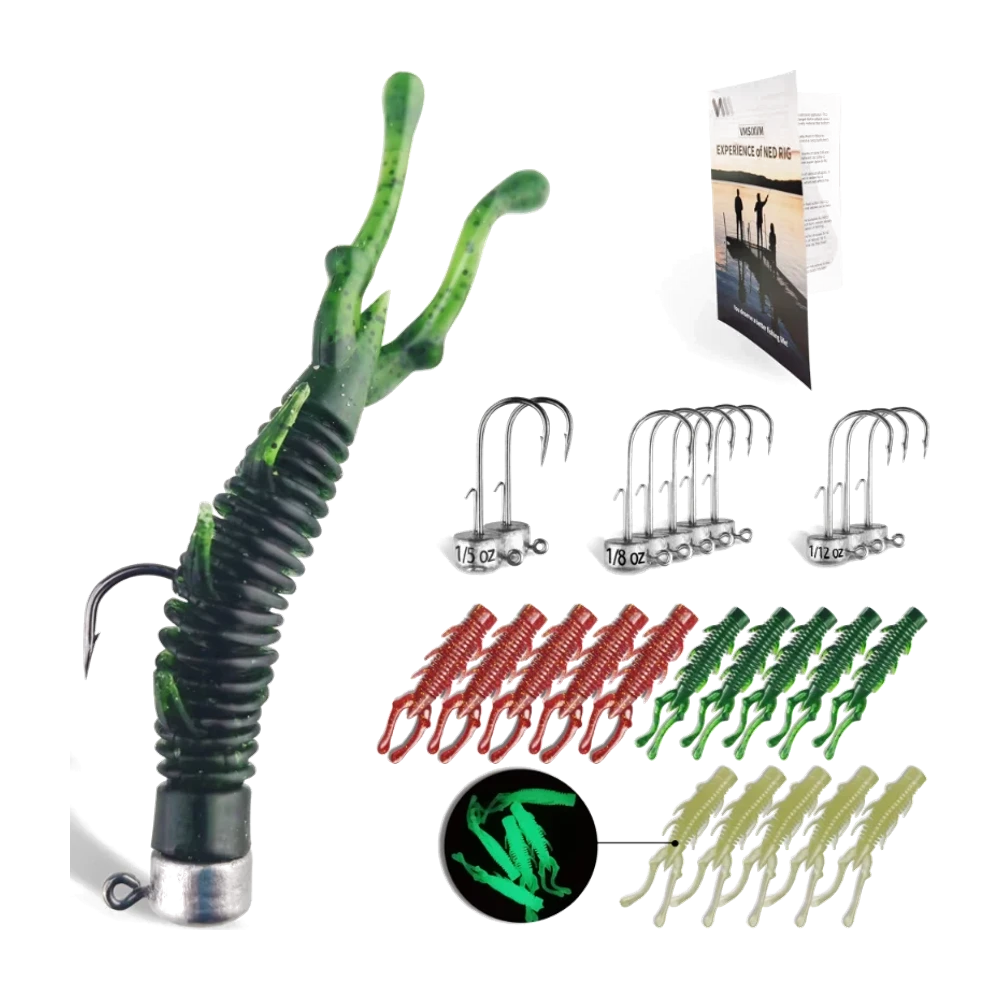
The idea is almost absurdly simple: a small piece of buoyant soft plastic on a flat-faced jig head. And it is precisely that lack of sophistication that makes it work when fish are educated or inactive.
Why it works
Three mechanisms combine.
The bait stands up. The flat head rests on the bottom while the buoyant body points upwards. The resulting silhouette — small, vertical, motionless — matches nothing the fish are used to refusing.
The profile is tiny. Less signal, fewer reasons to be suspicious. On heavily fished water, reducing the signal is often more effective than increasing it.
The presentation lasts an extremely long time. The bait stays in the same place for tens of seconds, inside the field of view of a fish holding on a spot, moving just enough to stay alive.
The rig
There are only two components, and neither is interchangeable.
The mushroom head. Flat at the front, mushroom-shaped, with a keeper collar. It is that flat face that lets the bait stand up. A classic round head tips it onto its side and removes the whole point of the rig.
A buoyant soft plastic. Z-Man's ElaZtech is the reference material — it genuinely floats. Some standard plastics work partly, but the bait stands up less convincingly and falls back faster.
On weight: 1.8 g down to 3 m, 3.5 g from 3 to 5 m, 5 g deeper or in light current. The urge to go heavier is the commonest mistake: above 5 g the bait no longer stands up properly.
On the water: if you can barely feel anything while fishing, that is a good sign. A Ned rig is supposed to be imperceptible. The moment you start to "feel the bait working", you are working it too hard.
The retrieve, or rather the wait
- Cast and let it sink to the bottom on a semi-tight line.
- Do nothing for ten seconds.
- Drag the bait two or three centimetres, simply by tightening the line without lifting the rod.
- Wait another ten seconds.
- Repeat over a few metres, then cast somewhere else.
A useful variant on active perch: two small 15 cm pulls, then a pause. But the passive version stays the most productive on difficult fish.
Recognising the bite
This is the tricky part. A Ned rig bite is almost always subtle:
- A weight that builds progressively on the line.
- A line that moves off gently to the side, with no knock.
- A slack feeling, when the fish takes the bait and lifts with it.
In all three cases, set the hook by tightening progressively, not by ripping. The hook on a Ned head is fine wire and a violent hookset pulls out or tears through.
Not sure what to tie on?
Photograph your spot: CarnaFish reads the scene, cross-checks the conditions and gives you the zone, the lure and the retrieve. Free on iOS and Android.
The right baits
- The cut-off stick, like the TRD, a minimal profile for the wariest fish.
- The micro craw, like the TRD CrawZ, whose claws wave on their own over rocky bottoms.
- The small cut-off shad, which adds a slight kick.
- The tube, which stands up well and whose tentacles never stop moving.
When to bring it out
The Ned rig is not a searching rig. It is a conversion tool.
- Tough days: cold front, rising pressure, lifeless fish.
- Heavily fished waters where the fish have seen it all.
- Fish located on the sounder that will not react to anything else.
- Hard bottoms: gravel, rock, rip-rap.
Locate first with something fast — a lipless or a crankbait — then come back and work the area with the Ned rig.
Our guide to perch fishing with lures places the Ned rig among the finesse approaches. And if you have located fish that refuse everything, CarnaFish analyses a photo of the spot and suggests a line of attack.
Key takeaways
- A mushroom head is compulsory: a round head tips the bait over and cancels the rig.
- Buoyant soft plastic, ideally ElaZtech.
- 1.8 to 5 g maximum. Heavier and the bait stops standing up.
- Drag two or three centimetres, then wait ten seconds.
- Set the hook progressively, never violently: the hook is fine wire.
FAQ
What is a Ned rig?
It is a finesse rig made of a small buoyant soft plastic on a flat-faced jig head known as a mushroom head. The bait stands vertically on the bottom and is fished by dragging it very slowly with long pauses.
Why do you need a mushroom head?
Its flat front face lets the bait stand vertically when the head rests on the bottom. A classic round head tips the bait onto its side and removes the vertical silhouette that makes the whole rig worth fishing.
What weight should I use?
1.8 g down to 3 m, 3.5 g between 3 and 5 m, 5 g deeper or in light current. Above 5 g the bait no longer stands up properly, even with a buoyant material.
How do you recognise a Ned rig bite?
By a weight that builds progressively, a line moving gently off to the side, or a slack feeling as the fish lifts with the bait. Set the hook by tightening progressively, never by ripping.
Do I need an ElaZtech bait?
It is clearly preferable: ElaZtech genuinely floats and makes the bait stand up convincingly. Some standard plastics work partly but fall back faster and give a less defined silhouette.
When should I use the Ned rig?
On tough days — cold front, lifeless fish — on heavily fished waters, and on located fish that refuse everything else. It is not a searching rig: locate first with something fast.
The full perch lure guideSeason-by-season strategy: which family of lure, when, and why.Go from theory to fish
CarnaFish reads your spot from a photo and gives you the game plan: zone, lure, retrieve. Free on iOS and Android.