Gary Yamamoto Yama Craw: the 7.6 cm craw that stands up on the bottom
The right lure in the wrong spot still catches nothing. CarnaFish spots the zone that works, from a single photo.
Early April, a stretch of large rock exposed to the afternoon sun. The water warms two degrees in three days, crawfish come out of the cracks, and bass settle on them before they even think about spawning. That is the window where a craw bait does not imitate one prey among many: it imitates the only prey the fish are watching. The 3 inch Gary Yamamoto Yama Craw is cut for exactly that moment.
A downsized version, and why the format exists
The 3 inch Yama Craw is the scaled-down take on the original. Yamamoto says it released the bait in answer to demand from both tournament anglers and recreational ones, which tells you a lot about the gap: there was no short craw that kept the big one's action.
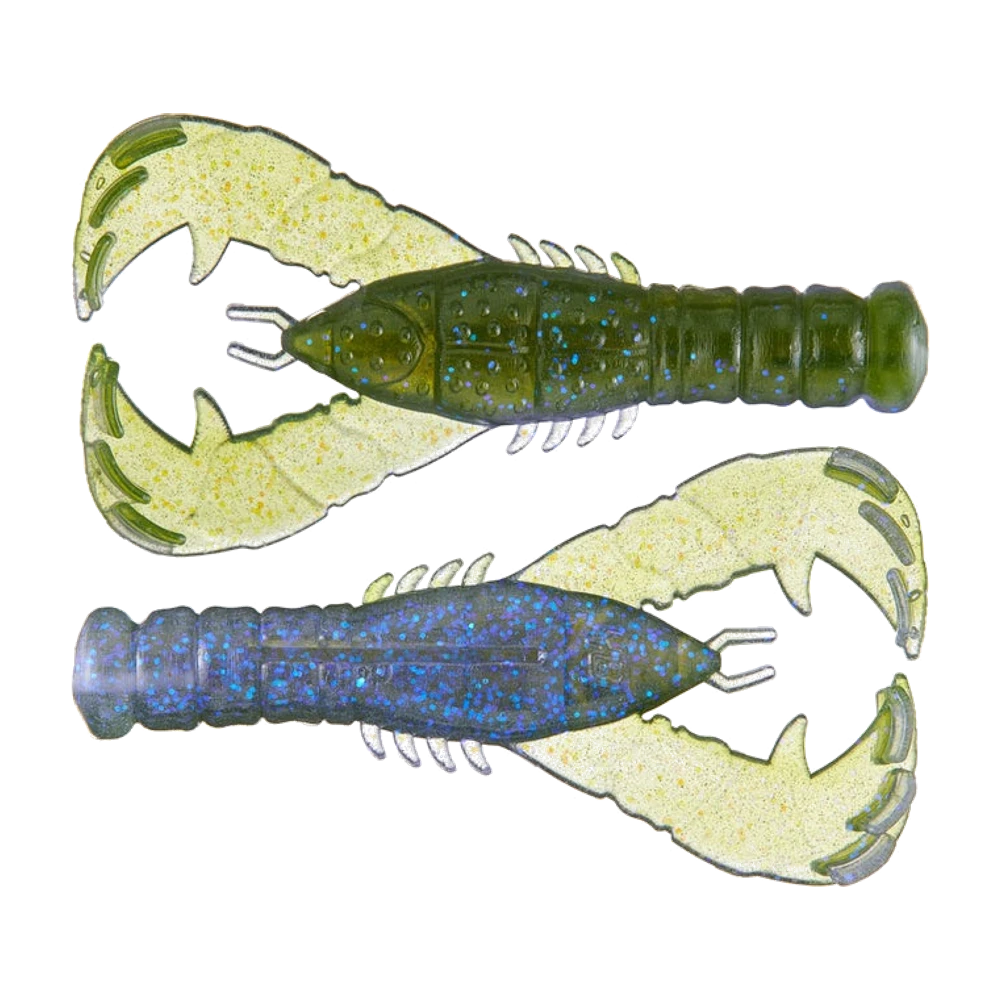
Because dropping in size is not as simple as it sounds. Almost every small soft craw on the market suffers from the same two faults: it splits when you thread it onto a jig shank, and its body is too thin to take a Texas hook of any serious size. Yamamoto states it reworked the body proportions to fix both points, with a heavier forward section. In the photo you can clearly see that bumpy, swollen carapace, markedly bulkier than the ribbed tail behind it.
The spec table, for its part, comes down to two numbers: 3 in, meaning 7.6 cm, in packs of 8. No per-bait weight, no buoyancy class. That is a constant across Yamamoto's soft range, and it is worth knowing before you pick a weight.
The channels in the claws, the real technical detail
Both claws are wide, flat and far larger than you would expect on a 7.6 cm body. Yamamoto moulded precise channels into them, perfectly visible in the photo as dark grooves in the cream material. They are not decorative: a flat, smooth claw simply undulates softly, whereas a channelled claw cups, grabs water on one side then the other, and ends up kicking decisively.
Practical consequence: this craw works on the fall without you doing anything at all. Between the moment the rig leaves the surface and the moment it touches down, both claws open and snap several times. That is often when the bite comes, far more than on the retrieve — provided you follow the drop on a controlled slack line rather than a tight one.
The Mega Floater formula and the posture on the bottom
Yamamoto moulds the Yama Craw in its Mega Floater formula and presents it as highly buoyant while staying soft and durable. The stated effect is specific: when the rig lands, the claws rise and the craw stands up on the bottom, exactly like a real crawfish facing a threat.
One point deserves to be stated plainly: the maker's spec table carries no buoyancy column at all, only length and pack count. The Mega Floater argument therefore belongs to the brand's own description rather than to a published specification. It is consistent with what the material does in the water, but if your whole strategy rests on claws that stand up, check it yourself in a bucket before you head out.
Three rigs for three moments
Jig trailer
The main use. Threaded onto the shank of a skirted jig, the Yama Craw adds two kicking claws to a lure that has none, and the thickened body takes the threading without tearing on the first fish. It is the spring rig par excellence: a 7 to 14 g jig, a rocky edge, and a retrieve made of short sharp pulls in contact with the bottom.
Texas rig
A 2/0 to 4/0 wide gap hook, a 5 to 14 g bullet weight depending on depth and wind. The rig to bring out as soon as the spot holds wood, branches or weed: with the point tucked into the back, it goes where a jig would hang up. Pin the hook through the thick part of the carapace, not the ribbed tail — that is where the body has material to offer.
Plain jighead
Over clean bottom, a light round head lets the claws work to the maximum on the fall. Favour it when you are fishing a vertical break or a dock, where the drop accounts for most of the productive fishing time.
Do not lift the bait the moment it touches down. Leave it sitting two to five seconds before the first pull: that is how long the claws need to finish rising, and how long a fish a metre away needs to come and look. Across a whole day, those pauses make more difference than the choice of colour.
The classic mistake
Choosing too small a hook because the bait looks short. A 7.6 cm craw with a thickened body wants a wide gap hook: if the point has too little clearance, it stays buried in the plastic on the hookset and you miss the fish. That is precisely the flaw Yamamoto says it set out to correct by redrawing the proportions — so make use of it.
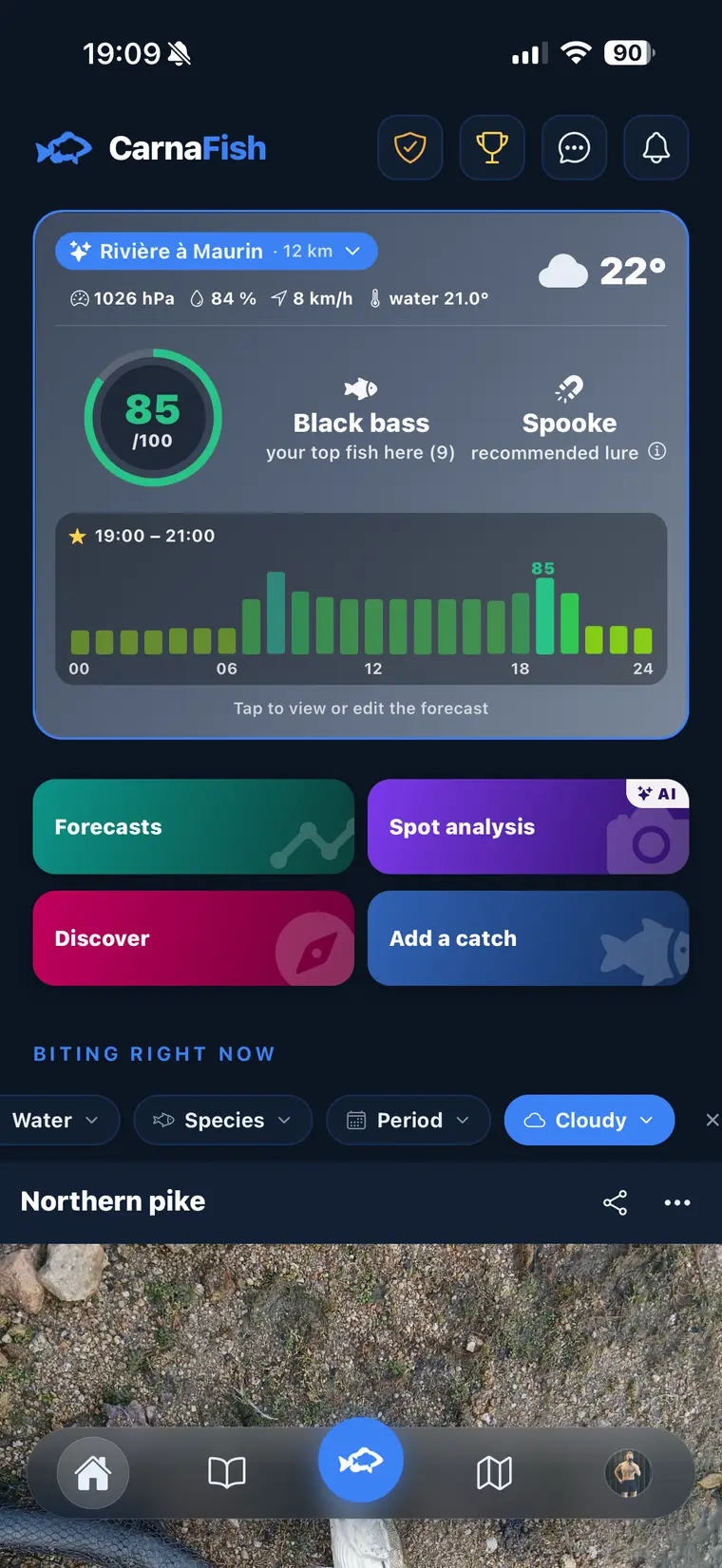
Not sure what to tie on?
Photograph your spot: CarnaFish reads the scene, cross-checks the conditions and gives you the zone, the lure and the retrieve. Free on iOS and Android.
Colours by water clarity
- Lightly stained water: the olive green blue-flaked body with cream chartreuse claws photographed here. The contrast between dark body and pale claws makes the kick visible from a distance, which is the entire point of a two-tone craw.
- Clear water over gravel or rock: solid green pumpkin, which matches the real shade of hard-bottom crawfish and triggers no suspicion.
- Dark water or silt bottom: black and blue, the sharpest silhouette when visibility is down to a few tens of centimetres.
Where it sits between the two formats
The 3 inch Yama Craw occupies a specific slot: bulkier and more demonstrative than a Gary Yamamoto Covert Craw, which trades on discretion and quivering appendages, but quieter than a Strike King Rage Craw, whose claws produce far more aggressive vibration. If fish are active and hunting for signal, the Rage Craw wins; if they are settled and wary, the Yama Craw holds up better. And when the stretch genuinely calls for volume in late summer, a Gary Yamamoto Ichi Worm on the same spot completely changes the class of fish you touch.
A soft craw is only worth as much as the bottom you set it on: over uniform silt it imitates nothing credible. That is exactly what CarnaFish helps with: one photo of the spot, and the AI suggests the zone, the depth and the presentation that fit the day's conditions. To pin down the time of year when this bait really earns its place, our guide to predator fishing season by season covers the windows not to miss.
Key takeaways
- 7.6 cm in packs of 8: a reduced format that keeps the big Yama Craw's action, with a deliberately thickened body.
- The channels moulded into the claws produce a decisive kick during the fall, with no input from you.
- Buoyancy claimed by Yamamoto through the Mega Floater formula, but absent from the spec table: verify it yourself.
- Jig trailer in spring, Texas rig around cover, plain jighead over clean bottom to exploit the drop.
FAQ
What is the difference from the original Yama Craw?
It is the same craw, shorter: 3 in, meaning 7.6 cm. Yamamoto states it kept the action while reworking the body proportions so it does not split when threaded onto a jig and will take a decent sized hook on a Texas rig.
How much does the 3 inch Yama Craw weigh?
The maker does not publish it: the spec table gives only the length and the pack of 8. If that figure matters to your fall-rate calculation, weigh one on a kitchen scale.
Does this craw really float?
Yamamoto describes it as highly buoyant thanks to the Mega Floater formula, with claws that rise when the rig reaches the bottom. The table carries no buoyancy class, though: treat it as a manufacturer's claim and test it in a bucket.
What hook for a Texas rig?
A 2/0 to 4/0 wide gap hook, pinned through the thick part of the carapace. An undersized hook stays buried in the plastic on the hookset, and that is the main cause of missed fish on dense-bodied craws.
What season does this bait suit best?
Spring, when crawfish come out onto warmed rocky edges and bass settle on them. It stays effective all year over hard bottom, but that is the period when the imitation genuinely matches what is on the menu.
Should you work it during the fall?
No, leave it alone. The channels moulded into the claws are enough to produce a kick on the way down, as long as you do not keep the line tight. Follow the bait on a slightly controlled slack line and wait for bottom contact before the first pull.
The full bass lure guideSeason-by-season strategy: which family of lure, when, and why.Go from theory to fish
CarnaFish reads your spot from a photo and gives you the game plan: zone, lure, retrieve. Free on iOS and Android.