Fiiish Black Minnow N°3: the jighead system that changed sea bass fishing
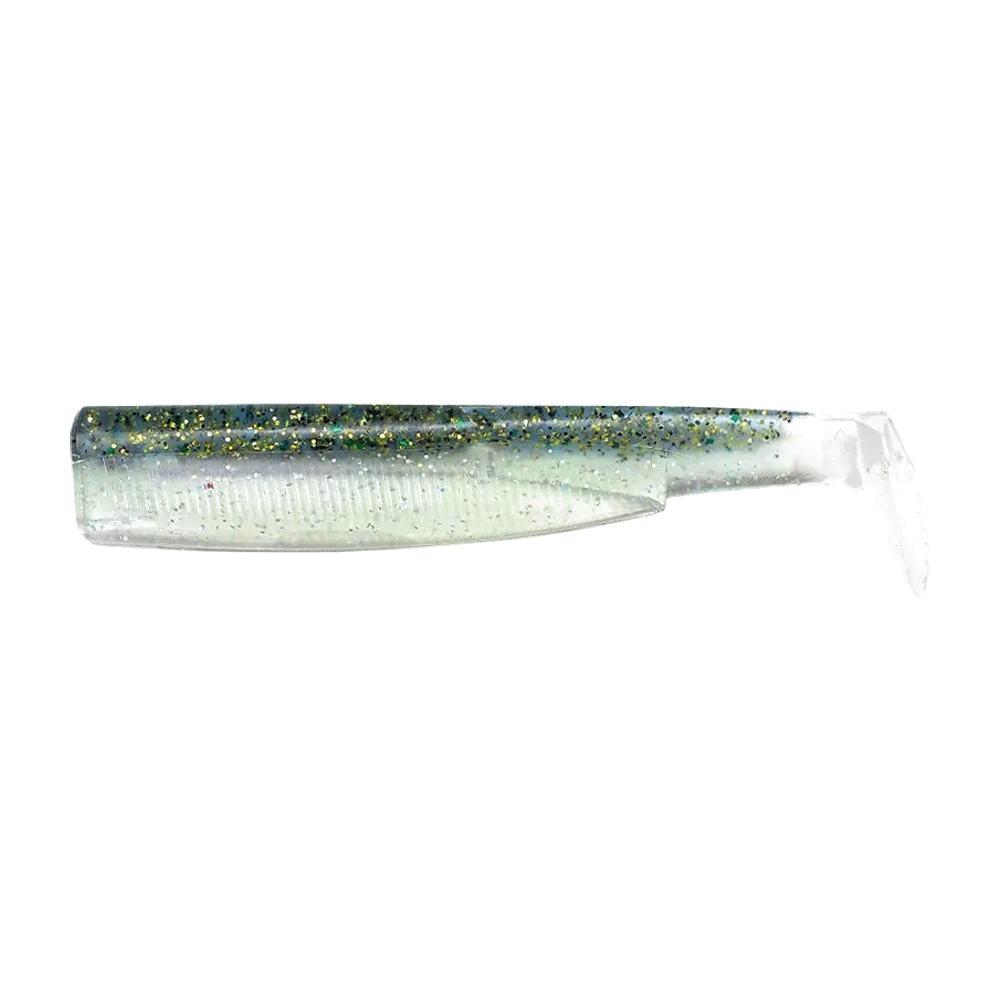
This lure shines under specific conditions. CarnaFish tells you in 10 seconds if today is one of them.
Everyone's got a Black Minnow in the box, and that's not an accident. Over the last decade this lure made something ordinary that wasn't: casting far, dialling in your fall speed to the gram, and swapping jigheads in ten seconds without ever touching a pair of cutters. The N°3, with its 12 cm body, covers the widest range of conditions of the whole range — from bass in open surf to zander tight against an estuary channel edge.
A system, not just a soft plastic
The difference from a standard shad is the screw-in jighead: it detaches and swaps depending on depth, current and casting distance, without ever touching the soft body, which wears out and gets replaced on its own. Three head families cover almost everything:
- Shore: the lightest and most streamlined, built for casting from the beach with a shallow glide.
- Search: its flat belly makes it sit at a 45° angle on bottom, ideal for scanning a zone close to the seabed without snagging.
- Offshore: shaped to cut through water fast, built for vertical jigging and strong estuary current.
The N°3 body screws onto any of the three, meaning one soft plastic in the box, paired with three head weights, covers the beach, the rocks and the estuary mouth.
Matching the head to the spot and the tide
On the beach, on the flood
A 12 g Shore head is usually enough in a typical surf gutter or sandbar setup, provided the sea isn't too rough. It casts far and swims high in the water column, right where bass patrol chasing sandeels stirred up by the swell.
On the rocks or a rocky point
Step up to an 18 g Search head as soon as the bottom turns broken and uneven: it sits flat without wedging between rocks and lets you probe the pools between two waves — classic rock-fishing territory for bass.
In the estuary, against the current
The 25 g Offshore keeps contact with bottom even in strong ebb current — exactly the setup for a zander holding tight to a channel edge, waiting for food to drift past.
Field rule: if your line bows out downstream before the lure has even touched bottom, the head's too light — size up instead of fighting it with the retrieve.
Rigging it in three seconds
Screw the body onto the head until the nose meets the collar: even a couple of millimetres of gap is enough to throw off the swim. No spreader rig or extra swivel needed — the system is built to go straight onto a 35-50 lb fluorocarbon leader, lighter for zander in the estuary, heavier for big rock-marks bass where abrasion is the real threat.
The retrieve that triggers strikes
The Black Minnow's S-tail keeps wobbling even at rest during vertical jigging, which is what makes it so effective fished slow-and-pause: two or three cranks, then a two-to-three-second pause letting it sink. Bass very often hit on the pause, right as the lure starts its descent. For estuary zander, slow down even further — a near-stationary drag along bottom reads perfectly as a baitfish worn out by the current.
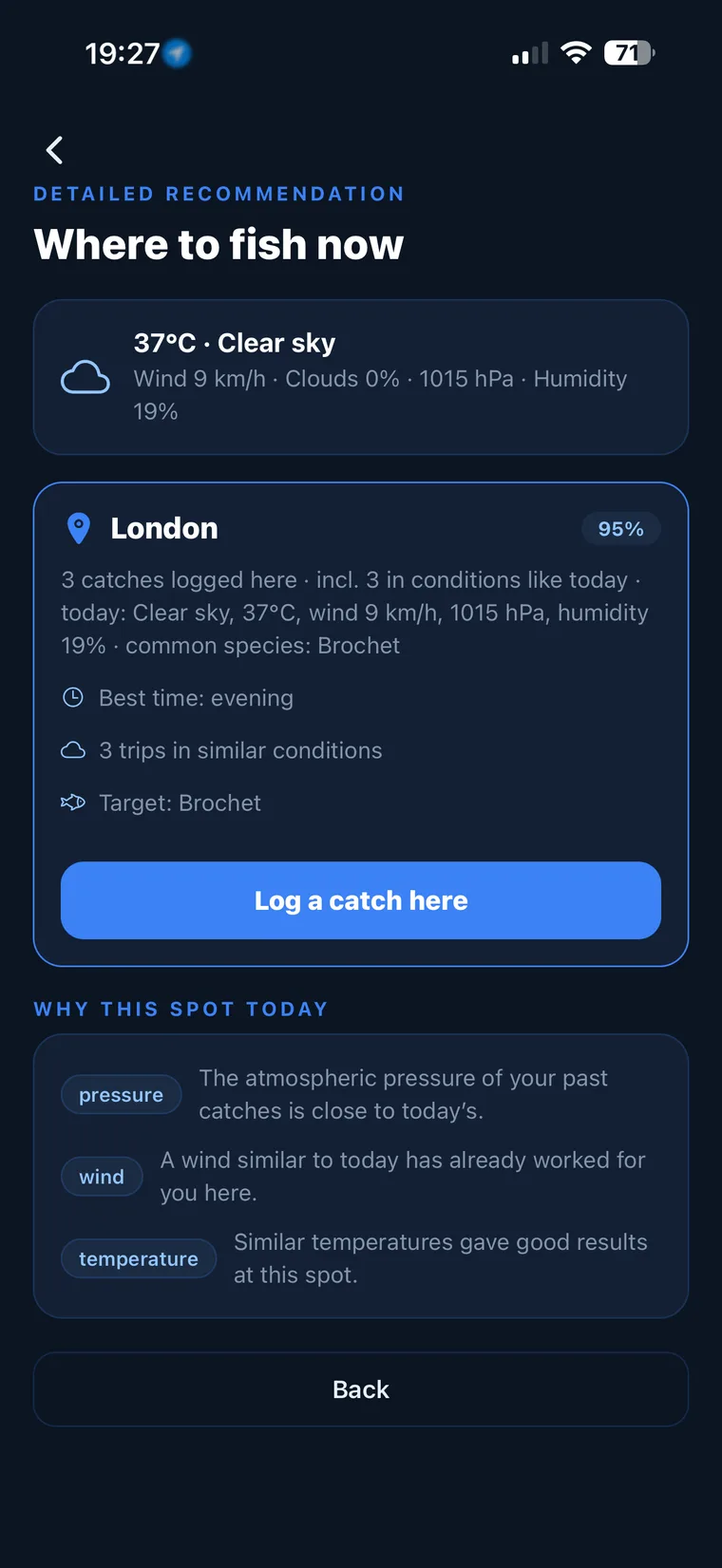
Not sure what to tie on?
Photograph your spot: CarnaFish reads the scene, cross-checks the conditions and gives you the zone, the lure and the retrieve. Free on iOS and Android.
Colour by light and water clarity
- Clear water, bright sun: Green Fish Killer, subtle and natural.
- Overcast or lightly stained water: Baby Bonito, a solid contrast-versus-realism compromise.
- Murky water or night fishing: Black, whose sharp silhouette shows up better than a natural tone washed out by turbidity.
One lure, two very different fisheries
That's the real strength of the Black Minnow N°3: the same soft body, rigged on a different head, goes from open-surf bass fishing to dragging bottom for estuary zander without ever swapping tackle boxes. The lure's behaviour stays identical — only the depth window changes. It's also one of the more forgiving lures for beginners: the tail keeps working even when your retrieve isn't perfect.
Before tying anything on, reading the spot is still what actually decides the session — that's the whole point of our guide to fishing sea bass on lures, tides and shore marks included. When you don't know a spot yet, CarnaFish reads a photo of the water against the tide and the day's marine conditions and hands you a zone and a head weight to start with, instead of guessing.
Key takeaways
- One N°3 body, three heads: 12 g Shore for the beach, 18 g Search for the rocks, 25 g Offshore for the estuary and current.
- Rigs straight onto fluorocarbon, no spreader needed, in three seconds.
- Slow-and-pause retrieve: strikes usually come on the pause, as the lure starts to fall.
- Dark, high-contrast colours in murky water or after dark; natural tones in clear water.
FAQ
Which head should a beginner start with on the Black Minnow N°3?
The 18 g Search head is the best all-rounder: it covers both open beach and shallow rocky ground well, and its flat belly keeps snagging to a minimum on broken bottom.
Does the Black Minnow N°3 work for zander?
Yes, especially in estuaries with an Offshore head dragged very slowly along a channel edge. Zander aren't built for chasing, and they respond well to this slow, steady presentation.
How do I know if my head is too light?
If your line bows downstream before the lure touches bottom, or you lose contact with the seabed in decent current, size up rather than trying to fix it with the retrieve.
Do I need a spreader rig to fish the Black Minnow?
No — the screw-in system between body and head is enough on its own. A spreader or extra swivel adds nothing and can actually throw off the swim axis.
What leader strength for the Black Minnow N°3?
Fluorocarbon between 35 and 50 lb depending on the situation: lighter in the estuary to stay subtle for zander, heavier on rocky marks where abrasion against barnacles and rock chews through line fast.
Does the soft body wear out quickly?
Yes, it's a normal wear part — after several strikes or contact with teeth, the tail tears and loses its wobble. The whole point of the system is that you only replace the body, never the jighead.
The full sea bass lure guideSeason-by-season strategy: which family of lure, when, and why.Go from theory to fish
CarnaFish reads your spot from a photo and gives you the game plan: zone, lure, retrieve. Free on iOS and Android.