Forest Pal: the area spoon for high-riding trout
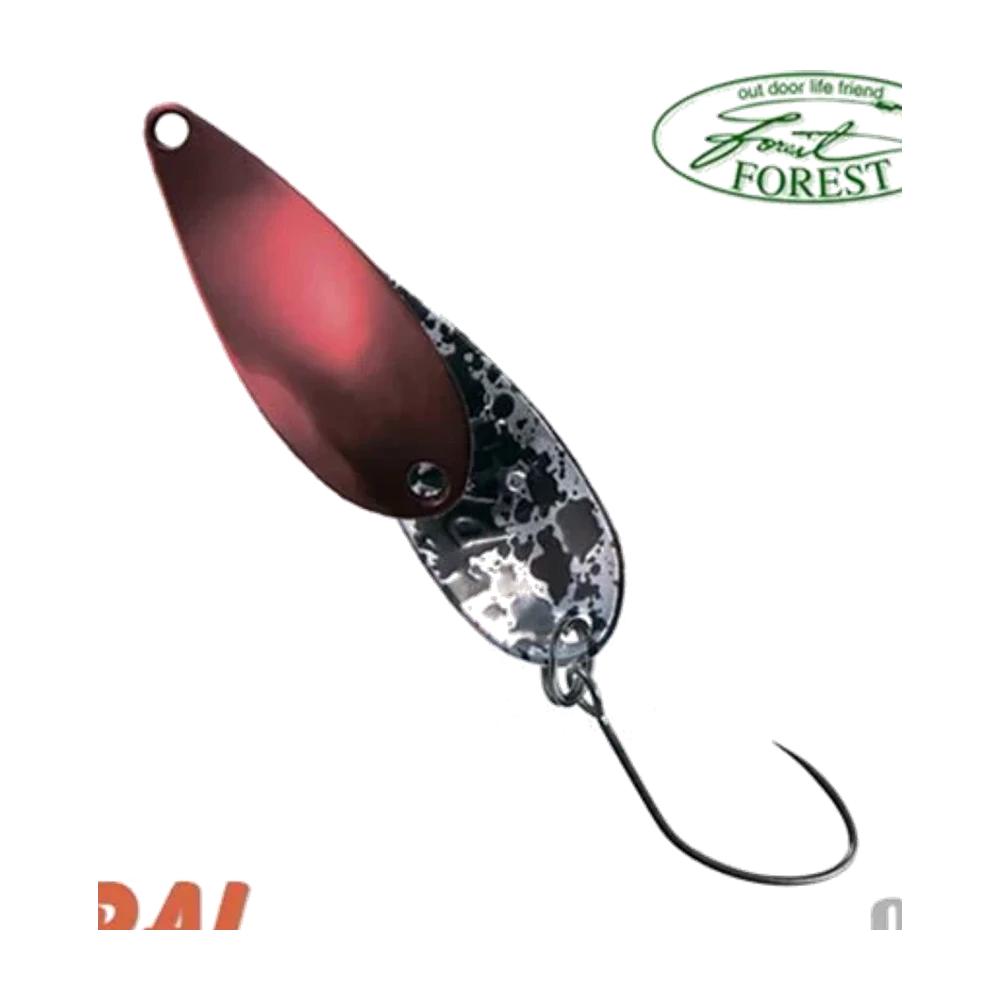
This lure shines under specific conditions. CarnaFish tells you in 10 seconds if today is one of them.
On a trout pond, the first half hour after a stocking is like nothing else. The trout have just arrived, they are grouped up, and above all they are high: they cruise in the top fifty centimetres, sometimes visible to the naked eye. It is the best window of the day, and it is also the one most anglers waste.
The reflex is to cast the heaviest spoon in the box to reach the far water. It then runs underneath the fish, in a layer where nobody is home, and the window closes after twenty minutes without anyone working out what happened.
The general principles of area fishing — very slow retrieve, constant colour rotation, ultra-light gear — are covered on the Forest Miu page, and none of that changes here. What changes is the Pal's precise job in the box: it is the top-layer spoon, the one that stays in the feeding zone without sinking out of it.
A braked glide, not a low weight
Plenty of anglers think a spoon stays high because it is light. That is wrong: two 2 g spoons can have sink rates that differ by a factor of two.
What decides it is the surface area relative to weight. A wide, thin body offers a lot of surface to the water: it falls flat, braked, gliding as it goes. A narrow, thick body falls on its edge, almost vertically, much faster.
The Pal belongs squarely in the first category. Two consequences on the water:
- The descent is long and usable. The lure crosses the layer the fish are in slowly, instead of passing through it in a second.
- The wobble starts immediately. From the first turn of the handle it is working. No dead phase during which the lure gets going while sinking.
It is exactly that combination — slow glide, instant start — that lets you fish the top thirty to fifty centimetres without ever leaving them.
The retrieve: count, then do nothing
- Cast, and count out loud during the sink. Three seconds maximum on the first cast, often just one.
- Start the retrieve the instant the count ends, without letting the lure sink any further.
- Retrieve slowly and steadily, about one handle turn per second, with no rod twitches at all.
- Vary the sink count by one second on every cast — 1, 2, 3, then back to 1 — until you find the layer that answers.
- Stay on that count while they keep biting, and start sweeping again as soon as it stops.
| Sink count | Layer covered | Typical moment |
|---|---|---|
| 0 to 1 second | 0 to 30 cm | Just after a stocking, fish visible |
| 2 to 3 seconds | 30 to 70 cm | First hour, active fish |
| 4 to 6 seconds | 70 cm to 1.2 m | The fish are starting to drop |
| More than 6 seconds | Below 1.2 m | The Pal is no longer the right tool |
On the water: when you take two fish in a row on a two-second count, do not sit on it mechanically. Try one second less on the next cast. On a shoal of freshly stocked trout, the active layer rises as the fish keep coming, because they follow the lure upward — and the count that worked five minutes ago is already starting to pass underneath them.
The window within a session
The Pal is not a spoon you leave on all day. It has a moment, and it is short.
- The first twenty minutes after a stocking. The fish are high, grouped and unwary. That is where it makes the clearest difference.
- Early morning, when the surface water is still cool and the trout are patrolling high.
- The restart after a rain shower or a gust of wind, which brings activity back to the surface.
- The margins and corners of the pond, where the fish track around the edge.
Conversely, it is wrong for a summer afternoon, when the trout drop down to find cooler water at two or three metres: its weight and braked glide make deep exploration interminable. It is also badly equipped on a deep, windy fishery where you have to cast far into the wind. And in flowing water, it simply cannot hold a seam.
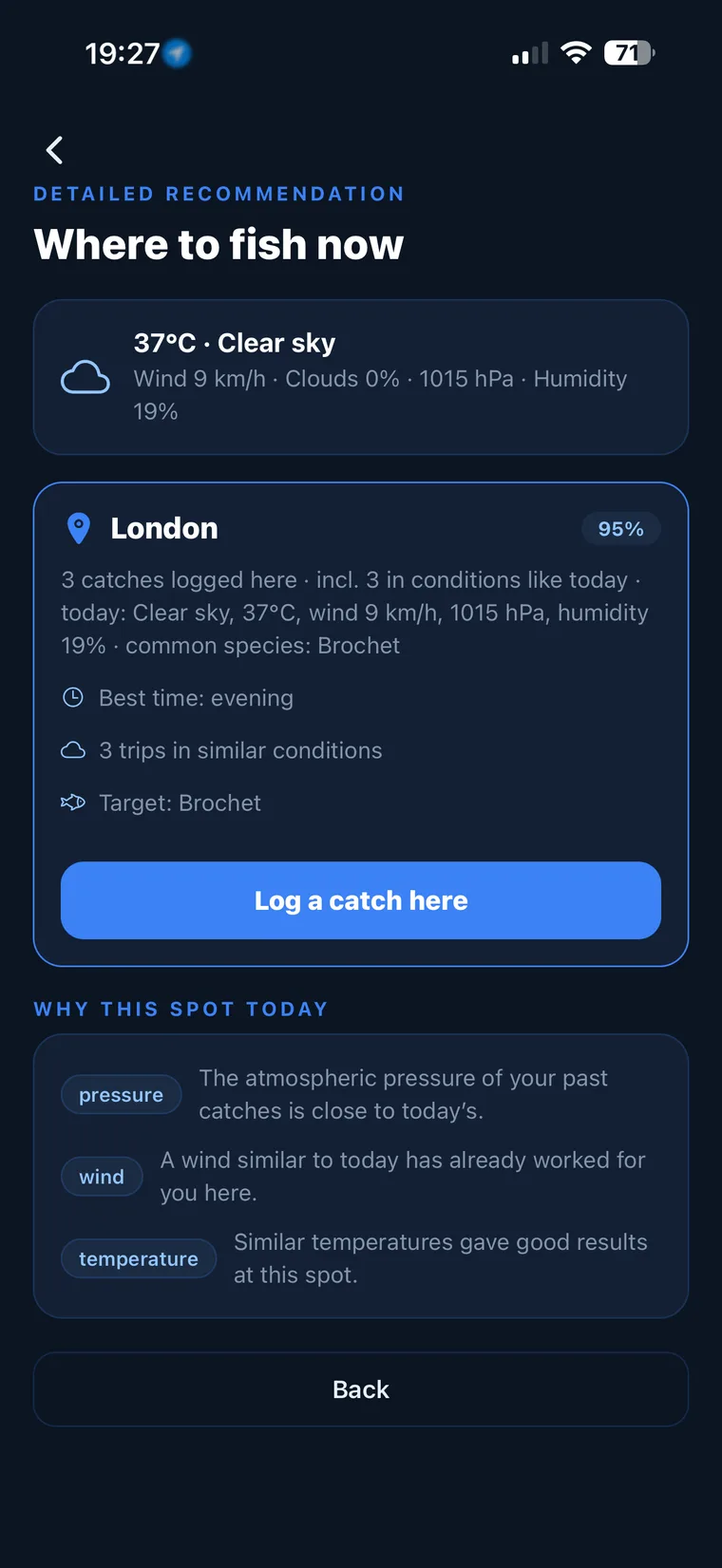
Not sure what to tie on?
Photograph your spot: CarnaFish reads the scene, cross-checks the conditions and gives you the zone, the lure and the retrieve. Free on iOS and Android.
Colours: bright first, natural after
Colour rotation is a general area fishing reflex, but on the Pal there is a sequence logic tied to its window.
At the stocking, the fish have just come out of a rearing tank and react to bright, saturated tones: orange, pink, fluorescent yellow, chartreuse. Those are the colours of the pellets they have been eating for months.
After twenty to thirty minutes, that same colour stops producing. Move to pastels and half-bright tones: off-white, pale salmon, soft green.
After an hour, once the fish are educated and the session has turned hard, naturals and translucents take over — and that is often the moment to change spoon rather than colour.
Pal or Miu
The two come from the same maker and fill two distinct roles.
The Forest Miu is the all-round spoon in the box: it comes in a wide weight range, keeps its wobble at minimum speed, and can be fished at any depth via the sink count. It is the one you leave on when you do not know.
The Pal is specialised. It does not try to cover the whole water column: it works the surface layer better than the Miu, because it stays there effortlessly. In exchange, it becomes useless as soon as you need to go below a metre.
The sequence that works best over a full day is to start on the Pal, move to the Miu when the fish drop, then finish with a wide-wobble spoon like the Nories Masukuroto Weeper once they are pinned to the bottom.
Our guide to river trout fishing covers the other side of this fishing, in running water. And if you do not know which layer to attack when you arrive at a fishery, CarnaFish analyses a photo of the spot and answers.
Key takeaways
- It is not weight but surface area that keeps a spoon high: the Pal falls flat and braked.
- The wobble starts on the first turn of the handle, with no dead phase.
- Count the sink to the second and vary it cast after cast to find the layer.
- Short window: stocking, early morning, the restart after a shower.
- Useless below a metre, in strong wind, and in flowing water.
FAQ
Why does the Forest Pal stay near the surface?
Because its body is wide and thin relative to its weight. That surface area makes it fall flat, gliding rather than knifing down, which lengthens the descent considerably and keeps it in the top few tens of centimetres.
How long should I let it sink?
Between zero and three seconds in most cases. Vary that count by one second on each cast until you find the layer the fish answer in, then stay on that count while they keep biting.
When in a session should I tie it on?
Right after a stocking, early in the morning, or after a shower that restarts surface activity. Those are the moments when the trout patrol high, and that is where it beats denser spoons.
Which colours should I favour?
Bright, saturated tones at the stocking — orange, pink, yellow — then pastels after twenty to thirty minutes, and finally naturals once the fish get wary. The rotation matters more than the initial choice.
What is the difference with the Forest Miu?
The Miu is all-round and covers the whole water column via the sink count. The Pal is specialised in the top layer, where it stays effortlessly, but it becomes useless as soon as you need to fish below a metre.
Does it work in rivers?
Very poorly. Its low weight and braked glide cannot hold a seam. In current you need a denser spoon that sinks on its edge and resists the push of the flow.
The full trout lure guideSeason-by-season strategy: which family of lure, when, and why.Go from theory to fish
CarnaFish reads your spot from a photo and gives you the game plan: zone, lure, retrieve. Free on iOS and Android.