Acme Phoebe: the two-gram spoon your tackle can ruin
The right lure in the wrong spot still catches nothing. CarnaFish spots the zone that works, from a single photo.
Plenty of anglers buy a two-gram spoon, tie it to the setup they already had — 0.12 mm braid, 0.26 mm fluorocarbon leader, a 12 kg snap — cast, and conclude that "it doesn't work". They are right about the result and wrong about the cause. The lure is not at fault: the terminal tackle weighs more than it does.
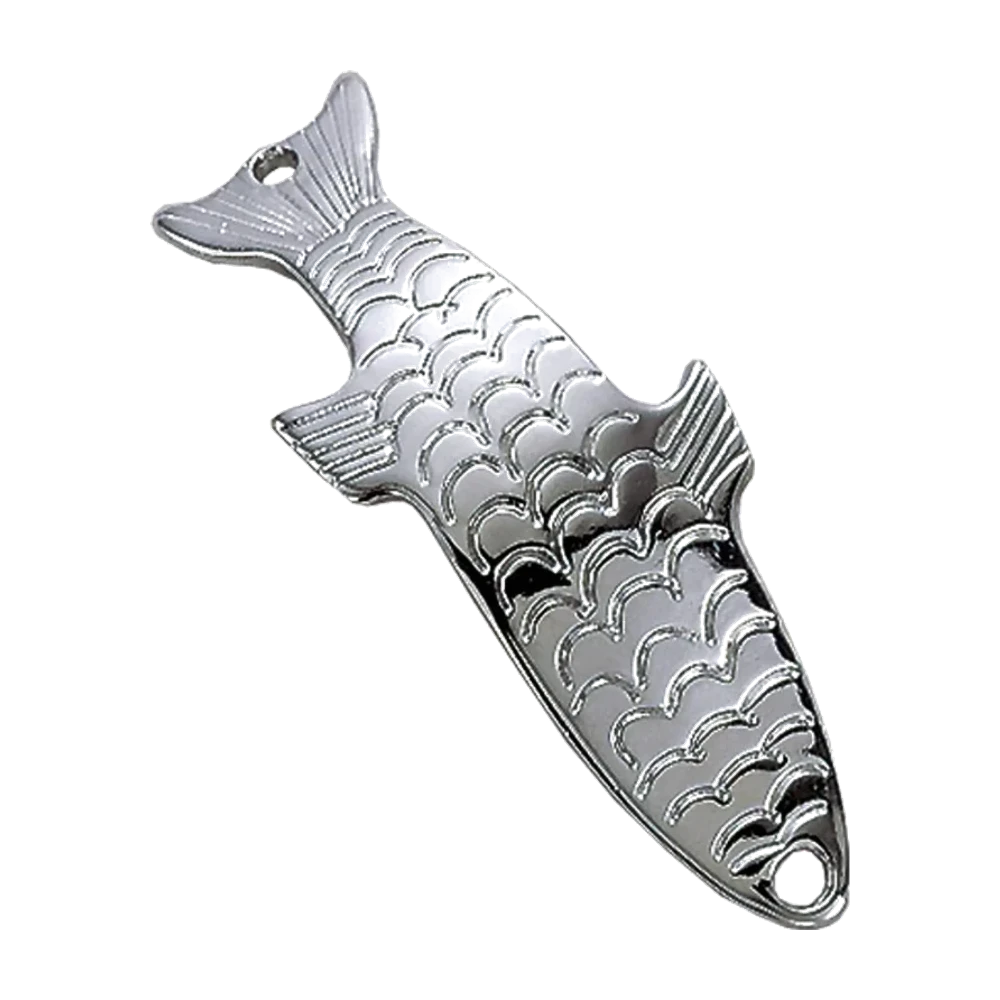
The Phoebe illustrates that problem better than any other spoon, because it is both very light and barely profiled. Its curve makes it wobble softly at ridiculously low speeds, but the slightest excess of stiffness upstream kills that movement completely.
Rigged properly, it does what few lures can: pass for an isolated three-centimetre fry, in clear water, in front of trout that have already refused everything you have shown them.
The curve creates a volume the lure does not have
The Phoebe is a narrow metal plate, curved asymmetrically. Head-on it is thin; seen three-quarters on and moving, it looks distinctly thicker than it is. That mismatch creates the illusion of a well-fed little fish when the spoon weighs only two or three grams.
Two consequences in the water:
- It starts wobbling immediately, without a run-up. Half a turn of the handle is enough to get it moving, which lets you fish it in very little water.
- It keeps working on a free fall, sliding on its flank rather than dropping flat. Along a deep margin, that oscillating descent is often worth more than a retrieve.
The setup is the centrepiece
This is where everything is decided. Here is the rig that makes the lure usable.
- 0.12 to 0.16 mm mono or fluorocarbon straight off the reel, or fine braid finished with a metre of 0.14 mm fluoro. Beyond 0.18 mm, the wobble visibly stiffens.
- A tiny rolling swivel, forty centimetres above the lure. It is not there for strength but to absorb the small amount of rotation a thin spoon eventually picks up.
- A direct knot to the stock split ring, or a micro snap under 0.5 g if you change models often. No predator-sized snaps.
- A rod of 1.8 to 2.1 m, rated 1 to 5 g, soft action. A stiff rod will tear the lure out of the fish's mouth on the strike and will stop you casting 2 g properly.
- A very light drag setting. On 0.12 mm line, a thirty-centimetre trout in current can break you in three seconds.
On the water: with a Phoebe, set the hook by lifting the rod slowly, never with a sharp snap. This spoon carries a single light treble, mounted well behind the pulling point: a brutal strike pulls it clear before it has penetrated. Steady, progressive pressure hooks far better.
Weight by situation
| Situation | Weight | What you are after |
|---|---|---|
| Clear stream, spooky trout, 30 cm of water | 2 g | A high, almost stationary pass over a precise spot |
| Mountain lake, from the bank, light wind | 3.5 g | Distance without losing the soft action |
| Pond or gravel pit, 2 m margin | 5 g | A counted drop along the slope |
| Reservoir, deep trout, settled wind | 7 g | Keeping the line tight despite the drift |
The instinct to fight: going up in weight because you are casting badly. If you cannot reach the distance, the problem is almost always line that is too thick, not a lure that is too light.
On colour, the rule is short. In clear water and bright weather, bare metal — silver or brass — is enough and stays the most believable. Under a low sky or on slightly amber water, a small-trout pattern or a coloured back helps the fish lock onto the target. And if you are getting follow after follow with no bite, change shade before you change weight: on a lure this small, contrast counts for more than grams in the fish's decision.
Where it works and where it stalls
Its window: clear, calm, shallow water, on fish that see well. Mountain lakes, clear reservoirs in summer, slow canal reaches, trout ponds, and gravel-pit margins. It shines especially when fry dominate and anything over five centimetres gets ignored.
It is out of its depth as soon as there is strong current — it stalls and rises — as soon as there is settled wind in your face, and whenever you need to cover a lot of water quickly. It is also unsuited to bigger predators: its fine hook bends out on a pike.

Not sure what to tie on?
Photograph your spot: CarnaFish reads the scene, cross-checks the conditions and gives you the zone, the lure and the retrieve. Free on iOS and Android.
A lesser-known use: vertical fishing in winter
On a cold water where trout group up deep, the Phoebe can be fished vertically from a boat or a jetty. Drop it to the depth you have marked, lift it twenty centimetres, let it fall back on a semi-tight line, and wait three seconds before starting again. The sideways glide of that fall is very different from the straight drop of a lead, and it triggers lethargic fish that would not move horizontally.
Phoebe or Little Cleo
Both come from the same house, and that is precisely why confusing them is expensive.
The Acme Little Cleo is concave, thick, and commonly weighs 10 to 20 g. It is built to hold in river current and to handle powerful fish. The Phoebe weighs three to eight times less and works in still water on a fine setup. Going from one to the other is not a change of size, it is a complete change of tackle.
Against a Forest Miu, the difference is subtler: the Miu is cut out for area fishing and the absolute minimum speed on a stocked lake, while the Phoebe keeps a minnow profile and accepts slightly brisker rhythms in natural water. Our guide to river trout fishing revisits the spots where this finesse pays. And if you are unsure what weight to pick when you reach the bank, CarnaFish analyses a photo of the spot and answers.
Key takeaways
- The setup matters more than the lure: beyond 0.18 mm, the Phoebe stops wobbling properly.
- The asymmetric curve gives it an apparent volume greater than its real weight.
- It also works on the fall, sliding on its flank: use the drops along margins.
- Progressive hooksets, never sharp, because of the light treble set well back.
- Out of place in strong current, in settled wind and on powerful predators.
FAQ
What line should I use with an Acme Phoebe?
Mono or fluorocarbon of 0.12 to 0.16 mm, or fine braid finished with a metre of 0.14 mm fluoro. Beyond 0.18 mm the line stiffens the connection and the wobble goes limp, especially in the 2 and 3.5 g sizes.
How do I cast a two-gram lure far enough?
By thinning the line first of all, then by using a soft 1.8 to 2.1 m rod rated 1 to 5 g that genuinely loads on the cast. Going up in weight to compensate for a setup that is too heavy is the wrong fix.
Do I need a snap?
A direct knot to the stock split ring stays the best choice. If you change models often, use a micro snap under 0.5 g: a standard predator snap weighs more than the nose of the lure and chokes the action.
Does it twist the line?
Less than a spinner, but yes over time, especially on a fast retrieve. A tiny rolling swivel forty centimetres above the lure is enough to prevent it without weighing the rig down.
Can it be fished vertically?
Yes, and it is an under-used option in winter. Drop it to the depth you have marked, lift twenty centimetres, let it fall back on a semi-tight line and hold a three-second pause. The oscillating fall triggers fish that refuse to move horizontally.
What is the difference with the Little Cleo from the same brand?
The Little Cleo is concave, thick and weighs three to eight times more: it is a lure for current and powerful fish. The Phoebe is a fine still-water spoon that demands a light setup. The two do not replace each other.
The full trout lure guideSeason-by-season strategy: which family of lure, when, and why.Go from theory to fish
CarnaFish reads your spot from a photo and gives you the game plan: zone, lure, retrieve. Free on iOS and Android.