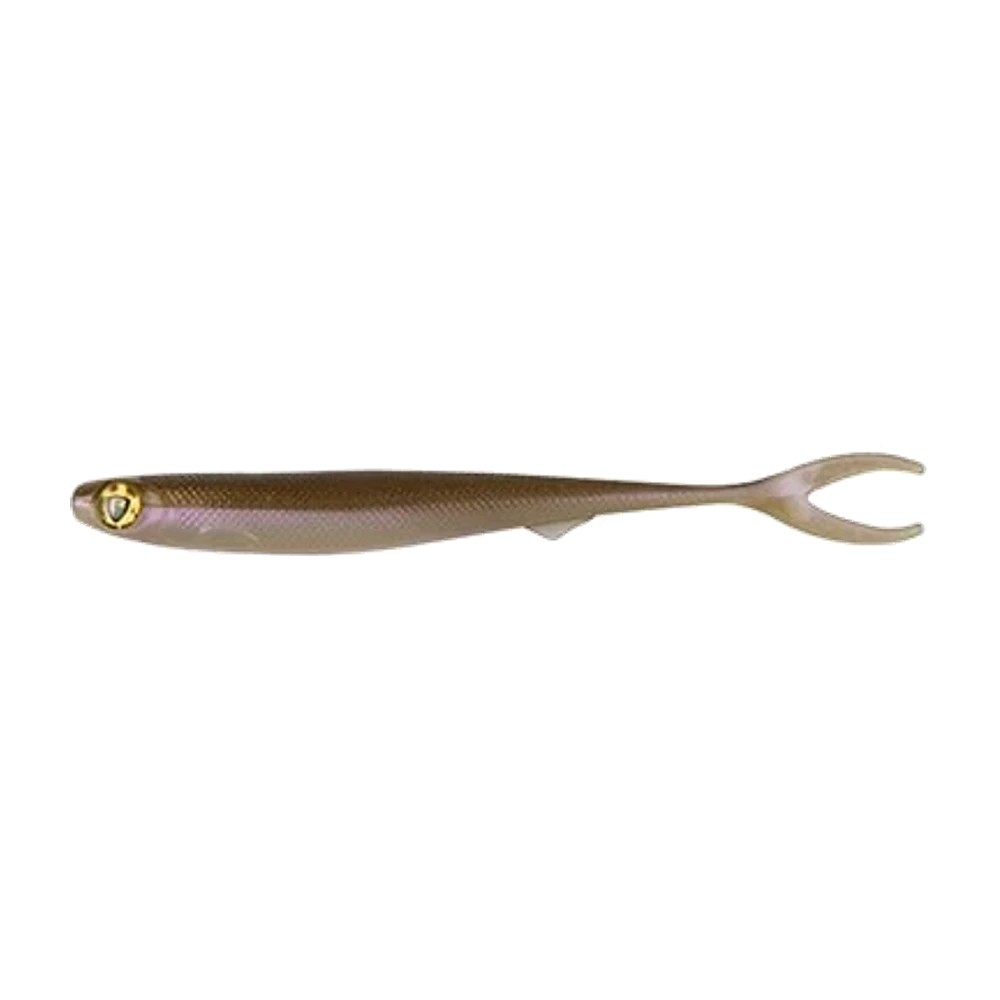
Fox Rage Slick Finesse: the finesse bait that walks the bottom instead of waiting
Rather not fish it blind? Photograph your spot — CarnaFish cross-checks the conditions and points you the right way.
Every perch angler knows the situation: the fish are there, the sounder shows them, but they refuse anything moving quickly. The usual reflex is the drop shot — lure suspended, line tight, worked on the spot. That works when perch are static on a precise spot.
The trouble is that they are not always static. When a shoal patrols along a flat or a gravel margin, a motionless presentation only meets a fish by chance. What you need then is a lure that covers ground while staying slow, which is a contradiction for most finesse rigs.
The Slick Finesse answers that contradiction with its geometry: a smooth, rigid body that glides across the bottom without fouling, and a tapered tip that starts quivering as soon as the whole thing moves two centimetres. You drag, it works. You stop, it keeps shivering.
A smooth body with a nervous tip
The name of the lure describes its surface, and the surface does the work.
- The body is smooth and has no appendages. No claws, no fringes, no ribs. A ribbed body picks up twigs and strands of algae; a smooth body glides over gravel or sand. On a cluttered bottom, that is the difference between fishing and cleaning your rig.
- The section is oval, not round. That detail means that under tension the lure lies over on one flank then rights itself, producing a slow, irregular flash.
- The tip is heavily tapered, with the plastic thinning to almost nothing over the last centimetre. It is the only moving part of the lure, and residual current or a tremble in the line is enough to set it going.
That last point explains why this lure tolerates, and even demands, long stops. A flat-tailed soft plastic goes completely dead the moment you stop pulling. This one keeps a minimal signal going, which is exactly what a wary perch is looking for.
The retrieve: dragging along the bottom
This is not a lift-and-drop technique. It is a dragging technique.
- Cast and let it drop on a tight line until it touches bottom. Count — that marker serves for the whole margin.
- Lower the rod towards the water, then pull slowly and horizontally, moving the rod tip 40 to 60 cm over two to three seconds. The lure does not lift off: it scrapes.
- Stop dead and give it one to three seconds, rod still, line just tight.
- Wind in the slack without moving the rod, then start the next pull.
- Work along in stages: three or four cycles, then a cast two metres further down the margin.
The bite rarely shows as a knock. Most often you feel a soft resistance during the pull, as if the bottom had got heavier. Set the hook by accelerating the rod, not with a sharp snap: with a fine hook and tight braid, a violent hookset pulls out as many fish as it pins.
On the water: when a margin that was producing goes quiet, do not change colour. Change the length of the pull. Going from 50 cm to 15 cm — a series of micro-drags instead of one long glide — often restarts the spot within five minutes, because you triple the number of stops over the same distance.
The rig decides the fishing
| Rig | Weight | What you get |
|---|---|---|
| Round jig head | 2 to 3 g | standard bottom dragging, 1 to 4 m, the benchmark |
| Round jig head | 4 to 6 g | same fishing at 5-6 m or in wind, contact kept |
| Shaky head | 3 to 5 g | the lure stands up at rest, ideal on settled fish |
| Ned rig | 2 to 4 g | slower fall, preferred in very cold water |
| Weightless weedless | — | weed edges, ultra-slow presentation, under 1 m |
The shaky head deserves a word: its head shape holds the lure standing up when you stop pulling. Combined with the quivering tip of the Slick Finesse, you get a lure planted vertically on the bottom, vibrating on the spot. That is the most effective setup on perch that refuse horizontal movement.
Line-wise, 0.08 to 0.10 mm braid and an 0.18 to 0.22 mm fluorocarbon leader on a rod with a sensitive tip. In this kind of fishing, fluorocarbon diameter matters as much as lure weight: dropping from 0.22 to 0.16 mm on a hard day genuinely changes the number of bites in clear water.
Its windows, and what it is not built for
- Gravel flats and clean margins, spring through autumn, when perch patrol rather than settle.
- Zander sitting on hard bottom, late in the day, when the classic lift-and-drop dries up and you need to slow down a notch.
- Clear, heavily fished waters, where a lure with no appendages goes down better than a gaudy creature bait.
- Bank and float tube, because dragging works better horizontally than vertically.
On the other hand, it is bad anywhere there is dense weed or wood: it is not designed to dodge, it is designed to scrape. It is also unsuited to fast searching — if you have 200 metres of bank to cover in an hour, a shad on a straight retrieve or a crankbait does the job far quicker. Finally, out in the water column without bottom contact it loses all interest: it is a bottom lure, not a mid-water lure.
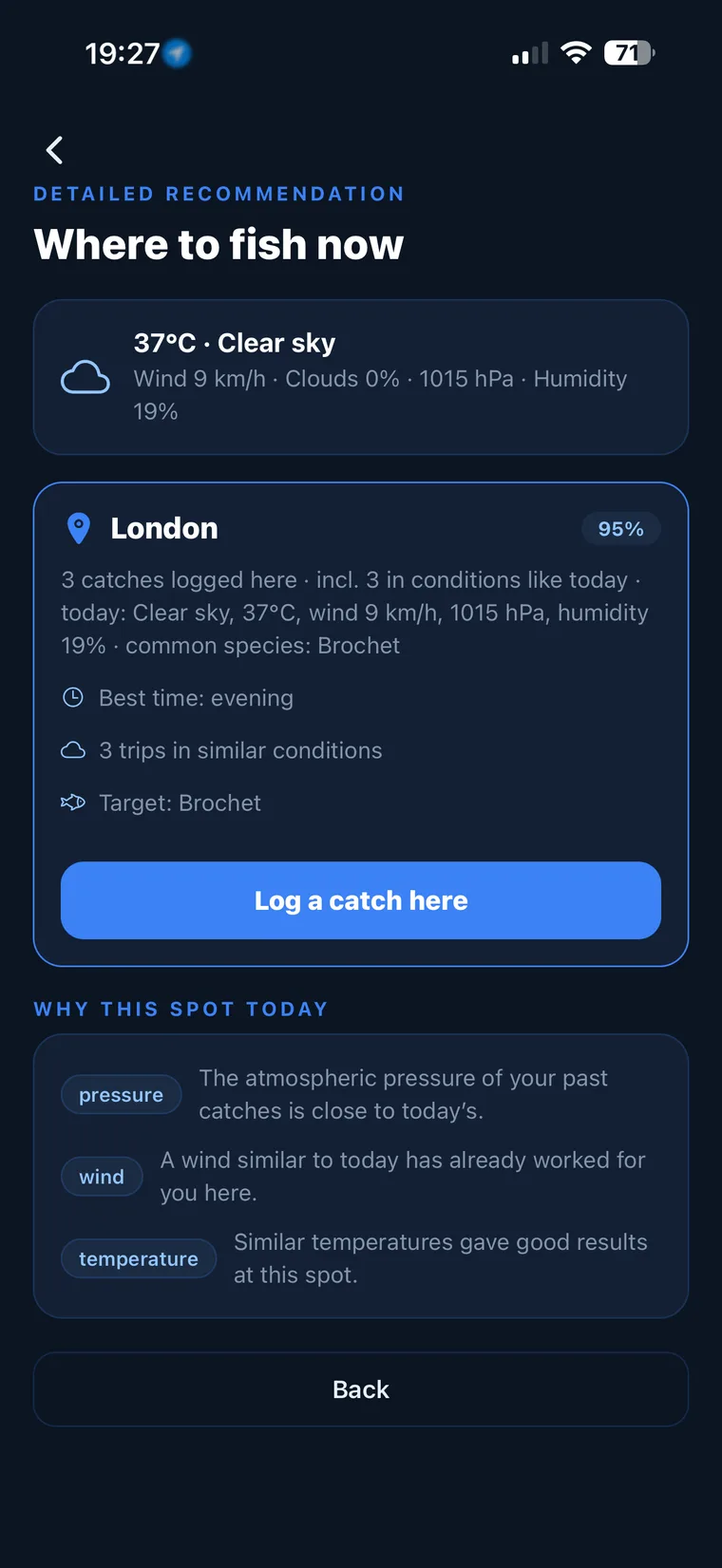
Not sure what to tie on?
Photograph your spot: CarnaFish reads the scene, cross-checks the conditions and gives you the zone, the lure and the retrieve. Free on iOS and Android.
Slick Finesse or Fish Snax Dropshot
The comparison is between two philosophies more than two lures.
The Fox Rage Fish Snax Dropshot is designed to hang above the bottom on a dropper weight. The lure touches nothing, it sits in the water column and simply quivers on the spot. That presentation is unbeatable on a narrow, identified spot: a bridge pier, a sunken tree, a fish marked on the sounder. You stay on it as long as it takes.
The Slick Finesse plays the opposite game: permanent bottom contact, continuous movement, exploring a whole margin. It takes you to the fish instead of waiting for them to come. If you are new to these slow techniques, the drop shot rig is still the easiest way in, and our guide to perch fishing with lures places both approaches in a typical day.
In practice the two complement each other in the same box: you search by dragging, and as soon as you locate a fish that refuses to follow, you switch to a suspended presentation on the spot. If you are unsure which approach to try in front of an unfamiliar margin, CarnaFish analyses a photo of the spot and answers.
Colours
- Clear water: glittered translucents, roach or gudgeon tones. The lure scrapes the bottom, so it should look like what lives there.
- Dark bottom, stained water: a contrasting pattern with a light tip, giving a focal point on the moving part.
- Winter, cold and clear water: as discreet as possible, plain matt body.
Key takeaways
- Smooth body built to scrape clean bottom, tapered tip that quivers even at rest.
- Horizontal dragging, not vertical lifting: the lure should never leave the bottom.
- When it goes quiet, shorten the pull rather than changing colour.
- The shaky head stands it up at rest: the best option on settled fish.
- Avoid it in weed, wood, and for fast searching.
FAQ
What jig head for the Fox Rage Slick Finesse?
A round head of 2 to 3 g down to 4 m, 4 to 6 g beyond that or in wind. A 3 to 5 g shaky head is the best choice when you want the lure standing up at rest on settled fish.
How does it differ from a drop shot bait?
The drop shot suspends the lure above the bottom, with no contact, to work a known spot. The Slick Finesse stays in permanent contact with the bottom and moves slowly: it is there to explore a margin and intercept moving fish.
How should I set the hook with this technique?
With a progressive acceleration of the rod, never a sharp snap. Bites often show as nothing more than a soft resistance during the pull, and a violent hookset on tight braid pulls out as many fish as it pins.
What leader diameter?
Fluorocarbon of 0.18 to 0.22 mm for general use, down to 0.16 mm in clear water on a hard day. At these speeds the fish has time to inspect the rig: diameter matters as much as weight.
Does it work for zander?
Yes, especially over hard bottom and late in the day, when the classic lift-and-drop runs out of steam. Go one size up and stretch the stops to a full three seconds.
Can I fish it in weed?
No. Its smooth body is designed to glide over clean bottom, not to dodge vegetation, and it sits on an exposed hook in most setups. Along a weed edge, switch to a weightless weedless rig and stay above the cover.
The full perch lure guideSeason-by-season strategy: which family of lure, when, and why.Go from theory to fish
CarnaFish reads your spot from a photo and gives you the game plan: zone, lure, retrieve. Free on iOS and Android.