Drop shot rig: weight on the bottom, bait above it, and why that changes everything
The right lure in the wrong spot still catches nothing. CarnaFish spots the zone that works, from a single photo.
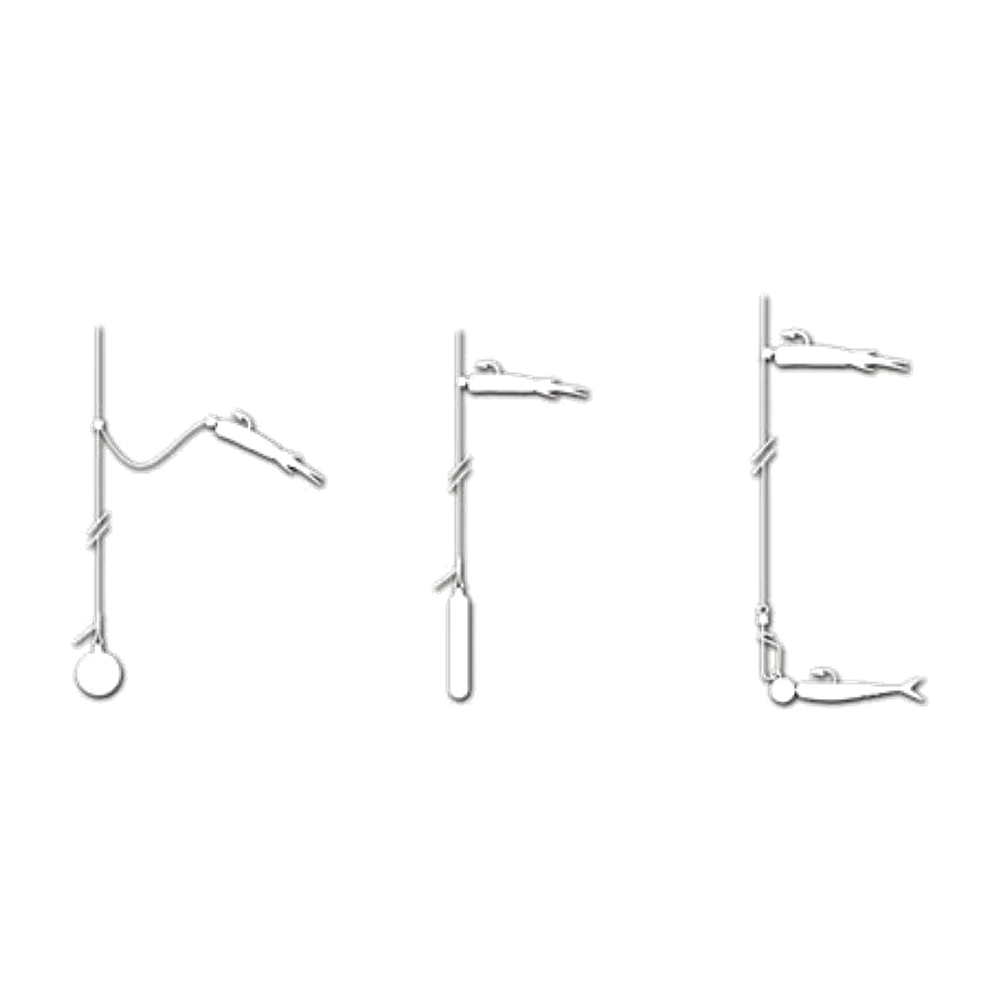
Every classic rig shares the same flaw: the bait either sits on the bottom or flies over it while moving forward. On inactive fish, glued to the bottom and unwilling to chase, that is not enough.
The drop shot reverses the usual order. The weight goes at the end of the line and the bait sits above it. The result: you can hold the bait at a precise height, in mid-water, motionless, for as long as you want.
Why that reversal matters
On a classic rig, holding the bait still means laying it on the bottom. It then disappears into the silt or between the rocks, and stops being visible.
On a drop shot, stillness is suspended. The sinker holds the bottom, the line stays tight, and the bait hovers 30 cm above it, in open water, perfectly visible. Every tiny movement of your rod or of the current makes it quiver without it travelling a centimetre.
That is the longest possible presentation inside the field of view of a fish holding on a spot. An inactive zander can stare at a bait for a full minute before making up its mind — and that is exactly what this rig allows.
Tying it, step by step
- Tie a hook onto your main line with a palomar knot, leaving a free tag end of 30 cm to 1 m below the hook.
- Pass the tag end back through the hook eye, from the top. This is the step that makes the hook stand perpendicular to the line, point facing up.
- Attach the weight to the end of the tag, with a drop shot clip or a simple knot.
- Rig the bait on the hook, nose-hooked straight through.
On the water: if your hook will not stay perpendicular to the line, you forgot to pass the tag back through the eye from the top. It is the most common mistake, and it wrecks the presentation completely: the bait hangs down instead of sitting horizontally.
Leader length
The distance between the weight and the hook sets the height of the bait. You adjust it to how the fish are behaving.
| Weight-to-hook distance | Situation |
|---|---|
| 15 to 25 cm | Fish pinned to the bottom, cold water |
| 30 to 50 cm | General use, perch and zander |
| 60 cm to 1 m | Fish lifted off the bottom, marked on the sounder in mid-water |
If you see echoes a metre off the bottom on the sounder, set your length accordingly. No other rig gives you that kind of precise adjustment.
The retrieve: shake without moving
This is what makes the drop shot different, and it takes a little practice.
- Cast and let the weight hit the bottom.
- Tighten the line until you feel the sinker, without lifting it.
- Shake the rod tip with tiny movements, leaving the weight where it is. The bait quivers on the spot.
- Pause for five to ten seconds between sequences.
- Move the weight 30 cm and start again.
The classic mistake is pulling too hard and dragging the weight with every shake. The whole point is that the bait moves while the weight does not.
Not sure what to tie on?
Photograph your spot: CarnaFish reads the scene, cross-checks the conditions and gives you the zone, the lure and the retrieve. Free on iOS and Android.
Choosing the weight
The shape matters as much as the mass.
A cylindrical sinker rarely jams between rocks and comes back easily: that is the choice over broken ground.
A round sinker transmits more bottom information but snags more.
On mass: 5 to 10 g down to 4 m, 10 to 15 g down to 8 m, 15 to 25 g deeper or in current. Take the lightest that still keeps you in contact — too heavy a sinker makes bites much harder to feel.
The right baits
Not every soft plastic works here. The best profiles have an action of their own at zero speed:
- Long, slim finesse baits such as the Fish Snax Dropshot, which undulate at the slightest shake.
- Ribbed shads like the Spikey Shad, whose ribs generate signal without travelling.
- Creature baits with appendages, whose legs move on their own.
Avoid big shads with heavy paddle tails: they need speed to come alive and stay dead on a drop shot.
Where and when
- Fish located on the sounder and inactive — that is the main use case.
- Vertical fishing from a boat, over a precise piece of structure.
- From the bank, along quays, jetties and deep rock walls.
- Cold water, when the fish have stopped chasing anything.
Our guide to perch fishing with lures places the drop shot among the finesse approaches. And if you have found fish that refuse everything, CarnaFish analyses a photo of the spot and suggests a line of attack.
Key takeaways
- Weight at the end of the line, bait above it: the bait stays suspended in mid-water, motionless.
- You must pass the tag back through the eye from the top for the hook to sit perpendicular.
- Set the weight-to-hook distance from the height of the fish you see on the sounder.
- Shake the bait without moving the weight — that is the whole principle.
- Choose baits with an action of their own at zero speed, not shads with big paddle tails.
FAQ
How do you tie a drop shot?
Tie the hook onto the line with a palomar knot, leaving a long tag end, pass that tag back through the hook eye from the top, then attach the weight to the end of it. The hook must stay perpendicular to the line with the point facing up.
What distance between the weight and the hook?
15 to 25 cm on fish pinned to the bottom in cold water, 30 to 50 cm for general use, up to a metre if you can see fish lifted off the bottom on the sounder. It is the main adjustment on this rig.
How do you work a drop shot?
By shaking the rod tip with tiny movements without moving the weight. The bait quivers on the spot while the sinker stays on the bottom. Pause for five to ten seconds between sequences.
What weight should I use?
5 to 10 g down to 4 m, 10 to 15 g down to 8 m, 15 to 25 g deeper or in current. Take the lightest that keeps you in contact: too heavy a sinker masks the bites.
Which baits work on a drop shot?
Soft plastics that come alive at zero speed: long slim finesse baits, ribbed shads, creature baits with appendages. Big shads with heavy paddle tails need speed to swim and stay dead.
Does the drop shot work from the bank?
Yes, extremely well along quays, jetties and deep rock walls. It lets you present a motionless bait at a precise height against vertical structure, which no other rig does nearly as well.
The full perch lure guideSeason-by-season strategy: which family of lure, when, and why.Go from theory to fish
CarnaFish reads your spot from a photo and gives you the game plan: zone, lure, retrieve. Free on iOS and Android.