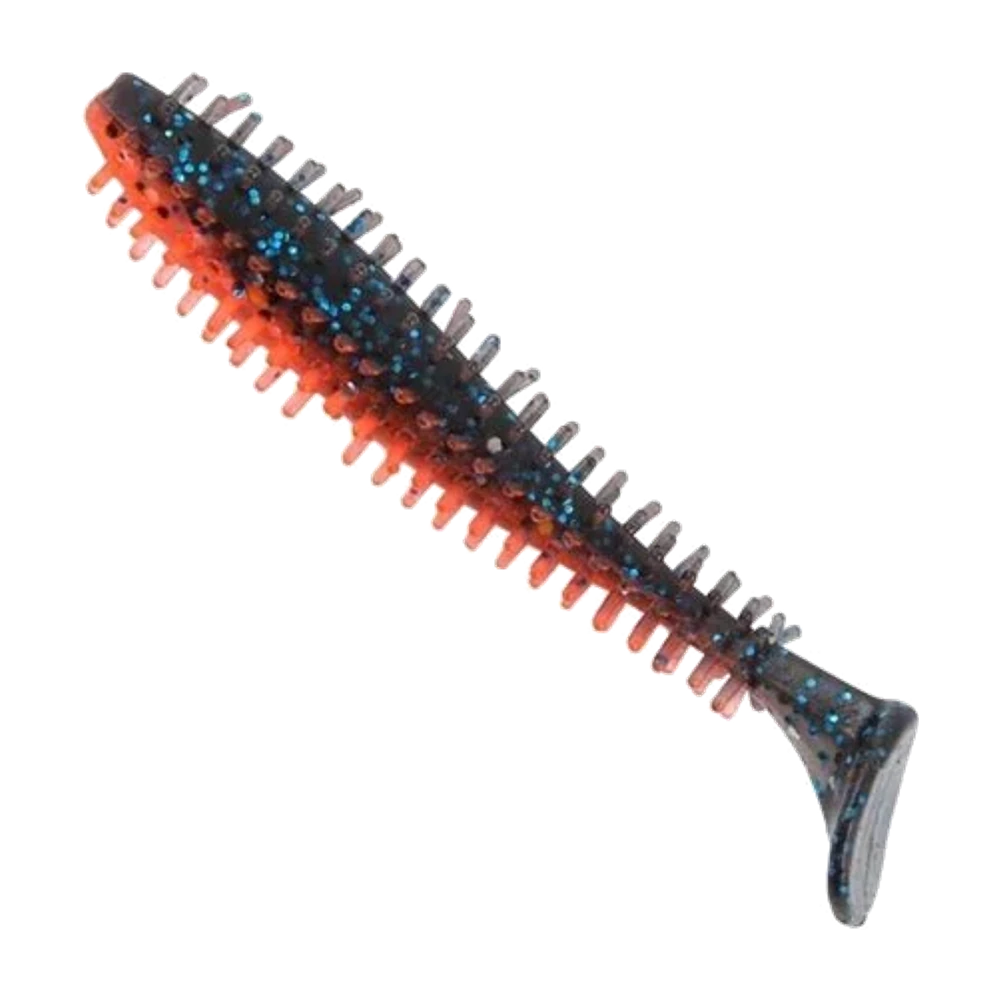
Fox Rage Spikey Shad: the ribs that vibrate where a smooth shad says nothing
The right lure in the wrong spot still catches nothing. CarnaFish spots the zone that works, from a single photo.
In clear water a predator finds its prey by sight and most shads work. In stained water sight counts for very little: the fish hunts on its lateral line, meaning it detects the pressure changes made by whatever moves around it.
In those conditions a smooth-bodied shad produces a weak signal. The Spikey Shad was designed to amplify it without making the lure any bigger.
What the ribs do
The body carries pronounced crosswise ribs along its whole length. They have two measurable effects in the water.
They create turbulence. Every rib disturbs the flow of water along the body. Instead of a smooth sheet of water, you get a run of micro-vortices that add to the tail beat.
They amplify the roll. The uneven resistance makes the body roll slightly on each beat, which widens the signal compared with a shad that just waves its tail.
The practical result: size for size, the Spikey Shad is detectable from further away in coloured water than a smooth model. It is a low-visibility lure, not an all-round one.
Choosing the weight
As with any shad, this is the main setting.
| Situation | Jig head |
|---|---|
| Margins, under 2 m | 5 to 7 g |
| 2 to 4 m, no current | 7 to 12 g |
| 4 to 6 m or slight current | 12 to 15 g |
| Over 6 m or strong current | 15 to 20 g |
On the water: in stained water, drop one weight step below what you would use in clear water. The fish takes longer to locate the lure — you have to give it that time, so slow the fall down.
The retrieves
The slow straight retrieve in contact with the bottom. The staple for zander. Cast, let it sink, retrieve very gently while keeping contact. The rib signal works continuously.
Short lifts with a pause. For perch, one or two 30 cm lifts followed by a two to three second pause. The bite comes during the pause, often just before the lure touches bottom.
The drop shot. Rigged above a weight, the Spikey Shad quivers on the spot thanks to its ribs, with no need for you to move it. Deadly on settled perch marked on the sounder.
Sizes by species
- 6 to 8 cm: perch, on a light jig head or drop shot. The most widely used format in France.
- 9 to 10 cm: zander, general use.
- 12 cm: zander when the big fish are about, or pike while searching.
For perch, staying small is almost always the right call. Going from 8 to 10 cm often halves the number of bites without increasing the average size of the fish.
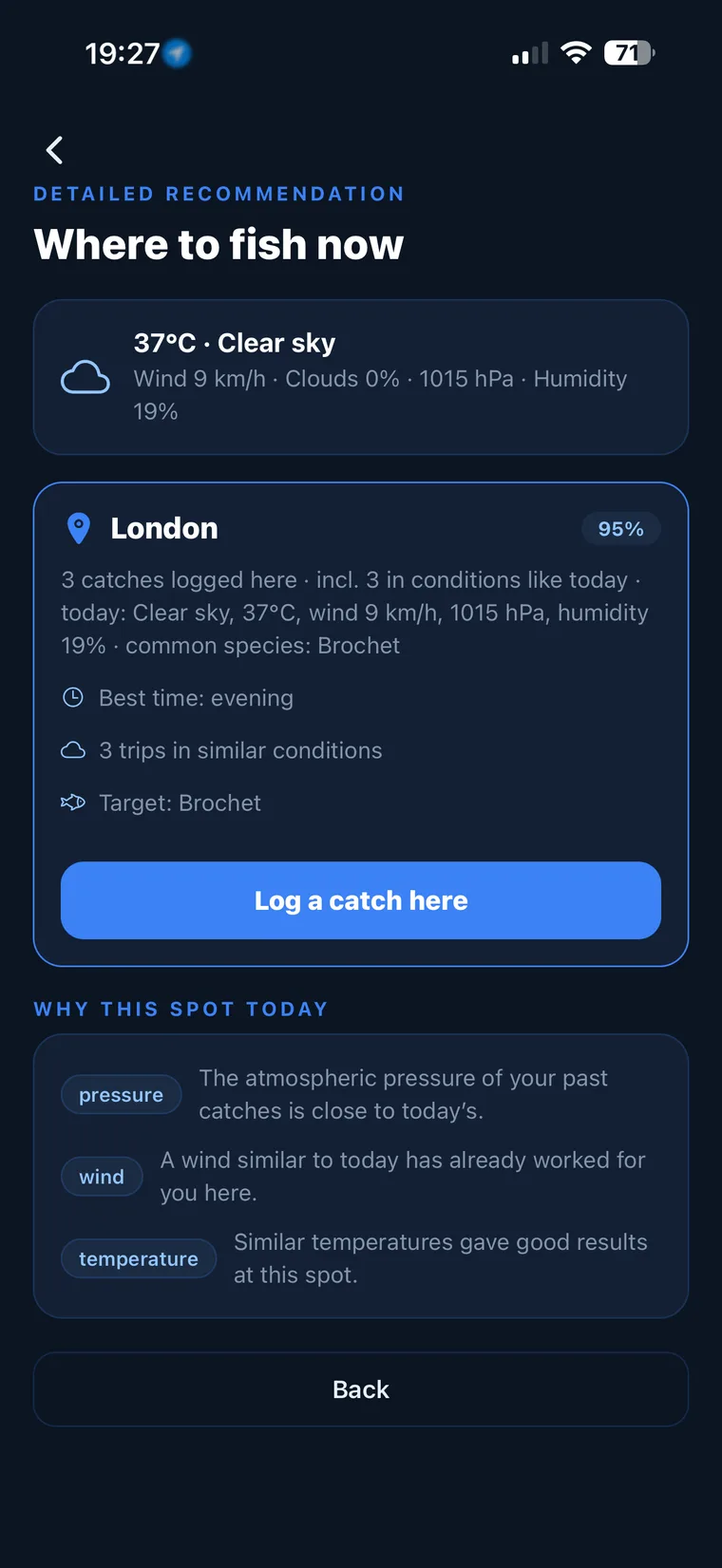
Not sure what to tie on?
Photograph your spot: CarnaFish reads the scene, cross-checks the conditions and gives you the zone, the lure and the retrieve. Free on iOS and Android.
When to choose it over a smooth shad
The Spikey Shad is not better everywhere. It takes the lead in specific conditions:
- Stained, coloured or green water, where detection happens through vibration.
- Late in the day and in deep water, when light no longer penetrates.
- After a flood, when turbidity is at its peak.
- Active fish that respond to a strong signal.
Conversely, in very clear water on wary fish, its pronounced signal can become a fault. A slim, smooth-bodied shad or a finesse presentation will then be more productive.
Colours
In stained water colour matters less than contrast and vibration, but three families stand out:
- Natural perch and roach as soon as visibility passes 50 cm.
- Fluo chartreuse or orange in very coloured water, where only a contrasting silhouette shows up.
- UV finishes in low light and at depth, where they stay visible once standard colours turn grey.
Our guide to perch fishing with lures goes into matching the lure to water clarity. And if you do not know what weight or size to tie on when you reach the bank, CarnaFish analyses a photo of the spot and suggests a starting point.
Key takeaways
- The ribs create turbulence and amplify the roll: detectable from further away in coloured water.
- In stained water, drop one weight step to slow the fall.
- For perch, stay at 6-8 cm: going bigger reduces the number of bites.
- Very effective on the drop shot thanks to the natural quiver of the ribs.
- In very clear water on wary fish, go for a slim, smooth body instead.
FAQ
What are the ribs on the Spikey Shad for?
They create turbulence along the body and amplify the roll on every tail beat. The lure becomes detectable from further away by a predator's lateral line, which is decisive in stained water where sight is no longer enough.
What jig head weight should I choose?
5 to 7 g in the margins, 7 to 12 g down to 4 m, 12 to 15 g down to 6 m, 15 to 20 g beyond that or in current. In stained water, drop one step below what you would use in clear water so the fish has time to locate the lure.
What size for perch?
6 to 8 cm in the vast majority of cases. Going up to 10 cm often reduces the number of bites without increasing the average size of the fish you land.
Does it work on the drop shot?
Very well. The ribs make the lure quiver on the spot with no input from you, which makes it an excellent choice on settled perch marked on the sounder.
When should I prefer a smooth shad?
In very clear water and on wary or pressured fish. The Spikey Shad's strong signal then becomes a drawback: a slim, smooth body goes down better.
What colours in coloured water?
Fluo chartreuse or orange when visibility is very poor, UV finishes in low light and at depth. Naturals stay relevant as soon as visibility passes about fifty centimetres.
The full perch lure guideSeason-by-season strategy: which family of lure, when, and why.Go from theory to fish
CarnaFish reads your spot from a photo and gives you the game plan: zone, lure, retrieve. Free on iOS and Android.