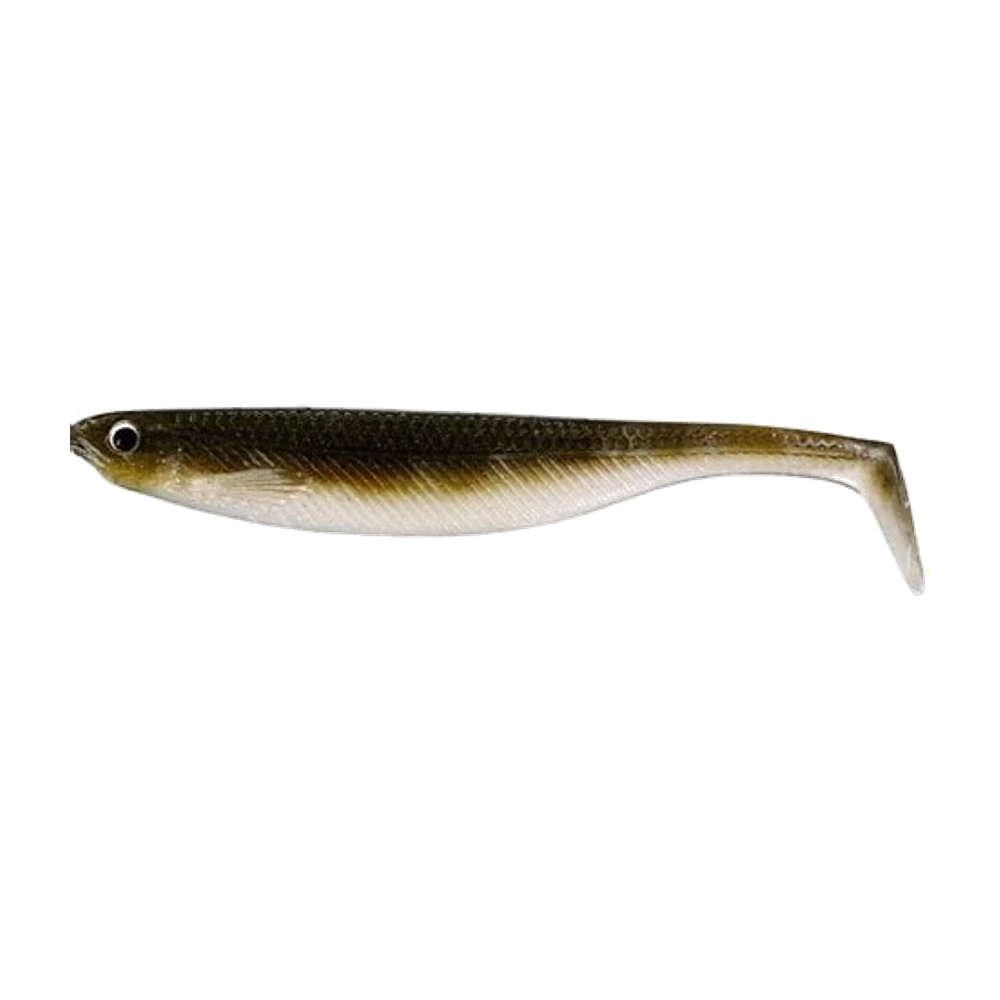
Westin ShadTeez Slim: the lure you tie on to fish the spot a second time
The right lure in the wrong spot still catches nothing. CarnaFish spots the zone that works, from a single photo.
You've just fished a spot with a standard shad. Two bites, one fish, then nothing. You pack up and move on. Nine times out of ten, there were still fish there.
What just happened is simple: the most active fish reacted first, and the rest watched the lure go past three or four times. They haven't left — they've just stopped reading that silhouette as prey. Showing them the same profile a fifth time won't change anything.
The ShadTeez Slim exists for that second pass. Same family as the standard model, same low-speed swimming logic, but a noticeably slimmer body and a tighter action. It's a different volume, a different shadow, a different water displacement. To a fish that has just refused three times, it's a fresh proposition.
Slim silhouette versus volume: what the fish perceives
A thick shad displaces a lot of water. Its lateral line picks it up from a distance, its silhouette is broad, and its action is wide. That's excellent for calling fish in — and it's precisely what makes it identifiable when it comes past again.
A slim profile changes three parameters at once:
- Less water displaced, so a weaker, more discreet signal.
- A narrow head-on silhouette, closer to a bleak or a small roach than to a broad fish.
- A tight rather than wide action, giving the impression of a fish darting rather than one waddling along.
On a zander in clear autumn water, or on perch that follow without biting, that triple change often converts immediately.
The double-pass strategy
- First pass with the standard shad, normal head weight, medium retrieve. The aim: take the active fish and identify where the bites are coming from.
- Note where it reacted. Depth, distance, structure. That's the information that matters, not the fish.
- Change lure, not spot. Tie on the Slim, with a head one step lighter if possible.
- Slow down clearly, about a third slower than the first pass.
- Fish the same place again, from slightly different angles. Two or three casts per angle is enough.
This rotation also works the other way round at the start of a session — start slim, then go bigger — but it's less effective: a discreet lure doesn't pick off the active fish as quickly.
On the water: when you change lure on a spot you've already worked, change two parameters at once, not one. Slimmer profile AND a slower retrieve. A single change often goes unnoticed by a fish that has already decided to ignore your lure; two changes create a genuine break.
Head weights and sizes
| Situation | Size | Jig head |
|---|---|---|
| Perch in the margins, under 2 m | 7.5 cm | 5-7 g |
| Perch and zander, 2-4 m | 10 cm | 7-12 g |
| Zander, 4-6 m | 12 cm | 12-18 g |
| Zander in a river or over 7 m | 12-14 cm | 18-25 g |
As with any soft shad, take the lightest head that keeps you in contact with the bottom. The simple jig head rig covers most situations; in the small sizes, the drop shot is an excellent option on perch sitting tight.
One note on hook size: a slim body stiffens up quickly if the shank is too long. Choose a head whose hook stops before the rear third of the lure, or you kill the body's undulation.
Retrieves suited to a tight action
The slow straight retrieve in contact. The simplest and most consistent for zander. No rod work, just a constant retrieve keeping the line tight. The Slim's tight action stays readable even at low speed.
Short pulls. Two rod pulls of thirty to forty centimetres, then a drop on a semi-tight line. Shorter than with a thick shad: a slim profile doesn't need a long travel to produce its signal.
The stepped retrieve for perch. Three turns of the handle, a two-second pause, three turns. On perch that are following, it's the pauses that trigger — they almost always hit on the stop.
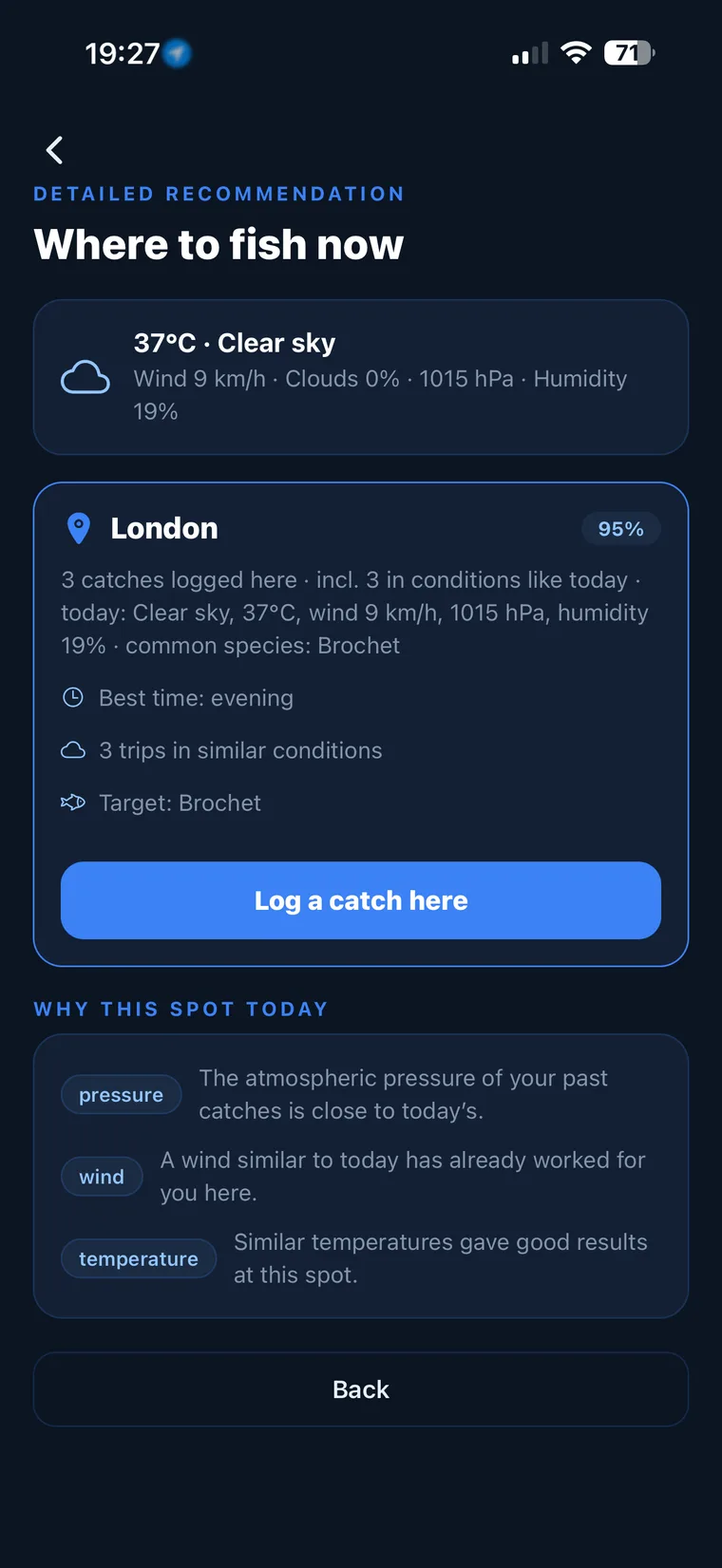
Not sure what to tie on?
Photograph your spot: CarnaFish reads the scene, cross-checks the conditions and gives you the zone, the lure and the retrieve. Free on iOS and Android.
Where it's the right choice and where it isn't
It takes the lead in clear water, on pressured fish, on a second pass, and when the dominant prey is slim — bleak, small roach, fry of the year. In autumn, on a clear lake where bleak shoals are out in open water, it often becomes the best choice from the very first cast.
It's poorly suited to three situations. In heavily stained water, where a weak signal never gets detected: you need volume and vibration. In strong current, where the slim body lies over and loses its action. And on pike, where a thin lure tears quickly and volume is exactly what you want.
Slim or standard ShadTeez
The standard ShadTeez remains the searching lure: more volume, more vibration, better for calling in fish scattered over a large area or fishing stained water. If you could only have one, that would be it.
The Slim is the complement, not the replacement. It takes over once the standard has been seen, when the water is clear, or when the natural food is slim. Along the same slim-profile lines, the Fox Rage Zander Pro Shad offers a zander-oriented alternative, while the Keitech Easy Shiner plays a middle card between finesse and vibration.
Our guide to lure fishing for perch covers how to read shoal-holding spots. And if you're torn between fishing a spot again or moving on, CarnaFish reads a photo of it and answers.
Key takeaways
- A second-pass lure: change profile without changing spot.
- Change two parameters at once, slim profile and a slower retrieve.
- Tight action: your pulls need to be shorter than with a thick shad.
- Choose a head whose hook stops before the rear third of the body.
- Unsuited to stained water, strong current and pike.
FAQ
What's the difference between the ShadTeez Slim and the standard model?
The Slim has a noticeably slimmer body and a tighter action, so less vibration and a finer silhouette. The standard stays better for searching and in stained water; the Slim takes over in clear water or on a second pass.
Should you fish a spot you've already covered again?
Yes, provided you genuinely change the presentation. A slimmer profile combined with a slower retrieve often produces bites where the first pass had stopped producing.
What jig head weight for the Slim?
The lightest that keeps contact: 5-7 g in the margins for perch, 7-12 g down to 4 m, 12-18 g down to 6 m, 18-25 g beyond that or in a river.
Is this shad suitable for pike?
Hardly. A slim body tears quickly on teeth, and pike respond better to obvious volume. Keep it for perch and zander, or move to a thicker model if pike are the target.
Which retrieve for perch?
The stepped retrieve: three turns of the handle, a two-second pause, and start again. Perch that are following almost always hit during the stop, not during the pull.
What hook size on a jig head?
A shank that stops before the rear third of the lure. Too long a hook stiffens the slim body and removes the undulation that makes this model worth fishing.
The full perch lure guideSeason-by-season strategy: which family of lure, when, and why.Go from theory to fish
CarnaFish reads your spot from a photo and gives you the game plan: zone, lure, retrieve. Free on iOS and Android.