Gan Craft Jointed Claw: the cult glidebait that started a movement
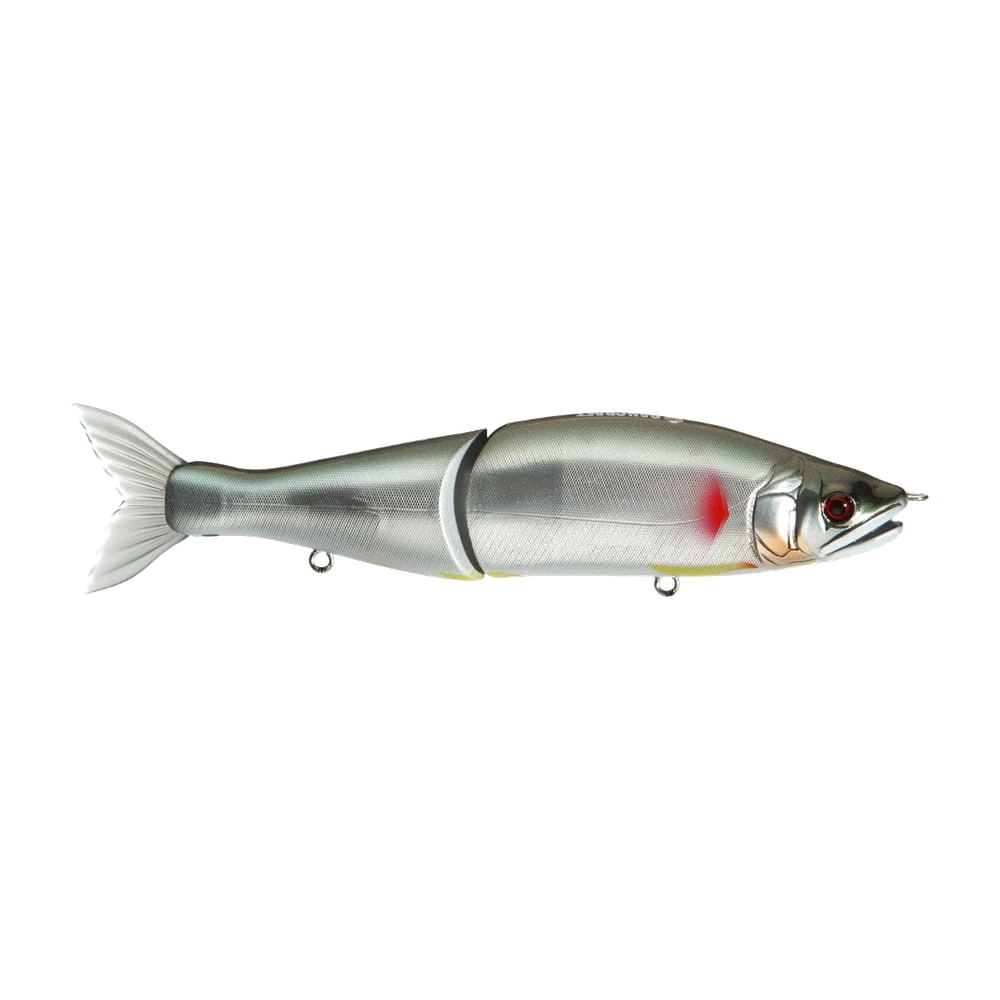
This lure shines under specific conditions. CarnaFish tells you in 10 seconds if today is one of them.
Some lures get bought to fish, and then there's the Jointed Claw. Hand-built in Japan by a small artisan brand, priced enough to make you wince at the register, collected as much as fished — Gan Craft's Jointed Claw holds a status all its own in the big-lure world. And yet, underneath the folklore, it's a genuinely effective fishing tool, the lure that kicked off the jointed-glidebait craze that swept Japan before landing in Europe in the mid-2010s.
The joint that changed everything
Before the Jointed Claw, glidebaits were mostly one-piece bodies, the way the Westin Swim Glidebait still is today. Gan Craft introduced a central joint that tightens the S-curve glide while making it more organic: the lure pivots on itself rather than simply tipping from side to side. The result is a swim that reads more like a wounded baitfish changing direction than a mechanical object gliding. That nuance is what converted the most demanding Japanese anglers, then European pike and bass anglers looking for a lure that could still move a fish that had already seen everything.
A size range for every ambition
The Jointed Claw spans an impressive size range:
- 70 mm, about 4.6 g (1/8 oz): a compact format, built for finesse work or even stocked trout (a dedicated AR version exists), far from the oversized-glidebait image.
- 178 mm (7 in): the historic base size of the line, the one that built the Jointed Claw's reputation on pike and bass.
- Magnum 230, about 113 g (4 oz): reserved for big pike and waters known for trophy fish, needs dedicated gear.
- Super Magnum 303, about 255 g (9 oz): the extreme format, built for truly oversized pike or muskie on North American waters, only for a rod-and-reel combo specifically rated for giant lures.
To start with this lure on pike, the 178 mm size is the most sensible entry point: imposing enough to interest a big fish, still castable with a standard big-bait setup.
How to work it to reveal the joint
Like any glidebait, the Jointed Claw is worked off the reel, not the rod tip. But the joint changes one specific thing: it allows a tighter glide, meaning a slower, more deliberate retrieve than a one-piece glidebait.
- A short, continuous pull with no jerk, letting the joint do its work.
- Slow the cadence down compared with a one-piece glidebait: the Jointed Claw performs best on a deliberate, almost hypnotic retrieve.
- An occasional deliberate pause breaks the rhythm and often triggers a strike, since the jointed body stays slightly mobile even at rest.
Field rule: on a jointed glidebait, slowing down almost always pays off more than speeding up. It's the width of the glide that has to convince, not the speed.
Does the price hold up?
That's the question everyone asks before buying. The honest answer: the Jointed Claw is expensive because it's hand-built in small batches in Japan, with a level of finish and balancing that carries a real cost. On a strictly practical fishing level, a well-chosen one-piece glidebait like the Swim Glidebait gets the job done for far less. The Jointed Claw earns its keep mainly when you specifically want that tight, jointed action, or when targeting fish already wise to standard glidebaits that need a different trigger to react.

Not sure what to tie on?
Photograph your spot: CarnaFish reads the scene, cross-checks the conditions and gives you the zone, the lure and the retrieve. Free on iOS and Android.
Rigging: don't underestimate the mechanical load
The stock hooks and rings are sized to handle both the jointed body's weight and the torque generated by the joint mid-glide — a heavier mechanical stress than a one-piece lure of the same size sees. Never swap them for lighter components, even on the smaller sizes: that's the single most common failure point on this style of lure.
Colour by water clarity
- Clear water: a natural baitfish tone, consistent with the lure's realistic profile.
- Slightly stained water: a flashier pattern, to make up for lower visibility without distorting the silhouette.
- Low light: a dark silhouette, which stands out better against residual light than fine detail does here.
The Jointed Claw remains, above all, a big-fish lure, which means knowing where that kind of fish actually holds — a point covered in our full guide to pike lure selection. And rather than burning casts with a lure this valuable over a spot that doesn't merit the effort, CarnaFish reads a photo of your water to flag the high-potential zones before you tie one on.
What actually matters
- The central joint tightens the S-curve glide and gives a more organic swim than a one-piece glidebait.
- The 178 mm size is the most sensible entry point for pike.
- Slow the retrieve down compared with a standard glidebait: width of glide should convince, not speed.
- Never replace the stock hooks and rings, sized for the joint's specific mechanical load.
FAQ
Why is the Jointed Claw so expensive?
It's hand-built in small batches in Japan, with a finish and balancing standard above mass production. The price reflects that craftsmanship, not just the brand name.
What size Jointed Claw should you pick for pike?
The 178 mm size is the most sensible starting point: imposing enough to interest a big pike, while still castable with a standard big-bait rod.
How do you work a jointed glidebait like the Jointed Claw?
Off the reel, with a short, continuous pull, at a slower cadence than a one-piece glidebait. The central joint performs best on a deliberate, unhurried retrieve.
Does the Jointed Claw work for bass?
Yes, especially in the smaller sizes (70-178 mm), where the jointed action triggers reactions from bass already used to standard swimbaits and glidebaits.
What's the difference between the Jointed Claw and a one-piece glidebait like the Westin Swim?
The one-piece delivers a wider, easier-to-master glide. The jointed Jointed Claw offers a tighter, more organic glide, at the cost of a higher price and a more demanding retrieve technique.
Do you need special gear to cast a Jointed Claw Magnum 230?
Yes, absolutely: at roughly 113 g (4 oz), this size requires a rod rated for very large lures and a heavy-duty reel, or you risk damaging your gear and losing casting accuracy.
The full pike lure guideSeason-by-season strategy: which family of lure, when, and why.Go from theory to fish
CarnaFish reads your spot from a photo and gives you the game plan: zone, lure, retrieve. Free on iOS and Android.