Westin Swim Glidebait: understanding and fishing a glidebait properly
This lure shines under specific conditions. CarnaFish tells you in 10 seconds if today is one of them.
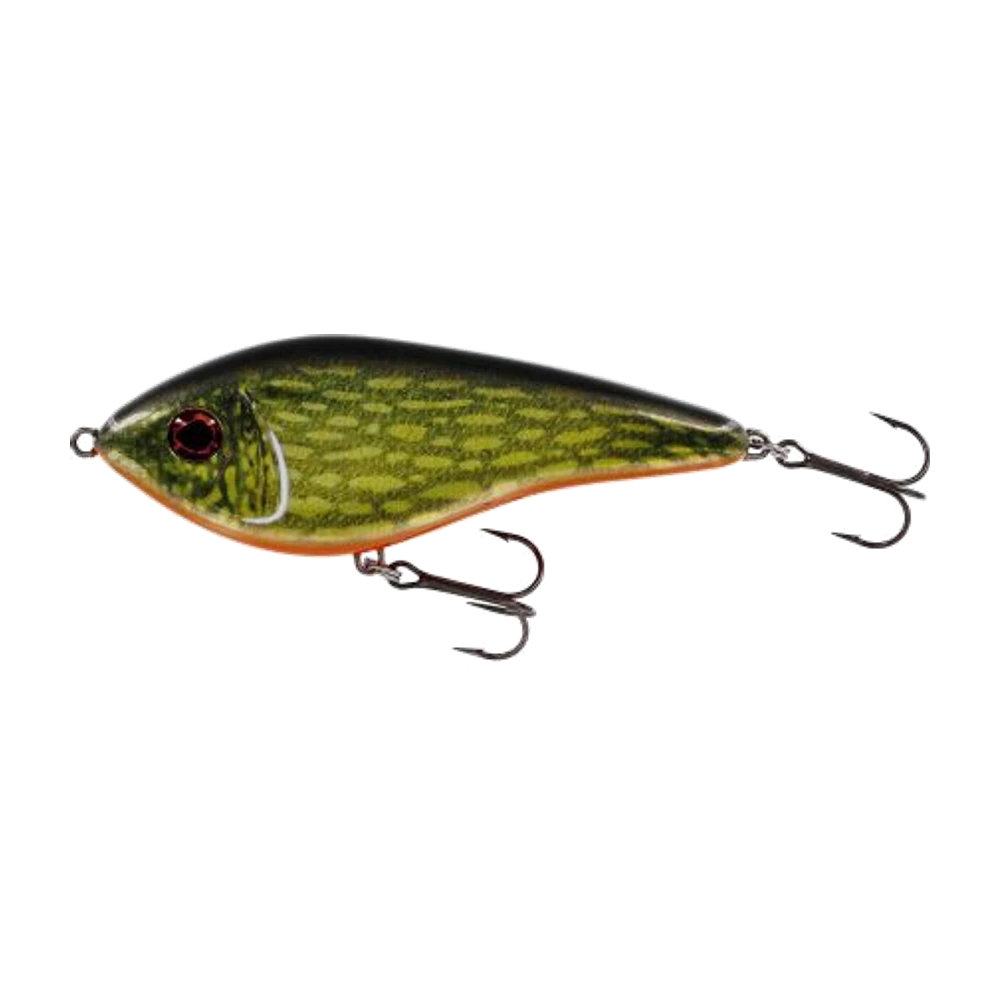
Glidebaits arrived from Japan with a reputation that was only half deserved: a specialist's lure, expensive, reserved for medium and large pike on big waters. The Westin Swim Glidebait did a lot to dismantle that idea in Europe. It's an accessible glidebait, offered in enough sizes to fish a medium river just as well as a big lake, and — crucially — far easier to work correctly than it looks on the first cast.
What exactly is a glidebait?
Before going further: a glidebait is neither a jerkbait nor a classic swimbait. It's a one-piece (or jointed, on some models) lure whose centre of gravity is engineered so that a plain reel pull, with no rod twitch, produces a wide S-curve glide from side to side. Unlike a jerkbait, which you work with the rod tip, the Swim Glidebait is fished almost entirely off the reel handle, which makes it surprisingly restful to fish for a full day.
Sizes worth knowing
The Swim Glidebait spans a wide range, from 6.5 cm/9 g up to 15 cm/107-115 g, in floating, suspending or sinking versions depending on size. Three reference points for choosing:
- 6.5-10 cm: an entry format, or good for perch and smaller pike, castable with medium-power gear (0.7-1.4 oz).
- 12-13.5 cm: the most versatile format for pike on rivers and medium lakes, already needs a dedicated big-bait rod (1.4-2.8 oz).
- 15 cm and up: reserved for waters known for their big pike, with specific gear (2.8-5 oz rod, heavy-duty reel).
Don't make the classic mistake of starting straight on the biggest model: the retrieve feel is much easier to learn and correct on a mid-size lure.
How to work it without choking the action
The Swim Glidebait's retrieve comes down to one simple formula: pull and wind, never a sharp rod snap.
- A short, steady reel pull, no jerk.
- A split-second micro-pause between pulls, just enough to let the lure switch sides.
- Hold a constant rhythm over several metres before varying cadence — it's speed, not the size of the movement, that changes the action.
Field rule: if the lure runs in a straight line instead of gliding side to side, the pull is almost always too sharp or too long. Shorten the motion before blaming the lure.
Depth and where to fish it
The Swim Glidebait works surface to sub-surface, between 0 and 1 m (0-3 ft). It's a horizontal search bait, not a tool for reaching a fish holding deep. It excels over big open water, surface feeding zones and spots where a pike can intercept prey moving through open water — much less so in thick weed, where its exposed front hook snags fast.
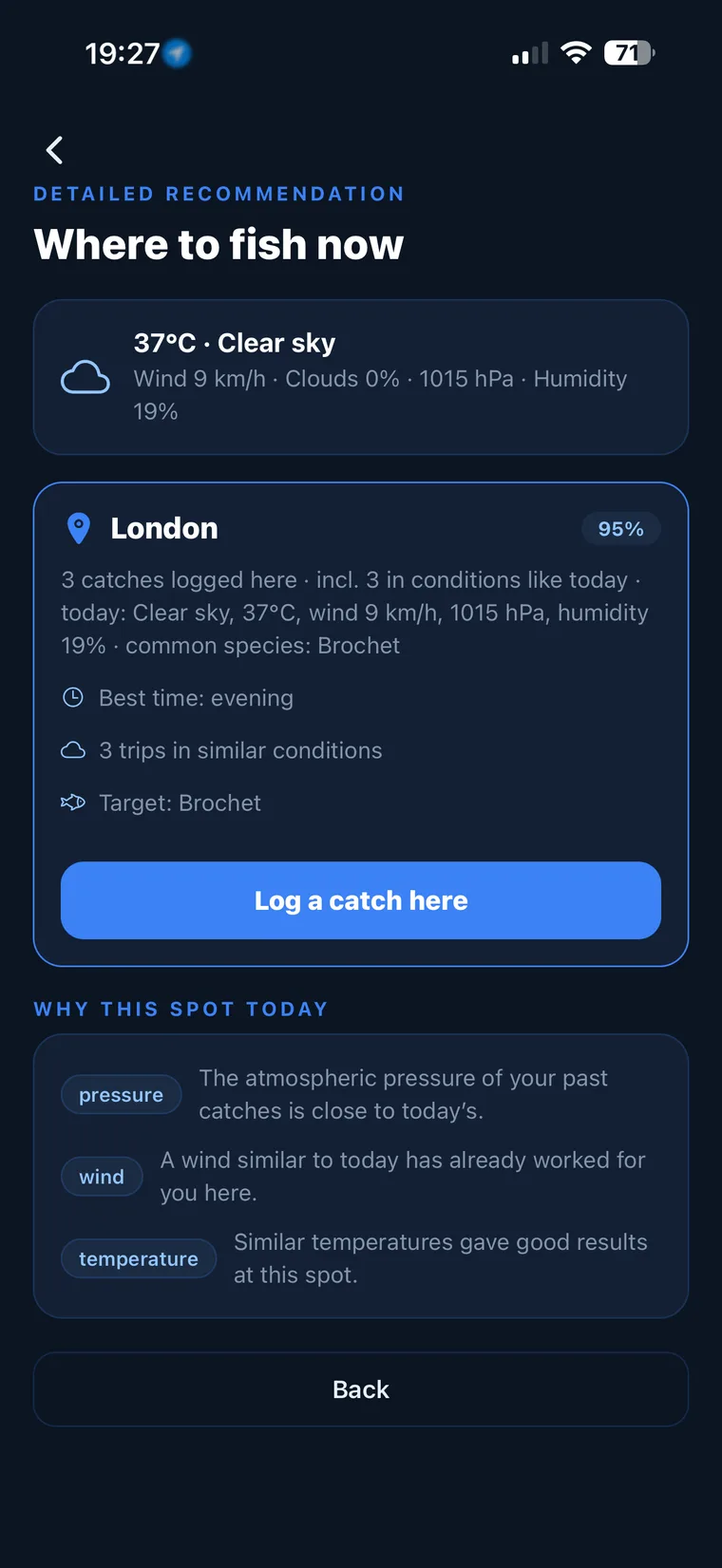
Not sure what to tie on?
Photograph your spot: CarnaFish reads the scene, cross-checks the conditions and gives you the zone, the lure and the retrieve. Free on iOS and Android.
The rigging detail that matters
The reinforced stock front treble and heavy-duty split ring are sized to handle the body's weight mid-glide, a different mechanical stress than a classic jerkbait sees. Downsizing these parts for subtlety is a false economy: the rig risks failing at the exact moment a big pike commits.
Colour by water clarity
- Clear water: a natural roach-style back, enough to convince without overdoing it.
- Slightly stained water: a higher-contrast tone, to stay visible without losing credibility.
- Low light: a dark colour, whose silhouette stands out well against the sky or a lit surface.
One-piece glidebait or jointed: the real choice
The one-piece Swim Glidebait offers a wider glide that's easier to master for anyone starting out with this style of lure. A jointed model like the Gan Craft Jointed Claw delivers a tighter, more realistic action at rest, at the cost of a higher price and a steeper retrieve technique. For a first approach to glidebaits, the Swim is the more sensible pick; for fine-tuning on fish already wise to big lures, the jointed option takes over.
A glidebait remains a search tool: it pays off in proportion to where it's cast, which our full guide to pike lure selection covers in detail. And rather than spending a whole session guessing at the right zone, CarnaFish reads a photo of your spot and suggests where and how to work it before the first cast.
The essentials
- Work the Swim Glidebait off the reel, never the rod tip: a short, steady pull is all it takes.
- Pick the size to match the water, not the urge to fish big from day one.
- Runs surface to sub-surface (0-1 m): favour open water, avoid thick weed.
- Don't replace the stock front hook or split ring, sized for the glidebait's mechanical load.
FAQ
What makes a glidebait different from a jerkbait?
A jerkbait is worked with rod twitches, alternating swim and pronounced pauses. A glidebait like the Swim Glidebait is worked purely off the reel, with steady pulls, producing a continuous S-curve glide without jerks.
What size Swim Glidebait should you start with?
Something between 8 and 10 cm, easier to feel and correct in the retrieve than a 15 cm model. Move up in size once the technique clicks.
Why won't my Swim Glidebait glide side to side?
Almost always because the pull is too sharp or too long. Shorten the motion and keep a steady rhythm — it's constant speed, not amplitude, that produces the S-curve.
How deep does the Swim Glidebait run?
It works surface to sub-surface, between 0 and 1 m (0-3 ft). It's not a lure for reaching a fish holding deep.
What gear do you need to cast a mid-size Swim Glidebait?
For a 12-13.5 cm model, get a dedicated big-bait rod rated 1.4-2.8 oz and a reel that can handle repeated casts all day without excessive fatigue.
Does the Swim Glidebait work in weed?
Not really, because its exposed front hook snags quickly in thick vegetation. It performs best in open water, over big flats and surface feeding zones.
The full pike lure guideSeason-by-season strategy: which family of lure, when, and why.Go from theory to fish
CarnaFish reads your spot from a photo and gives you the game plan: zone, lure, retrieve. Free on iOS and Android.