Predator Fishing Season by Season: What to Target and When
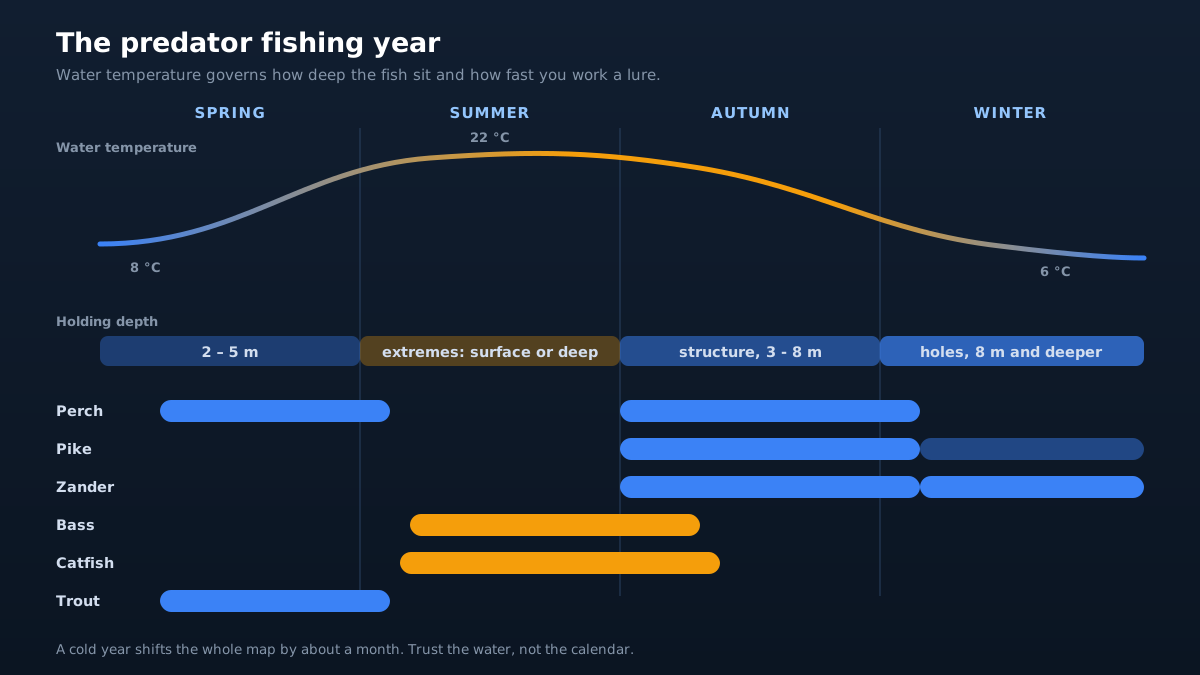
The same spot doesn't fish the same way in April and in December. It isn't luck: water temperature governs the fish's metabolism, and therefore their depth, their aggression and the speed you need to work a lure. Here's the year-round map.
The only indicator that really matters
Before the calendar dates, remember water temperature. It explains almost everything:
- Below 8 °C: metabolism in slow motion. Fish group up deep and barely move. Very slow retrieve, long pauses.
- 8 to 14 °C: activity climbing. Fish spread out and the feeding windows lengthen.
- 14 to 20 °C: the sweet spot for most predators. Peak activity, fish spread across every lie.
- Above 22 °C: the water loses oxygen. Fish seek cool — depth, shade, inflows — and feed mainly early and late.
A cold year shifts everything by a month. Trust the water, not the calendar.
Spring: the restart
What's happening. The water warms and fish move up onto the shallow zones that heat fastest. It's also the spawning period, with closed seasons to respect — see our guide to French fishing regulations, and check the equivalent rules wherever you fish.
Where to fish. Sun-exposed margins, shallows, plateaus in 2-5 m. Shallow bays warm before the rest of the venue and concentrate the activity.
How. Still slow early on, then increasingly brisk. Medium-sized lures: fish are coming out of winter and aren't yet chasing large prey.
The species.
- Perch: very active as soon as the water hits 10-12 °C. The best spring target.
- Bass: wakes up late, from 15-16 °C.
- Trout: the season opening, then the most productive stretch of the year.
- Pike and zander: watch the closed seasons, which vary regionally.
Summer: the extremes of the day
What's happening. The water is warm, sometimes too warm. Oxygen drops, fish turn nocturnal or take refuge in cool water during the day.
Where to fish. Shade — pontoons, trees, bridges — deep zones during the day, inflows and churned water. The shallows come good again at dusk.
How. Two opposite strategies: fast, reactive lures during the activity windows (dawn and dusk), or a slow, deep presentation in the heat of the day.
This is the topwater season: nothing replaces a first-light strike over a weed bed.
The species.
- Bass: clearly its season. Warm water means an active fish.
- Wels catfish: peak nocturnal activity. The high point of the year for catfish fishing.
- Zander: turns strongly nocturnal, moving up onto plateaus after dark.
- Sea bass: the late-summer feeding spells, timed on the tide.
- Trout: difficult, with low clear water. Early, late, and fine leaders.
Autumn: the best season
What's happening. The water cools gradually and fish feed hard to build reserves. It's the most predictable and most productive period of the year.
Where to fish. Fish group onto structure: drop-offs, plateaus, the edges of holes. Baitfish shoal up and the predators follow.
How. Size up your lures. This is when big volumes take big fish. Cover water to find the groups, then work them hard.
The species.
- Pike: the prime season. Big shads, big swimbaits, big fish.
- Zander: excellent too, with grouped and aggressive fish.
- Perch: the period for big stripes, which gather on deeper structure.
- Wels catfish: still very good before the winter slowdown.
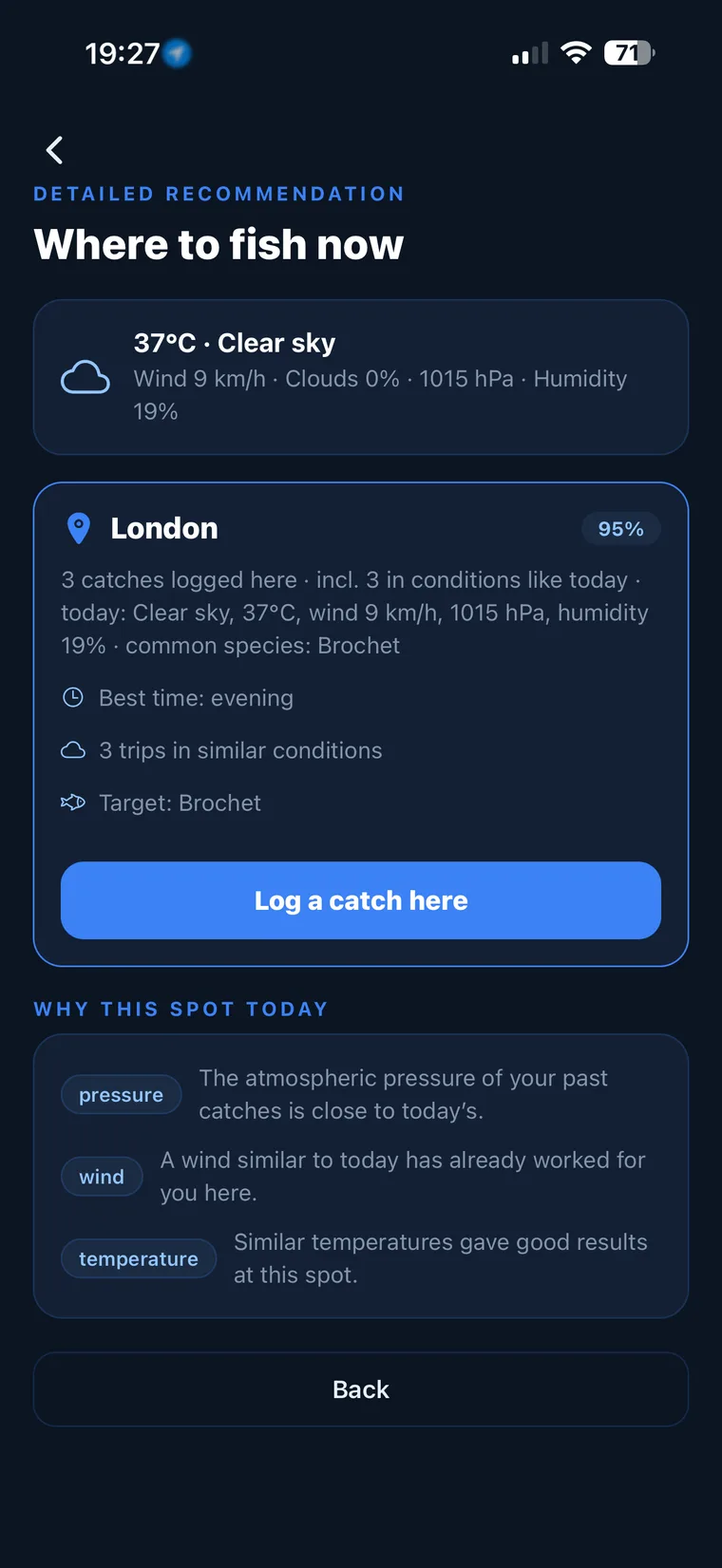
Not sure what to tie on?
Photograph your spot: CarnaFish reads the scene, cross-checks the conditions and gives you the zone, the lure and the retrieve. Free on iOS and Android.
Winter: few bites, big fish
What's happening. Metabolism collapses. Fish pack onto deep zones and will barely move to feed. You have to put the lure in front of their mouth.
Where to fish. Holes, the deepest water in the stretch, the margins of major drop-offs. On a lake, the fish can be concentrated in a few dozen square metres.
How. Everything in slow motion. Minimal animation, very long pauses, lighter jig heads for a slower fall. The bite is often nothing more than a feeling of weight.
The species.
- Zander: the most consistent winter species, in tight shoals down deep.
- Perch: grouped up, on the vertical or the drop shot.
- Pike: few bites, but often very big fish. Patience pays.
- Bass: effectively shut down below 10 °C.
In winter, when you find one fish, you've found ten. Mark the spot and come back to it.
The year at a glance
- Spring: perch, trout, then bass. Shallow, medium-paced retrieve.
- Summer: bass, catfish, sea bass. Early/late/night, topwater or deep.
- Autumn: pike, zander, big perch. Structure, big lures.
- Winter: zander, perch, big pike. Deep, very slow.
Read the day, not just the season
The season gives you the trend; the conditions on the day decide the rest. Three things shift from session to session:
- Light: bright sun pushes fish into the shade and deeper; overcast skies let them hunt more widely.
- Water level and colour: rising, staining water pushes fish towards the margins.
- Atmospheric pressure: a rapid drop often precedes a good feeding window.
That's exactly the cross-check CarnaFish, the AI fishing app, performs: you photograph your spot, the AI reads the scene and combines it with the weather and the season to suggest a zone, a lure and a retrieve for the moment. And if you'd rather learn to do it by eye, it's all in our guide on how to read a fishing spot.
Key takeaways
- Water temperature beats the calendar.
- Cold water = deep, slow, big volumes. Warm water = varied, fast, early and late.
- Autumn is the best season across every species.
- Winter gives few bites but the biggest fish.
- A cold year shifts the whole map by roughly a month.
FAQ
What is the best season for predator fishing?
Autumn, across every species. Fish feed hard before winter, group onto identifiable structure and accept big lures. It's the most predictable period for pike and zander, and the one for big perch. Spring comes a close second, especially for perch and trout.
At what water temperature are predators most active?
Between 14 and 20 °C for most species: metabolism is high and fish spread across every lie. Below 8 °C they group up deep and barely move. Above 22 °C the water loses oxygen and they seek cool water during the day, feeding mainly early and late.
How do I fish for predators in winter?
Deep, in the holes and on major drop-offs, with a very slow retrieve and long pauses. Lighten your jig head to slow the fall, which gives the fish time to commit. The bite is often just a feeling of weight. Bites are rare but usually involve big fish — and when you find one, there are almost always others in the same place.
Which species should I target in summer when the water is warm?
Bass, which loves warm water, and wels catfish, whose nocturnal activity peaks. In the sea, bass on the tide windows. For zander and pike you need to work dawn and dusk, or fish at night. Trout become difficult: low water, clear water, very wary fish.
Should I change lure size with the season?
Yes. In autumn, size up — that's when big volumes take big fish, up to 15-20 cm for pike. In spring and summer, medium sizes are enough. In winter the logic partly inverts: a substantial volume worked very slowly still beats a small lure worked fast.
Is the calendar the same every year?
No, and it matters. A cold year shifts everything by roughly a month; a mild one brings it forward by the same. Trust water temperature rather than dates: it's what governs the fish's metabolism. A simple thermometer genuinely changes how you read a season.
When are predators in their closed season?
Closed seasons protect spawning and vary by species, water category and region. In France, pike and zander have specific spring closures on second-category water, and trout a closed season on first-category water. Exact dates are set annually — always check the current rules for the water you intend to fish.
Why am I catching nothing when it's supposedly the right season?
The season gives the trend, not a guarantee. Three factors decide the day: light, water level and colour, and atmospheric pressure. Rising, staining water pushes fish to the margins; bright sun sends them into shade and depth. Adjust your depth before you change lure.
Go from theory to fish
CarnaFish reads your spot from a photo and gives you the game plan: zone, lure, retrieve. Free on iOS and Android.