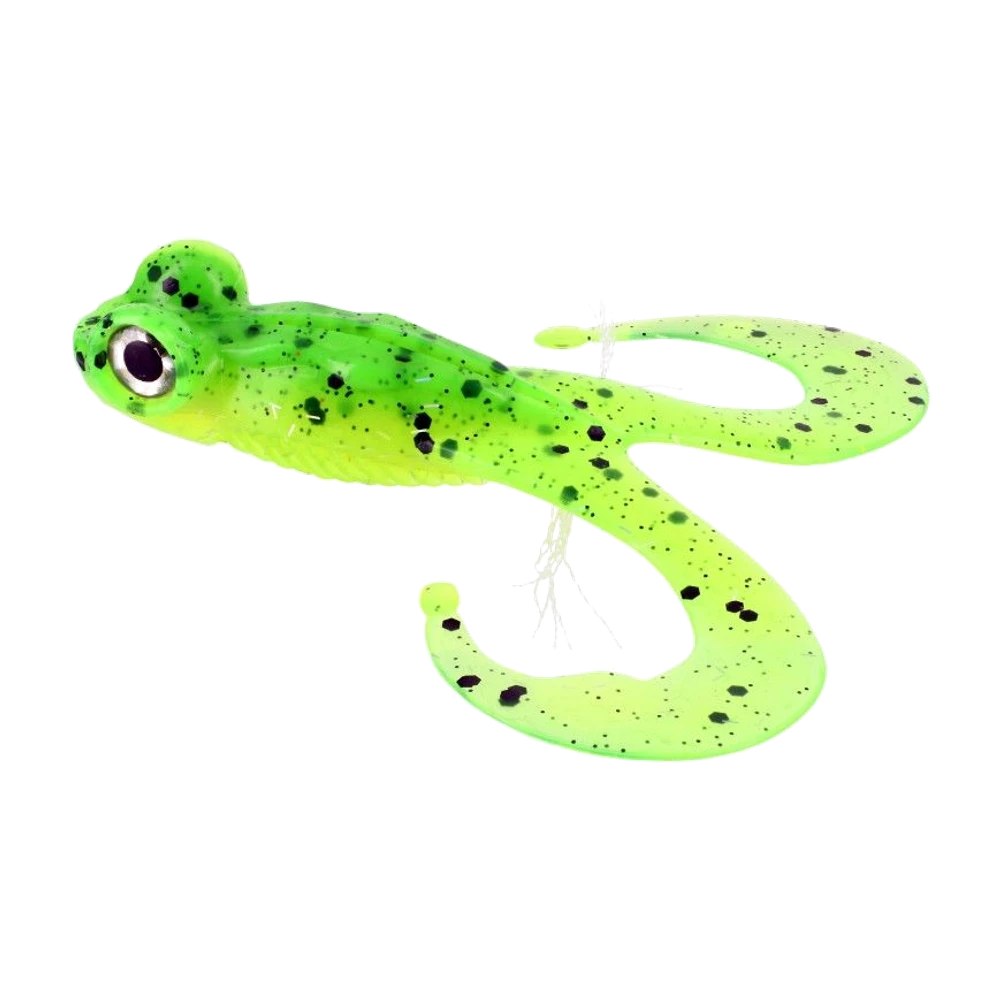
Gunki Bull Frog 100: the soft frog for finessing small ponds
Not sure this lure fits YOUR spot today? CarnaFish tells you in 10 seconds, from a photo.
Gunki spreads its soft frog range across several sizes, from the Bull Frog 100 (10cm) to the Mama Bull Frog 170 (17cm), up to the Mega Frog 230 for big water. The Bull Frog 100, the most compact of the three, is also the best suited to a finesse presentation on small water — that's the one covered here.
Why a small frog on small water
On a pond a few hundred square meters across, or a narrow canal, a bulky 17cm frog forces powerful pulls that push too much water for the scale of the spot — fish can grow wary of a disproportionately large object in a confined space. The Bull Frog 100, with its smaller frame, stays believable in that tighter water while keeping everything that makes a soft frog work: a buoyant, bulky body and two vibrating legs.
What makes it effective despite its size
The Bull Frog 100's body is designed to float high despite its 16.1g weight, with oversized eyes and two comma-shaped legs that vibrate at the slightest tremor, even on a minimal retrieve. That residual vibration compensates for the smaller body: fish pick up on the frog's presence through leg movement before ever getting a clear look at it.
Weedless rigging: non-negotiable
On the small waters where this frog earns its keep, floating vegetation (lily pads, duckweed, dense weed) is almost always present. A standard rig would snag constantly there. A Texas-rigged weedless setup, with the hook buried in the soft body's back, lets it slide through that vegetation without hanging up, the hook only exposing itself when a fish's mouth applies pressure on the strike.
The hop-and-pause retrieve
The base technique is a scaled-down "pop and pause":
- Land the frog on a lily pad or the edge of the weed.
- A short, sharp rod snap to make it "hop" a few centimeters, creating a small splash.
- Pause for 2-4 seconds, letting the legs keep vibrating even at rest.
- Repeat, methodically covering the vegetation without rushing.
On a small frog, patience matters more than technique: the bite often comes after the third or fourth pause, never on the first hop.
Not sure what to tie on?
Photograph your spot: CarnaFish reads the scene, cross-checks the conditions and gives you the zone, the lure and the retrieve. Free on iOS and Android.
Versus a bulkier frog
Compared to the Molix Frog, bulkier and built to push more water over big weed beds, the Bull Frog 100 clearly favours discretion in tighter water. Against the Booyah Pad Crasher, which leans into a louder surface commotion, the Bull Frog 100 stays quieter, better suited to a wary fish on a pressured pond.
Colors by light
- Bright, clear day: natural green, blending into surrounding vegetation.
- Very bright water or heavy glare: white, keeping a visible silhouette even under harsh light.
- Sunset or backlight: black, standing out sharply as a silhouette against a surface lit from behind.
Small water fishes differently from a big lake, and knowing where to concentrate effort on floating vegetation makes all the difference — exactly what CarnaFish helps identify. Photograph the pond, and the AI spots the most promising vegetation zones instead of covering everything at random. For the full bass strategy, our beginner's guide to bass fishing is worth reading alongside this sheet.
One last thing before tying it on
- It isn't a "Micro Frog" — it's the Bull Frog 100, the smallest soft frog in the Gunki lineup.
- Its smaller size stays believable on small water where a bulky frog would look disproportionate.
- Weedless Texas rigging is mandatory to cross floating vegetation without snagging.
- Patience over speed: bites often come after several pauses, not on the first hop.
FAQ
Is the Bull Frog 100 subtle enough for wary fish?
Yes, that's exactly its strength: its compact size (10cm, 16.1g) pushes less water than a bulky frog and stays believable on small water, where a larger model would look disproportionate.
How do you rig a soft frog weedless?
Bury the Texas hook in the soft body's back, point barely poking through under the surface, so it stays shielded from vegetation while releasing instantly under the pressure of a fish's mouth on the strike.
How long should the pause be after a frog hop?
Generally 2-4 seconds, letting the legs keep vibrating even at rest. Many bites come after several successive pauses rather than the first hop, which is why patience matters here.
Why use a small frog instead of a standard-size one?
On small water, a bulky frog pushes too much water for the scale of the spot and can look disproportionate to a wary fish. A compact frog like the Bull Frog 100 stays more believable in that tighter water.
Does this frog work over dense lily pads?
Yes, that's actually its ideal terrain. The weedless Texas rig lets it slide over floating vegetation without hanging up, where an exposed-hook lure would snag constantly.
What color should I pick in strong sunlight?
White remains a good option, keeping a visible silhouette despite harsh light. In backlight, black stands out better as a silhouette against a surface lit from behind.
The full bass lure guideSeason-by-season strategy: which family of lure, when, and why.Go from theory to fish
CarnaFish reads your spot from a photo and gives you the game plan: zone, lure, retrieve. Free on iOS and Android.