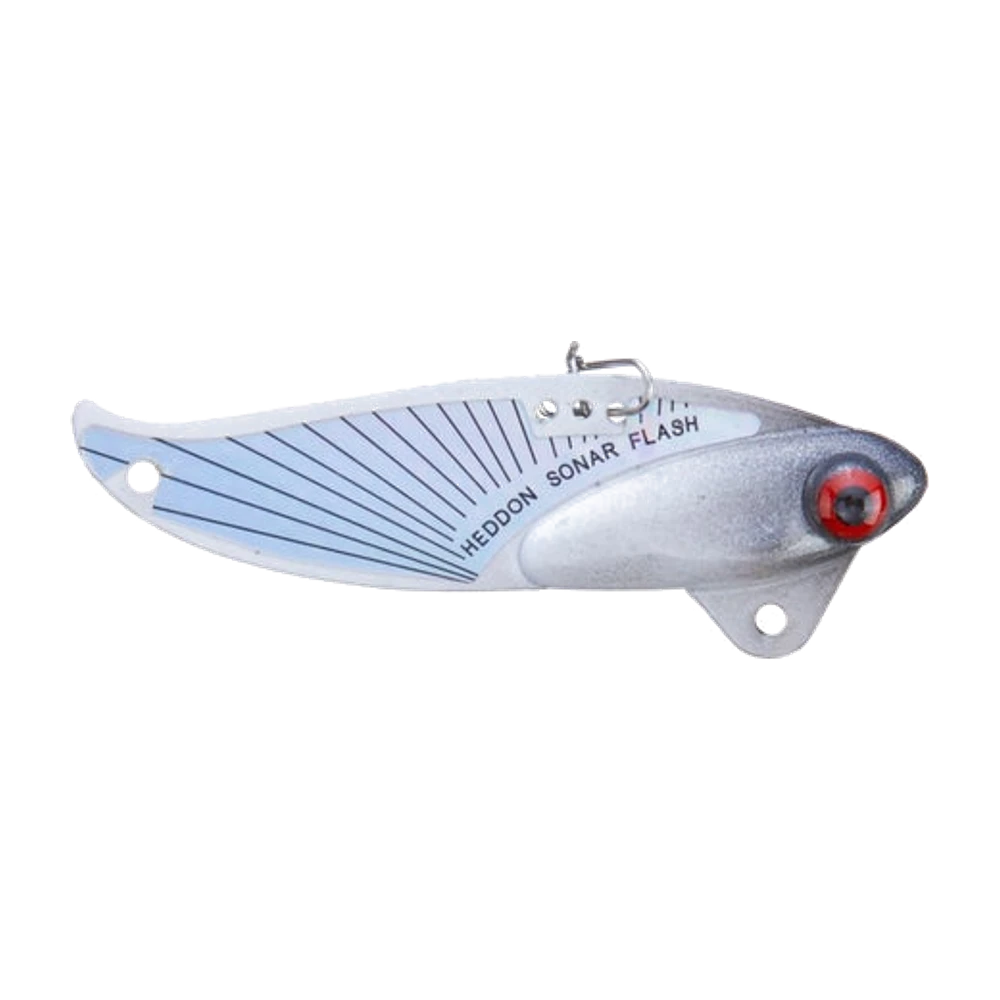
Heddon Sonar: three tie-holes, three lures in one
The right lure in the wrong spot still catches nothing. CarnaFish spots the zone that works, from a single photo.
Most lures have a single tie point. The Heddon Sonar has three, lined up along its back, and that's the whole trick behind one of the oldest blade baits still on the market today: which one you clip onto completely changes the lure's behaviour without unrigging anything.
The three-hole system
- Front hole: fast swim and high-frequency vibration. The lure shoots forward the instant you start reeling, ideal for a straight retrieve to cover ground.
- Center hole: the all-purpose setting, built for jigging and vertical fishing. Moderate vibration, a good balance between fall speed and the signal it transmits.
- Rear hole: deeper-running, with a wide, slow roll. The lure glides more on the fall, stretching out its presentation time in front of a suspended fish.
Switching positions takes ten seconds with a small pair of pliers, no need to take the lure off the leader. In practice, one Sonar in the box covers three different situations — handy for keeping pack weight down on a canal-walking session.
A blade, not a hollow body
The Sonar belongs to the blade bait family: a thin metal plate with no bulky body, vibrating from water resistance against its flat surface rather than a moulded plastic shape. That older design has a direct payoff: the lure is dense, sinks fast, and stays effective even in cold water when fish hug bottom and won't chase a bulkier lure.
Vertical fishing: its home turf
Born for trolling and later adopted by North American ice anglers, the Sonar excels at boat or deep-margin vertical fishing:
- Drop it to bottom on the center hole.
- Snap it up with a sharp wrist flick, then let it fall back, following it down.
- Pause briefly on bottom contact — that's often exactly when zander make the mistake.
A blade bait that never touches bottom is wasted effort — half its effectiveness comes from steady contact with the substrate.
Zander and perch: two different uses
For zander, favour the center or rear hole for a slower presentation in cold water. For perch, usually more active and curious, the front hole on a fast retrieve works very well to trigger reaction strikes, especially on small active schools near the surface late summer.
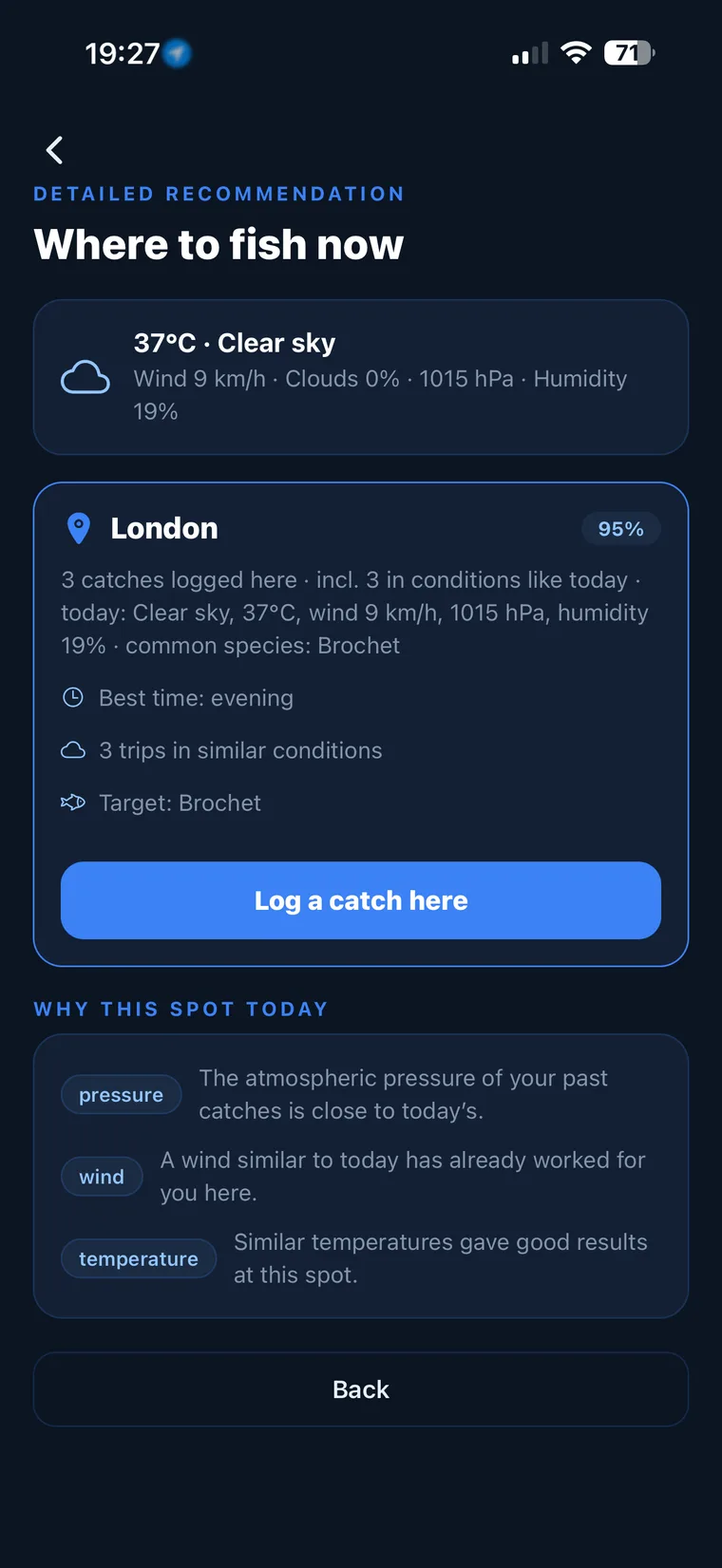
Not sure what to tie on?
Photograph your spot: CarnaFish reads the scene, cross-checks the conditions and gives you the zone, the lure and the retrieve. Free on iOS and Android.
Versus a plastic vib
Against a compact vib like the Chubby Vib 40, the Sonar has a clear edge in deep vertical fishing or cold-water conditions thanks to its metal density. It loses ground, though, on slow near-surface retrieves, where a lighter plastic vib is easier to keep in mid-water without sinking too fast.
Colors
- Clear to slightly stained water: silver, for a natural flash that reads as scale.
- Murky water: chartreuse, more visible in the limited available light.
- Winter or deep water: gold or red, tones that carry well under low light at depth.
Whether vertical or straight-line fishing is the right call today depends mostly on the spot and conditions — exactly what CarnaFish helps settle: a photo, and the app reads the scene to suggest a technique and a target depth instead of guessing at the water's edge. For the full strategy on zander, our beginner's guide to lure fishing for zander is worth reading alongside this sheet.
The rundown
- Three tie-holes, three behaviours: front for speed, center for all-purpose jigging, rear for a slow glide.
- A dense blade bait that sinks fast, excellent for vertical jigging and cold-water fishing.
- Steady bottom contact accounts for half its effectiveness — never fish it too high in the water column.
- Zander on the center/rear hole, active perch on the front hole with a fast retrieve.
FAQ
How do I choose the right tie-hole on a Heddon Sonar?
Front hole for a fast swim on a straight retrieve, center hole for all-purpose jigging, rear hole for a slower, deeper glide. Switch depending on whether you need speed or a slow presentation.
Is the Heddon Sonar effective in winter?
Yes, it's actually one of its best seasons. Its metal density sinks it fast and keeps it effective on sluggish fish holding tight to bottom, where a lighter lure struggles to get down properly.
What's the difference between a blade bait and a plastic vib?
A blade bait is a thin metal plate with no bulky body, vibrating from water resistance against its flat face. It's denser, sinks faster, and suits deep vertical fishing better than a lighter, more retrieve-versatile plastic vib.
Can you fish the Heddon Sonar on a standard straight retrieve?
Yes, especially on the front tie-hole, which gives a fast swim and strong vibration suited to prospecting. It's a good option on active perch, particularly small schools feeding near the surface.
Should the Sonar be allowed to touch bottom during the retrieve?
It's actually recommended: much of its effectiveness comes from steady contact with the substrate, which kicks up a cloud and mimics a baitfish rooting around. A short pause right there often triggers the strike.
What color Sonar should I use in very murky water?
Chartreuse is the most reliable choice, since it carries better in limited light. In deep or winter water, gold and red are also solid picks to stay visible despite low light levels.
The full zander lure guideSeason-by-season strategy: which family of lure, when, and why.Go from theory to fish
CarnaFish reads your spot from a photo and gives you the game plan: zone, lure, retrieve. Free on iOS and Android.